
As the culinary landscape continues to evolve, the need for reliable and innovative packaging solutions grows ever more critical. Silgan Plastic Food Containers in Fort Smith, Arkansas, stands at the forefront, providing essential packaging for businesses in the beverage and food industry. This article examines the vital aspects of Silgan’s operation, shedding light on employee experiences, cutting-edge technologies, and the broader market impact of their high-barrier food containers. Each chapter contributes to a comprehensive understanding, showing how Silgan not only meets but shapes the packaging demands of today’s food service businesses.
Fort Smith Plant: Packaging, People, and Performance
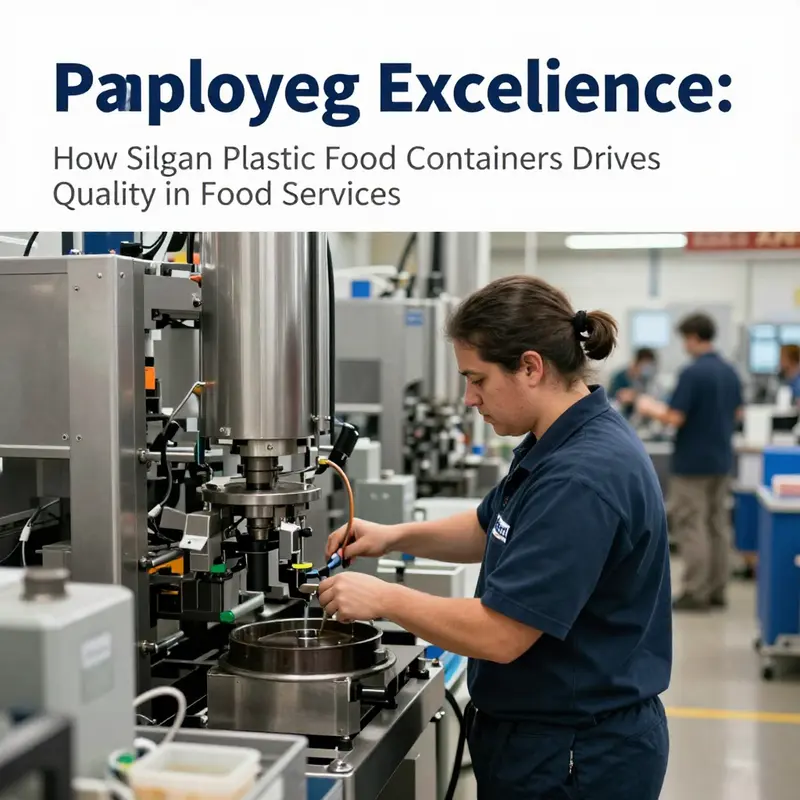
The Fort Smith plant of Silgan Plastic Food Containers sits at a quiet crossroads of industry and daily life. It is a facility that keeps shelves stocked with durable, safe packaging for brands across the nation. More than a manufacturing site, it is a node in a global supply chain that threads through food safety standards, materials science, and the rhythms of a modern factory. On the floor, lines of molded parts feed automated packaging systems, with careful temperature control, timing, and material flow coordinated to sustain quality and efficiency. Yet the human dimension matters most; the people who operate, maintain, and improve the lines shape the outcomes as much as the chemistry of plastics.
Silgan positions Fort Smith as a critical production hub within a portfolio of high barrier containers. The focus is on durability, safety, and performance to guard flavors and textures in a wide range of products. A key output is modified atmosphere packaging MAP, using trays and components crafted from polypropylene, PET, and PETG. MAP slows oxidation and microbial growth by selecting gas mixtures in the packaging headspace, extending shelf life and preserving freshness for fresh produce and prepared meals. The facility blends material science with consumer expectations, delivering reliable, scalable packaging that supports brands in a cost effective way. Leadership emphasizes quality, efficient changeovers, and a culture of continuous improvement. Yet the human side is equally important, because the end product rests on the daily efforts of workers who run, maintain, and optimize the lines.
Employee voices describe a mix of experiences. Some revel in teamwork, problem solving, and moments of growth, while others note pressures from pace, staffing, and management climate. Reports of long hours and intense workloads reflect a broader industrial pattern where automation raises expectations about throughput while the human factors demand attention. Pay and benefits are viewed differently across teams, with some finding compensation fair and others seeking more mobility and security. Work-life balance emerges as a real challenge in a high demand environment, with ratings and anecdotes suggesting room for improvement.
Looking ahead, Fort Smith illustrates the tension and opportunity common to many modern plants. The MAP focus and high barrier capabilities offer strong value to brands and consumers, but sustainable success depends on leadership that listens, equipment that is well maintained, and clear pathways for growth for frontline workers. A future oriented approach would couple technical investments with a humane culture, strengthened maintenance, and flexible scheduling that respects personal time. If Silgan can align corporate goals with front line realities, Fort Smith could become a model of efficient, humane manufacturing that preserves both product integrity and worker well being.
Sealed Futures: Technological Innovations at Silgan’s Fort Smith Plastic Container Plant
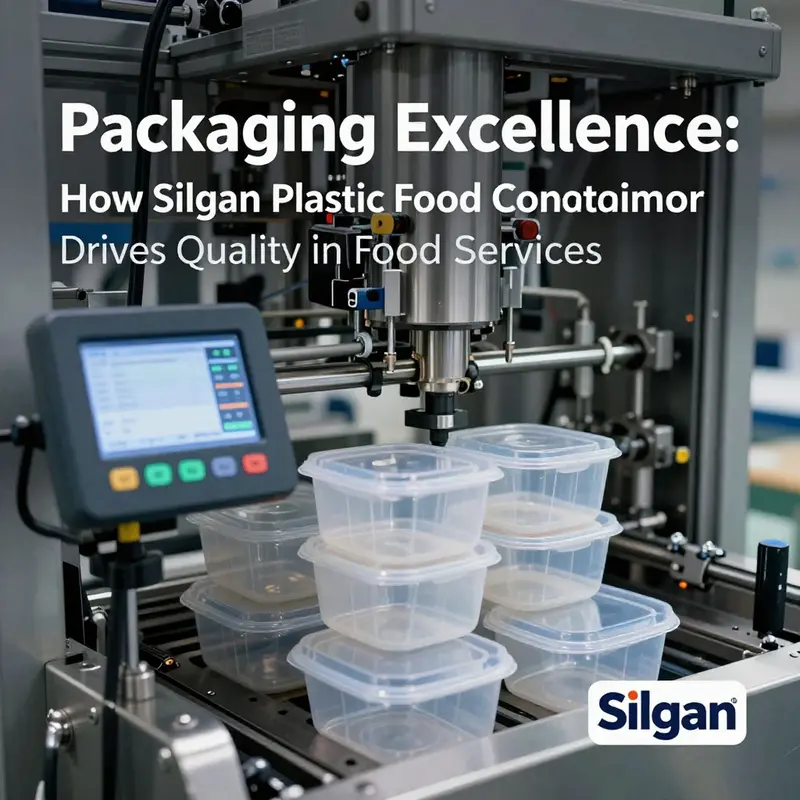
In Fort Smith, Arkansas, a quiet but relentless pace of progress pulses through the walls of Silgan’s plastic container facility. The plant stands as a critical node in a global network, where high-barrier plastic packaging is engineered to protect perishable foods from farm to table. What unfolds here is not merely the assembly of containers but an integrated story of material science, process intelligence, and strategic manufacturing that aims to extend shelf life, preserve freshness, and reduce waste across diverse food categories. The Fort Smith operation embodies a balancing act: maintaining the rigidity and reliability demanded by large brands while continuously seeking efficiency gains and smarter, safer ways to package foods. It is a place where the chemistry of polymers and the choreography of automation meet a disciplined culture of quality, regulatory awareness, and the evolving expectations of consumers, retailers, and regulators alike.
At the heart of the facility’s innovations is a sustained focus on modified-atmosphere techniques that influence the internal chemistry of a package to keep food safer for longer. Instead of relying solely on tight seals or thick walls, the plant engages in a more nuanced packaging strategy: altering the atmosphere inside the tray to slow the growth of aerobic bacteria and mold, thereby reducing spoilage and maintaining product integrity. This approach, implemented in trays designed to protect delicate products such as meats, cheeses, and ready-to-eat meals, depends on precise control of gas compositions, temperatures, and seal integrity. The Fort Smith team treats this not as a single technology but as a system—an orchestration of material performance, barrier properties, and process controls that work in concert to deliver consistent outcomes across high-speed lines. In practical terms, the systems here are oriented toward predictability: predictable oxygen transmission rates, predictable moisture barriers, and predictable performance in the harsh realities of real-world distribution, from cold storage facilities to retail shelves.
A pivotal area of technological evolution at the plant revolves around material science that supports both barrier performance and sustainability. The containers and trays in use are built from multi-layer structures, where layers of PET, PETG, and PP form a composite capable of resisting oxygen ingress and moisture migration while honoring the demands of display clarity and consumer appeal. The choice of materials is not arbitrary. It reflects a careful assessment of how different polymers interact with each other under pressure, how they respond to sterilization and aseptic handling, and how their barrier properties evolve as product shelf life extends. The Fort Smith operation mirrors a broader industry shift toward smarter barrier design—where the emphasis is on achieving the right balance between barrier performance, mechanical strength, weight, and recyclability. In this balancing act, the plant is exploring thinner yet more effective configurations, intelligent co-extrusions, and innovative tie layers that hold disparate materials together without compromising food safety or performance.
The plant’s sophistication is not limited to the chemistry of the films. It reaches into the realm of automation and data-driven manufacturing. Modern packaging lines here rely on high-speed filling and sealing equipment that pairs reliability with precision. The automation stack includes synchronized conveyors, servo-driven forming tools, and seals calibrated to tolerances that protect the product while keeping waste to a minimum. Inline sensors and vision systems monitor seam quality, lid placement, and fill volumes with real-time feedback that informs adjustments at the line-speed scale. The outcomes are not merely about throughput; they are about consistency. In high-volume food supply chains, even minute deviations can accumulate into defective lots or out-of-spec moisture and gas content. The Fort Smith facility prioritizes continuous monitoring, allowing technicians to respond quickly to drifts and, where necessary, to fine-tune process windows to sustain uniform performance across shifts. The result is a more predictable supply chain for brands that demand reliability, even as consumer expectations shift toward fresher products with extended shelf life.
This emphasis on reliable performance is closely linked to the plant’s ongoing work in barrier-enhancing coatings and film laminates. Barrier chemistries, surface treatments, and adhesive technologies are continually tested to improve the longevity of the package. The aim is not only to resist oxygen and moisture but also to minimize interactions with the food product itself—reducing the potential for flavor or aroma transfer that can influence consumer perception. These developments are deeply informed by a broader industry dialogue about sustainability and circularity. The Fort Smith facility strives to optimize material use and weight, thereby lowering energy requirements and material waste during production and end-of-life handling. The challenges are real: each reduction in material thickness must not compromise barrier integrity or seal performance, especially in logistics scenarios where packages endure vibrations and temperature fluctuations. Engineers here solve this through a blend of predictive modeling, accelerated aging studies, and iterative testing on pilot lines that mirror the full-scale process. In doing so, they convert laboratory insights into production-ready specifications that keep the plant competitive while aligning with evolving environmental expectations.
The question of how such innovations translate into daily work is inseparable from the human dimension of manufacturing. Indeed, the Fort Smith facility embodies a dual reality: on one hand, the precision, discipline, and rigor that define modern packaging lines; on the other, the real-world experiences of employees who operate, maintain, and improve these systems. Operator training emphasizes not only mechanical aptitude but also a deep appreciation for contamination control, cleanliness, and food safety. The workforce is educated in the nuances of polymer behavior, energy-efficient operation, and lean practices that reduce downtime and waste. This educational emphasis reflects a broader industry trend toward upskilling, with technicians becoming versed in data capture, SPC (statistical process control), and root-cause analysis. Yet even with a strong emphasis on training, conversations about work pace, management approaches, and resource constraints surface in employee reviews and informal feedback. Those realities invite a constructive tension: the need to maintain a demanding production schedule while preserving a sustainable work environment—one that values safety, fairness, and opportunities for growth. In practice, the Fort Smith plant translates these tensions into continual improvement cycles. Problem-solving sessions, routine maintenance windows, and cross-functional teamwork across quality, engineering, and operations form a feedback loop that informs both day-to-day decisions and longer-term capital planning.
Beyond the immediate production floor, the Fort Smith operation situates its technology strategy within a larger packaging ecosystem. Silgan, as a global packaging leader, relies on a portfolio that spans materials science, process engineering, and end-use applications that cross into multiple food categories. The Fort Smith plant thus serves as a critical innovation hub within this network, translating global insights into location-specific solutions. This translation is not a simple matter of replication; it requires adaptation to local supply chain realities, supplier bases, and customer expectations. In turn, the Fort Smith team monitors industry movements, participating in broader dialogues about advanced packaging technologies, sustainability targets, and regulatory expectations. While public-facing specifics about every innovation are scarce, the qualitative sense is clear: the plant builds upon a lineage of developments in barrier films, multi-layer packaging, and automated systems to deliver what brands need most—reliable performance that protects product integrity from processing to plate while maintaining an eye on environmental responsibility.
An important dimension of this narrative is how technology at the Fort Smith facility interacts with consumer and retailer demands. Consumers are increasingly attuned to freshness, safety, and convenience, while retailers seek reliable packaging that minimizes spoilage and waste and supports efficient shelf replenishment. The Fort Smith plant’s emphasis on high-barrier, purpose-built containers helps address these concerns by reducing the likelihood of spoilage and by preserving product quality under various transport conditions and storage scenarios. The incorporation of modified-atmosphere strategies means that packaging can be tailored to specific products and supply chains, offering brands the flexibility to extend shelf life without resorting to excessive preservative use or heavier packaging. Technological innovations here thus carry practical implications for product categorization, logistics planning, and even consumer perception on shelf presence. A clearer, more consistent packaging performance translates into fewer recalls, steadier supply across regions, and a tighter linkage between brand quality and packaging reliability.
From a sustainability standpoint, the Fort Smith facility is mindful of the life cycle of its products. Lightweighting strategies and smarter barrier technology enable the same protective function with less material, reducing environmental impact while maintaining protective capabilities. The facility also engages in thoughtful material selection that considers recyclability and compatibility with existing end-of-life streams. In practice, this means engineering teams assess not just how well a tray protects food, but how it can be handled within recycling infrastructure or how a design might be adapted for reuse or composting where feasible. The conversation around sustainability at this site is a living one—an ongoing evaluation of trade-offs and improvements that align with the evolving expectations of customers, regulators, and the communities surrounding Fort Smith. It is a quiet but persistent reminder that technological progress in packaging is not only about extending shelf life but also about enabling more sustainable consumption patterns through smarter design and smarter manufacturing.
A critical, underappreciated layer of the Fort Smith narrative is the interplay between reliability, safety, and continuous improvement. The plant’s quality systems are designed to capture data at every stage—from resin handling and film lamination to comic-sense checks on gas composition and final seal integrity. This data-centric approach supports rigorous problem solving and a culture of accountability. It also enables the plant to respond to shifts in demand with agility. When a brand requires tighter tolerances or more aggressive shelf-life targets for a given product, the Fort Smith team can translate those requirements into targeted process adjustments, material substitutions, or line-reconfiguration strategies that maintain throughput while protecting product quality. The result is a sourcing and manufacturing model that can adapt to a changing marketplace without compromising safety, compliance, or performance. In this sense, the Fort Smith facility is less a static factory and more a living technology platform—one that evolves as materials science advances, as automation technologies mature, and as the broader packaging industry evolves toward greater efficiency and resilience.
To understand the scope of what this means in practice, it helps to view the Fort Smith operation as part of a wider research and development continuum. While the plant may not publicly disclose every blueprint or pilot project, it is clear that engineers here are often engaged in field-based testing—taking lab-developed concepts and validating them under real-world conditions, in the conditions of global logistics and consumer use. The pace of this interplay grows with the appetite of brands for rapid-refresh packaging solutions, the expansion of e-commerce and direct-to-consumer channels, and the ongoing push toward sustainability across the supply chain. In response, the plant emphasizes scalable innovations: modular line configurations that can be adjusted as product portfolios shift, process controls that enable quick line requalification after a changeover, and modular coating systems that can be tuned for different barrier needs without a full plant rebuild. The ability to scale innovations from trial runs to full production is what makes Fort Smith more than a manufacturing site; it is a living testbed for the next generation of high-performance, responsible packaging.
In the end, the Fort Smith facility embodies a philosophy that ties together product protection, process stability, and responsible stewardship. It is a place where the most delicate aspects of packaging—gas composition, storage stability, and barrier integrity—are managed through a combination of precise materials science, intelligent automation, and disciplined quality practices. It is where the convergence of science and operations yields tangible benefits for brands and, by extension, for consumers who rely on safe, fresh foods arriving in trustworthy packaging. The narrative here is not a single breakthrough but a coordinated progression: incremental improvements in multi-layer film design, refinements in sealing technologies, and smarter line controls that collectively raise the baseline of what is possible in plastic food containers. The Fort Smith plant thus contributes to Silgan’s broader mission of advancing packaging solutions that protect product quality, enable efficient logistics, and support a more sustainable packaging ecosystem. It is a reminder that behind every tray on a shelf is a network of engineers, operators, and executives who are continually asking how to do better—how to keep food safer longer while using materials more thoughtfully and responsibly. For readers who want to explore how packaging trends translate into real-world manufacturing, the Fort Smith facility offers a lens into the cutting-edge practices that push the industry forward and shape the everyday experiences of brands, retailers, and consumers alike.
If you are curious to see how this field continues to evolve, you can explore more about the broader category of plastic packaging here. This link directs you to a resource that aggregates packaging solutions in this space, providing context for the kinds of materials, structures, and processes that facilities like Fort Smith are integrating into their operations: plastic-packaging category.
For readers seeking a broader technical perspective on the kinds of innovations discussed here, an external resource offers a comprehensive look at advanced packaging technologies in modified-atmosphere packaging and related approaches. It provides historical context, current best practices, and forward-looking insights that align with the developments seen at Fort Smith and across the industry: https://www.packagingdigest.com/processing/advanced-packaging-technologies-in-modified-atmosphere-packaging-mapping.
Fort Smith’s High-Barrier Frontier: How Silgan Shapes Modern Food Packaging and Local Industry
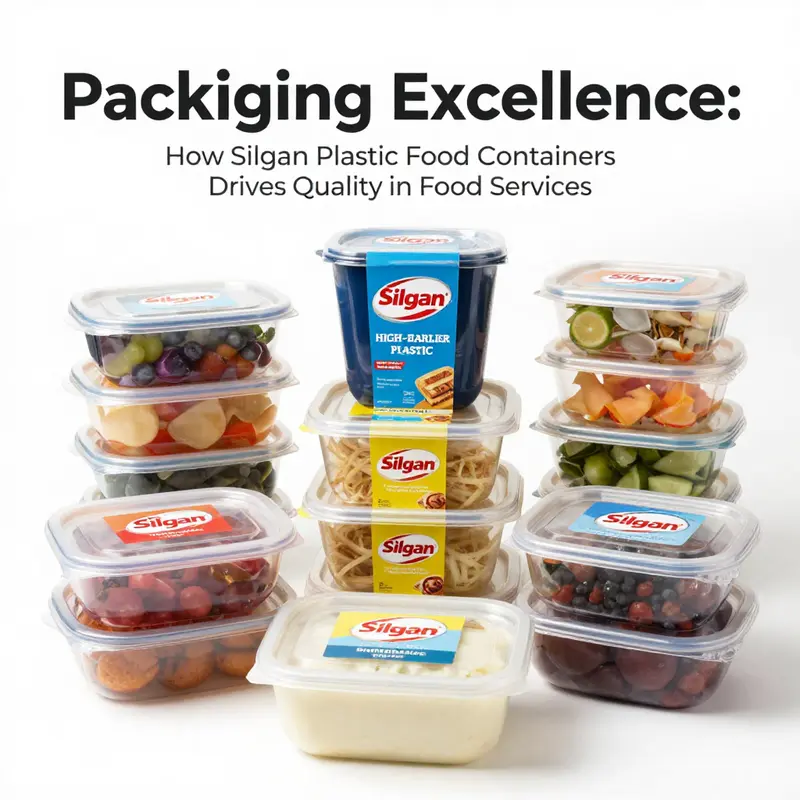
Fort Smith, Arkansas, sits at a pivotal crossroads in the evolution of food packaging. It is more than a production site; it is a strategic node where global packaging ambitions meet regional capabilities. The Fort Smith plant of Silgan Plastic Food Containers operates with a dual focus: deliver packaging solutions that guard freshness and safety, while sustaining the local economy that makes such precision possible. In this chapter, the story unfolds as a seamless narrative about technology, people, and place. The facility exemplifies how high-barrier packaging technology can translate into reliable performance across demanding supply chains, and how such performance reverberates beyond the walls of the plant to influence brands, communities, and policies. The thread that links these ideas is a shared commitment to protecting product quality from farm gate to table, a commitment that depends on meticulous process control, responsible material stewardship, and a workforce prepared to navigate fast-moving markets and rigorous standards. Read together, these elements illuminate why Silgan Fort Smith matters not only to customers who rely on dependable packaging, but also to the workers who operate the lines, the suppliers who keep the plant supplied, and the residents who experience the economic and social effects of manufacturing in the region.
The distinctive value proposition of the Fort Smith operation rests on a disciplined approach to barrier performance. In practical terms, barrier technology reduces the ingress of oxygen and moisture, slows oxidative changes, and preserves flavor and appearance over extended periods. This is not mere engineering for efficiency’s sake; it is a core capability that protects perishable products as they travel through complex distribution networks, from cold storage rooms to shelf aisles and, ultimately, domestic kitchens. The facility pursues precision at every step—from resin selection and extrusion to forming, sealing, and quality checks. The objective is to ensure that each container maintains its integrity across a spectrum of handling scenarios, including long transport routes, fluctuating temperatures, and diverse consumer expectations. When barrier performance is reliable, brands experience fewer spoilage events, fewer recalls, and more consistent consumer satisfaction. The ripple effects extend to retailers and distributors as well, where predictable performance reduces stockouts and aids in inventory planning. In this sense, Fort Smith does more than produce packaging; it sustains the trust that underpins modern food commerce.
Interwoven with the technical emphasis is a broader narrative about design for safety and shelf life. The plant emphasizes materials and geometries that promote efficient sealing and uniform barrier properties. It is not about chasing the latest feature for its own sake but about delivering tangible improvements in product protection. Each line operates under strict cleanliness, documented procedures, and continuous monitoring. Operators learn to recognize subtle deviations in seal integrity, color, or texture that may indicate a shift in material behavior or processing conditions. This vigilance is essential, not just for compliance with food safety standards but for maintaining consumer confidence in the brands that depend on the packaging. In an industry where a minor defect can cascade into wasted product and dissatisfied shoppers, the Fort Smith facility treats every seal like a promise that must be kept.
A central theme of these efforts is the seamless integration of technology with human skill. In Fort Smith, automated systems and digital monitoring converge with the hands and judgment of skilled technicians. Data collected at multiple points in the production cycle informs real-time decisions about equipment tuning, material routing, and quality acceptance criteria. This data-driven culture supports a proactive approach to maintenance and process optimization, reducing unplanned downtime and extending the useful life of critical equipment. Yet the human dimension remains indispensable. Operators bring tacit knowledge—patterns learned from thousands of cycles, subtle cues from machine acoustics, and intuition about when a process is drifting out of spec. Silgan’s Fort Smith platform therefore embodies a balance: precision through automation, resilience through knowledgeable people, and safety through continuous vigilance.
Beyond the plant floor, the Fort Smith operation binds itself to a broader ecosystem of suppliers, logistics partners, and customers who demand consistent performance. A reliable packaging supplier is not a one-time vendor but a steady, collaborative partner who helps brands translate product concepts into shelf-ready formats. The Fort Smith team coordinates closely with resin suppliers, equipment vendors, and service technicians to minimize variability in material properties and processing behavior. This collaboration yields a more predictable supply chain, which is especially valuable in periods of volatility—whether due to commodity price swings, labor market shifts, or global disruptions. The outcome is a packaging platform that can be scaled to meet diverse brand needs while maintaining the same core standards of barrier performance, safety, and hygiene. In this sense, the Fort Smith site contributes to a broader narrative about supply chain reliability, a topic that has ascended in importance as retailers and consumers increasingly expect consistency across a wide range of products and channels.
A recurring question for observers is how regional production nodes like Fort Smith navigate a competitive landscape that includes global and local players alike. Industry analyses from the mid-2020s position Silgan as a strong participant in the barrier-tray segment, underscoring the company’s ability to combine scale with a disciplined approach to quality and regulatory compliance. The Fort Smith operation reflects that balance in practice: it maintains high-volume throughput while adhering to rigorous process controls, audits, and documentation that support traceability and safety. This disciplined posture matters because brand owners evaluate packaging across several dimensions—safety, shelf-life, sustainability, and total cost of ownership. Fort Smith demonstrates that robust barrier performance can align with efficient production, enabling brands to manage quality at scale without compromising operational flexibility. Moreover, the facility’s performance feeds into broader market narratives about the role of packaging in reducing food waste and supporting sustainability goals, messages that resonate with retailers, policymakers, and conscientious consumers alike.
Another layer of significance comes from the plant’s commitment to sustainability and responsible material stewardship. The Fort Smith operation actively seeks opportunities to optimize resource use, minimize waste, and align with broader corporate goals for environmental responsibility. Initiatives may include energy efficiency upgrades, waste diversion programs, and supplier governance practices designed to ensure that raw materials meet ethical and environmental standards. While exact program specifics may evolve, the underlying ethos is clear: packaging should protect food while minimizing environmental impact across its life cycle. This balance requires careful material selection, process optimization, and a willingness to retire older, less efficient practices in favor of newer, cleaner technologies. When such efforts are coupled with closed-loop thinking about end-of-life scenarios, the plant contributes to a packaging system that not only protects products but also acknowledges the responsibilities that come with using finite resources.
The Fort Smith facility also plays a consequential role in shaping local values and the region’s economic trajectory. The plant is a steady employer, supporting families and communities with good wages and opportunities for growth. It anchors a network of suppliers and service providers whose livelihoods depend on the plant’s ongoing activity. As with any significant manufacturing presence, the social dynamic matters: how workers experience their jobs, how managers lead, and how the organization communicates its values. The mixed experiences reported by employees—from fair compensation and skill-building to concerns about management styles and pace—provide a candid reminder that sustaining high performance over time requires ongoing attention to culture, communication, and well-being. A workforce that feels supported and fairly treated is more likely to deliver consistent quality, adhere to safety protocols, and participate in continuous improvement efforts that lift the entire operation.
In the broader market context, the Fort Smith site contributes to the industry’s forward movement toward smarter packaging design and smarter production. The market increasingly rewards solutions that simplify logistics, reduce waste, and demonstrate transparent sourcing. The Fort Smith plant responds by aligning its practices with these expectations. The location serves as a testbed for process improvements that can be replicated across other facilities, amplifying its impact beyond regional boundaries. The resulting knowledge transfer helps Silgan and its customers stay ahead of evolving regulatory requirements, shifting consumer preferences, and the growing emphasis on circular economy principles. As packaging specifications evolve to accommodate new tastes and healthier lifestyles, the Fort Smith operation remains adaptable, ready to reconfigure lines, adjust material blends, and implement new quality control metrics with a confidence earned from years of experience and a culture oriented toward safety and reliability.
From a brand perspective, the Fort Smith facility becomes part of a value proposition that emphasizes trust, safety, and consistency. Brands that rely on durable packaging to sustain product quality across diverse markets rely on suppliers who can deliver on time, within spec, and with minimal waste. The Fort Smith plant’s performance thus contributes to brand performance in a way that is often invisible to consumers: fewer damaged units in transit, fewer returns at the shelf, and more predictable merchandising outcomes for retailers. Such outcomes are rarely celebrated in headlines, but they are the bedrock of stable revenue flows and long-term partnerships. When a plant can consistently meet these expectations, it creates a virtuous cycle in which reliability begets trust, trust attracts investment, and investment funds continued innovation that benefits both the business and its customers.
At the same time, market position is not static. The industry’s trajectory toward higher performance in barrier properties, greater material sustainability, and more transparent supply chains means that Fort Smith must continue to evolve. Emphasis on process analytics, predictive maintenance, and energy optimization offers a pathway to sustained competitiveness. Investments in automation and digital workflows can further reduce variability, accelerate changeovers, and shorten time-to-market for new formats. In such a future, the Fort Smith site would not only produce containers but also contribute to a repository of best practices that enable faster, safer, and more sustainable product launches. The potential to scale capabilities across multiple product families while maintaining consistent standards keeps the Fort Smith operation aligned with the strategic ambitions of Silgan as a global packaging provider.
This chapter also acknowledges the role of external perspectives in shaping how the Fort Smith plant operates and is perceived. Publicly accessible discussions about employee experiences, industry benchmarks, and regulatory expectations inform ongoing adjustments to operations, training, and leadership approaches. Such dialogues reinforce the idea that packaging excellence is inseparable from the people who design, manufacture, and deploy these solutions. The Fort Smith site demonstrates that a manufacturing operation can be both technically rigorous and deeply attuned to its community, a combination that positions it to weather cycles in demand and to contribute meaningfully to the integrity of the food supply chain.
For readers seeking a concise snapshot of the broader packaging landscape and its convergence with regional manufacturing networks, it is worth exploring the wider universe of plastic packaging offerings that companies use to tailor performance to specific product needs. A representative segment of the market illustrates how materials and formats are chosen to balance barrier performance, recyclability, and cost. A practical way to glimpse this landscape is to consider the range of plastic packaging categories that companies deploy to achieve these goals. See the broader spectrum of plastic packaging solutions to understand how materials are selected for safety, appearance, and shelf life while remaining adaptable to distribution networks and consumer preferences.
In closing, the Fort Smith operation embodies a coherent, forward-looking approach to packaging that connects technical proficiency with social and economic responsibility. It demonstrates how a regional facility can influence national packaging dynamics by delivering safe, efficient, and sustainable solutions at scale. The local impact—employment, economic activity, and workforce development—intertwines with industry trends that reward reliability, transparency, and innovation. The Fort Smith site thus stands as a microcosm of how modern packaging firms balance protection, performance, and responsibility, ensuring that the chain from farm to fork remains intact for consumers, retailers, suppliers, and policymakers alike. External resource: notably, employer and employee perspectives captured in public reviews provide additional texture to this story and invite readers to consider the human element behind the machinery and metrics. https://www.indeed.com/cmp/Silgan-Plastic-Food-Containers/reviews?jid=1283456
Final thoughts
In summary, Silgan Plastic Food Containers in Fort Smith, AR, transcends the traditional manufacturing model by integrating employee feedback, technological advancements, and a strong commitment to market needs. Their high-barrier plastic food containers not only enhance product safety and quality but also empower food service businesses to deliver freshness and convenience. With a robust focus on sustainable practices and innovation, Silgan continues to set a standard in the food packaging industry that is both reliable and forward-thinking.