
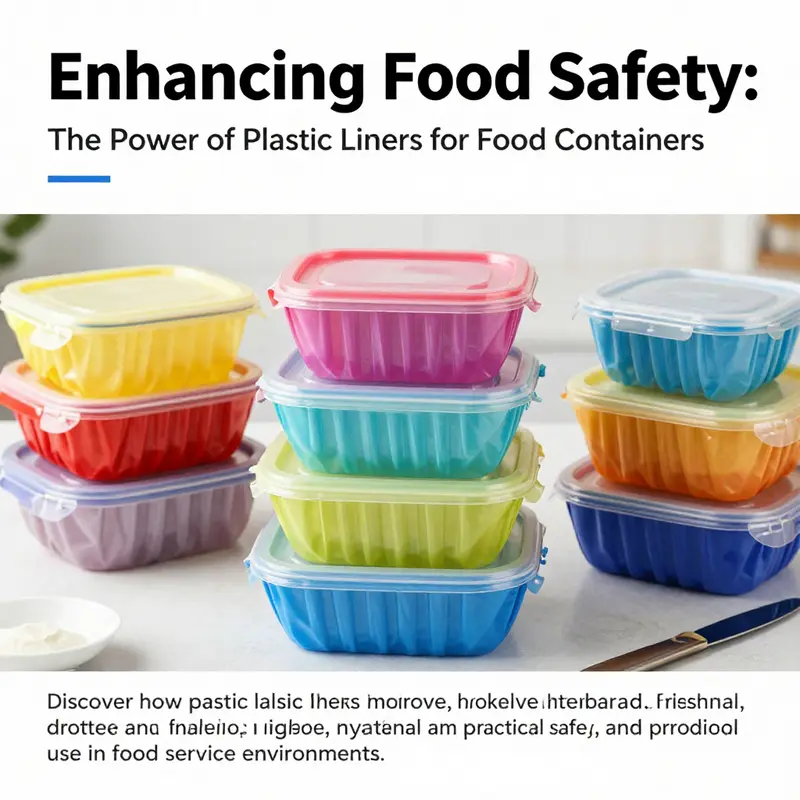
In the bustling world of food service, maintaining high hygiene standards while ensuring efficiency is more important than ever. Plastic liners for food containers offer a robust solution that supports the dual goals of safety and convenience. These innovative liners make food storage and service more hygienic, prevent contamination, and facilitate cleaning processes. In this comprehensive exploration, we’ll first discuss the hygienic benefits of plastic liners, then consider the essential material factors that make liners effective, and finally delve into their practical applications across various food service settings. By the end of this overview, you’ll appreciate how plastic liners can elevate your operational standards and customer satisfaction.
The Surface Shield: Hygienic Assurance and Practical Realities of Plastic Liners in Modern Food Containers
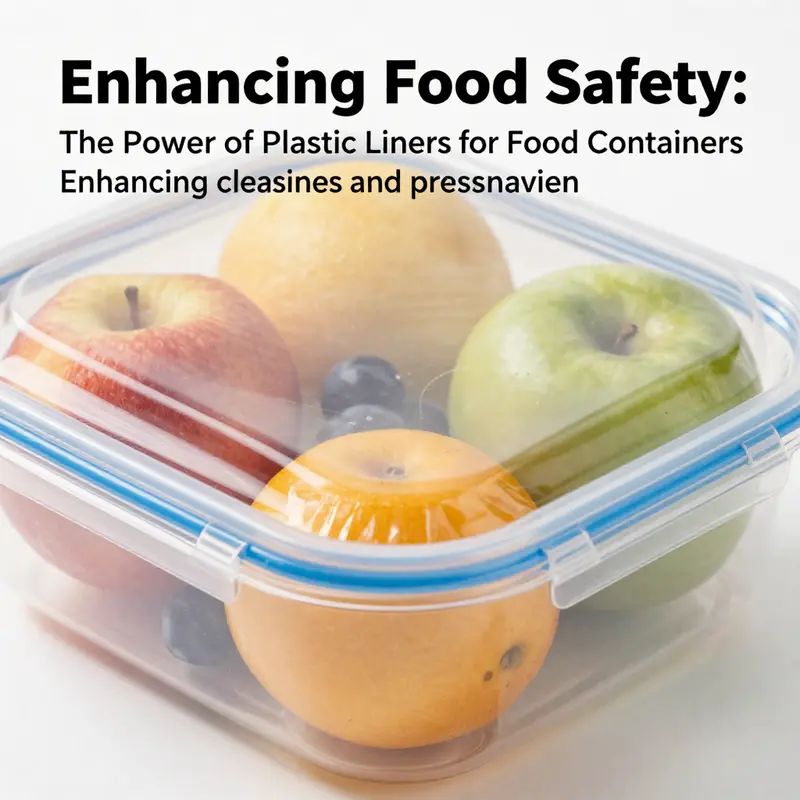
In the realm of food packaging, the most crucial safeguards often operate out of sight. A thin, disposable film lining the interior of a container can be the quiet guardian of hygiene, a layer that keeps the food from meeting the container’s own materials and, in doing so, reduces a cascade of potential risks. Plastic liners, made from food-grade polymers such as polyethylene or polypropylene, are designed to be removable after use, presenting a new, pristine surface with each opening. This simple proximity—food, not container—works to elevate safety and consistency in kitchens, cafes, meal-prep studios, and even home kitchens where speed and cleanliness are prized. The liner’s utility emerges most clearly when the container itself is reused, a frequent scenario in institutions or households that value sustainability alongside convenience. In these settings, the liner serves as a clean barrier that can be discarded, while the container is cleaned, inspected, and prepared for its next cycle. The result is a practical separation of tasks: a fresh interior surface for every fill, and a container whose exterior can be treated separately, allowing for efficient, targeted hygiene practices without compromising food safety.
The hygienic benefits of liners extend well beyond the simple barrier they provide. They reduce the likelihood that food residues or cleaning agents linger on surfaces that may later contact other foods. In environments that see a high turnover of meals—think a busy kitchen or a catering operation—the ability to discard a liner after service minimizes the risk that traces of last week’s sauces or lingering detergents could carry into the next service. This is not merely about cleanliness in a mere formal sense; it is about reducing opportunities for cross-contamination, a foundational concern in food safety. When different types of foods are prepared or stored in proximity, or when multiple staff members handle containers, a liner becomes a physical buffer that interrupts the chain of contact. The liner’s barrier property does not erase every hazard, but it can significantly lower the probability that bacteria or contaminants find a foothold, especially in high-volume operations where even small margins matter.
The practical advantage of liners is most evident in scenarios where cleaning between uses would be impractical or time-prohibitive. Consider a cafeteria line or a catering setup where dozens of containers pass through hands and equipment within a short window. Deep cleaning every container between uses demands time, resources, and sometimes compromises on throughput. A disposable liner makes the hygiene routine straightforward: replace, not scrub. This simplicity can help maintain compliance with established hygiene standards while enabling staff to keep pace with demands. The same logic translates to household meal prep, where a liner can streamline routines during busy weeks. The benefit is not merely convenience; it is a consistent baseline of cleanliness that can lessen the risk that lingering residues might mingle with new ingredients in a subsequent meal.
Cross-contamination is a central concern in food safety, and liners can play a meaningful role in mitigation. In environments where a variety of foods—especially raw proteins, dairy, and ready-to-eat items—are handled in close sequence, the liner acts as a dedicated, temporary barrier for each portion. By preventing direct contact between the food and the container surface, it reduces the chance that bacteria or colorants from one item could transfer to another. This is particularly important for containers used in batch prep or in settings where multiple products are produced within the same shift. The liner’s role is not to replace good hygiene practice but to complement it, providing an added layer of protection that aligns with best practices for preventing cross-contamination. For facilities where food safety protocols emphasize compartmentalization and traceability, the liner can serve as a tangible marker of disinfection status and process discipline. It is a simple device, yet it speaks to a strategic approach to reducing risk in daily operations.
A fresh surface for each use is another straightforward but powerful hygienic benefit. The science behind this idea is intuitive: a new interior surface eliminates the chance that yesterday’s residues or micro-pathogens remain on the bed where today’s food will rest. For routine household packing, this means greater peace of mind, especially when packing colorful or highly pigmented foods that might stain or linger on the container’s interior. In commercial and institutional settings, a sterile, unused surface for every serving supports compliance with hygiene standards that require state of cleanliness to be maintained repeatedly across shifts and days. The perception of cleanliness matters as well; consumers and staff alike respond to the sense that a product is clean, fresh, and ready for safe use. A liner helps realize that perception by delivering a dependable, repeatable baseline every time the lid is sealed and the meal is prepared.
Temperature control is another dimension in which liners can contribute to food quality and safety. Some liner materials offer modest thermal insulation, helping to slow the exchange of heat between the container’s contents and the surrounding environment. While a liner is not a primary temperature-control device, its presence can influence how long food remains within a desired temperature range, particularly when paired with lids designed for secure sealing. The interplay between liner material, container geometry, and lid design can produce a mini-system that supports the preservation of texture, moisture, and flavor. A liner can also reduce condensation on the interior surface, which sometimes dilutes sauces or affects the perceived freshness of the food. Product designers and operators can harness these subtle effects to optimize presentation, storage, and service conditions, recognizing that even small shifts in moisture management can influence sensory quality and consumer satisfaction.
Material choice matters deeply in the conversation about liners. The most common options—polyethylene (PE) and polypropylene (PP)—are selected for their food-safe credentials, chemical resistance, and process compatibility. PE liners often deliver excellent moisture barriers and a forgiving feel against a wide range of foods, while PP liners can provide better resistance to high temperatures and a stiffer, more robust surface. The choice between PE and PP is not simply a matter of price or availability; it is a decision rooted in how the liner will interact with the specific foods it protects, the cleaning regimes it will face, and the handling practices it must endure. For highly colored or acidic foods, the liner’s colorfastness and chemical stability can be decisive. Some pigments and dyes have a greater tendency to migrate or stain than others, so material grades are chosen with attention to compatibility and performance. This careful selection helps ensure that the liner remains a neutral barrier rather than a source of unintended coloration or flavor transfer.
The surface properties of the liner also influence cleaning and sanitation workflows. A smooth, non-porous interior reduces the risk of micro-crevices where food particles or cleaning residue could lodge. Such smoothness streamlines inspection and cleaning, whether manual or automated, and it contributes to more reliable hygiene outcomes across batches and shifts. In practice, this means facilities can sustain faster cleaning cycles without compromising safety or thoroughness. The ease of removing a liner and discarding it after service is another practical factor that intersects with waste management. While the liner’s primary purpose is hygiene, its disposable nature also invites consideration of environmental impact and lifecycle thinking. Organizations can balance hygiene benefits with sustainability goals by selecting liner materials that align with their waste streams, exploring compostable or recyclable options where feasible, and ensuring that disposal does not undermine broader environmental commitments. The conversation about liners, therefore, sits at the crossroads of safety, efficiency, and stewardship.
It is essential to acknowledge the limitations and caveats of relying on liners as a hygienic solution. A liner can reduce direct contact and simplify cleaning, but it does not substitute for rigorous sanitation programs, appropriate storage temperatures, or correct handling practices. If liners are used inappropriately or if containers are damaged, contaminated, or misused, the benefits may not fully materialize. Moreover, improper disposal or mixing of liner waste with other streams can complicate recycling or composting efforts, underscoring the need for clear protocols and staff training. The liner’s value lies in how well it is integrated into a comprehensive hygiene strategy that accounts for material properties, container design, user behavior, and regulatory expectations. In this sense, the liner becomes part of a system rather than a standalone fix.
When considering the broader regulatory and safety context, liners must satisfy standards that govern food contact materials. Materials intended for contact with food are evaluated for chemical migration, mechanical performance, and overall safety under expected usage conditions. The goal is to ensure that any substances present in the liner do not migrate into food at levels that could pose a risk to health. This is especially important when meals are stored for extended periods or when containers are subjected to temperature variations. The science behind migration is nuanced, involving the interaction between polymer matrices, additives, and the food matrix itself. Manufacturers and researchers work to optimize resins, processing methods, and finished films to minimize migration while preserving barrier properties and mechanical integrity. In practice, this means that a liner chosen for a particular container must be compatible not only with the container material but also with the foods it will contact and the processing environment in which it will be used. A well-chosen liner harmonizes safety, performance, and practicality, delivering consistent results across different use cases.
From a design perspective, the liner also interacts with the lid and sealing system. In many packaging configurations, a liner works best when paired with a lid that can be threaded or tightly closed, creating a more complete barrier against leakage and ingress of contaminants. The synergy between liner and lid design is part of a broader engineering conversation about how to maintain freshness and hygiene across a supply chain that may involve cold storage, transit, and display. The liner’s role in leakage prevention is notable in liquid-rich foods, sauces, or dressings, where an imperfect seal could otherwise cause staining, contamination, or waste. By providing a dedicated interior surface, the liner helps ensure that any leakage is contained within the liner itself, reducing the risk that spillover reaches the container walls and creates a second site of contamination that requires cleaning or replacement. This aspect of liners aligns with a broader objective to minimize waste by maintaining product integrity through the point of service and into consumption.
The educational value of liners for consumers and operators should not be overlooked. For households, liners offer a straightforward way to manage hygiene without requiring specialized equipment or elaborate procedures. The ease of disposal can make liners appealing to busy families who want to ensure clean meals for children and guests, while still underlining the importance of proper recycling or composting practices where available. For professionals, liners translate into reproducible results, which can be crucial for brand consistency, audit readiness, and regulatory compliance. The ability to demonstrate that each use started with a fresh interior surface can be a practical measure in quality assurance programs. In both contexts, the liner becomes a quiet ally that supports hygiene without dominating the narrative of food safety; it is a tool that, when used thoughtfully, helps maintain the integrity of food from preparation to consumption.
In considering the broader chain of events—from sourcing to service—it is worth reflecting on how liner choices reflect organizational priorities. A facility devoted to rapid throughput and high hygienic standards may favor liners with strong barrier properties and dependable performance under temperature fluctuations. A facility with a strong emphasis on sustainability might seek liners that balance hygiene with lower environmental impact, perhaps embracing advances in recyclable or compostable formulations. The decision is rarely about one attribute in isolation; it is about the interplay of barrier performance, ease of use, compatibility with food types, processing methods, and end-of-life considerations. In this sense, the liner becomes a strategic element in packaging design and operations management, one that can influence efficiency, safety, and customer confidence across a product’s life cycle.
To bring these ideas into a practical frame, consider the interplay between hygiene, handling, and food presentation. A liner helps preserve the interior, keeping the container looking and feeling clean for customers who may judge quality by tactile and visual cues. A spotless interior is not merely aesthetic; it signals that the container has been prepared with care and that hygiene protocols have been followed. In a market where consumer expectations are shaped by visible cleanliness and consistent performance, liners provide a tangible and repeatable experience. They support consistent fill lines, predictable textures, and reliable moisture management that together contribute to perceived quality and safety. Packaging professionals, chefs, and operators who understand this dynamic can design workflows that leverage liner performance to meet both safety standards and consumer expectations, thereby aligning operational realities with broader goals of food safety and brand integrity.
As the discussion broadens to the standards that govern food-contact materials, the presence of a liner invites a careful examination of material science, processing, and regulatory frameworks. The liner’s life cycle—from resin selection and extrusion to formation, filling, sealing, and disposal—must be considered within the scope of risk assessment and compliance. The relationship between liner chemistry and the foods it contacts requires ongoing validation, particularly as new formulations and additives enter the market. The global landscape of food safety standards continues to evolve, reinforcing the importance of robust testing, documentation, and traceability. In this context, a well-chosen liner is not just a pragmatic accessory; it is an evidence-based component of a safety system designed to minimize hazards and maximize the reliability of food service and household routines.
To deepen understanding of how liner families are evaluated and specified, several sources provide guidance on performance, properties, and types for industrial applications. For readers seeking reliable sourcing and technical specifications on food-safe liner materials, a foundational reference offers a structured overview of material grades, barrier properties, and migration considerations. In practice, this knowledge helps facilities articulate their requirements, benchmark different options, and communicate expectations across procurement, quality assurance, and R&D teams. The outcome is a more deliberate approach to selecting liners that deliver the hygienic benefits described here while meeting the broader constraints of cost, supply, and regulatory compliance. The interplay of science, policy, and practice is not merely academic; it shapes the day-to-day decisions that affect safety, efficiency, and consumer trust across the entire food packaging ecosystem.
For readers who want to explore related topics within packaging and surface protection that intersect with liners, the journey can extend to adjacent product categories and services that support hygiene, readability, and sustainability. A related consideration is how liners align with packaging formats that emphasize portability and convenience, such as disposable lunch boxes or other disposable tableware. The way a liner integrates with these formats can influence user experience, waste management, and even the economics of service models in institutions and households. When exploring options, it is worth reviewing product categories focused on disposable tableware and related packaging accessories to understand how liners complement lids, seals, and other components in delivering a cohesive, hygienic solution for food containers.
If you are curious about how these concepts translate into actual product categories and purchasing choices, a practical entry point is to look at the disposable lunch box category within a packaging and tableware catalog. There you can observe how liner solutions are presented in relation to other components, gaining a sense of how the entire system works together to ensure hygiene and service quality. By examining real-world configurations, buyers can compare how different liner materials interact with various lid designs, how effective seals are in maintaining freshness, and how disposal streams align with waste-management objectives. This holistic perspective helps ensure that the liner is not viewed in isolation but as a vital element within a complete packaging strategy that supports safe handling, efficient service, and responsible stewardship of resources.
In closing, the hygienic benefits of plastic liners for food containers rest on a balance of scientific understanding, practical utility, and thoughtful design. They provide a barrier that reduces direct contact, simplify cleaning and turnover, help prevent cross-contamination, and offer a fresh surface for each use. They can assist in maintaining temperature-related quality, support consistent presentation, and contribute to streamlined operations in both commercial and home settings. Yet they are not a substitute for comprehensive hygiene programs, proper handling, and appropriate disposal practices. When chosen with care—considering material compatibility, barrier performance, and end-of-life implications—liners become a dependable ally in safeguarding food safety, delivering reliability, and reinforcing consumer confidence across the entire packaging lifecycle.
For further context on standards and compliance that frame these practices, consult regulatory resources on food safety standards and migration limits for food-contact materials, which provide the foundation for how liners are specified, tested, and validated for real-world use. External regulatory context can be explored here: https://www.foodsafety.gov/food-safety-modernization-act/fsma-standards. And for practical insight into related disposable packaging options that often accompany liner usage, you can browse the disposable lunch box category here: disposable lunch boxes.
From Molecules to Meals: How Material Choices Shape Plastic Liners for Food Containers
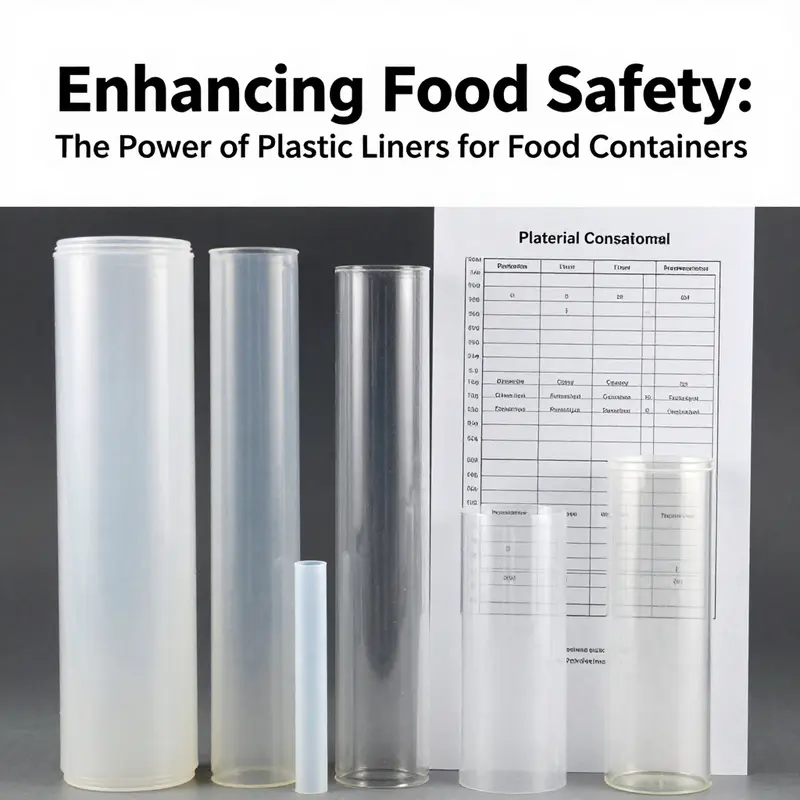
The journey from raw polymers to a hygienic, reliable liner that sits quietly at the heart of a meal is a study in careful material reasoning. A plastic liner for food containers is more than a convenience; it is a first line of defense, a maker of shelf life, and a guard against both contamination and waste. When we consider what makes a liner perform well, we inevitably return to material choices—the kind of plastic, its crystalline structure, its interaction with heat and moisture, and how easily it can be returned to the circular economy after its service life. The core materials that dominate this space—polyethylene, polypropylene, and polystyrene—each carry a distinct profile. Polyethylene, especially in its high-density form, is prized for durability and barrier properties against moisture and many chemicals. Its flexibility and toughness translate into resilient liners that resist puncture and abrasion, while maintaining a smooth interior surface that food cannot easily cling to or stain. Polypropylene, on the other hand, is selected for its higher melting point and better performance under heat. It is well suited to hot foods and microwave-safe applications, which is especially relevant for students, office workers, and others who rely on thermal liners to keep meals warm during short commutes or busy days. Polystyrene, with its excellent rigidity and clarity, serves certain niche roles where a stiff, smooth surface helps with sealing or with stacking and display, though its chemical barrier profile and recycling characteristics call for careful consideration. These material families are not isolated in practice; they are often configured in layered or coextruded formats, where a liner may combine the favorable traits of two or more plastics to balance heat resistance with moisture barrier, or to improve processing efficiency for mass packaging operations. The specific grade and formulation matter as well. A liner designed for dry foods needs less permeation resistance than one intended for fatty or aqueous products that can drive diffusion of aromas, oils, or moisture through the container wall. A liner used in a microwave setting must maintain its integrity without releasing additives or developing surface textures that could harbor bacteria or degrade in the presence of steam. Each choice, then, becomes a decision about trade-offs: better heat tolerance may come at the expense of simple recycling; higher barrier properties could affect the ease of processing or cost; and sharper surface finishes can influence both cleanability and staining tendencies. The challenge for designers and manufacturers is to translate broad material properties into a practical, everyday product that is safe, affordable, and environmentally responsible.
Barrier performance is a central consideration that defines how a liner contributes to product quality. Gas and moisture permeation are not abstract concepts; they determine how long a product remains fresh and how well flavors and colors are preserved during storage. In the context of perishable or sensitive foods, even modest permeation rates can accumulate over days or weeks, altering texture, aroma, and microbial stability. A liner’s barrier properties are influenced by the polymer’s intrinsic characteristics—matt or glossy surface energy, crystallinity, and molecular orientation all play a role. For instance, HDPE provides robust moisture resistance and chemical inertia, contributing to dependable performance for a wide range of products. PP’s barrier properties can be tuned through molecular weight and additives, enabling a balance between warmth tolerance and diffusion control. PS can offer a compact, stiff barrier in certain configurations, though its recyclability profile often prompts designers to weigh circularity considerations alongside barrier needs.
Surface smoothness and non-reactivity emerge as subtle but important determinants of hygiene and pigment control. When food contact occurs, pigments from strongly colored items, or staining compounds from sauces, can migrate into the liner’s surface or even into the container’s interior if the surface is rough or reactive. A smoother interior minimizes sites where pigments can lodge, simplifying cleaning and reducing the likelihood of color carryover between batches. Non-reactivity is equally critical. Some pigments and additives are inert within the intended temperature range, while others can interact with acidic or fatty foods, imparting off-flavors or leaching residuals. Manufacturers mitigate these risks through careful material selection, surface treatment, and finish. In practice, even slight improvements in surface finish or chemical resistance can translate into measurable gains in hygiene and consumer satisfaction over the liner’s lifecycle.
The real world of food packaging imposes a broader suite of performance constraints. The liner must withstand repeated openings and closings without compromising the seal, prevent leakage under normal handling, and tolerate exposure to refrigerated or warm environments without warping or delaminating. The liner’s compatibility with the container’s lid system—whether it involves threading, compression fit, or snap closures—also influences seal efficiency and contamination control. In meal-prep settings and deli packaging, a liner that enhances the lid’s seal can help preserve freshness, reduce waste, and improve user experience by minimizing contact with the container exterior. Conversely, poor seal integrity can yield moisture accumulation or aroma escape, undermining perceived quality from the first bite.
From a processing perspective, the choice of liner material shapes how the container is manufactured and how efficiently operations run. HDPE and PP, for example, are compatible with high-speed forming and sealing equipment, enabling consistent thickness, seal strength, and edge quality. The material’s melt behavior, compatibility with adhesives or heat-sealing layers, and its response to forming temperatures all determine the ease of production and the likelihood of defects such as pinholes or delamination. In a high-volume setting, the ability to maintain a uniform gloss on the interior surface while ensuring a reliable, tight seal is not just a quality signal; it is a production throughput consideration. The economics of liner fabrication also involve the balance between resin cost, shrinkage during cooling, and the efficiency of any lamination steps used to create a multi-layer interior. Families of resins are repeatedly tested for performance under accelerated aging, where temperature cycling, humidity, and mechanical stress simulate months of service in a compressed timeframe.
Regulatory standards anchor these material conversations in safety and accountability. In the United States, material selection for direct contact with food is governed by a framework that emphasizes safety, non-toxicity, and suitability for intended use. FDA guidelines inform the permissible polymers, additives, and coatings, as well as testing protocols for migration and performance under heat, storage, and mechanical stress. Similar regulatory considerations apply in the European Union and other regions, where harmonized or regional frameworks guide the use of plastics in food contact applications. The overarching aim is to ensure that the liner’s composition does not introduce contaminants into food during normal use, while also enabling traceability and consistent performance across batches. This regulatory lens has grown even more nuanced as packaging shifts toward more sustainable practices. The environmental dimension—recyclability, potential microplastic release during heating, and overall life cycle impacts—has become intertwined with safety and performance. Designers must consider not only the immediate functional requirements but also how the liner’s material profile aligns with end-of-life processing and recovery streams. In this sense, material selection becomes a forward-looking choice, balancing food safety, consumer expectations, and environmental responsibility.
The environmental implications of liner materials extend beyond recyclability. The recycling ecosystem for plastics is both regional and procedural. Some polymers are widely accepted in conventional recycling streams, while others require specialized handling. Additives, plasticizers, and colorants can complicate reuse or degradation, potentially limiting end-of-life options to downcycling or energy recovery in some jurisdictions. As circular economy goals increasingly shape packaging strategies, designers are pressed to select materials that maximize recyclability without sacrificing barrier performance. This often invites a dialogue between food safety teams, materials scientists, and sustainability professionals to weigh trade-offs in a way that honors both health and stewardship. In practice, this means considering how a liner’s polymer choice affects resin streams, how additives influence recyclability, and how the form factor of the liner—whether it is a simple single-layer film or part of a laminated structure—participates in the closed-loop ambitions of a brand or institution.
The decision matrix for liner materials is further enriched by practical consumer-facing concerns. For many users, the ease of removing the liner and cleaning the container is a tangible benefit of having an inner layer. The liner isolates the food from the container, which can simplify cleanup and support a consistent dining experience, especially in settings like meal-prep services or takeout. A well-chosen liner can also reduce staining, making the container look cleaner over repeated uses and reducing the perceived need for aggressive maintenance. Yet, users should remain mindful of how color transfer can occur with certain foods, a reminder that even a high-grade material cannot eliminate all staining risk if temperatures are high or if pigments are particularly invasive. These consumer realities underscore why material choices must be guided not only by laboratory metrics but also by everyday user experiences—the crispness of a seal, the steadiness of a lid, the absence of odor transfer, and the ease with which the inner surface can be isolated for cleaning or disposal.
To connect theory with practice, one can imagine a chain of decisions starting with a simple aim: preserve freshness and hygiene from production line to lunchbox. Material selection informs how well a liner will resist permeation by gases like oxygen or moisture, how it will tolerate heat without deforming or releasing additives, and how its surface will interact with a wide range of foods. When a liner is designed with this end in mind, it helps maintain sensory attributes—taste, aroma, texture—across the product’s shelf life. It also supports operational efficiency in kitchens and facilities where liners are used in bulk. The liner’s role becomes especially visible in settings that require quick turnarounds, precise portioning, and consistent presentation. Here, the surface quality, seal integrity, and cleanability translate into tangible gains—fewer product returns, less waste, and a more predictable consumer experience.
The interior geometry of a container interacts with liner materials in meaningful ways. A flat interior offers simplicity and cost efficiency but can be more prone to staining in the presence of strong pigments. A curved interior can reduce stress concentrations and may improve seal formation, but it also introduces processing and coating challenges that must be managed during manufacturing. Liner thickness, while seemingly a minor detail, can influence heat transfer, barrier performance, and the mechanical behavior of the sealed system. Thicker liners may provide stronger barriers and better puncture resistance, yet they come with higher material costs and potential issues in recycling streams. The interplay of geometry, thickness, and material composition must be navigated with a holistic view—one that accounts for the entire lifecycle of the product, from raw material production to end-of-life handling. In the end, the best liner is the one that harmonizes barrier integrity, heat resilience, stain resistance, processing efficiency, and environmental responsibility in a way that is aligned with the container design and end-user needs.
Inside this framework, suppliers and manufacturers must also consider how the liner fits within a broader packaging ecosystem. The choice of outer container materials, sealing technologies, and lid designs all influence how a liner performs in real-world use. A liner that seals well with a threaded lid, for instance, contributes to freshness and leakage control, while also reducing contamination risk during transport. In clamshell or hinged-lid formats, a clean, well-formed inner surface supports hygienic handling and reduces the chance of residue transfer between uses. These interactions underscore why material selection cannot be treated as a standalone decision. It belongs to an integrated product strategy that includes processing methods, quality control protocols, and clear labeling that communicates safe heat handling and storage guidance to consumers.
From an educational standpoint, engineers and designers can benefit from a disciplined approach that translates regulatory demands into everyday practice. Understanding the standard benchmarks for migration testing, heat resistance, and chemical compatibility helps teams anticipate potential failure modes before they occur. This proactive stance also supports consumer trust by ensuring that the liner materials used in widely distributed packaging are consistently safe and reliable. Bringing together laboratory insights, manufacturing realities, and environmental considerations yields a more resilient packaging solution. It ensures that a liner does not merely perform in an idealized lab setting but remains robust under the diverse conditions of real-world use—from cold storage to quick-service kitchens, from retail display cases to home refrigerators.
For readers who want to explore practical sourcing and material specifications beyond this chapter, consider exploring the broader ecosystem of packaging materials and suppliers, including the dedicated space for plastic packaging options. This context helps connect the science of polymers to the day-to-day decisions that shape product performance, cost, and sustainability. For a deeper dive into packaging categories and related materials, you can visit the following resource which outlines various plastic packaging options and their applications: Plastic Packaging.
As the discussion turns to the design and regulation of liners, one thread remains consistent: the goal of a liner is to serve as a clean, protective, and efficient interface between food and container. The right material choice ensures that safety is upheld, that the user experience is reliable and convenient, and that the container aligns with broader environmental objectives. The chapter above sketches the landscape of material considerations, but it also invites ongoing dialogue as new materials, additives, and processing technologies emerge. Innovations in barrier polymers, smart packaging concepts, and advances in repurposing and recycling pathways will continue to influence how liners are designed, tested, and implemented. In the larger arc of food packaging, the liner is a hinge point—a small component with outsized impact on safety, quality, and sustainability. As practice evolves, the dialogue between materials science, regulatory science, and consumer expectations will keep refining what counts as the ideal liner, and how to measure its value across the entire lifecycle.
External resource for further detail: https://www.fda.gov/industry/device-regulatory-information/plastic-containers-for-pharmaceutical-guide-structure-material-properties-and-performance-metrics
Guardians of Freshness: How Plastic Liners Elevate Hygiene, Efficiency, and Safety in Food Containers
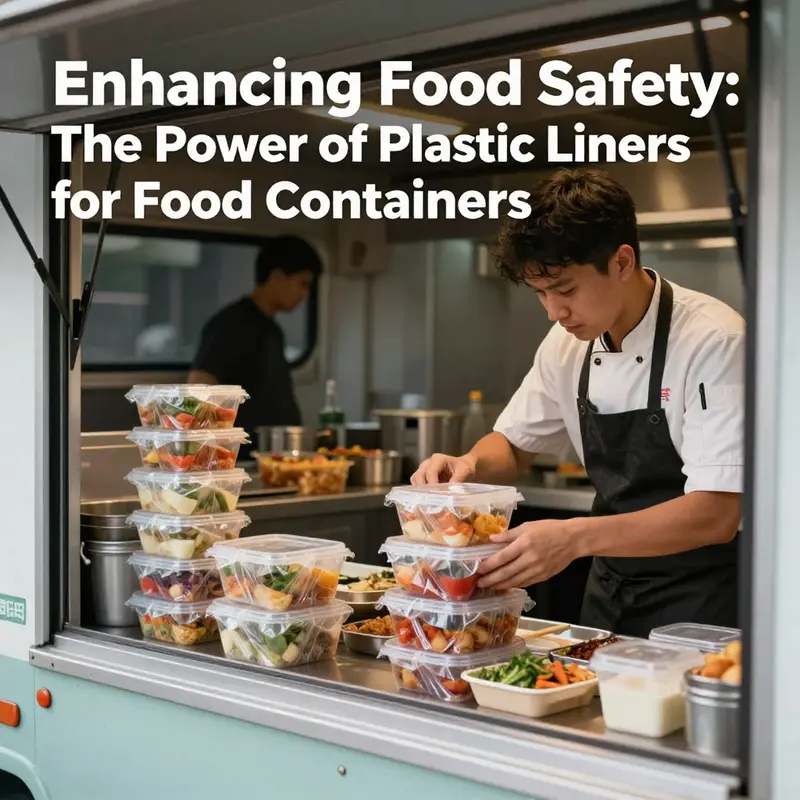
Plastic liners for food containers function as an understated middleware that quietly enables cleanliness, consistency, and speed across diverse food-service settings. They are not flashy, but they are central to how modern kitchens, delis, and catering operations maintain product quality from the moment ingredients are portioned to the final moment of service. A liner’s purpose begins with hygiene: a fresh, clean surface becomes the barrier between the food and the container’s interior, reducing risks of contamination and residue transfer. This is particularly important for acidic or oil-rich foods that can interact with certain plastics or cause staining, as well as for highly pigmented sauces that can impart color and flavor onto container materials. The liner also provides a predictable, uniform surface that standardizes workflow in environments where speed and repeatability matter as much as food safety. In practice, when a liner is correctly matched to the container, the user gains a surface that is easier to wipe, easier to inspect, and easier to dispose of after use, which translates into a tangible reduction in cleaning time and water consumption. The ongoing relationship between liner design and operational efficiency is a quiet but essential thread in the broader story of modern food packaging and service.
Material choice underpins much of this value proposition. The most common liners are made from food-grade plastics such as polyethylene (PE) or polypropylene (PP). These polymers offer a balance of safety, flexibility, and barrier properties that suit a wide range of foods and temperatures. In many cases, liners are formulated to be BPA-free, addressing consumer demand and regulatory expectations for avoiding substances that could migrate into food. The emphasis on safety is not merely about avoiding a single chemical; it encompasses the broader concern of migration—how tiny amounts of additives, plasticizers, or residues might move from the liner into the food under certain conditions. This is why food-grade certification, clear material specifications, and rigorous testing are non-negotiable in the supply chain. The industry often prioritizes HDPE, LDPE, or linear low-density polyethylene (LLDPE) grades because they combine toughness with low creep, good puncture resistance, and reliable sealing characteristics. In some cases, PP is used for its higher heat resistance and stiffness, providing a stable barrier in containers that see temperature fluctuations in refrigeration, freezing, or hot-well service. The result is a family of liners that can stretch across diverse applications—from brining tanks in large-scale production to the precise, delicate wrapping needed for ready-to-eat meals.
In practical terms, durability and thickness matter. A typical 4 mil liner delivers extra strength that helps resist punctures and leaks when heavy liquids or viscous sauces are involved. This is not purely a matter of preventing leaks during handling; it is about preserving the container’s integrity and the bag’s integrity across the life of use, which can include subzero temperatures, rapid temperature changes, or tumble-drying in some retail environments. The thicker film reduces the risk of tear-through when utensils or scoops are used, and it supports reliable performance during repeated opening and closing of containers in fast-service settings. Such robustness matters not only for marginal spills but also for long runs where consistent sanitation, minimal cross-contamination, and predictable waste generation are central to the operation’s hygiene protocol. It is a practical engineering compromise between flexibility, barrier performance, and cost, acknowledging that every extra mil adds cost while boosting performance in high-demand contexts.
The 5-gallon bucket liner example, while specific, illuminates broader patterns in how liners support scale and efficiency. In large kitchens, 5-gallon containers are employed for marinating, brining, bulk storage, and bulk preparation. Liners designed for these vessels must be large enough to secure a tight fit without wrinkling into the food, and sturdy enough to withstand immersion in liquids over extended periods. They also enable batch-based workflows where marination or brining occurs before portioning for service. The liner acts as a disposable interior that can be discarded after use, allowing operators to bypass time-consuming cleaning between batches. This is where labor savings and water conservation converge: by eliminating the need to scrub the interior of heavy containers between cycles, staff can redirect time toward other critical tasks, while water use for cleaning drops in step with that efficiency. In environments that juggle countless orders, such marginal gains compound, shaping service speed and consistency. The role of liners in these settings becomes a practical case study in how modular components can streamline processes without sacrificing safety.
To understand the layering effect of liners, consider how a container’s lid interacts with the liner. In the context of lids featuring air or vent holes, a liner can help preserve freshness and reduce leakage by providing an initial barrier plus a secondary seal when the lid threads or clamps down securely. The combination of a tight seal, a clean inner surface, and a robust liner reduces the chance of contaminant ingress and minimizes the risk of spillage during transport. This is especially relevant for deli packaging or meal-prep scenarios where a product must travel through multiple handling stages—from kitchen to service counter to customer—without degrade in quality. Similarly, clamshell containers, commonly used for sandwiches and salads, benefit from a liner that keeps the contents uncontaminated during brief transit and protects the container’s interior from staining and residue. A well-chosen liner must be compatible with the container’s design, including its sealing mechanism, to ensure a uniform barrier that does not complicate opening or compromise the seal.
Yet the act of choosing a liner is not a one-size-fits-all decision. The tendency to prefer perfectly clear, glossy films can collide with real-world needs such as color resistance and staining. Some flat plastic containers, particularly those used for vibrant, tomato-based sauces or deeply pigmented dressings, can still exhibit staining or color transfer even with a liner, if the material is not selected with the right additives or stabilization agents. The material scientist’s job is to tune pigments, stabilizers, and barrier properties so that the liner performs across the expected spectrum of foods and use cases. In environments that handle a spectrum of items on a single menu, the liner’s versatility—its ability to accommodate a range of pH levels, oil contents, and temperatures—becomes a key performance criterion. This is not an abstract concern; it has direct implications for cleanliness and for the ease with which staff can inspect the container’s interior between uses. A liner that resists staining helps maintain a perception of cleanliness, even in a high-paced setting where color-fast sauces are common.
From a sourcing perspective, the objective is to find a balance among safety, performance, and cost. The literature and supplier guidance commonly emphasize food-grade certification and BPA-free composition as baseline assurances. Beyond that, the industry tracks barrier properties such as moisture and oxygen transmission rates, which influence how well a liner protects perishable contents and how long a product remains fresh. While oxygen transmission is more critical for packaging that encloses whole products for distribution, moisture barriers can be decisive in marination or brining where liquids are in constant contact with the liner. The durability rating—such as a 4 mil equivalent depiction—offers a tangible gauge of puncture resistance during handling. However, real-world performance also hinges on how the liner interacts with the container’s geometry, whether a ribbed interior or a smooth surface might alter fit, and how well the liner can be dispensed from its roll or pouch in busy kitchens. The practical takeaway is that successful liner selection blends material science with kitchen workflow design, ensuring the chosen film aligns with the container’s geometry, the expected food matrix, and the operational tempo.
In terms of workflow, liners are a practical solution to common challenges in food service: cross-contamination, inconsistent sanitation, and variable cleaning capabilities across sites. By providing a fresh surface for every use, liners reduce the risk that residues or micro-contaminants from previous uses linger on contact surfaces. The hygiene benefits extend to storage; liners can seal and isolate the contents, reducing exposure to air and potential contaminants when containers are stacked or moved. When combined with a well-designed lid, the liner contributes to a predictable sealing package that protects flavor, texture, and appearance. The aesthetic and sensory dimensions of this are important: customers expect that the product they receive will taste as intended and look appetizing, and the liner helps ensure that the container’s interior remains neutral—free from lingering odors or color from prior items. In catering operations that rotate menus, liners simplify product changeovers because staff can simply remove the liner from a declining batch and insert a fresh one when the next product is loaded, avoiding the need for aggressive cleaning that could risk damage to delicate container interiors.
Another dimension is the lifecycle of the liner. In an era focused on sustainability, operators weigh the benefits of single-use liners against the environmental footprint of disposable products. The landscape includes discussions of compostable or recyclable liner options, as well as strategies to minimize waste through optimized sizing, roll packaging efficiency, and better waste segmentation at the point of disposal. The tradeoffs between durability, barrier performance, and end-of-life options must be examined in the context of local recycling streams and municipal guidelines. In hospitality and institutional kitchens, these decisions often tie into broader sustainability targets, including water conservation, energy use, and waste diversion programs. The goal is not merely to meet regulatory requirements but to align packaging choices with broader environmental and social commitments while maintaining the level of hygiene and operational efficiency that customers expect.
In practice, the integration of plastic liners into food containers also reflects a broader design philosophy: standardization across container types and sizes can unlock economies of scale. When liners are designed with versatile fit profiles, they can satisfy multiple container families with a single solution, simplifying procurement and inventory management. This standardization supports faster changeovers in busy settings and reduces the risk of mismatches between liner and container that could compromise performance. For operators who run multi-site programs, consistent liner performance across locations helps maintain uniform sanitation protocols and product quality, reinforcing brand integrity and customer trust. The liner, then, is not just a passive barrier; it becomes a strategic component of a standardized, efficient, and safe food service system.
To connect this discussion to practical procurement and usage, consider the potential for integrated packaging ecosystems. A liner that pairs well with a given container type can enable a full lifecycle workflow: a clean interior supports quick filling, reduces contamination risk during handling, and simplifies disposal after service. In some scenarios, operators might opt for a combination of liner materials to optimize for different menu items—one film with higher oil resistance for marinades, another with superior color stability for bright sauces. The decision framework for these choices balances the expected food matrix, the container’s design, the anticipated service cycle, and the environmental and regulatory landscape that governs the operation. In every case, the liner’s performance hinges on thoughtful material selection, precise fabrication tolerances, and careful alignment with container geometry and handling procedures.
For readers seeking reliable sourcing and technical specifications on food-safe liners, including material grades and performance metrics, the conversation points you toward standardized guidance and regulatory baselines. While technical details will vary by supplier and application, the core principles remain consistent: the liner must safeguard food, resist degradation in contact with various foods and liquids, and support clean, efficient workflows from prep through service. The emphasis on safety, durability, and compatibility with container designs forms the backbone of a practical, economy-wide approach to liner selection in food service settings. As with any component in a complex system, success lies in the careful alignment of materials science with real-world use and continuous attention to food safety standards and best practices.
For readers exploring how these liners fit into a broader packaging and service strategy, a quick reference point comes from the wider standards ecosystem that governs food safety and packaging integrity. This resource provides concise, action-oriented standards that help translate laboratory-backed properties into day-to-day decisions in kitchens, cafeterias, and catering operations. By grounding liner choices in certified, tested specifications, operators gain confidence that their packaging choices support both safety and operational performance, even as menus evolve and service demands shift. The interplay between liner technology and container design demonstrates how thoughtful packaging choices can elevate hygiene, speed, and consistency across the entire food-service workflow.
External resource: https://www.foodsafety.gov/food-safety-modernization-act/fsma-standards
Within this chain of considerations, it is valuable to acknowledge how internal linking can support readers who want to explore related topics on a single site. For instance, the disposable lunch box category offers a window into how packaging choices are coordinated across container types, sizes, and service contexts. The internal resource provides a practical touchstone for readers seeking a broader sense of how disposable components fit into a cohesive packaging system. Explore the category here: disposable lunch boxes. This link points readers toward a practical collection that mirrors the same design principles discussed here—compatibility, sanitation, and efficiency—while illustrating how liners complement other disposable components in everyday use. Keeping the focus on core safety and performance, this broader view helps situate liners within the daily realities of kitchen practice, where packaging choices ripple through prep, service, and cleanup.
In sum, plastic liners for food containers are a foundational technology that supports hygiene, efficiency, and consistency across food-service operations. They enable a clean start with every use, protect food from container-related interactions, and streamline workflows by reducing cleaning burdens and cross-contamination risks. Their performance is a function of material science, container design, and the operational tempo of a given setting. When selected with care, liners contribute not only to the safety and quality of the food served but also to the sustainability and economic viability of the service model. The story of liners is thus not merely about a plastic film; it is about the careful orchestration of materials, processes, and practices that keep food safe, fresh, and ready for service in a world where speed, reliability, and consumer trust matter as much as flavor.
Final thoughts
The importance of implementing plastic liners in food containers cannot be understated. From elevating hygiene standards to ensuring the integrity of your food products, these liners serve multiple critical functions that align with best practices in food service operations. Investing in quality plastic liners not only means safer products but can also enhance customer satisfaction and business efficiency. Empower your food service offerings today by integrating reliable plastic liners into your processes.