
Introduction
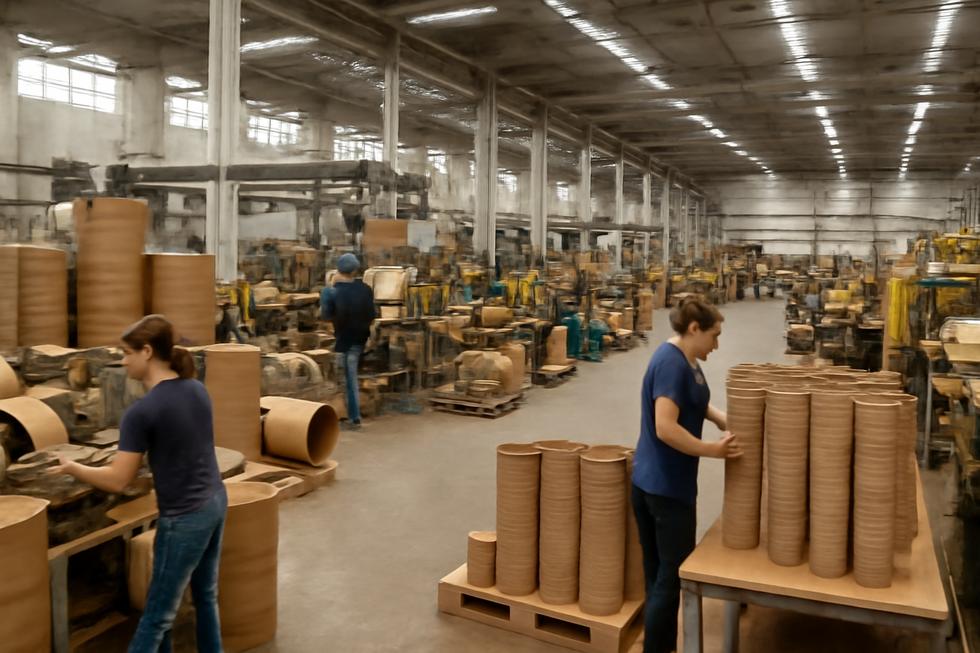
The global demand for eco-friendly packaging has led to a surge in the production of disposable paper buckets, essential for various food applications like popcorn and fried chicken. As business owners seek reliable suppliers, understanding the intricate workings of paper bucket factories is crucial. This article delves into the production processes involved in creating these containers, examines market dynamics and economic impacts, investigates geopolitical factors that influence operations, and highlights sustainability considerations in manufacturing. Each chapter builds a comprehensive picture of how these factories operate and their role in contemporary business.
Tables of Contents
Chapter 1: Innovative Techniques in the Crafting of Paper Buckets
- Design and Protective Coatings: Ensuring Quality and Performance in Paper Bucket Production
- Transformative Techniques in Printing and Die-Cutting for Paper Bucket Manufacturing
- Upholding Standards: A Deep Dive into Quality Control and Compliance in Paper Bucket Manufacturing
Chapter 1: Innovative Techniques in the Crafting of Paper Buckets
1. Design and Protective Coatings: Ensuring Quality and Performance in Paper Bucket Production
The production of paper buckets, essential for a broad range of food services, requires a meticulous integration of design principles and sophisticated coating techniques. Manufacturers must navigate a landscape where demands for sustainability, performance, cost-efficiency, and aesthetic appeal coexist. The effectiveness of these elements directly influences the bucket’s ability to withstand the rigors of food service while ensuring product integrity and consumer satisfaction.
At the core of the design process lies a careful selection of materials: either molded pulp or laminated paperboard. Molded pulp buckets, often favored for single-use applications, capitalize on eco-friendliness. They are created through a wet-formed process, which utilizes a slurry of paper pulp. This slurry is molded via vacuum or pressure techniques, requiring drying and often a protective coating to enhance moisture resistance. On the other hand, laminated or folded paperboard buckets, which consist of durable materials, often designed for reusability, involve more complex manufacturing steps. These buckets leverage die-cutting, crease-scoring, and gluing, usually performed in automated systems to improve efficiency.
The design of a paper bucket, whether for molded pulp or laminated variants, incorporates several critical structural and manufacturability principles. Wall geometry and bead or rim design play pivotal roles in providing strength. Features such as rolled rims or flange reinforcements not only bolster stacking capabilities but also facilitate the fitting of lids, thereby preventing delamination during use. Additionally, taper or draft angles are vital; they are designed with care to allow seamless demolding from production equipment, ensuring that each bucket maintains its intended shape. Crafting thicker walls at high-stress points enhances compressive and impact resistance, optimizing the overall durability of the final product while minimizing material waste.
When it comes to coating techniques, the primary concern is ensuring adequate protection against moisture and grease. There are various methods employed based on the intended usage of the bucket. Water-based barrier coatings, such as acrylics or polyvinyl alcohol (PVA), serve as effective moisture shields for buckets requiring limited water resistance. These options are preferable in applications compliant with food contact regulations. Conversely, polyethylene (PE) extrusion or coating offers superior durability and resistance for wet contents, commonly employed in both food service and other sectors like paint packaging. These PE-laminated boards provide both food-safe surfaces and heat-seal capabilities, enhancing usability.
For those seeking a more sophisticated barrier, aluminum foil lamination serves as an exceptional option, creating an oxygen or light barrier that is particularly advantageous for premium product packing. On the other end of the spectrum, low-cost solutions like wax or paraffin coatings may enhance moisture resistance in molded pulp, catering to applications like bakery items. However, care must be taken; such coatings can adversely affect compostability, a factor that should not be overlooked in today’s environmentally conscious markets.
Moreover, contemporary production doesn’t shy away from innovative coating alternatives. The increasing inclination towards sustainable solutions has led to the exploration of bio-based coatings that maintain compatibility with composting standards. While performance and cost-effectiveness still need thorough assessment, this industry trend signifies a growing commitment to reducing plastic dependency and enhancing landfill diversion.
Printing and decorative finishes also play a crucial role in the overall aesthetic of paper buckets. Methods such as flexographic printing apply high-quality graphics on paperboard surfaces, facilitating consumer engagement through appealing visuals. Additionally, the ability to layer varnishes or coatings adds an extra layer of protection while enhancing the visual appeal through gloss or matte finishes.
In conclusion, the techniques and processes involved in the design and coating of paper buckets are pivotal for ensuring quality, sustainability, and performance. As manufacturers like Joyfine in Xiamen lead the charge with innovative designs and coatings, the industry looks toward a future that balances efficiency with environmental responsibility. The integration of these practices not only meets current market demands but sets the stage for an evolution in disposable food packaging technology. For a closer look at various food containers and their eco-friendly options, check out customized food packaging solutions.
2. Transformative Techniques in Printing and Die-Cutting for Paper Bucket Manufacturing
In the realm of paper bucket production, printing and die-cutting are pivotal stages that not only affect aesthetic appeal but also ensure functionality and compliance with food safety standards. These processes bridge creative design and technical execution, leading to innovative solutions for an industry focused on mass production while maintaining quality.
At the outset of production, the prepress and platemaking stages play a crucial role in setting the groundwork. This phase involves converting high-quality artwork into printable layouts that correspond with designed dielines and creases. By utilizing technologies such as flexographic plates or gravure cylinders, these preparations cater to both short and long production runs. For instance, while flexo printing remains the most prevalent method for paper food containers—favoring aqueous inks that dry quickly and can be adjusted with ease—gravure printing steps in for projects requiring exceptional image quality at scale, despite its higher setup costs.
Once the prepress setup is complete, the raw paperboard enters the printing process, where the choice of technology is dictated by the project’s scope. Flexographic printing, characterized by its efficiency and adaptability, is favored for medium to large runs. This method allows manufacturers to apply vibrant colors and patterns while facilitating quick transitions between jobs. In contrast, gravure becomes indispensable for longer production cycles where print consistency and detail are critical, optimizing press speed and image reproduction.
As digital technology has surged, digital printing serves as a complementary method, especially ideal for short runs or personalized orders, such as limited edition buckets with variable data contexts like promotional QR codes. Although this method alleviates the costs and time associated with plate creation, the need for food-safe inks and coatings underscores the importance of careful material selection and adherence to safety regulations in all forms of printing.
Post-printing, the application of inks and drying techniques is essential to ensure a product’s durability and safety. Inks must be certified for food contact to mitigate any risks associated with food products stored in these containers. Various drying systems, including ultraviolet (UV) and infrared (IR) curing, are employed, with UV curing gaining popularity due to its accelerated cycle times and higher gloss finish, which not only enhances visual appeal but also boosts resistance to scratches and impacts during later forming processes.
After printing, the coating and finishing phase introduces additional layers of protection and functionality. Here, coatings such as aqueous varnish and film lamination are utilized to create barriers against moisture and grease, crucial for maintaining the integrity of wet or oily food products. This phase focuses on sustainability as well, with a growing preference for mono-material coatings that facilitate recycling while ensuring product safety.
Once the printed and coated sheets are ready, the production line transitions to the die-cutting and creasing stage. Here, methods vary based on production volume and complexity. Flatbed die cutting is excellent for shorter runs and intricate designs, while rotary die cutting provides the speed necessary for vast quantities, seamlessly integrating with roll-fed printing setups. For prototyping unique shapes or designs, laser cutting offers versatility despite being slower for high-volume orders.
Subsequently, the forming and gluing of the bucket takes place. Blanks are assembled into the final product using folder-gluers or thermoforming stations, utilizing adhesives that are also food-safe to maintain compliance with food packaging regulations. Throughout this entire process, quality control and inline inspection are vital, ensuring that print registration, ink adhesion, and the structural integrity of seams meet stringent standards. Modern production facilities leverage technology to maintain these checks continuously, promoting efficiency and reducing waste.
With a deepened understanding of each stage, manufacturers can leverage advanced printing and die-cutting technologies to enhance production flexibility while meeting the increasing consumer demand for customized, eco-friendly food packaging solutions. For an industry evolving at a rapid pace, these processes remain essential in paving the way for effective, compliant, and sustainable manufacturing in the production of paper buckets. For more insights into sustainable packaging innovations, explore the variety of products available here.
3. Upholding Standards: A Deep Dive into Quality Control and Compliance in Paper Bucket Manufacturing
In the world of paper bucket manufacturing, quality control and compliance are not merely regulatory formalities; they are foundational pillars that ensure each product meets the high expectations of safety and environmental stewardship. With a rising demand for sustainable food packaging solutions, manufacturers must navigate an intricate web of standards and certifications that guarantee the safety and quality of paper buckets meant for food use.
Certifications play a pivotal role in affirming a factory’s commitment to quality and environmentally friendly practices. Leading factories, such as Joyfine in Xiamen, China, adhere rigorously to a variety of international standards. These include ISO 9001, which validates effective quality management systems, ensuring that products consistently meet desired quality criteria. Furthermore, certifications like FSC and PEFC signify responsible sourcing of raw paper materials, while EN13432 and BPI confirm that products can break down biologically without leaving harmful residues, addressing concerns about waste. Special attention is paid to certifications such as FDA approval in the U.S. or CE marking in Europe, which certify that materials used do not leach hazardous substances into food.
The connection between certifications and production processes lies in the meticulous integration of best practices throughout all stages of manufacturing. The lifecycle of a paper bucket begins with pulp molding, where refined pulp is shaped using molds to create bucket forms. The following drying process is crucial; it eliminates moisture that could compromise the structural integrity and strength of the final product. Such attention to drying not only ensures product durability but also enhances resistance to leaks, vital for food packaging. Moreover, many factories incorporate recycled fibers into their pulp, reducing environmental impact while promoting sustainability.
Quality control measures are embedded into the manufacturing workflow to safeguard product integrity and compliance with standards. For instance, factories perform first article inspections to ensure that each new batch meets predefined specifications. Dimensional accuracy is maintained through sophisticated dimensional checks using tools like Coordinate Measuring Machines (CMMs) and optical vision systems, which help prevent manufacturing errors.
Material verification is another significant aspect, where advanced spectrometers are used to analyze raw materials before they enter production. This step is indispensable to confirm that the material meets quality and safety benchmarks. Subsequently, performance testing is conducted where buckets are subjected to various stress tests, simulating real-world conditions to ascertain their durability under heat, weight, and transport stress. These rigorous measures ensure that the final products not only meet safety regulations but also perform reliably during use.
Even beyond initial production quality checks, ongoing testing and compliance protocols exist to uphold standards continuously. Engaging with third-party validation allows external experts to assess manufacturing practices against established Key Performance Indicators (KPIs). Historical data monitoring aids in reviewing operational efficiency, ensuring that any quality deviations can be quickly remedied. Regular supplier audits further strengthen the supply chain by assessing vendor compliance with required quality standards and certifications.
In today’s environmentally conscious market, there is an increasing focus on compostability and safety. Manufacturers aim to comply with relevant standards prioritizing compostability, obtaining accolades such as the OK Compost certification. This aspect serves to reassure consumers about the environmental stewardship embodied in production practices. Lastly, factories are continually innovating in their designs, creating stackable and space-efficient structures which facilitate easier transportation and reduced material usage across the packaging system.
The interlinkage between certifications, rigorous production processes, and industry compliance underscores a holistic approach to quality that transcends basic manufacturing. This robust framework guarantees that every paper bucket produced not only meets the highest standards of food safety but also champions ecological responsibility—ultimately bridging the gap between consumer demand and sustainable practices in the food packaging industry. For further insights into the innovative practices within food packaging, refer to detailed analyses available on various platforms that specialize in sustainable packaging solutions.
Final thoughts
The exploration of paper bucket factories reveals the intricate balance between efficient production, market responsiveness, and the pressing need for sustainable practices. As demand for eco-friendly packaging continues to rise, factories must innovate and adhere to environmental standards, impacting both societal norms and business operations positively. Business owners should recognize the importance of partnering with factories committed to responsible production, ensuring a sustainable future for their businesses and the environment alike.
Choose our reliable disposable tableware and packaging solutions for your business. We offer quality products that meet safety standards with fast delivery. Contact our team now for a tailored quote!
About us
We specialize in manufacturing and supplying disposable tableware, packaging paper, and boxes. With years of experience, we prioritize safety, durability, and eco-friendly practices. Our goal is to provide businesses with trusted, cost-effective solutions backed by responsive customer support.