
Introduction
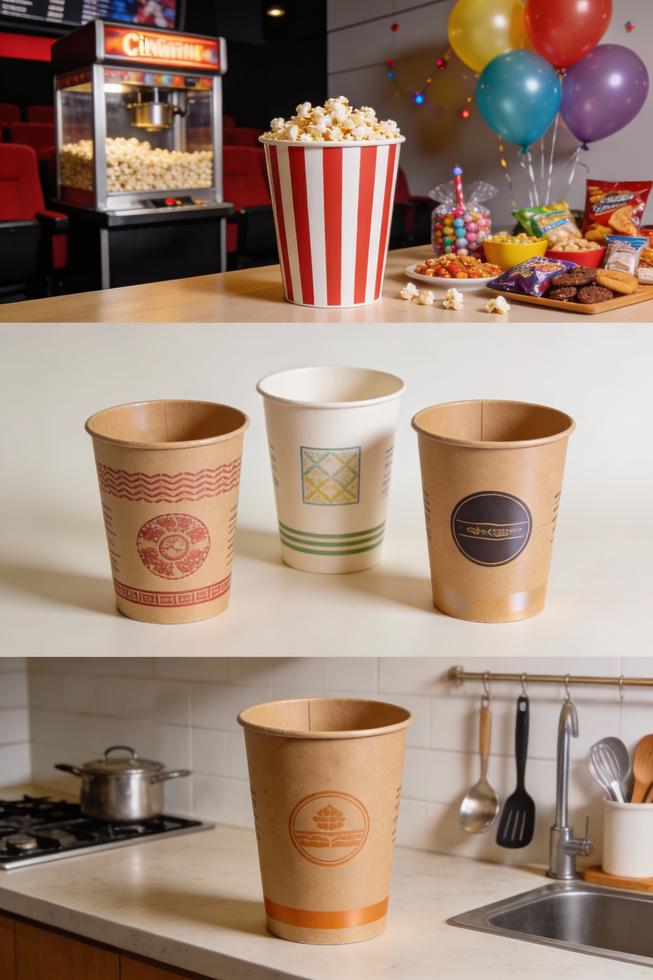
Disposable paper buckets have evolved beyond simple serving vessels into strategic packaging assets for cinemas, caterers, and event organizers. Constructed from kraft paper with a polyethylene coating, single-wall design, and printer-ready surfaces, these containers balance durability, heat resistance, and branding with cost and sustainability concerns. For business owners, the choice of bucket affects guest experience, operating margins, and environmental footprint. This piece unpacks three interconnected perspectives: the technology, materials, and design that determine performance; the economic and market dynamics that influence procurement and pricing; and the societal, environmental, and global factors that shape end-of-life options and supply chains. Together, they form a holistic framework to help executives select solutions that meet safety standards, support brand promises, and align with evolving regulations and consumer expectations.
Tables of Contents
Chapter 1: Chapter 1: Disposable Paper Buckets – Technology, Materials, and Design
- From Barriers to Basins: Material Science, Coatings, and Forming in Disposable Paper Buckets
- From Barrier to Benefit: The Economic, Geopolitical, and Social Footprint of Disposable Paper Buckets
Chapter 1: Chapter 1: Disposable Paper Buckets – Technology, Materials, and Design
1. From Barriers to Basins: Material Science, Coatings, and Forming in Disposable Paper Buckets
Disposable paper buckets sit at the intersection of everyday practicality and high‑stakes material science. They must be light enough to handle handily, sturdy enough to carry hot or greasy contents, and capable of resisting leaks long enough for a customer to reach the car or cinema. Yet they must also be compatible with recycling or composting streams, avoid undue migration of substances into food, and fit within a complex web of regional regulations and environmental goals. A closer look at how they achieve this reveals a layered story of material choice, barrier chemistry, and forming prowess that underpins every spill‑free pour and reliable grip.
At their core, disposable paper buckets are built from paperboard engineered to balance strength, stiffness, and printability. The basis weight and caliper—measured in grams per square meter and microns, respectively—directly influence how a blank sheet behaves when folded into a three‑dimensional container. Thicker boards provide rigidity and a confident standing profile, but they also raise raw material costs and can impact the ability to form tight radii and smooth seams on high‑speed equipment. The surface finish matters as well; a smooth, well‑bonding surface supports clean adhesion of barrier layers and crisp graphic printing, which in turn affects consumer perception and brand recognition.
Barrier performance is the heart of functional performance. Most traditional buckets rely on some kind of grease and moisture barrier to resist oil migration from popcorn, sauces, or fried foods. Wax coatings were among the earliest approaches, offering a simple yet effective shield against oil penetration. Today, many buckets use polymeric laminates or film‑based barriers, often in multilayer structures. Polyethylene laminates or heat‑sealed polymer films can dramatically improve grease resistance and heat tolerance, enabling hot fills and even microwavable service in some designs. Yet multilayer constructs also complicate recycling, because separating layers from fibers requires additional processing. This has driven ongoing exploration of fluorine‑free, lower‑migration barrier chemistries and the development of bio‑based or compostable alternatives, such as PLA‑based layers or PVOH barriers, that aim to preserve performance while easing end‑of‑life constraints.
Coatings and adhesion science play a crucial role in the durability of the finished container. The bond between the paperboard and the barrier layer must withstand handling, stacking, and the rough treatment of transport. Interfacial treatments, primers, corona or plasma discharge, and carefully chosen surface finishes all influence how well a coating sticks and how uniformly it dries. In practice, a bucket’s barrier layer has to maintain its integrity under heat, moisture, and repeated contact with wet or oily contents. Any fracture or delamination can create a weak seam or a leak path that defeats the purpose of the product. The choice of coating also interacts with printing performance. A surface optimized for ink adhesion may slightly alter barrier characteristics, so designers must balance aesthetics with performance, especially for print‑heavy buckets that rely on strong branding to compete in crowded food environments.
The forming and sealing processes are where material strategy becomes tangible. Buckets are typically formed from die‑cut blanks or cup‑forming lines that create a double‑wall or single‑wall configuration. Structural features such as reinforced rims, ribbed walls, or reinforced bases can dramatically increase stacking stability and load bearing. The base geometry often determines spill resistance and pour control; a well‑designed base reduces tipping risk when the bucket is set down or when contents are being poured. Seals and seams must endure thermal cycling and handling, especially for hot contents. Heat‑sealing laminates or starch‑based adhesives are widely used; however, their compatibility with recycling or composting streams varies. This is why ongoing research emphasizes adhesives and laminates that maintain seal integrity while preserving end‑of‑life options.
Design choices extend beyond raw materials and forming logic. Ergonomics—the feel of the handle, the weight distribution when carried, and the rim’s strength during pouring—shapes user experience as much as capillary action and grease resistance do. Handles must be comfortable, securely attached, and able to bear the intended load without cutting into the user’s grip after a long walk from concession to seat or table. The rim geometry and lip design influence how easily a consumer can pour hot contents without splashing, while still enabling a clean set down and stable stacking for transport and storage. Aesthetics cannot be neglected either; the surface must support vibrant color reproduction and durable prints that resist scuffing during transit. All of these factors converge to create a product that performs reliably in an unpredictable real‑world setting while presenting an appealing brand message.
End‑of‑life considerations increasingly guide the material and design decisions. Recyclability, compostability, and fragmentation risk are central to evaluating a bucket’s environmental footprint. Multilayer structures that prioritize barrier performance can impose recycling challenges because separating components is energy intensive and not universally available. In response, some designers pursue monomaterial approaches or formulate coatings that stay compatible with existing recycling streams. Others pursue industrial compostability, aiming for disintegration under controlled composting conditions while ensuring safety and regulatory compliance for food contact. The regulatory landscape itself adds another layer of complexity. Materials intended for direct contact with foods must meet food‑contact safety standards and migration limits set by authorities in different regions. Designers must factor in these safety considerations when selecting barrier systems and adhesives, ensuring the final product does not compromise consumer health or environmental goals.
Innovation in this field is not limited to chemistry alone. Process innovations are reshaping how coatings are applied, how forming is conducted, and how customization is achieved at scale. Lean manufacturing principles reduce water and energy consumption in coating and forming stages, while digital printing enables brand customization without compromising barrier integrity or print quality. The pursuit of sustainable coatings continues to accelerate, with research into biodegradable or recyclable barrier systems that minimize fluorinated components while preserving grease resistance. In practice, this means the industry can push toward more sustainable bucket designs that still meet the exacting expectations of hot foods, greasy snacks, and cold beverages—without creating a bottleneck at the end of life.
A practical thread running through these developments is the balancing act among performance, cost, and circularity. Barrier performance must be robust enough to protect contents and maintain user safety, yet coatings and laminates should not preclude recyclability or industrial composting where those end‑of‑life options exist. Achieving this balance requires careful material selection, an intimate understanding of manufacturing capabilities, and a clear view of regional waste management infrastructures. When done well, a disposable paper bucket becomes more than a simple vessel; it becomes a carefully engineered interface that controls thermal performance, prevents leaks, communicates branding, and contributes to a more sustainable packaging ecosystem.
One example of how the market is responding to these converging needs is the emergence of eco‑friendly, biodegradable kraft takeaway packaging that seeks to combine favorable barrier properties with more straightforward end‑of‑life processing. Thoughtful design considers not only the barrier layer but also how the entire assembly can be optimized for recycling streams or composting facilities available to a given community. The result is a bucket that can function reliably in a busy concession line, while also aligning with broader sustainability aims that guide today’s packaging development. For those exploring these materials and configurations, one representative approach highlights how multi‑compartment kraft systems are evolving to deliver convenience with responsibility, offering a practical reference point for discussions about barrier chemistry, forming methods, and end‑of‑life trade‑offs. eco-friendly biodegradable kraft takeaway food boxes This direction illustrates how coating chemistries, substrate selection, and structural design converge to enable packaging solutions that meet hot‑fill demands, maintain integrity during service, and still leave room for responsible waste management.
Looking ahead, the subchapter of technological innovations and material science foundations in disposable paper buckets will continue to push toward designs that are lighter, stronger, and more recyclable or compostable. The challenge remains to pair cutting‑edge chemistry with manufacturing speed and cost constraints, all while navigating the patchwork of regional waste systems and regulatory requirements. Yet the trajectory is clear: papers and coatings that cooperate with recycling streams, forming processes that maximize material efficiency, and ergonomic, brand‑forward designs that enhance the consumer experience. In practice, this means that every bucket on the shelf is the product of deliberate choices about fiber source, barrier strategy, and structural geometry—choices that determine whether the bucket serves its purpose and then returns to a circular life, rather than becoming a stubborn waste stream. The ongoing dialogue among materials science, process engineering, and industrial design will shape how these containers evolve in the years to come, keeping the focus on safety, practicality, and sustainability as these products fill streets, venues, and kitchens around the world.
2. From Barrier to Benefit: The Economic, Geopolitical, and Social Footprint of Disposable Paper Buckets
Disposable paper buckets sit at the nexus of engineering craft and policy choices. They are not merely vessels for popcorn or fries; they are artifacts whose performance, cost, and end-of-life fate are shaped by a web of material science, manufacturing realities, and the wider social and political environment. To understand their trajectory, we must trace how substrate selection, barrier technologies, and structural design translate into practical outcomes in markets that prize reliability, safety, and sustainability, even as they grapple with waste-management realities and regulatory shifts.
Material decisions drive both performance and end-of-life options. The core substrate—paper pulp drawn from wood fiber or recycled content—determines baseline strength, tear resistance, and dimensional stability. However, the quest for grease and moisture resistance pushes developers toward barrier strategies that can complicate recyclability or compostability. Wax impregnation and thin polymer coatings have long offered robust moisture barriers and heat tolerance, enabling hot servings and greasy foods to be carried without leakage. Yet these same barriers can impede conventional paper recycling streams or hinder composting processes if the coating does not break down under industrial conditions. Multilayer laminates, combining paper with polymer films, epitomize the design compromise: they deliver strong barrier performance at the cost of more challenging end-of-life processing. In contexts where composting infrastructure is limited or recycling streams are fragmented, these trade-offs become pivotal for operators evaluating total lifecycle impact.
Design choices amplify or mitigate these material tensions. The bucket’s geometry—whether cylindrical, slightly tapered, or rooted in a stable, broad base—affects stacking efficiency, transport stability, and user ergonomics. Wall thickness must be calibrated to balance lightness with strength, particularly for hot contents, where heat transfer and burns risk become critical concerns. The handle system, often attached by staples or adhesives, and the lid design—whether snap-on, friction-fit, or heat-sealed—shape user experience and dispensing efficiency, while also influencing end-of-life separation. Aesthetics and branding matter too, yet printing on barrier-coated surfaces introduces limits; a glossy exterior or matte finish may interact with coatings in ways that affect recyclability or consumer perception. Taken together, these design elements determine leakage risk, temperature tolerance, and the ease with which consumers and staff can handle and dispose of used buckets.
Manufacturing realities underwrite the feasibility of these designs. Paper-making remains a high-volume, high-precision process, with Fourdrinier machines and refining steps setting the stage for final form. Coating and lamination streams—blade, curtain, or roll coating for barrier layers, followed by lamination for multi-material constructs—must be carefully controlled to achieve consistent barrier performance without sacrificing recyclability where possible. Deep-draw forming or rigidizing steps shape the bucket geometry, while handle attachments and lid closures require robust adhesion and sealing integrity. Quality control spans leakage testing, heat resistance trials, and end-of-life compatibility checks, all of which influence yield, waste, and unit costs. In practice, this means manufacturers must balance the economics of raw materials, coatings, and inks with energy, water use, and labor in facilities designed for continuous production. The result is a supply chain calibrated to produce large quantities, often with minimum orders in the tens of thousands, a reality that can constrain customization for niche markets but enables predictable pricing and rapid shelf turnover for mainstream applications.
From the economic lens, several drivers shape the financial calculus behind disposable paper buckets. Raw materials—paper pulp (virgin versus recycled), barrier coatings, adhesives, and inks—are subject to price volatility and regional availability. Energy costs, water usage, and equipment maintenance weigh on unit economics, particularly for plants operating near capacity. The logistics footprint—weight, volume, and pallet efficiency—affects distribution costs and retail display strategies. End-of-life pathways introduce additional cost considerations or savings, depending on local waste-management capabilities; in regions with robust composting or advanced recycling, some barrier systems may be offset by lower disposal fees or incentives. The economic narrative is not purely transactional, though. Market dynamics—ranging from consumer demand for sustainable packaging to regulatory pressures on single-use materials—shape investment in new materials and process innovations. In practice, operators evaluate both the short-term margin benefits of durable barrier packaging and the longer-term risk profile associated with waste streams and policy changes.
Geopolitically, the supply chain for disposable paper buckets is sensitive to where pulp is sourced, where barrier materials are manufactured, and how trade policies shape cross-border flows. Wood pulp and paper industries concentrate in regions with abundant forest resources and established manufacturing ecosystems. Barrier coatings, laminates, and specialty inks traverse petrochemical and bio-based value chains, each with its own regional footprint, tariff landscape, and regulatory constraints. Tariffs and trade agreements influence material pricing and availability, while environmental regulations steer end-of-life options and labeling requirements. Extended Producer Responsibility (EPR) schemes, increasingly adopted around the world, push producers to internalize disposal costs and align product design with local waste-management capabilities. This geopolitical texture means that the same bucket design may perform differently in different markets, not only because of consumer preferences but because of how waste streams are organized and funded. Companies mindful of resilience may diversify material sources or invest in alternative barrier technologies that reduce dependence on any single supply chain corridor while preserving performance.
Societal considerations frame how these materials and designs are perceived and utilized. Consumers increasingly weigh the environmental narrative of packaging—whether a paper bucket truly lowers environmental impact relative to plastics, and whether end-of-life options exist and are accessible. Public health and food-safety standards demand strict conformance to food-contact regulations, migration limits, and clean manufacturing practices, reinforcing the need for traceability from raw material to disposal. In consumer settings such as cinemas, events, and food-service operations, reliability and speed of service often trump aesthetics; yet a bucket’s branding and perceived sustainability can influence brand loyalty and purchasing decisions. Policy environments also shape societal outcomes. Municipal support for composting, curbside recycling capabilities, and consumer education campaigns determine the real-world effectiveness of end-of-life efforts. When policy signals align with product design—favoring recyclability or compostability alongside barrier performance—the societal burden of packaging can be mitigated without sacrificing user experience.
The path forward for disposable paper buckets hinges on navigating trade-offs and seizing opportunities. A central challenge remains balancing barrier performance with end-of-life outcomes. Traditional wax and polymer coatings excel at moisture resistance and heat tolerance but can hinder recycling or composting streams. Innovations that deliver equivalent or superior performance with easily separable or compostable coatings represent a critical frontier. Increasing the use of recycled fibers and sustainably sourced pulp can reduce environmental footprints, while advances in bio-based or water-based barrier systems may improve recyclability. Design for disassembly—creating bucket components that can be readily separated at end of life—offers a practical route to minimize contamination of recycling streams. From a policy perspective, harmonizing standards for compostability and recyclability across regions can reduce confusion for designers and operators alike, enabling more consistent product declarations and labeling.
An integrated approach to economics and policy is essential. Procurement strategies should consider bulk quantity economics, but also align with waste-management capabilities and regulatory incentives. For operators, the choice between a high-performance, multilayer barrier and a simpler, more recyclable option depends on application temperature, grease load, and expected disposal pathway. For policymakers, incentives that reward packaging that fits local recycling or composting infrastructure can spur innovation while reducing systemic waste. In the end, the most successful designs will be those that deliver reliable service, clear consumer value, and a lifecycle story that resonates with a market increasingly attentive to circularity and climate impact. As a practical touchstone for industry players exploring supply options, many manufacturers and retailers now anchor decisions on something close to bulk kraft-based packaging options that balance performance, cost, and end-of-life feasibility. See related offerings at this supplier page for reference: bulk kraft-based packaging options.
Final thoughts
Across technology, economics, and sustainability, disposable paper buckets stand as practical, brand-friendly packaging solutions for modern food-service operations. Understanding material choices and coating performance helps guarantee leak resistance and temperature tolerance while enabling customization that reinforces brand identity. Economic awareness—minimum-order requirements, bulk pricing, and supplier diversity—directly affects margins and service levels. Finally, societal and environmental considerations, from recyclability and compostability to global supply chains and regulatory trends, define risk and opportunity for adoption. By balancing design quality, cost discipline, and responsible end-of-life options, business owners can deploy disposable paper buckets that satisfy guests, protect margins, and support corporate sustainability promises.
Choose our reliable disposable tableware and packaging solutions for your business. We offer quality products that meet safety standards, with fast delivery and flexible options. Partner with us today to elevate your service – contact our team now for a tailored quote!
About us
We specialize in manufacturing and supplying disposable tableware, packaging paper, and boxes. With years of experience, we prioritize safety, durability, and eco-friendly practices. Our goal is to provide businesses with trusted, cost-effective solutions backed by responsive customer support.