
Introduction
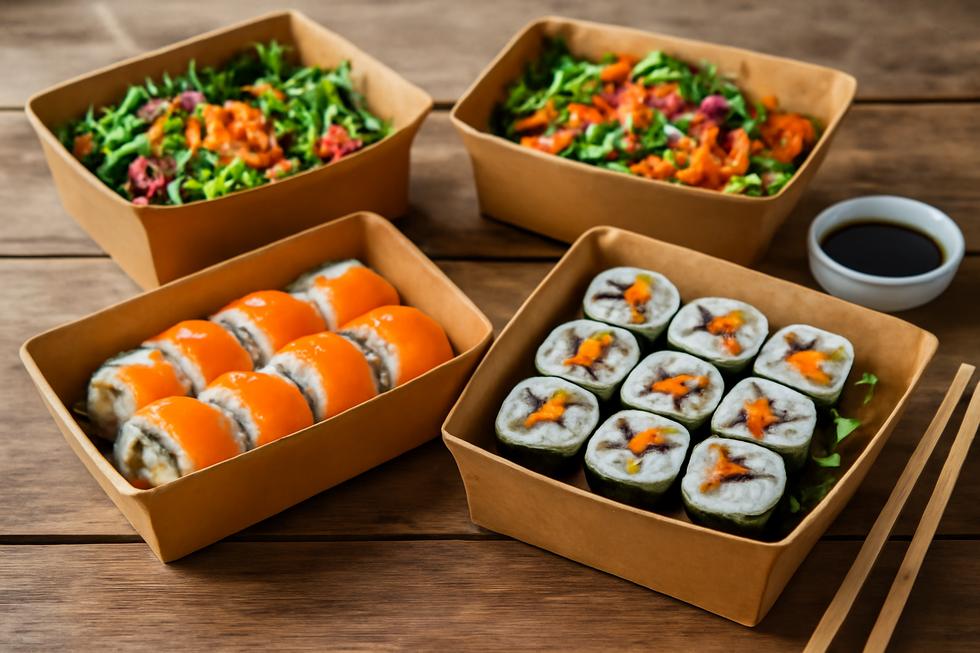
As the demand for sustainable practices continues to grow, business owners in the food industry are increasingly turning to disposable kraft paper sushi boxes. These innovative packaging solutions offer myriad benefits, not only in preserving food quality and freshness but also in underscoring a commitment to the environment. In the following chapters, we will delve into the sustainability and environmental impact of these boxes, explore their design and customization features, analyze current market trends and demand, and discuss their practical applications in the food industry. Understanding these aspects will help business owners make informed decisions that align with both consumer preferences and eco-conscious goals.
Tables of Contents
Chapter 1: Embracing Eco-Conscious Choices: The Prominence of Kraft Paper Sushi Boxes
- Examining the Green Revolution: Key Sustainability Benefits of Disposable Kraft Paper Sushi Boxes
- Understanding the Sustainability Landscape: Kraft Paper Sushi Boxes Versus Their Contenders
- Exploring the Environmental Nuances of Disposable Kraft Paper Sushi Boxes: Challenges and Solutions
Chapter 1: Embracing Eco-Conscious Choices: The Prominence of Kraft Paper Sushi Boxes
1. Examining the Green Revolution: Key Sustainability Benefits of Disposable Kraft Paper Sushi Boxes
The culinary landscape has begun to shift towards sustainability, with disposable kraft paper sushi boxes emerging as a frontline solution to combat the environmental challenges posed by traditional plastic packaging. These eco-friendly containers, crafted from robust kraft paper, offer an array of sustainability benefits that are crucial in promoting environmentally responsible practices within the food industry.
One of the foremost advantages of kraft paper sushi boxes is their biodegradable, compostable, and recyclable nature. Made primarily from renewable wood pulp, they serve to significantly mitigate the heavy reliance on non-renewable resources prevalent in plastic packaging. Unlike their plastic counterparts, these boxes break down naturally over time, whether in compost facilities or soil. This degradation process plays a critical role in diverting waste from our landfills and minimizing the long-term pollution often associated with petroleum derivatives, such as Styrofoam. Thus, opting for kraft paper not only champions a greener approach but also fosters a cleaner environment for future generations.
In addition to their eco-friendly decomposition, the source material employed in manufacturing kraft paper sushi boxes often aligns with ethical practices. Many manufacturers utilize Forest Stewardship Council (FSC)-certified and recycled fibers, thereby supporting sustainable forestry. This practice significantly lowers the carbon footprint associated with production compared to that of virgin plastic or foam materials. By ensuring that sourcing standards are met, businesses further enhance their ecological standing while contributing positively to forest conservation initiatives.
Aside from their sustainability credentials, kraft paper sushi boxes exhibit remarkable versatility. Their design allows for various linings, such as polylactic acid (PLA), which effectively manages grease and moisture without compromising the structural integrity of the packaging. This adaptability makes kraft paper boxes suitable not only for sushi but also for a plethora of other takeaway foods, including salads and fried items. The utility of these boxes extends their appeal, making them an optimal choice for restaurants and food vendors seeking reliable, eco-conscious packaging solutions.
Moreover, by incorporating kraft paper sushi boxes into their operations, businesses embark on a journey of eco-conscious branding that resonates strongly with today’s environmentally aware consumers. This alignment with sustainable practices not only enhances customer loyalty but also bolsters a brand’s image in a marketplace increasingly driven by consumer choices towards greener options. Customers are more likely to support restaurants and food providers who demonstrate a commitment to sustainability, leading to long-term benefits for both the business and the environment.
However, it is essential to acknowledge potential limitations of kraft paper sushi boxes. For instance, uncoated kraft paper might struggle to withstand extreme heat or significant moisture, posing challenges in specific food applications. Additionally, while their compostable qualities are advantageous, the realization of complete decomposition is highly contingent on the availability of proper composting infrastructure. In regions without comprehensive composting systems, some benefits of using kraft paper may go unexploited.
In conclusion, the sustainability benefits of disposable kraft paper sushi boxes firmly establish their role as a preferable alternative to traditional plastic packaging. With attributes such as biodegradability, responsible sourcing, versatile usage, and the potential for enhancing brand loyalty, these eco-friendly boxes contribute to advancing sustainable practices within the food service industry. As this green revolution gains momentum, embracing such innovative packaging solutions will be pivotal for ensuring ecological balance while meeting consumer demands. For those looking to explore customizable options for their food packaging, consider visiting here for various kraft paper solutions.
2. Understanding the Sustainability Landscape: Kraft Paper Sushi Boxes Versus Their Contenders
Disposable kraft paper sushi boxes stand out in the realm of food packaging for their perceived ecological benefits and enhanced sustainability profile. Made primarily from unbleached kraft paper, these boxes provide an attractive alternative to traditional petroleum-based plastics. The inherent advantages lie in their composition, which is not only biodegradable and compostable but also derived from renewable resources. Yet, the true sustainability of these boxes is often dictated by the materials and coatings used in their production as well as the infrastructure available for disposal.
When considering environmental impact, it is important to examine krat boxes against several alternatives such as bagasse, PLA (polylactic acid), and recyclable PET (polyethylene terephthalate). Each option brings a unique set of characteristics, benefits, and limitations. Kraft paper boxes are typically lighter and can reduce the carbon footprint associated with transport, particularly when made from recycled materials or certified sustainably harvested fiber. The lifecycle assessment of these materials often reveals that kraft paper tends to have a lower cradle-to-gate greenhouse gas emission when compared to plastics since they can be made from renewable wood or recycled fiber sources.
Nevertheless, the sustainability of kraft paper packaging can be significantly compromised by coatings. Many of these boxes feature a polyethylene lining to enhance moisture resistance and avoid leaks. Once coated, the boxes lose their recyclability, which might render them worse for the environment than uncoated alternatives. Conversely, kraft boxes lined with compostable materials like PLA can remain compostable, but only if proper industrial composting facilities are accessible. Without appropriate waste management systems, even biodegradable materials can be lost to landfill environments where they fail to decompose effectively, leading to increased methane emissions—an issue that further complicates their green profile.
Turning our attention to bagasse—a byproduct of sugarcane processing—these products are often completely biodegradable and well-suited for both hot and cold food applications. Their overall life-cycle impact can sometimes be comparable or even lower than that of kraft paper boxes, depending on how they are processed and transported. Beyond kraft paper and bagasse, polylactic acid (PLA) presents another viable alternative; nevertheless, PLA requires specific industrial composting conditions to decompose properly. Its lack of recyclability in traditional systems raises concerns about its end-of-life risks. On the other hand, PET containers offer high recyclability potential where local recycling streams are efficiently maintained, albeit they are still produced from fossil fuels.
In evaluating these options, local waste management infrastructure becomes a crucial factor. Areas lacking the facilities to separate and process compostable or recyclable materials can lead to a waste scenario where every discarded item contributes to landfill mass, undermining the sustainability claims of those products. To gain a clearer understanding, it is essential to analyze the broader sourcing practices and manufacturing processes involved in the production of these materials. Notably, employing recycled fibers or ensuring compliance with forestry management standards—such as FSC certification—further enhances the sustainability narrative.
To sum up, while kraft paper sushi boxes present a promising eco-friendly choice in theory, the reality of their environmental impact is multifaceted. Their efficiency as a sustainable option is contingent upon the specific configurations of the material used, the accessibility of waste management systems, and consumers’ understanding of responsible disposal practices. As industry stakeholders look toward greener solutions, comprehensively evaluating these factors becomes key to ensuring minimal environmental impact and maximizing the benefits of sustainable resources. For a better understanding of how to enhance packaging ends, you can explore customizable kraft paper options available here.
3. Exploring the Environmental Nuances of Disposable Kraft Paper Sushi Boxes: Challenges and Solutions
Disposable kraft paper sushi boxes have emerged as a favored choice among eco-conscious consumers and businesses, promoting sustainable practices in the food packaging sector. However, a detailed examination reveals both the strengths and weaknesses associated with their use, particularly regarding environmental impact. While they are generally lauded for their compostable and recyclable qualities, certain challenges must be addressed to fulfill their potential as a truly sustainable option.
One significant drawback is the necessity of coatings, such as polyethylene (PE) or polylactic acid (PLA), used to enhance the functionality of these boxes for foodservice. These coatings are essential for providing resistance to moisture and oils, which is particularly important for sushi and other food items that could compromise packaging integrity. Nonetheless, they significantly hinder the compostability of the boxes. When kraft paper boxes with non-compostable linings are disposed of, they can contaminate recycling processes and compromise the effectiveness of composting facilities, thwarting waste management efforts.
Additionally, the production of virgin kraft paper—originating from wood pulp—requires substantial amounts of water and energy, contributing to deforestation and thus increasing the overall carbon footprint associated with these products. This intensive resource consumption raises questions regarding the sustainability of relying solely on kraft paper for food packaging. Alternatively, materials like bagasse, or by-products from sugarcane processing, offer lower-resource options that can compete effectively in the market while minimizing environmental impact.
Furthermore, when disposed of improperly, these boxes pose landfill concerns. Decomposing food-soiled kraft paper can generate methane, a potent greenhouse gas, particularly in anaerobic landfill conditions. This is further exacerbated when consumers are unaware of appropriate disposal methods, leading to greater environmental consequences. Each of these issues illustrates a necessary duality in our approach to disposable kraft paper sushi boxes: that of functionality balanced against environmental impact.
To mitigate these drawbacks, a multi-faceted approach is essential. Firstly, businesses should opt for uncoated or compostable PLA-coated kraft boxes that are certified for industrial composting. Such certifications, like those from BPI or OK Compost, assure that the packaging can adequately break down in the appropriate facilities. Moreover, sourcing from companies that utilize FSC-certified kraft paper can lessen the impact from deforestation, promoting sustainable forest management practices.
Education plays a crucial role, too. Businesses can foster consumer awareness regarding the importance of proper disposal methods, encouraging patrons to utilize local composting initiatives or recycle their used boxes accordingly. By making not only the product but also its disposal accessible and understandable, companies contribute to a more environmentally conscious culture around takeaway food packaging.
Adopting alternative materials can also present opportunities for sustainability while providing strong packaging solutions. For example, using bagasse can offer enhanced grease resistance without the need for synthetic coatings. Embracing such innovations can help align disposable kraft paper boxes with broader sustainability goals while maintaining the functional advantages necessary in the foodservice industry. As companies navigate the challenges associated with these products, the balance between environmental responsibility and operational performance remains paramount, ultimately steering the industry towards a more sustainable future.
Final thoughts
Disposable kraft paper sushi boxes represent not just a packaging option, but a pathway to sustainability embraced by conscientious consumers. Their eco-friendly nature, coupled with customization potentials, makes them a favorable choice in a competitive market. As demonstrated throughout this article, business owners can achieve significant benefits by integrating these boxes into their service models. Ultimately, making the switch not only supports the planet but can also enhance brand reputation and attract environmentally-aware clientele.
Choose our reliable disposable tableware and packaging solutions for your business. We offer quality products that meet safety standards, with fast delivery and flexible options. Partner with us today to elevate your service – contact our team now for a tailored quote!
About us
We specialize in manufacturing and supplying disposable tableware, packaging paper, and boxes. With years of experience, we prioritize safety, durability, and eco-friendly practices. Our goal is to provide businesses with trusted, cost-effective solutions backed by responsive customer support.