
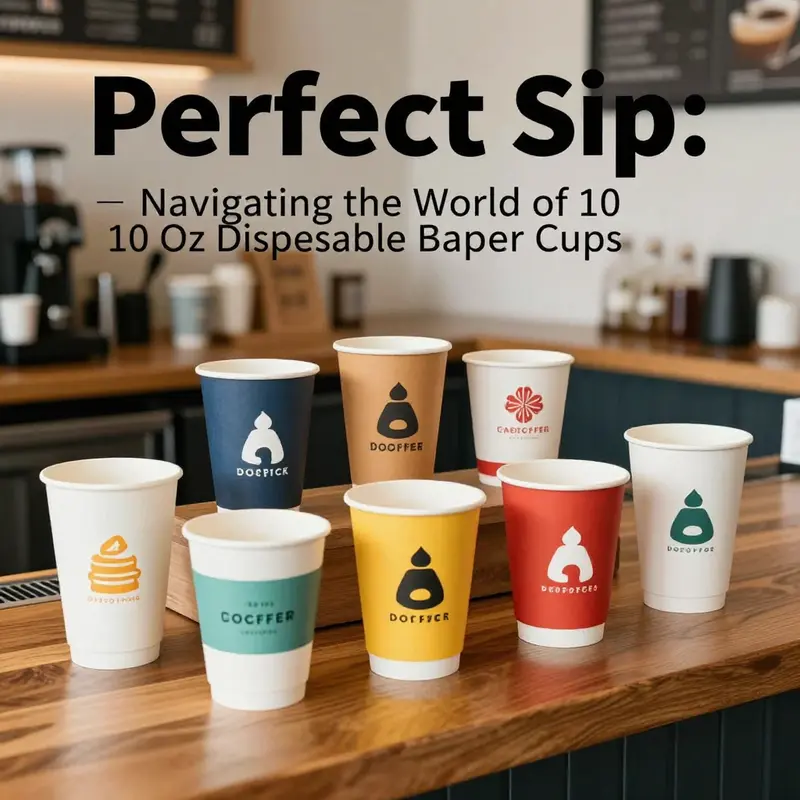
In the bustling realm of beverage service, the choice of cup can significantly impact customer experience and brand perception. The 10 oz disposable paper cup emerges as a versatile option, ideal for serving everything from steaming coffee to chilled bubble tea. This article explores the nuances between single-wall and double-wall cups, customization opportunities for branding, and eco-friendly solutions that cater to a growing market. Each chapter will equip beverage chains, food service providers, and event planners with valuable insights to enhance their offerings while addressing sustainability concerns.
Between Warmth and Comfort: Best Practices for 10 oz Disposable Paper Cups — Single-Wall and Double-Wall
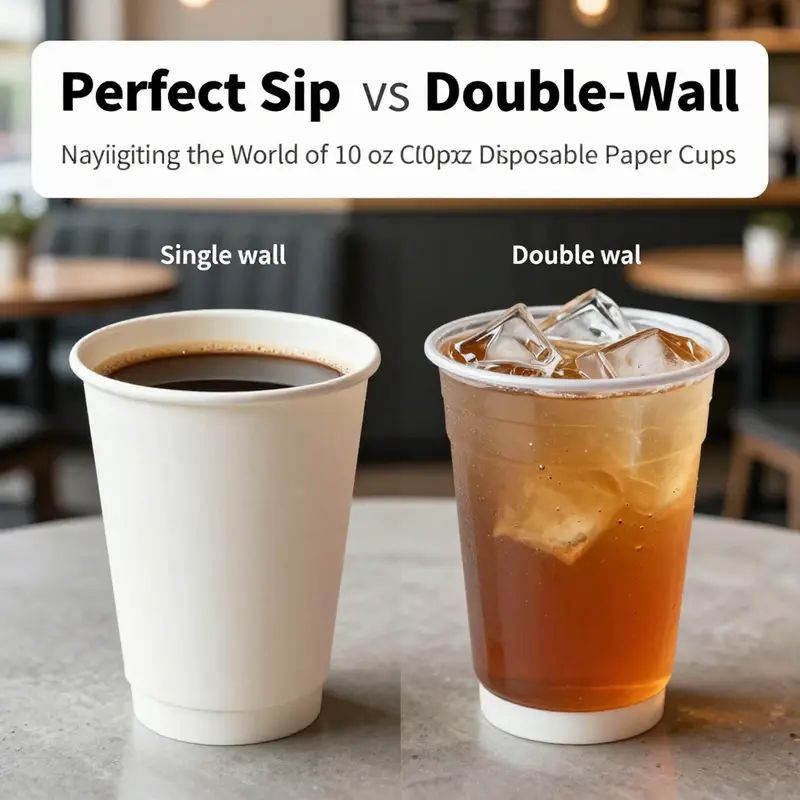
The disposable paper cup in a compact 10 oz size sits at the interface of efficiency, experience, and environmental consideration. It is small enough to feel unobtrusive in a busy café line, yet deliberate enough to shape how a customer experiences a hot drink before they even take the first sip. In this seemingly simple vessel, two core construction philosophies vie for attention: single-wall and double-wall. Each carries its own set of practical implications for heat retention, handling comfort, cost management, and environmental footprint. Understanding how these two designs perform in real-world service settings is not a boutique concern. It is a core component of day-to-day decision-making for operators who want consistent temperatures, safe handling, and a positive impression that travels with a customer from the counter to the street. The 10 oz cup becomes a lens through which we can examine how small packaging choices ripple outward, influencing workflow, customer satisfaction, and even sustainability commitments.
To begin with, the single-wall cup is a straightforward embodiment of simplicity. It is typically composed of a single layer of paper, aligned with a food-grade standard, and commonly lined with a thin inner coating to resist moisture and grease. In many instances, this coating is a thin polymer layer that protects the cup’s integrity when it is filled with hot beverages and kept under the damp heat of steam and condensation. The result is a cup that is lightweight and economical, an attractive option for high-volume environments where speed and price per unit are the daily bread and butter of operation. In practice, the single-wall design excels in cold-drink service or quick hot-service contexts where drinks are not expected to stay hot for long periods. Its simplicity means fewer materials in the path from production to disposal, which can align with lean inventory and rapid turnover.
Yet there is a human-scale consideration that accompanies single-wall cups, especially when they are used for hot beverages. The same one-layer construction that keeps costs down can translate into a warmer exterior as heat moves through the paper. For a customer who orders a hot coffee or cocoa, the outside of the cup can become uncomfortable to hold after a few minutes, particularly in cooler environments or when beverages are served with shortcuts like short hold times. The risk is not just a fleeting burn but a moment of hesitation where the customer pauses to manage the cup’s temperature, potentially slowing a quick-service flow that thrives on speed and predictability. The physics behind this is straightforward: heat travels from the hot liquid toward the cooler exterior. The single-wall design, with minimal insulation, provides less resistance to that transfer. In a nutshell, single-wall cups are often best suited to cold drinks or to hot drinks served briefly, where the container remains an economical carrier with acceptable handling comfort.
If a business chooses single-wall cups for hot drinks, the operational rationale often hinges on cost-per-unit and speed. The price advantage is real; suppliers frequently quote lower per-unit costs for single-wall configurations, particularly at high volumes. The sourcing story can also be simpler because there is less material complexity. For operations that require no lids, or that rely on quick, on-the-spot service with minimal handling, single-wall cups can keep the entire service line agile. The market itself reflects these tendencies: you can find eco-friendly variants and water-based printing options within the single-wall category, which means environmental and branding concerns can still be addressed even with the leanest design. The practical decision then becomes a balance between the desired guest experience and the cost-efficiency that underpins the business model. If the drink is consumed within moments, if the customer profile prioritizes speed, and if the location invites a quick turnover, single-wall cups offer a straightforward, pragmatic path.
Turning to the double-wall cup invites a different calculus altogether. In a double-wall construction, there is a deliberate insulating structure. The most common embodiment of this principle is an inner wall that forms a sealed layer against the drink, combined with an outer wall that acts as a second barrier. The space between these two layers can be simply an additional sheet or an engineered air gap. The net effect is a marked improvement in thermal performance for hot beverages: heat is more effectively contained within the beverage, which helps maintain temperature for a longer period. On the exterior, this insulation means the outer surface remains cooler to the touch, reducing the likelihood that a customer will experience heat through the paper as they hold the cup. The outer surface is also less prone to condensation from the warm interior, which translates to a drier, more secure grip and a cleaner experience in environments where patrons might rest their drink on a sleeve or napkin.
The practical implications of double-wall design are most visible in high-traffic settings and in service models where customers expect warmth and consistency from the first sip to the last. A double-wall cup sets a higher standard for customer comfort. In a café with a steady stream of orders and a diverse guest base, the premium feel of a hotter drink that remains approachable to hold can contribute to a perception of quality and care. This is not just about temperature retention; it is about the tactile experience—the cool exterior, the dependable grip, and a sense that the cup fits neatly into the social choreography of a coffee break. Because the outer layer stays cooler, staff can manage the line with slightly more confidence—knowing that even after a few minutes, the drink in a double-wall cup is not likely to become an awkward, hot-mess hazard at the counter. All of this supports a smoother customer journey, a reduction in spill risk, and a sense of reliability that customers associate with thoughtful service.
From a cost perspective, double-wall cups carry a higher unit price than single-wall cups. The difference is not always drastic, but it is material enough to influence budgeting and procurement strategy, especially for operators who scale up to tens of thousands of units. The math is straightforward: the extra material and production steps required to achieve two walls or the equivalent insulating configuration contribute to the price. In return, the benefits come in the form of heat retention, safer handling, and the perception of a premium service. For a customer who plans to enjoy a hot beverage for several minutes in a commute or a break, the double-wall option aligns with expectations that the drink will stay warm without becoming a burn risk or a sticky, damp exterior. In spaces where a quick but elevated experience is part of the brand promise, the double-wall cup can become a practical and symbolic component of that promise.
In practice, many operators adopt a blended strategy. They may reserve double-wall cups for hot beverages during peak hours or in locations where the environment favors a robust insulation strategy, while offering single-wall cups for cold beverages or for hot drinks during off-peak times where speed and cost control are paramount. The choice is rarely binary; it is a matter of calibrating the cup to the service context, the drink profile, and the mood the brand seeks to cultivate in its guests. The long arc of this decision is not simply about which cup holds more heat; it is about shaping the daily rhythms of a business. In busy hours, the customer might notice that the double-wall cup makes the hot drink feel more comforting, that the exterior remains pleasantly cool, and that the hand feels steadier as it carries the cup through the crowd. In more relaxed moments, a single-wall cup can provide a leaner, price-conscious option that supports a quick and casual experience without compromising safety.
Branding in Every Sip: Maximizing Customization and Visibility with 10 oz Disposable Paper Cups
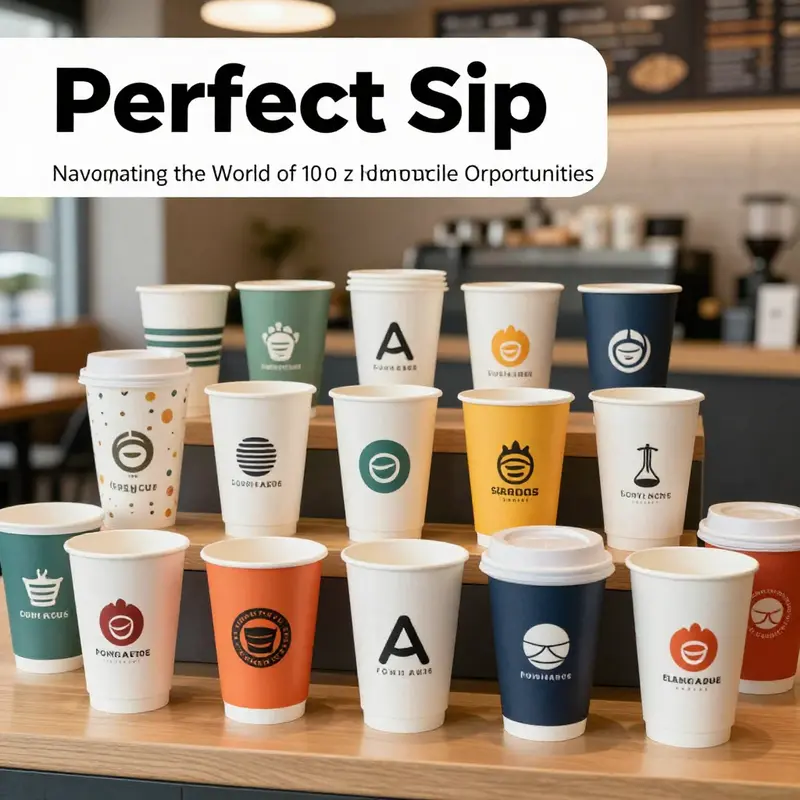
The small, everyday act of pouring a hot coffee or a cool drink into a disposable 10 oz paper cup has, in the hands of a thoughtful business, the potential to become a steadfast touchpoint with customers. The 10 oz cup is more than a vessel; it is a mobile billboard, a portable ambassador that travels from barista station to customer hand, to the backseat of a car, to a conference table, and into countless social media moments. When a business treats this everyday item not as a mere container but as a carefully crafted extension of its brand, the results are not simply a more cohesive aesthetic. They are reinforced recognition, improved customer recall, and a tangible signal of quality and care that customers can feel, sip by sip. In this context, customization emerges not as an optional flourish but as a strategic method to deepen engagement with audiences, to tell a brand story in bite-sized, on-the-go form, and to harmonize packaging with product while reinforcing sustainability and responsibility in consumer perception. The 10 oz cup, with its compact footprint and compatibility with standard service settings, offers a flexible stage for branding without imposing unnecessary frictions on the customer experience. It is the size that fits comfortably in cupholders and in hands, the balance point between convenience and the space needed for a meaningful graphic or message. Yet behind this convenience lies a series of choices about materials, printing, coatings, and supplier capabilities that determine not only how a cup looks, but how well it supports a brand’s promises—in terms of safety, taste, temperature, and environmental stewardship.
To begin with, the core appeal of 10 oz disposable paper cups lies in their versatility. The capacity is enough for a standard hot drink such as coffee or tea, a comforting hot chocolate, or a smoothly blended smoothie or juice. For quick-service concepts, single-wall cups offer a lean, cost-effective baseline that satisfies the dual constraints of fast service and reasonable insulation for shorter, warmer servings. Double-wall options, by contrast, raise insulation performance and hand comfort, letting a customer enjoy warmth without a burn risk, especially during colder months or in venues where drinks travel longer distances before consumption. The material palette behind these cups matters as much as the silhouette itself. A typical 10 oz cup features a food-grade paper stock, commonly reinforced with an inner polyethylene (PE) lining for leak resistance and moisture management. The outer appearance becomes a canvas that brands can print upon—whether through basic logos, bold color blocks, or intricate patterns that tell a brand’s story in a single glance. In a world that rewards instant recognition, a well-executed cup design turns each customer interaction into a micro-experience of the brand, reinforcing trust and differentiating the business in crowded marketplaces.
The design language, however, is not a matter of aesthetics alone. It intertwines with practical considerations about how a cup performs in real-world use. For hot beverages, the cup must shield the hand while maintaining the drink’s integrity—heat retention, structural rigidity, and barrier protection all matter. The introduction of eco-friendly options has added another layer of decision-making, as brands increasingly seek coatings and materials that align with sustainability commitments. PLA coatings, derived from plant-based materials, can serve as an alternative to conventional PE coatings, offering a more compostable profile for consumers who prioritize environmental responsibility. For brands that want to go further, some suppliers offer cups made from bamboo fiber or other natural fibers, presenting an appealing combination of natural aesthetics and perceived healthfulness. This is not just a trend but a meaningful shift that helps brands communicate stewardship. Yet even with such innovations, the essential aesthetic and functional question remains: how does customization translate into tangible marketing value for a 10 oz cup, and how can a business balance cost, speed, and impact?
Supplier ecosystems for 10 oz customized cups answer these questions by offering a spectrum of options designed to meet different branding goals and operational realities. An important element in this ecosystem is Original Equipment Manufacturer (OEM) services. With OEM capabilities, a brand can overlay its own logo, messaging, or artwork directly onto the surface of the cup. The printing techniques supported by leading suppliers typically include flexographic printing, which can accommodate multiple colors and is well-suited for packaging runs that require vibrant, durable graphics on paper stock. A common ceiling cited in many supplier listings is up to six colors, a practical maximum for achieving clean brand lines, legible typography, and color contrast that remains legible when the cup is held in varying lighting conditions or viewed from distance. The ability to print directly on the cup surface opens up a broad range of branding strategies—from single-color emblems for a minimalist, premium feel to full-color campaigns that integrate complementary color schemes with the beverage’s identity. The design process often begins with free design support, a low-friction entry point for brands that want professional guidance without incurring initial costs. In many cases, this is paired with sample requests, enabling businesses to test how a design translates from digital mockups to actual print on the cup material. It is not unusual for a custom sample to carry a nominal fee, such as around USD 100, and to take roughly seven days to produce. While this upfront investment may seem modest in comparison with broader packaging projects, it represents an essential step in validating visual impact, print integrity, and compatibility with the intended beverages.
The logistics of ordering also influence branding outcomes. MOQs for customized 10 oz cups are commonly set at around 50,000 pieces, a threshold that reflects the realities of print setup, run efficiency, and the economics of large-format packaging production. For establishments with frequent, high-volume needs—be it a growing cafe chain, a festival vendor, or a corporate event organizer—the bulk option offers a practical route to achieving consistent, high-quality branding at a favorable unit cost. In return, buyers can anticipate production cycles that, for large orders, average around 25 days, including design finalization, pre-production proofs, and full-scale manufacturing. The predictable cadence helps marketing teams integrate packaging design into campaigns that roll out across multiple locations or events with synchronized branding. The ability to align packaging with promotional calendars—seasonal flavors, limited-edition beverages, or experiential events—further deepens the cup’s role as a storytelling vehicle.
Within this framework, cost is not simply a unit price but a composite of design complexity, color depth, coating choice, material weight, and print durability. A 10 oz cup with a standard weight of around 320gsm and a basic 18PE coating might present the most economical option for many operators while still offering a respectable canvas for branding. When brands choose to upgrade to eco-friendly coatings, such as PLA or other compostable options, the price per cup may rise slightly, but the value proposition expands significantly for consumers who favor sustainable packaging. The choice between a single-wall and a double-wall configuration can also affect the perceived quality of the beverage and the user experience, influencing customers’ willingness to pay a premium for a brand experience that emphasizes comfort, warmth, and a sense of responsible stewardship. This is particularly important in premium or specialty coffee contexts, where the tactile experience of the cup and its branding work in concert with the beverage’s aroma, flavor, and overall presentation.
Another central element in the branding equation is the ability to incorporate design support as a value-add in the customization package. Free design support, often offered by suppliers, helps ensure a brand’s identity is faithfully captured in the printed artwork. The collaboration between brand teams and supplier designers can yield a composition that respects legibility, color fidelity, and the constraints of printing on paper stock. The process frequently includes design development, where preliminary concepts are refined into production-ready files. This step helps prevent design missteps—such as color bleed, misregistration, or insufficient contrast—before the cup is set to print. For brands, the potential to request samples is not just about visual appeal; it is a practical verification of how the design behaves on actual cup stock, how the ink adheres to the coating, and how legible the typography remains when the cup is handled and filled with beverage. It is these details that safeguard the integrity of a brand’s message in real-world service settings.
From a sustainability perspective, the customization conversation has shifted from simply adding a brand mark to crafting packaging that aligns with responsible consumption patterns. Environmental credentials have become an influential criterion for many buyers. Suppliers increasingly offer cups with compostable or recyclable options, and some allow customers to opt for coatings that reduce plastic content and improve end-of-life outcomes. This is not merely a marketing story; it is a practical commitment to environmental stewardship that resonates with both consumers and regulatory environments that increasingly scrutinize packaging waste. In practice, brands can pair a visually compelling design with a responsible material choice, signaling to customers that the brand considers both flavor and footprint. The marketing impact of such decisions is not only about reducing waste; it is about communicating values that can foster deeper customer loyalty in a crowded, distraction-rich retail landscape.
The branding payoff from customized 10 oz cups extends beyond the overt visuals. A well-designed cup becomes a portable extension of the brand’s identity in daily routines. The graphic language, chosen typography, and color palette can evoke a specific mood—bold and energetic, refined and minimalist, or warm and approachable. The orientation of the design—whether centered, wrapped, or with a band motif around the cup—affects how the brand sits in the consumer’s mental map. Distinctive cup designs can also function as conversation starters, particularly in social or work environments where multiple beverages are present. A memorable cup invites social sharing, whether through selfies, check-ins, or simply word-of-mouth recommendations. In this way, packaging becomes a social catalyst that reinforces brand awareness with every sip. The cup’s role as a marketing tool also invites ideas about cross-promotion. For example, a brand can coordinate cup artwork with in-store signage, digital campaigns, and loyalty programs, creating a consistent, recognizable motif across touchpoints. Such alignment strengthens the overall brand ecosystem and reduces fragmentation in consumer messaging.
Moreover, the business case for cup customization benefits from the inherent ease of distribution in busy service settings. Because 10 oz cups are widely used in cafes, quick-service restaurants, and event contexts, every drink served becomes a touchpoint that reaches a broad audience. The cup moves through the customer’s day, and as it does, it carries the brand’s message into homes, offices, car interiors, and social spaces. This is particularly powerful in corporate or promotional programs where branded cups are part of a larger experiential strategy. When a brand uses print to convey a story or a call to action—such as a seasonal promotion, a QR code for a discount, or a message that aligns with a sustainability initiative—the cup becomes a direct link to ongoing consumer engagement. The measurement of impact can be nuanced, but indications of success include higher repeat visits, increased social sharing, and stronger association between the beverage and the brand in customer memory.
In considering supplier selection, brands look for attributes that extend beyond aesthetics. Certifications and traceability of raw materials are increasingly important, especially for brands seeking transparent supply chains or those aiming to meet internal sustainability standards. ISO certifications and audited supplier statuses provide assurances about manufacturing practices, quality control, and ethical sourcing. Traceability means brands can identify the origin of the paper stock and coatings, ensuring that these elements meet safety and environmental criteria. A robust supplier relationship also reduces risk in the supply chain, a key consideration for cafes and chains that rely on predictable delivery schedules. The reliability of lead times—particularly for bulk orders—becomes part of the brand’s operational planning, ensuring that campaigns, promotions, and seasonal menus roll out on time. The knowledge that a supplier can deliver consistent quality across thousands of cups in a uniform color and finish empowers brand teams to execute ambitious, time-bound marketing initiatives without compromising on fidelity.
As with any packaging decision, the economics of customization must be weighed against broader branding goals. A 50,000-unit minimum order may seem large, but it often aligns with the scale of chain rollouts or major event campaigns. The per-unit cost must be balanced against the added value of branding—how much customers notice the cup, how much the design contributes to perceived product quality, and how the packaging reinforces the beverage’s position in the market. In some cases, brands find that the cost of a higher-quality cup or one with eco-friendly coatings is justified by the enhanced consumer experience and the longer-term benefits of brand loyalty. For smaller operators or businesses piloting a new concept, the possibility of requesting smaller runs or sampling programs can provide a path to gradually scale branding investments as demand grows. The strategic takeaway is that customization on a 10 oz cup is not a one-off expense but an investment in a consistent, scalable brand experience that can compound over time as the business expands.
Beyond the technical and financial dynamics, there is a storytelling dimension to the customization journey. The cup becomes a narrative instrument. It can carry seasonal motifs, highlight a commitment to sustainability, or echo a broader campaign’s visual language. The inner and outer surfaces offer opportunities for complementary messaging: the exterior can display the logo and primary branding while the interior can reveal a secondary message, a QR code, or a color-coded cue that enhances the customer’s perception of taste and quality. Even the choice of cup color and finish can influence consumer behavior, shaping expectations about flavor and aroma before the first sip. Some brands may opt for bold, high-contrast palettes that demand attention in a crowded display, while others may prefer a restrained, minimalist look that connotes sophistication. In either case, the cup becomes a constant, approachable touchpoint that quietly reinforces brand recognition across a variety of environments—from a bustling cafe during morning rush to a conference lunch hour, and from a neighborhood pop-up to a corporate catering event.
The path to successful customization, then, is not simply about printing a logo onto a cup. It is about aligning every design decision with the beverage experience, the operational realities of service, and the brand’s broader promises to customers. The design must be legible at a glance, even when the cup is partially obscured by the hand or steam. It must endure the practicalities of a fast-paced service setting, resisting wear or peeling during transport and consumption. It should honor customer safety and regulatory expectations, including food-grade materials and appropriate coatings. And it should reflect the brand’s values, whether those values center on sustainability, craftsmanship, or accessibility. When these elements cohere, the 10 oz cup becomes more than packaging; it becomes a partner in the customer journey, reinforcing the brand at every interaction and helping to build a sense of continuity that customers can rely on across locations and occasions.
For brands seeking to maximize the return on investment from customized cups, a few practical steps can help translate strategy into operational success. First, engage early with suppliers that offer comprehensive OEM services, from artwork proofs to technical specifications and production timelines. Early collaboration reduces the risk of miscommunication and speeds up the transition from concept to production. Second, leverage the opportunity for free design support to test multiple iterations. Small, iterative changes—such as adjusting contrast, line thickness, or color saturation—can dramatically improve legibility and print fidelity when observed in real-world conditions. Third, request samples to evaluate how your artwork performs on actual cup stock under typical beverage handling scenarios. This step helps confirm that brand messaging remains crisp and legible from various angles and distances. Fourth, consider sustainability as an integrated aspect of brand storytelling. If a PLA coating or a bamboo-fiber cup aligns with your environmental narrative, coordinate these choices with in-store messaging and loyalty programs to amplify their impact. Finally, collaborate across channels to create a cohesive brand ecosystem. Align cup designs with storefront signage, digital marketing, social media content, and promotional campaigns so that every channel reinforces a consistent brand voice and visual language. In doing so, you turn a single packaging asset into a strategic touchpoint that complements product quality, service excellence, and brand integrity.
The practical implications of these practices extend beyond the branding outcomes alone. The 10 oz cup, as a product category, sits at a confluence of design, materials science, and consumer psychology. The choice of paper weight and coating influences not only print quality and hot-drink performance but also the perception of value. A cup that feels sturdy and well-constructed communicates a similar expectation about the beverage inside. A design that reads well under a range of lighting conditions, in various hands, and through steam, communicates clarity and confidence. These moments collectively shape how customers perceive a brand, how they remember it, and how likely they are to engage in repeat business, refer friends, or share positive experiences online. In practice, a well-executed customization program that leverages 10 oz cups can contribute to a stronger, more differentiated brand presence in a crowded landscape, improving both foot traffic and customer loyalty while staying compatible with the operational realities of modern beverage service.
The journey from raw stock to branded cup is a choreography of care, precision, and storytelling. The suppliers’ capabilities—ranging from paper weight and coating choices to printing techniques and color limitations—set the boundaries within which designers and marketers must operate. But within those boundaries lies substantial creative latitude. By choosing the right balance of visual impact, printing durability, eco-friendly options, and cost efficiency, brands can craft a packaging experience that resonates with customers long after the beverage has been consumed. That resonance is the essence of branding through packaging: a simple cup, a compelling message, and a pipeline of consistent touchpoints that together amplify the brand’s voice across every sip.
For readers seeking a practical pathway to begin or refine a customized 10 oz cup program, the following considerations form a concise guide. First, specify the primary objective of the cup branding—whether it is to drive immediate sales through a seasonal campaign, to increase brand recall over the long term, or to emphasize sustainability as a differentiator. Your objective shapes design, color choices, and material selections. Second, evaluate supplier capabilities against your goals. Do they offer free design support, and what is the scope of this service? Can they accommodate your preferred color palette across multiple production runs? What are the minimum order quantities and lead times, and how do these align with your promotional calendar? Third, test the packaging in real-use scenarios. Request physical proofs and samples that reflect typical beverage temperatures, hand positions, and travel distances. Metrics such as legibility under steam, readability from a distance, and tactile impressions should inform the final design. Fourth, consider a staged rollout. For a new concept or a rebrand, begin with a smaller run to gauge customer responses and to fine-tune the artwork before committing to larger orders. Fifth, integrate sustainability into the brand narrative without compromising readability or visual impact. The average consumer increasingly expects responsible packaging; the ability to substantiate those claims with credible coatings and recyclable or compostable materials is a differentiator that can pay dividends through enhanced trust and loyalty. Finally, document and measure outcomes. Track changes in customer engagement, social media mentions, and loyalty-driven purchases that correlate with packaging changes. A systematic approach to assessment helps refine future campaigns and demonstrates a measurable return on investment for branding investments in cups.
In sum, 10 oz disposable paper cups offer a potent platform for brand expression, consumer engagement, and sustainability storytelling. They are not passive vessels but active participants in the customer experience, shaping perceptions with every lift, sip, and discard. The opportunity lies in treating this packaging as a strategic asset rather than a routine necessity. When brands embrace the full range of customization possibilities—from design support and print capabilities to eco-friendly coatings and responsible sourcing—these cups become multipliers for brand recognition and market presence. They translate the intangible attributes of a brand—trust, quality, mindfulness—into tangible artifacts that customers carry, use, and, critically, remember. In doing so, a 10 oz cup program can become a core component of a business’s marketing architecture, complementing in-store experiences, digital campaigns, and overall customer relationship strategies. It is a compact platform with outsized potential—an avenue to tell a brand story in a single, portable object that travels far beyond the counter and into everyday life.
For readers who want to explore further options and examples, see the broader disposable drinkware category in our catalog, which aggregates various shapes, coatings, and customization capabilities and can serve as a reference point for aligned packaging decisions. disposable drinkware category. This resource helps situate the 10 oz cup within a wider ecosystem of disposable packaging and supports cross-category brainstorming for campaigns that require cohesive branding across beverage vessels and related serveware. As you consider how to deploy these cups across your own operations, it’s useful to imagine the cup not just as a serving tool but as a small, wearable advertisement that travels with your beverage from the moment it leaves the machine until it finds its next audience. The design choices you make today can generate momentum for your brand tomorrow, and the 10 oz cup can be an essential ally in that ongoing narrative.
External resource: https://www.alibaba.com/product-detail/Wholesale-Take-Away-Eco-Friendly-PLA-Coffee1600496571885.html?spm=a2700.galleryofferlist.pclick&fsb=1&src=detail
Balancing Convenience and Care: Sustainable Solutions in the 10 oz Paper Cup
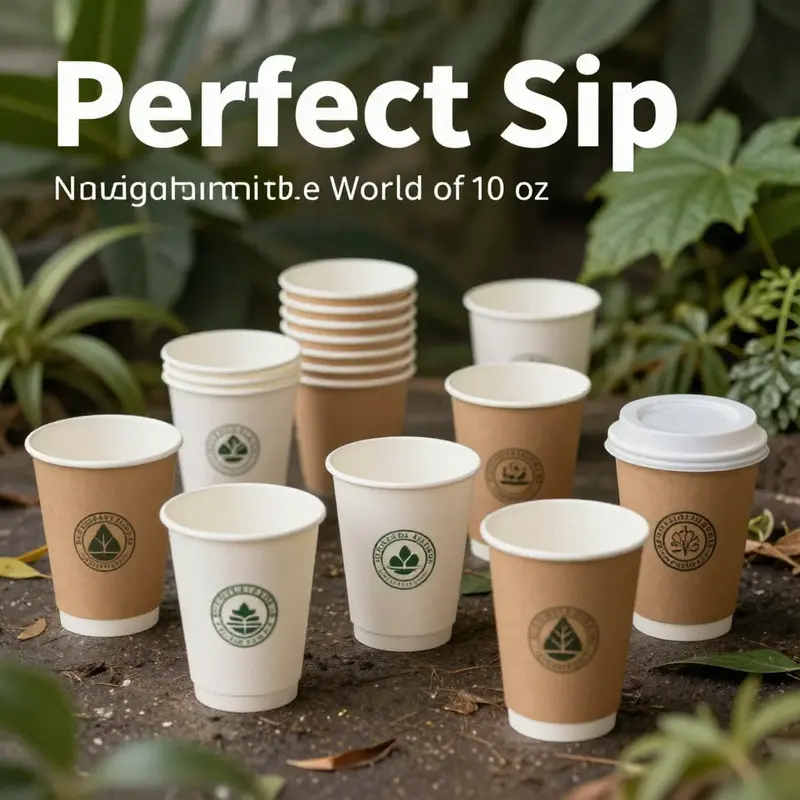
Across the busy floor of a coffee shop, a quiet shift is unfolding in the way customers and businesses think about a familiar, single-use item: the 10 oz disposable paper cup. It is a size that has become almost default for a quick-service world, a compact vessel that fits in standard cup holders, travels well in takeout orders, and serves as a reliable conduit for hot drinks, cold beverages, or a mid-morning juice. Yet behind its simple form lies a rapidly evolving conversation about what it means for a single-use item to also be responsible. The 10 oz cup has emerged not merely as a convenience but as a testing ground for sustainable packaging choices that balance performance, cost, and environmental impact. In the current era, where consumer awareness and regulatory scrutiny are increasingly aligned around plastic reduction and waste minimization, the cup is moving along a continuum from conventional paper with conventional coatings toward materials and designs that invite a more circular lifecycle. This transformation does not demand a trade-off between quality and conscience; rather, it invites businesses to reimagine what “single-use” can mean when it is framed by smarter material science, smarter sourcing, and smarter end-of-life options.
Material choices are at the heart of this evolution. The classic image of a paper cup often includes a polymer lining that protects the paper from moisture and heat. Historically, this lining has been polyethylene (PE), a durable barrier that helps prevent leakage and keeps beverages reliably contained. However, as conversations about recyclability and compostability intensify, the industry has looked for alternatives that maintain function while easing end-of-life processing. Plant-based liners, particularly those made from polylactic acid (PLA), have risen to prominence as a practical response. PLA coatings originate from renewable resources such as cornstarch or sugarcane, and they decay more readily under conditions found in industrial composting facilities. This shift addresses concerns about contaminants that can complicate recycling streams when multiple layers of materials are involved. The result is a cup that can perform the same task—keeping drinks hot or cold, preserving flavor, and preventing spills—while offering a clearer pathway toward circularity.
The dynamics of the cup’s structure also matter. Within the 10 oz category, there are single-wall and double-wall configurations, each with distinct advantages. Single-wall cups are light and economical, making them appealing for everyday coffee and tea service where speed and cost are paramount. Double-wall designs, by contrast, add an insulating air layer that helps keep hot beverages hotter for longer and protects hands from heat transfer. From a sustainability viewpoint, the choice between single and double wall cannot be reduced to heat retention alone; it must be weighed against material use, production energy, and the end-of-life scenario. A double-wall cup, while offering superior insulation, may involve more material and a different disposal profile, depending on the lining and outer paper stock. Yet the industry is finding ways to optimize both forms: lighter, stronger papers, smarter coatings, and improved manufacturing processes that reduce energy intensity without compromising performance. The result is a range of options that allow a business to tailor the cup to the customer experience—whether that means a hot latte on a winter morning or a chilled smoothie on a summer afternoon—without losing sight of environmental goals.
A crucial lever in this transformation is the sourcing of paper itself. The 10 oz cup is typically produced from high-quality, food-grade paper sourced from responsibly managed forests. The assurance that the fibers originate from responsibly managed sources is more than a virtue; it directly influences the cup’s overall safety, reliability, and public perception. When customers trust the material lineage, they are more likely to view sustainability as an intrinsic feature of the product rather than a marketing afterthought. This is particularly important in foodservice contexts, where margins and reputational capital hinge on consistent performance. The role of certification and traceability emerges here as well. Audited suppliers and transparent supply chains help ensure that the paper’s origin aligns with environmental standards and social responsibility norms. The industry has responded with certifications that verify sustainable forestry practices, track the movement of raw materials through the supply chain, and confirm adherence to defined quality benchmarks. Businesses that adopt such practices not only reduce their ecological footprint but also strengthen their storytelling around responsible packaging.
Innovation in material composition complements responsible sourcing. The shift away from standard PE coatings to plant-based alternatives is not merely a substitute of one polymer for another. It is a rethinking of compatibility with recycling streams and composting infrastructure. Industrial composting, in particular, becomes a pivotal component of a sustainable strategy for 10 oz cups with PLA linings. PLA-coated cups are designed to break down under the controlled conditions of industrial composting facilities, offering a more definitive end-of-life option than traditional multi-material cups that resist separation and recycling. The presence of a compostable lining can facilitate a circular loop when paired with appropriate facilities and consumer participation in proper disposal habits. Of course, the feasibility of industrial composting varies by region, and consumer education remains essential. Businesses that communicate clearly about how to dispose of these cups—and that guide customers toward the correct waste streams—enhance the practical impact of their sustainability commitments. In regions where local composting programs are robust, PLA-lined cups can become a central piece of a circular economy rather than an isolated improvement within a linear system.
In the branding and customization space, the sustainability story need not come at the expense of visibility and identity. Suppliers increasingly offer customization options that preserve branding while integrating eco-friendly materials and inks. Offset and flexo printing using food-safe inks enable brands to maintain a strong visual identity on cups that are designed to be more responsible from an environmental perspective. In practice, this means a cafe can communicate its values—through color, typography, and graphics—without compromising the cup’s end-of-life performance. The ability to tailor cups with corporate logos, event branding, or seasonal designs remains a powerful marketing tool, and it can be aligned with sustainability claims to amplify customer engagement. The equation thus becomes one of balancing aesthetics and ethics, ensuring that a coffee cup tells a story of care as much as it tells a story of taste.
As consumer expectations evolve, so too do regulatory pressures and market dynamics. The demand for greener packaging is no longer a niche consideration; it has become a baseline expectation in many markets. Regulatory frameworks increasingly favor materials that reduce plastic content, favor compostable or recyclable formats, and demonstrate traceability of raw materials. In practice, this means cups designed with PLA linings or other compostable components must be accompanied by credible certifications and transparent documentation that verify their performance and end-of-life behavior. The conversation moves beyond “is it safe for use?” to “how does it behave after use?” and “what are the realistic pathways for recycling or composting?” Businesses that anticipate these concerns, rather than react to them, position themselves to navigate policy shifts with fewer disruptions. The 10 oz cup thus becomes a barometer of the broader packaging ecosystem, reflecting both the ingenuity of material science and the practical realities of waste management infrastructure.
Logistics and lifecycle thinking play a meaningful role in shaping the sustainability profile of the 10 oz cup. The lightweight nature of many paper cups supports more efficient transport, reducing freight-related emissions and enabling more meals or beverages to be moved with the same energy. The reinforced kraft paper construction sometimes used in compostable or recyclable variants contributes to maintaining structural integrity while keeping weight down. This combination is valuable for quick-service operations where every gram saved translates into cost savings, reduced fuel usage, and lower carrier emissions. The broader takeaway is that sustainability in single-use packaging often derives from system-level considerations: how materials are produced, how they are disposed of, and how the supply chain coordinates with customers and waste management systems. The cup thus becomes part of a larger, interconnected practice that blends design, sustainability, and operational efficiency.
Future progress in this space will hinge on continued innovation coupled with robust certification and clear communication. The industry is likely to see more materials that minimize ecological footprint while delivering reliable performance. Certifications related to compostability and sustainable sourcing will increasingly act as differentiators for suppliers and customers alike. The emphasis on traceability will extend from forests to factories to the end user, with brands seeking to demonstrate a transparent, verifiable environmental story. In this landscape, the 10 oz cup remains a practical and scalable solution for coffee shops, snack bars, and events that want to offer a responsible option without compromising the customer experience. The journey is not about a single breakthrough but about an evolving toolkit—one that blends what a cup can do with what it asks of the world in which it lives.
For those seeking a more expansive view of related packaging and printing possibilities that can complement sustainable cup choices, the broader range of options in the packaging and printing ecosystem is worth exploring. This context helps frame how a cup integrates with other disposable tableware and how a brand can present a cohesive, responsible packaging narrative across product categories. A deeper dive into this landscape can be found in the disposable drinkware category, which gathers items that share a common goal of reducing environmental impact while maintaining function and visual appeal. See the Disposable Drinkware category for a broader sense of how cups sit alongside lids, sleeves, and other accessories in a sustainability-minded lineup. Disposable Drinkware category
From a practical standpoint, selecting the right 10 oz cup requires aligning several factors: the intended beverage type, the environmental goals of the operation, local disposal infrastructure, and the business’s branding strategy. For hot drinks, heat retention and comfort for the consumer are critical. For cold beverages, barrier performance and drip resistance matter more. When sustainability is part of the decision, the question shifts from simply “Can this cup hold liquid?” to “How does this cup fit into a responsible value chain?” This broader lens can guide decisions about liner materials, whether to pursue compostable or recyclable options, and how to communicate these choices to customers in a credible way. The operational reality is that suppliers increasingly provide choices across a spectrum of weights, coatings, and printing options, allowing a cafe or institution to tailor a program that suits both practical needs and environmental aspirations.
In many ways, the 10 oz cup exemplifies a broader trend in packaging: the move toward materials and processes that emphasize stewardship without erasing utility. It invites a collaborative approach among growers of paper, manufacturers of coatings, branding teams, waste managers, and customers. The result is a packaging story that honors craft and clarity—where the warmth of a drink can be matched by the clarity of the cup’s environmental promise. What began as a simple vessel for hot beverages is becoming a conduit for responsible consumption, a tangible reminder that everyday choices can contribute to a more sustainable system. As more players enter the conversation with validated, verifiable claims and transparent sourcing, the 10 oz cup is likely to become not just a default option but an exemplar of how convenience, performance, and care can coexist in a single, small package.
External resource: https://www.alibaba.com/product-detail/8oz-10oz-16oz-biodegradable-eco-friendly_1600527393468.html?spm=a2700.1.women-1000002223.2.1c5d7a7bRgGzZm
Final thoughts
Choosing the right 10 oz disposable paper cup involves navigating various options that align with both functionality and branding. By understanding the differences between single-wall and double-wall designs, leveraging customization for brand recognition, and opting for sustainable practices, businesses can elevate their customer experience and cater to environmentally-conscious consumers. As these cups become essential tools for enhancing service in beverage shops, catering, and event planning, the importance of making informed choices about them cannot be overstated. Embrace these insights to improve your service strategy and contribute positively to the environment.