
Introduction
Sustainability is no longer a niche consideration for food-service packaging; it is a core driver of brand trust, regulatory compliance, and operational resilience. The compostable sushi box factory sits at the heart of this shift, turning plant-based materials into dependable, food-safe takeaway solutions. Materials such as sugarcane bagasse, PLA derived from plant starches, and molded pulp are not merely alternatives—they are the backbone of a new generation of packaging designed for leak-proof seals, multi-compartment designs, and compatibility with modern kitchens. The best facilities combine advanced manufacturing with rigorous certifications to ensure products degrade in commercial compost facilities within roughly 90 to 180 days, without compromising safety or performance. Notable players in this space demonstrate a spectrum of capabilities: INKOPACK Co., Millionpack, Sunzza Plastic Industry, INKOBOX, and InNature Pack illustrate how factories are embracing customization, branding, and varied materials while meeting strict food-safety standards.
For business leaders evaluating suppliers, the decision goes beyond price. It requires assessing materials stewardship, process reliability, supply-chain resilience, and environmental impact, all aligned with regulatory expectations in different markets. This article outlines three key dimensions that every sushi-box-focused factory must master to serve a growing market efficiently and responsibly. Chapter 1 delves into technological foundations—the materials, manufacturing processes, and certifications that define performance and legitimacy. Chapter 2 examines economics and global supply chains—how raw-material sourcing, logistics, production capacity, and pricing influence a factory’s viability. Chapter 3 surveys environmental, regulatory, and societal implications—how lifecycle thinking, compliance, and community considerations shape long-term success. Taken together, these chapters reveal how a compostable sushi box factory can scale responsibly while delivering tangible value to restaurant partners and consumers alike.
Tables of Contents
Chapter 1: Chapter 1 — Technological Foundations of the Compostable Sushi Box Factory: Materials (bagasse, PLA, molded pulp), Manufacturing Processes, and Certifications
- Chapter 1 — Technological Foundations of the Compostable Sushi Box Factory: Materials (bagasse, PLA, molded pulp), Manufacturing Processes, and Certifications — Subchapter 1: Material Science and Sustainable Sourcing in Chapter 1
- From Fiber to Form: Manufacturing Technologies, Certifications, and the Global Footprint of Compostable Sushi Packaging
Chapter 1: Chapter 1 — Technological Foundations of the Compostable Sushi Box Factory: Materials (bagasse, PLA, molded pulp), Manufacturing Processes, and Certifications
1. Chapter 1 — Technological Foundations of the Compostable Sushi Box Factory: Materials (bagasse, PLA, molded pulp), Manufacturing Processes, and Certifications — Subchapter 1: Material Science and Sustainable Sourcing in Chapter 1
The materials that underpin a compostable sushi box are not mere ingredients; they define how quickly a package can return to the soil, how reliably it protects its contents, and how cleanly the lifecycle closes in a modern circular economy. In this subchapter, we examine material science and sourcing as a single, integrated discipline. The goal is to reveal how the unique properties of bagasse, PLA, and molded pulp translate into performance for food contact, and how sustainable sourcing ensures that environmental gains are real, measurable, and traceable across supply chains.
Bagasse, the fibrous residue left after sugarcane juice extraction, embodies a compelling convergence of function and sustainability. This byproduct, when transformed into molded pulp, yields a material that naturally resists grease and offers robust cut resistance—qualities essential for sushi trays that must carry moist or oiled foods without adverse leakage. Its heat tolerance is notable: it can withstand microwave or oven exposure up to approximately 220°C for short intervals, a practical parameter for consumer reheating. Most importantly, bagasse-based packaging is designed for compostability in commercial facilities, with many formulations aligning to standards such as EN 13432 and AS 4736, and even home compostability under AS 5810 in certain contexts. The end-of-life story is clean by design: the material breaks down within about 90 days under appropriate industrial or home composting regimes, returning nutrients to soil and reducing residue that could persist in the environment.
From a sourcing perspective, bagasse is anchored in the agricultural cycle. Sugarcane residue would otherwise be discarded or burned, contributing to waste and emissions. By redirecting this byproduct into packaging, the supply chain closes the loop: farm byproduct becomes a feedstock for compostable packaging, rather than waste. This approach avoids deforestation pressures linked to virgin timber and reduces the energy intensity typically associated with packaging materials. When bagasse is combined with water-based forming processes and cured into molded shapes, it yields a rigid, durable tray or clamshell that can be tailored for multi-compartment configurations without compromising compostability or safety. The sourcing narrative becomes even stronger when suppliers work with agricultural partners that practice traceable farming practices and maintain documented material streams from field to factory floor. In such ecosystems, the bagasse content can be verified by certifications and material traceability schemes that bolster consumer and regulator confidence.
PLA, or polylactic acid, introduces a different but complementary set of properties. Derived from renewable starch-rich crops, PLA serves as a barrier layer or a coating that enhances moisture resistance and preserves the organoleptic properties of sushi during transport. The material’s plant-based origin aligns with broader sustainability targets, yet the full-cycle advantage depends on end-of-life conditions. PLA is biodegradable primarily in industrial composting facilities operating at elevated temperatures and specific residence times. This distinction matters: while PLA can biodegrade, it largely requires the right infrastructure to unlock that benefit. In practice, PLA-based coatings or linings on paperboard or molded pulp offer a practical balance between barrier performance and compostability, enabling products to meet food-safety standards while maintaining a clear path to disposal in compost facilities. Certification programs for PLA-focused products emphasize industrial compostability and often call out disintegration timelines under controlled conditions. In the right system, PLA contributes to a clean compost stream rather than complicating recycling or landfill disposal.
Molded pulp emerges as a natural synthesis of performance, safety, and environmental restraint. Formed from plant fibers—frequently bagasse or recycled paper—this material relies on wet pulping, molding, and careful drying to produce rigid trays and clamshells with intrinsic insulation and cushioning. Its lack of PFAS or other persistent chemical additives aligns with the goal of safe direct contact for sushi. Molded pulp can be designed with multiple compartments, vents, or folds that support freshness and ease of use, all while maintaining a straightforward degradation path in composting environments. The insulation properties help stabilize temperature during short transport windows, which helps preserve the organoleptic qualities of delicate fish and rice. As with bagasse and PLA, sustainability hinges on fiber sourcing and processing. Many molded pulp formulations favor FSC-certified virgin fibers or post-consumer recyclables, reducing the ecological footprint and reinforcing responsible forest management or waste utilization. The absence of PFAS and similar contaminants in molded pulp streams reinforces regulatory acceptance and builds resilience against evolving food-safety expectations.
The material science narrative cannot be disentangled from sustainable sourcing. Bagasse leverage illustrates a classic circular model: transform agricultural byproducts into high-value packaging and route the feedstock back to soil through composting. This loop not only reduces waste but also lowers the need for virgin inputs, frequently yielding lower net energy use and reduced greenhouse gas emissions compared with conventional packaging. PLA’s footprint hinges on agricultural practices; therefore, sourcing decisions should favor certified sustainable farming and traceable supply chains to minimize land-use impacts and to ensure that starch sources are managed responsibly. Molded pulp serves as a downstream, fiber-based solution that can incorporate recycled inputs and responsibly harvested fibers, further reinforcing the environmental case for plant-derived packaging. In all cases, sustainable sourcing is not a single decision at the supplier end; it is a system of policy commitments, supplier audits, material traceability, and transparent reporting that enables manufacturers to claim true end-to-end sustainability.
The manufacturing processes that transform these materials are the practical bridge between theory and practice. The typical sequence begins with pulping and slurry preparation, followed by vacuum forming or molding to define the final geometry. Drying or pressing then strengthens the structure, after which optional barrier layers—such as PLA coatings on paperboard—address moisture and odor diffusion while preserving compostability. Importantly, these steps are designed to avoid coatings or additives that could compromise the material’s ability to disintegrate in compost facilities. The process chemistry emphasizes water-based and low-energy techniques, reducing emissions and downstream waste. In a well-optimized operation, the equipment, molds, and process parameters are calibrated to deliver consistent wall thickness, precise compartment alignment, and reliable seals. The aim is an integrated system where design and production choices align with compostability standards, ensuring the final product performs in real-world conditions—from intimate sushi takeout to peak delivery periods—without leaving behind non-degradable residues.
Certifications anchor the material choices in verified performance and safety. For bagasse and molded pulp, the relevant standards typically encompass both industrial and, in some cases, home compostability benchmarks. EN 13432, AS 4736, and related regional schemes provide criteria for disintegration, biodegradation, and the absence of problematic residues. American standards under BPI (Biodegradable Products Institute) complement these, focusing on compatibility with composting infrastructure and the absence of microplastics. PLA-bearing products must also demonstrate compostability, with the caveat that industrial facilities—operating at elevated temperatures and controlled residence times—are usually required for complete breakdown. In parallel, consumer safety considerations demand that materials support direct food contact, do not migrate harmful substances, and tolerate the rigors of transport and handling. While each standard carries nuance, the shared objective remains clear: packaging that performs as intended in the foodservice environment and returns to soil cleanly, without compromising ecosystems elsewhere.
For researchers and practitioners, the challenge lies in translating these material properties into reliable, scalable production while maintaining supply-chain integrity. The choice of material is never only a matter of cost or performance; it is a statement about how a factory views its role in the broader system—from agricultural waste valorization to end-of-life stewardship. When sourcing strategies emphasize traceability, certifications, and collaboration across farm, mill, and manufacturing partners, the resulting packaging embodies a credible pathway to sustainability that resonates with restaurants, regulators, and consumers alike. A concrete illustration of this interconnected logic can be found in industry case studies and supplier portals that highlight fiber-based and bagasse-PLA blends, with explicit attention to multi-compartment compatibility and barrier performance under real-world conditions. The practical takeaway is simple: material science and sustainable sourcing are inseparable partners in the quest to create compostable sushi boxes that truly belong to a circular economy. For ongoing reference and a concrete example of fiber-based packaging innovations, readers can explore industry resources such as the molded pulp and bagasse offerings described by leading fiber-packaging providers. InNature Pack showcases how molded pulp and bagasse frameworks translate into robust, compostable trays and boxes that align with environmental goals and food-safety requirements.
2. From Fiber to Form: Manufacturing Technologies, Certifications, and the Global Footprint of Compostable Sushi Packaging
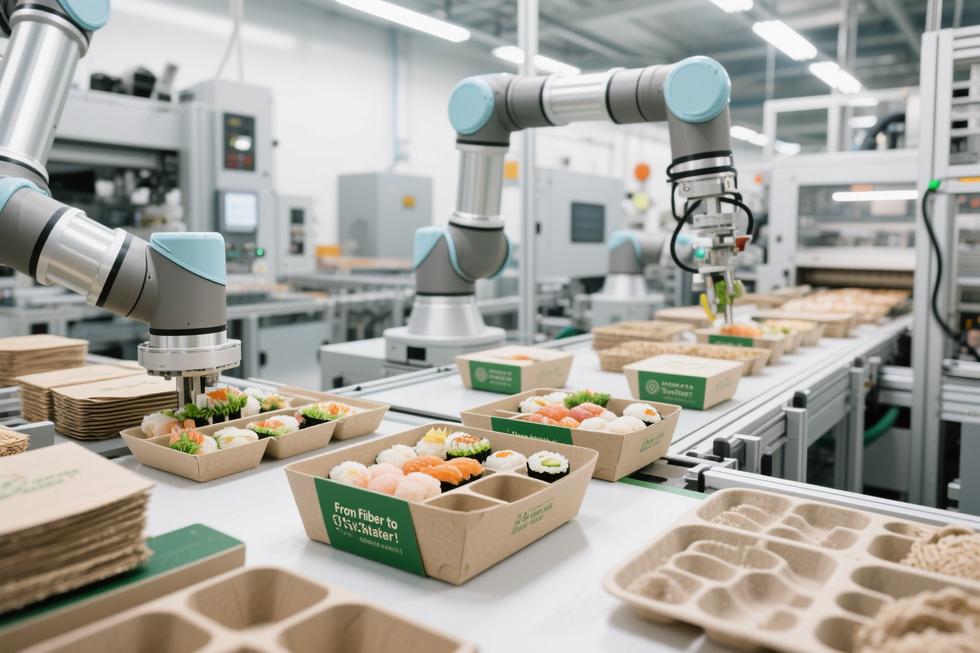
The technologies that translate renewable fibers into a practical, safe, and market-ready sushi box sit at the intersection of material science, precision manufacturing, and standardized performance. This subchapter explores how the choice of material—bagasse, PLA, or molded pulp—and the corresponding processing techniques shape not only the product’s physical properties but also its environmental trajectory, regulatory acceptance, and global practicality. In practice, the factory blends fiber-based substrates with targeted processing steps to deliver a container that can resist grease and moisture, maintain form during transport, and align with the circular economy’s demands for recoverability and end-of-life stewardship. The journey from fiber to finished box begins with a careful pairing of substrate and barrier strategy. Bagasse, a pulp derived from sugarcane fibers, provides a sturdy, naturally porous base that can be molded into multi-compartment trays with inherent grease resistance. It often serves as the structural backbone in molded pulp forms, where heat and pressure shape the substrate into complex geometries while preserving rigidity. The structural balance is enhanced by integrating a moisture and grease barrier—most commonly a thin PLA layer or an aqueous coating—that shields contents from rice moisture and oil migration without resorting to traditional petrochemical plastics. PLA, a plant-based bioplastic, lends itself to clear liners, lids, or surface coatings, enabling crisp visibility of sushi components and enabling advanced sealing solutions. Its thermoforming and extrusion pathways offer precise surface finishes and predictable barrier performance, with the caveat that heat tolerance must be managed to prevent deformation during frozen storage or hot holding. Molded pulp completes the trifecta by delivering fully fiber-based components that can form intricate shapes, from hinged lids to multi-compartment trays, while remaining compatible with compostability targets. The finishes on molded pulp—ranging from aqueous coatings to PLA overlays—are chosen to optimize leak resistance without compromising biodegradability. The interplay among these materials is not simply a matter of substituting one for another; it is a carefully engineered system where the barrier layer, the core substrate, and the final surface treatment all contribute to a predictable shelf life and end-of-life outcome. In processing terms, the core manufacturing technologies revolve around a handful of complementary operations. Thermoforming remains essential for shaping PLA-derived components, delivering tight tolerances and smooth finishes that support reliable lid positioning and secure seals. Injection molding adds rigidity for components that require higher mechanical strength, such as corner reinforcements, latch structures, or intricate locking mechanisms that keep multi-compartment trays intact during transport. Pulp molding, the workhorse for bagasse-based trays, uses presses and controlled drying to form stable vessels and carriers with a naturally favorable look and feel that resonates with sustainability claims. The coatings and laminations layer on top of these substrates to deliver grease resistance, moisture barriers, and, when needed, heat resistance. PLA coatings or laminates are a common choice for lining and sealing surfaces that contact moist foods, while water-based coatings offer a PFAS-free route to grease resistance. The choice of coating is as strategic as the substrate: it must harmonize with recycling and composting streams, avoid introducing contaminants into compost facilities, and maintain performance during the box’s life cycle. Beyond the material-and-process pairings, the industry’s forward movement is increasingly shaped by intelligent production configurations. Multi-footprint platforms and modular automation enable a range of formats—from round to square compartments—to be produced on a single line, dramatically reducing the need for separate tooling and enabling rapid changeovers. This flexibility is essential as the market shifts toward shorter runs, more customization, and local production that minimizes freight and carbon impact. In regional settings, factory footprints vary, yet the underlying aim remains the same: to blend fiber-based substrates with barrier systems that sustain hot or cold foods while preserving the product’s integrity on the shelf and in transit. The production sequence often starts with substrate preparation, followed by forming and shaping, a transition to barrier application, then capping and sealing, and finally quality testing. In-line quality controls—ranging from moisture-gradient checks to seal integrity tests and visual inspections—ensure that every tray meets both food-safety standards and consumer expectations for leak-proof performance. The sensory experience—the crispness of a nori sheet adhering to rice without oozing moisture, or the neat separation of compartments that keeps flavors distinct—depends on precise material selection and process control. Certification frameworks intersect with manufacturing choices at multiple stages. Food-safety compliance, traceability, and migration testing for contaminants are prerequisites for any material intended for hot or cold food contact. The objective is to demonstrate that the packaging materials will not release substances that compromise the safety or flavor of the sushi. For compostability, industrial facility standards define the conditions under which the box will break down within a defined period without leaving microplastics. These standards often reference recognized programs and test timelines, establishing expectations for brands, manufacturers, and waste-management partners. For forest-derived components, sustainability claims may be backed by certifications that cover responsible sourcing and chain-of-custody. The combined emphasis on safety, sustainability, and performance is why many factories pursue a suite of certifications that spans material safety, furniture-grade paper standards for fiber components, and compostability benchmarks. The global implications of these manufacturing choices extend well beyond the factory floor. On the environmental side, substituting conventional plastics with bagasse, molded pulp, and PLA-based systems can dramatically reduce the plastic footprint associated with takeaway packaging. In several contexts, estimates point to substantial reductions in plastic waste when fiber-based solutions replace certain petroleum-based alternatives in foodservice packaging. The adoption of compostable packaging aligns with the broader push toward industrial composting infrastructures, which can metabolize PLA-containing products within defined timeframes. However, scalability hinges on the presence of compatible end-of-life facilities; without accessible industrial composting networks, the environmental benefits may be dampened. This reality has driven a global shift toward aligning packaging designs with regional waste-management ecosystems, ensuring that product claims of compostability are verifiable in practice. The regulatory and policy landscape also shapes how these technologies are deployed. Certifications such as compostability and food-safety audits, along with responsible-sourcing credentials, influence procurement decisions and brand legitimacy. In regions with mature composting networks, producers can confidently offer certified compostable boxes that claim complete decomposition within industrial facilities. In areas where such infrastructure is developing, manufacturers may prioritize barrier performance and shelf-life stability while supporting long-term infrastructure investment. The result is a dynamic interplay among material properties, processing capabilities, regulatory acceptance, and the evolution of waste-management systems. Market demand for sustainable, leak-resistant packaging continues to push innovations in laminate-free coatings, heat-tolerant fiber bases, and modular lines that reduce waste and energy consumption. Cost considerations remain a central challenge, as the premium for compostable materials must be balanced against savings from reduced plastic use, optimized logistics, and longer-term regulatory compliance. The most successful factories are those that treat certification as a design feature rather than a mere afterthought, embedding it into both material selection and process engineering from the earliest design reviews. For readers seeking a broader picture of how the industry translates a fiber-based concept into a scalable product, consider examining the evolving landscape of sushi-box offerings and their packaging ecosystems, which illustrate the range of formats, barriers, and end-of-life pathways discussed here. sushi box
Final thoughts
The compostable sushi box factory embodies a convergence of material science, industrial engineering, and responsible stewardship. By selecting bagasse, PLA, or molded pulp based on performance and regional compostability standards, factories can tailor products to different cuisines, climates, and regulatory regimes without compromising safety or quality. Certifications such as BPI, CMA, and ASTM D6400 provide a credible signal to customers and regulators that packaging will biodegrade in commercial facilities within a defined timeframe. Economic considerations—material costs, supply-chain reliability, and capacity planning—determine whether a factory can meet rising demand from restaurants and delivery platforms while maintaining margins. Finally, environmental and societal implications call for ongoing lifecycle assessment, transparent reporting, and community engagement to ensure that packaging choices support broader goals like waste reduction and urban cleanliness. In short, a well-designed compostable sushi box factory is not just a producer of containers; it is a partner in sustainable dining, capable of delivering consistent quality, branding opportunities, and measurable environmental benefits.
Choose our reliable disposable tableware and packaging solutions for your business. We offer quality products that meet safety standards, with fast delivery and flexible options. Partner with us today to elevate your service – contact our team now for a tailored quote!
About us
We specialize in manufacturing and supplying disposable tableware, packaging paper, and boxes. With years of experience, we prioritize safety, durability, and eco-friendly practices. Our goal is to provide businesses with trusted, cost-effective solutions backed by responsive customer support.