

As the demand for refreshing and colorful frozen treats continues to soar, the choice of serving vessels is crucial for Bubble Tea Shops, Restaurants, Food Trucks, and Catering Services. Clear plastic snow cone cups are more than just functional; they enhance presentation, ensure safety, and cater to diverse consumer needs. This article takes a deep dive into the materials and designs that define these cups, explores current market trends and applications, and finally looks at the environmental impacts and sustainability of using plastic. By understanding these facets, businesses can make informed choices when it comes to their serving options.
Seeing Through Sweetness: The Material Science and Design of Clear Plastic Snow Cone Cups
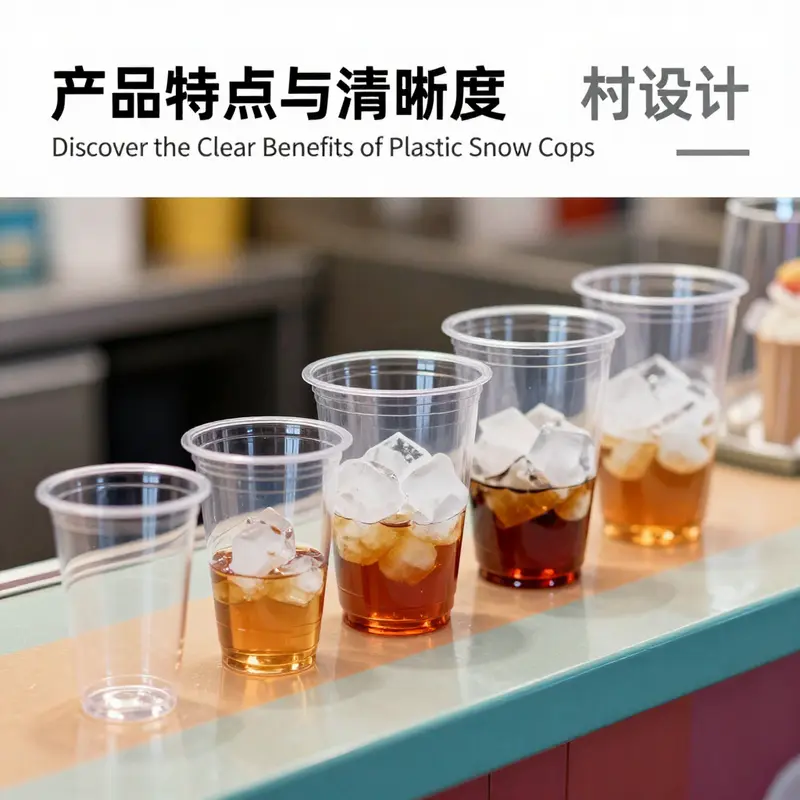
Clear plastic snow cone cups sit at a quiet intersection of aesthetics, safety, and practicality. Their appeal is immediate: a crystal clarity that makes the burst of color from syrups and shaved ice feel brighter, more inviting, and more appetizing. Yet behind that first impression lies a careful balance of material science and thoughtful design. The simplest looking cup is, in fact, the product of deliberate choices about chemistry, processing, and user experience. When we examine why these cups perform so reliably in homes, at summer parties, or in a bustling ice cream cart, we begin to see a narrative of how modern packaging moves from functional container to a carrier of mood, branding, and trust. The materials chosen, the way the cups are manufactured, and their shape all contribute to a single, coherent goal: to present the contents with minimum distraction, while ensuring safety and practicality for both the host and the guest.
At the heart of most clear plastic snow cone cups is a choice of food-grade plastics that can deliver transparency without sacrificing performance under the cold, syrupy conditions of shaved ice. The typical candidates include polypropylene (PP) and polyethylene terephthalate (PET), with occasional use of polystyrene (PS) in more economical lines. Each material brings its own strengths. PP is light, sturdy, and has excellent heat tolerance relative to its weight, making it a robust option for cold treats that may be served at varying indoor temperatures or briefly chilled storage. PET, renowned for its glass-like clarity, contributes that extra visual crispness that lets a cherry red or electric blue really pop through the cup wall. PS, while often cheaper and more brittle when pushed to extreme temperature shifts, can offer a high-clarity option that keeps costs down for high-volume venues. In practice, many suppliers blend these characteristics by selecting a primary material—often PP for cups used in fast-service contexts—and layering it with film coatings or specific wall thicknesses to optimize rigidity and transparency. In all cases, the emphasis remains on food-grade safety; certificates and standards such as FDA approval or other regional safety credentials are not merely decorative badges but essential assurances that the cups won’t impart unwanted flavors or odors to a frozen dessert.
The logic of material choice extends beyond safety into the ways a cup interacts with the product it contains. Snow cones rely on the visual impact of the snow’s texture and the syrup’s hue; the cup must offer a reliable window into that spectacle. Clarity is not simply a matter of aesthetics but of perception. A crystal-clear cup refracts light in a way that is almost akin to a gallery veil, allowing the color spectrum of the dessert to pass through without distortion. This is particularly important for events or settings where brand identity matters or where ice desserts are part of a display that must look pristine under varied lighting. The clarity is also tied to the stability of the material under cold shock. The right polymer resists fogging, clouding, or hazing when exposed to ice, syrup, and condensation, preserving a clean, unblemished surface that continues to showcase the dessert long after it is assembled.
In discussing design and production, it matters that most clear cups are formed through refined manufacturing processes such as injection molding combined with forming techniques that yield a lightweight yet resistant wall. The convergence of wall thickness, ribbing for strength, and the rim geometry that creates a comfortable grip all contribute to a cup that feels sturdy in the hand even when carried for a short distance from cart to table. The typical sizes—around 4 ounces (approximately 118 milliliters), 12 ounces (roughly 355 milliliters), and 24 ounces (about 700 milliliters)—reflect the needs of both home and commercial contexts. A 4-ounce cup can be a kid-friendly portion or a sampling size, a 12-ounce cup suits a standard single serving in a quick-service setting, and a 24-ounce cup satisfies larger appetites, outdoor gatherings, or recurring promotions. The cone shape is deliberate; it gives a natural grip when fingers wrap around the tapered body and helps with stacking for efficient storage and transport. Some variants include anti-leak features or secure lids that minimize spill risk during transport, an essential consideration for outdoor events or busy street vendors.
Durability and environmental considerations also thread into this narrative. Although many of these cups are designed for single use, there is a growing presence of more durable, reusable options crafted from stronger plastics such as Tritan or other BPA-free materials. These cups offer dishwasher compatibility, which broadens their appeal to venues aiming to reduce waste while maintaining the convenience and visual appeal of clear cups. Reusability introduces new design challenges, too. The material must resist wear from repeated washing cycles, avoid clouding from detergent residues, and maintain transparency even after multiple uses. The practical truth is that the majority of clear snow cone cups in the market remain disposable, but the spectrum is widening. Consumers and operators increasingly recognize the trade-offs between the cost-per-use of a disposable cup and the upfront investment in a durable, reusable version. This awareness sits alongside a broader recycling narrative. Although many cups are recyclable where local facilities permit, the true environmental footprint hinges on circulation: how easily these cups can be collected, sanitized, and reintroduced into manufacturing streams. In this context, material thickness and the absence of contaminants are critical for recycling compatibility, while the choice of material can influence downstream processing options. A lightweight, clear PP or PET cup with clean edges is more likely to be recycled in a standard system than a cup with opaque coatings or composite layers that complicate separation.
Beyond safety and sustainability, the cups’ design remains deeply linked to user experience. For a host, a clear cup is more than a vessel; it is a stage on which the dessert performs. The visibility of the ice and syrup lends itself to creative presentation: a layered effect with contrasting colors can be arranged to catch the eye from across a room, guiding guests toward a moment of anticipation as they approach the serving station. The rim quality—smooth and rounded—ensures comfortable sipping without catching on lips, a small but meaningful factor in customer satisfaction. The interior surface finish matters as well. A smooth interior prevents syrup from clinging, which can occur with rougher finishes and complicate cleaning if the cups are intended for reuse. For commercial operators, keeping a clean, glossy interior reduces product waste, because ice and syrup flows stay consistent from sip to sip. The chemistry here is subtle but real: a well finished interior reduces the chance of syrup residue forming an uneven film that could mar the clarity and the overall sensory impact of the snow cone.
Another thread in this story is the way these cups support branding and merchandising without demanding loud visuals. Clear cups act like a transparent canvas that can be easily branded through printed sleeves, labels, or printed designs on the cup surface itself. The absence of heavy coloration allows brands to tell a story through color contrasts, typography, and logo placement without competing with the product’s own visual drama. This is particularly valuable in types of venues where quick recognition matters—farmers’ markets, outdoor festivals, and seasonal pop-ups—where customers decide in a heartbeat whether they want to indulge. The possibility of pairing with lids or secure tops adds a further layer of versatility. For street vendors, a lid that fits snugly can turn a cup into a portable treat, reducing spillage and making it easier for customers to carry an icy sweet to amusement or seating areas. In terms of broad category strategy, these cups sit within a larger class of disposable drinkware that prioritizes clarity and reliability, a pairing that supports both the practical needs of service and the visual narratives of the dessert.
In contemplating the spectrum of options, it is useful to think about where these cups fit within the broader ecosystem of packaging and serving ware. The clear cup is not an isolated choice but sits alongside other components like lids, sleeves, and straws that shape the whole customer experience. The decision to choose PP versus PET hinges on the expected temperature range, the anticipated handling conditions, and the desired balance between cost and performance. For instance, a venue that prioritizes a crisp, glass-like appearance and has moderate turnover may opt for PET-based cups for their optical clarity, while another operation that expects frequent transport under warm sun could prefer PP for its resilience to heat and impact. The thickness of the cup wall—often 0.2 to 0.5 millimeters in many wholesale lines—also impacts rigidity, stacking stability, and the perceived value of the product. A slightly thicker wall may feel sturdier in the hand and stack more securely, reducing the risk of toppled stacks during restocking or display. These micro decisions accumulate into a product experience that feels seamless to the consumer and efficient to the operator.
Towards the end of the spectrum of considerations, one might reflect on how transparency aligns with safety and trust. Consumers often equate clear cups with purity and cleanliness, a psychological cue that reinforces confidence in the dessert’s safety and quality. The clear wall allows both the operator and the guest to observe any residues or imperfections, enabling a straightforward assessment of hygiene and maintenance. In environments where quick turnover and high guest flux define the day, that sense of trust—fostered by transparent clarity and consistent product appearance—can become a quiet differentiator. The material performance must, of course, be consistent with food-contact standards and reporting. Even when the cups are used in seasonal or outdoor contexts, this alignment with safety expectations remains critical. As such, the best manufacturers continuously test clarity under simulated service conditions, ensuring that the cup’s optical properties hold steady from first pour to last bite, and that the cup remains free from off-odors or chemical transfer that could mar the sensory experience of the snow cone.
For readers who want to explore the broader landscape of options within disposable drinkware, the plastic cups category represents a practical nexus of affordability, branding flexibility, and performance. Within this category, a carefully chosen clear cup can support a wide range of events—from casual family gatherings to professional catering—without forcing compromises in either presentation or safety. The decision to lean into a clear cup, over more opaque or heavily designed alternatives, speaks to a philosophy of letting the product shine. When the ice is bright and the syrup is vivid, the cup should recede into the background, letting the dessert take center stage. It is a reminder that in packaging, sometimes the most persuasive choice is the one that performs its role with minimal distraction, leaving the guest with a pure, unmediated sensory experience.
As we consider the future of clear plastic snow cone cups, several trajectories emerge. Innovations in polymer chemistry continue to refine the balance between transparency, rigidity, and chemical resistance, enabling cups that sparkle longer under lights, resist fogging in humid climates, and withstand the rigors of transportation and stacking. The push toward safer, more sustainable packaging is unlikely to slow, and alongside it grows consumer demand for clear, reliable presentation that conveys cleanliness and quality. In practical terms, this may translate to cups designed with smarter wall structures, optimized thickness gradients for different sizes, and improved lid systems that lock in condensation while allowing easy access for quick service. All of these developments reinforce a larger truth: the appeal of the clear cup is not solely about seeing through to the ice and syrup. It is about facilitating a smooth, enjoyable experience for both the server and the guest, aligning form with function in a small but meaningful way.
To deepen understanding of the materials and their roles in food-contact applications, one can explore authoritative resources that summarize the properties and standards governing these plastics. For instance, industry bodies provide technical data on the safety, mechanical performance, and processing parameters of common food-contact plastics, offering guidance on where each material excels and where it may require special handling. For readers seeking a concise synthesis of these principles, a reputable industry reference can be consulted at the British Plastics Association’s official materials and standards repository. This resource provides context for how food-grade plastics are evaluated and how manufacturers translate those standards into everyday serving ware like clear snow cone cups. In the practical terms of product selection, the alignment of material choice with intended use—whether for a casual home party or a high-volume outdoor event—remains the guiding principle for a satisfying, safe, and visually compelling experience. For those curious about how such standards translate into everyday packaging decisions, a deeper dive into industry guidance is readily accessible through resources that connect material properties to real-world performance.
For a more tactile sense of how these cups live in the broader ecosystem of packaging and serving ware, it helps to consider the journey from raw polymer to finished cup, and then to consumer hands. The path begins with carefully formulated resin pellets that are melted and injected into molds that shape the cup’s exterior geometry. The interior is finished to a smoothness that minimizes drag and residue, while the exterior is treated to enhance glare resistance and color fidelity under typical display lighting. During this journey, quality control checks ensure that each batch meets consistency standards for clarity, thickness, and surface finish. In facilities that produce these cups at scale, automation and meticulous measurement combine to ensure that every cup not only looks right but performs under pressure: it stacks securely on a tray, resists bending or cracking when dropped, and remains free from hydrating odors after multiple cycles in reuse scenarios. The result is a product that, at a glance, seems simple, yet is built on a dense matrix of decisions about chemistry, physics, and human factors. The different sizes, shapes, and tolerance levels offered to foodservice operators are not arbitrary; they reflect years of experience in balancing customer expectations with operational realities—how long a line can run before a refill, how many cups must fit on a display, and how the cup’s clarity can be preserved over hours of service.
In closing this exploration, the clear plastic snow cone cup emerges as more than a container. It is a carefully engineered interface between dessert and diner, designed to elevate color, texture, and refreshment while maintaining safety, practicality, and environmental awareness. The choice of material—PP for resilience and cost-effectiveness, PET for unmatched clarity, or a hybrid approach where the wall thickness and surface finish are tuned to the exact needs of a venue—serves the dessert rather than competing with it. The design details—from the rim for easier grip to the interior smoothness that reduces syrup cling—describe a product that is as reliable as it is attractive. And with the growing emphasis on reuse, recycling, and responsible sourcing, today’s clear cups are increasingly part of a broader conversation about how everyday items can be both delightful and sustainable. For readers who wish to situate these observations within a larger framework of food packaging standards, the following external reference offers additional context on the material science and safety considerations governing food-contact plastics: https://www.britishplastics.org.uk/ . Meanwhile, to see examples of how the category frames itself within the broader world of disposable serving ware, one can explore the available options in the plastic cups category here: plastic cups collection. This linkage provides a practical pathway to examine how transparency, cost, and branding come together across different sizes and uses, reinforcing the central idea that a clear cup is more than a window—it is a reliable, adaptable participant in the choreography of a successful dessert service.
Crystal Vessels of Summer: The Integrated Role of Clear Plastic Snow Cone Cups in Homes and Commerce

The sight of a clear plastic snow cone cup, perched at the edge of a summer celebration or a sunlit sidewalk stand, is more than a simple indicator of a cold treat. It is an almost invisible promise: that the colors inside will glow with the freshness of fruit syrups, that the drink will be easy to grip, and that the experience will remain clean from spill or confusion. In this sense, the cup itself becomes a silent co-creator of perception, guiding how a consumer evaluates flavor before the first taste. The transparent shell, so often overlooked, frames the experience and invites the eye to linger on the contrast between icy frost and vibrant color. The cups therefore do more than hold material; they present options. They set the scene for a small ritual that ranges from family backyard gatherings to bustling, time-crunched retail spaces where speed and accuracy are part of the fabric of customer satisfaction. This double role—being practical while supporting the aesthetics of display—explains why clear plastic snow cone cups have traveled beyond a simple serving vessel into a nuanced tool for both home enjoyment and commercial branding. They are, in effect, a bridge between the sensory appeal of the product and the logistical demands of service culture in hot weather.
Material choice sits at the core of this bridge. Most contemporary clear cups are molded from food-grade polymers designed to tolerate low temperatures while preserving clarity. The two most common workhorses are polypropylene and polystyrene. Both offer clarity, a degree of rigidity, and a degree of chemical safety that helps prevent flavor interference or contamination. For operators concerned with food safety certifications, the relevance extends beyond mere compliance; it becomes part of the confidence a consumer feels when choosing a treat. In markets that rely on recognized standards—such as certifications associated with food contact—the presence of a credible seal or test result can become a differentiator in crowded cabinets and on crowded shelves. The cup thus acts not only as a container but as a signal. It tells the buyer that the product is carefully managed from the moment it is poured to the moment it is consumed. The design objective is straightforward and ambitious at once: maximize visibility of the product while guarding its integrity under cold conditions and during quick handoffs.
As the design progresses from material to form, the shape and dimensions of the cup come into sharper relief. The classic conical silhouette is beloved for its ergonomic advantages. The tapered walls accommodate comfortable gripping, and the steady base provides stability in a crowded cart or on a bumpy ride home from a fair. The most common capacities—small for tasting or sample experiences, standard for individual servings, and larger for family-sized enjoyment—mirror the spectrum of consumer needs. A four-ounce cup can be ideal for younger children or for brief tasting flights at a fair, while a twelve-ounce cup serves a typical party-size portion, and a twenty-four-ounce cup delivers a shareable, no-fuss option for gatherings. Some designs integrate a leak-resistant profile near the rim or a subtle lip that helps prevent drips when a spoon or straw is introduced. Even small design decisions—thinner walls to reduce weight, a slightly textured surface to improve grip when hands are wet, or a reinforced seam to resist cracking under cold shock—have downstream effects on operational efficiency and consumer satisfaction. When vendors evaluate these options, they are often balancing the trade-offs between clarity, strength, and cost, all within the context of how the cups will be used: solo indulgence at home, a family dessert, or a high-volume concession for outdoor events.
The question of durability inevitably follows. The conventional narrative frames these cups as disposable, a single-use item aligned with the fast pace of modern catering and retail. Yet, the conversation around single-use plastics has grown increasingly nuanced. In many cases, the cups are designed for routine, efficient production and disposal, aligning with service models that prize speed and low up-front investment. However, sustainability concerns push both manufacturers and users to reframe the equation. In the marketplace, there is a rising interest in reusable or semi-reusable iterations made from more durable plastics or Tritan-like materials that tolerate repeated washing and still maintain clarity after many cycles. These options respond to a consumer desire to minimize waste while preserving the clean, transparent presentation that makes the product inside appear more vivid. The tension between disposability and durability is no longer a mere logistical choice; it is a reflection of a broader cultural shift toward accountability in packaging. The industry is also exploring options that extend beyond simple recyclability, including biodegradable or compostable formulations that could, in theory, reduce end-of-life impact without compromising safety or performance. The practical challenge remains: consumer systems for recycling, composting, and responsibly disposing of these items vary widely, and the best outcomes require clear guidance and accessible recycling streams.
In the home, these cups have quietly evolved into tools that go beyond mere serving. They are used to organize and simplify daily life in clever, sometimes unanticipated ways. The transparent container makes it easy to see precisely what is stored inside when the cups are converted into keepsakes or practical home organizers after their ice-cold mission is complete. Kids’ desks, snack stations, and pantry shelves become more orderly when items can be stored in clear receptacles that show their contents without opening a lid. The same clarity that showcases a rainbow of syrups in a shop window becomes a practical aid at home, where mislaid packages and unordered small objects disrupt flow. In this sense, the clear snow cone cup becomes a case study in how a simple object can cross the boundary from product packaging to household utility, teaching families how to repurpose misappropriated containers in smart, low-waste ways. The idea of repurposing mirrors a larger cultural shift toward reducing waste through creative reuse, a theme that resonates with a growing cohort of consumers looking for practical, economical, and environmentally minded solutions.
From a commercial perspective, the utility of clear plastic snow cone cups extends into the way products are presented and marketed. The transparency of the cups enables immediate visual communication; the colors of syrups or fruit toppings can be seen from outside, inviting impulse purchases and reinforcing expectations about flavor and quality. For operators in fast-casual settings, the cups act as quick communicators of portion size, price, and value. When a consumer sees a bright, visually appealing composition inside the cup, the product becomes more than a set of ingredients—it becomes a scene with personality. This is particularly useful in environments that rely on social media sharing, where the visual appeal of the beverage or dessert is often the engine of engagement. The cups elevate that appeal without adding complexity to the service workflow. They are designed to be easily stacked, transported, and filled in high-volume environments, which helps maintain throughput while preserving the product’s visual impact. In this light, the cup becomes strategic equipment, not merely a vessel. Its design and material choices influence the pace of service, the precision of portioning, and the consistency of presentation across multiple locations, which in turn supports brand cohesion and customer trust.
In the broader market, the production and procurement of clear plastic snow cone cups are influenced by a mix of consumer demand, regulatory considerations, and supplier innovation. The market rewards products that can deliver high clarity, reliable performance in freezing temperatures, and predictable pricing. This often means balancing criteria like wall thickness, polymer type, and thickness tolerance, all of which contribute to the perceived value of the cup. It also means recognizing that clear plastics must withstand not only the cold but occasional contact with acidic syrups, which can affect clarity or surface integrity over time. Accordingly, manufacturers test these items under simulated service conditions to ensure that they meet safety and performance expectations. In practice, this translates into cups that maintain transparency after repeated exposure to freezing temperatures and sugars, while also resisting deformation when gripped or packed in a crowded display or vehicle. The result is a product with a longer horizon of usefulness than a purely one-off item, even if most users will still discard it after a single event.
Branding and customization form another layer of value in the market for clear plastic snow cone cups. The ability to print logos, branding colors, and messaging on the surface makes the cup an advertising surface as well as a container. In the competitive world of ice-based desserts and cold beverages, such customization supports consistent brand identity and helps create a cohesive consumer experience across different touchpoints, from store counters to delivery packaging. For businesses that rely on a strong visual identity, the cup thus functions as a micro-billboard that carries brand recognition into the consumer’s home or office. It is important, however, to balance customization with clarity. Printed designs should not compromise the cup’s transparency or interfere with the viewing of the product itself. The most successful branding strategies keep the logo or messaging concise, selective, and well-integrated with the product presentation, rather than overpowering it. In this sense, the cup’s value is not solely in its ability to contain but in its capacity to convey a story—of freshness, of care, and of consistent quality across all stages of the consumer journey.
The sourcing landscape for these cups reflects the global nature of modern supply chains. A range of procurement channels exists, from large-scale wholesale suppliers to specialized packaging manufacturers. The economics of scale often determine the most practical choice for a given business, especially for operators who must balance cost with performance and safety. The market tends to reward compatibility with existing formats—cups that can be easily integrated with lids or spill-proof add-ons, with compatible accessories like spoons or lids, and with packaging that can be rapidly assembled in busy kitchens or kiosks. To buyers, this is a reminder that every component of the serving system, from cup to lid to straw, contributes to the overall user experience and to operational efficiency. For those seeking to source options, the plastic cups category provides a wide range of choices, enabling buyers to compare thicknesses, capacities, and finishes that align with their service model. See the plastic cups category for options that suit different volume needs and branding goals. plastic cups category
As the conversation about packaging evolves, the interplay between consumer preferences and environmental responsibility becomes increasingly central. Consumers are more attuned to the environmental footprint of single-use items, and they expect brands and retailers to demonstrate accountability. This does not mean discarding the functional advantages of clear plastic cups; rather, it means innovating toward more sustainable options that still preserve clarity and performance. Some manufacturers are exploring biodegradable formulations that offer a reasonable path to reducing long-term waste, while others are investing in more robust recycling programs that encourage correct disposal and collection. The result is a market that recognizes the value of transparency in both senses: the cup’s clear appearance and the clarity of the supplier’s environmental commitments. In the end, the future of the clear plastic snow cone cup will likely hinge on the emergence of packaging ecosystems that combine high visual appeal with responsible material choices and practical end-of-life solutions. The cups will continue to serve as a practical tool, a marketing instrument, and, increasingly, a symbol of a broader commitment to sustainable consumption.
The regulatory and safety frameworks that govern food-contact materials provide the guardrails that keep these expectations in balance. Standards and certifications help ensure that what is offered to consumers is appropriate for contact with ice, syrups, and other cold foods. In jurisdictions where regulatory oversight is strongest, manufacturers are required to demonstrate that their materials do not migrate harmful substances into food or drink during typical use. Consumers benefit from these checks through greater assurance about the safety of what they purchase and consume. While the specifics of compliance can vary by country or region, the general principle remains consistent: the packaging designed for cold desserts should protect both the product and the consumer, preserving flavor integrity and minimizing risk. In this context, clear plastic snow cone cups are not merely vessels; they are a visible manifestation of a safety-first approach to packaging that aligns with broader public health goals.
Looking toward the horizon, several directions seem likely to shape how these cups evolve. First, advances in material science are likely to yield clearer, stronger, and more heat- or cold-resistant polymers that can maintain pristine transparency even under challenging conditions. Second, sustainability will grow from a trend into a standard, with more options to select materials that are easier to recycle, more compatible with existing waste streams, or designed for longer reuse cycles. Third, the integration of branding and consumer engagement features—such as smart labels, color-coding, or interactive packaging elements—will expand the role of the cup from passive container to active participant in the brand experience. And finally, the ethical and environmental considerations that drive consumer choices will push suppliers to provide better information, more transparent sourcing, and clearer guidance on end-of-life options. In this evolving landscape, the clear plastic snow cone cup stands as a small but telling artifact of contemporary packaging culture—simple in form, complex in its implications, and quietly essential to how we savor summer.
External resource for regulatory context and safety guidance: https://www.fda.gov/food/food-safety-for-consumers/food-safety-terms/food-contact-materials
Transparent by Design, Responsible by Choice: Reimagining the Lifecycle of Clear Plastic Snow Cone Cups
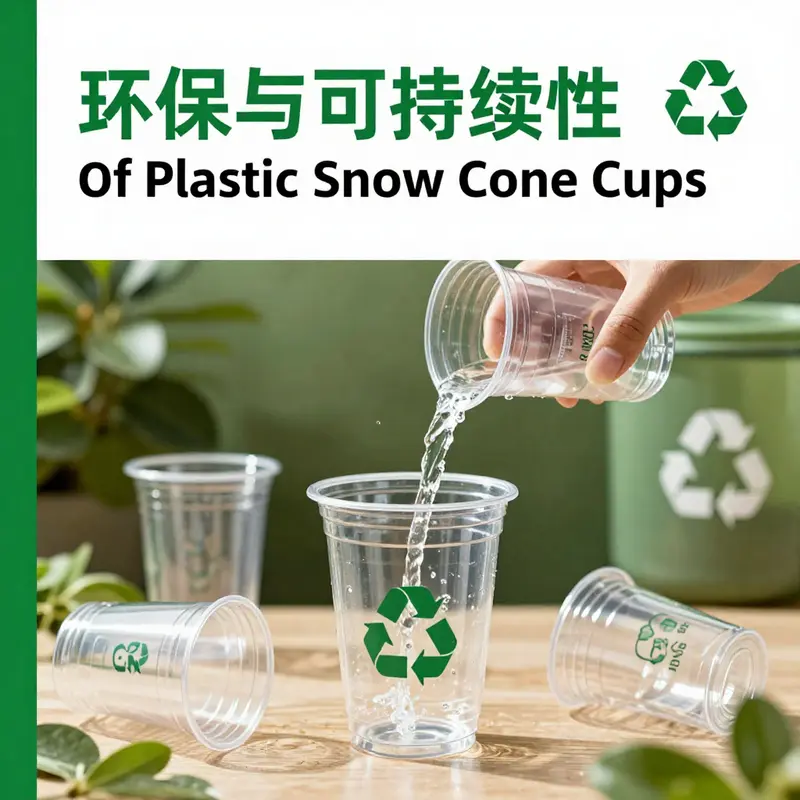
Clear plastic snow cone cups sit at the intersection of everyday practicality and environmental discourse. Their appeal lies in a simple, almost magical property: when ice and syrup meet the cup, the color of the drink remains vivid, unhidden by the container itself. Consumers and vendors alike prize that clarity, which makes flavors look more inviting and portions appear generous. Yet beneath this surface lies a larger conversation about how we design, use, and ultimately dispose of single-use items in a modern economy that increasingly values sustainability. The chapter that follows weaves together material science, consumer behavior, and policy signals to illuminate what it means to treat a common disposable cup not as a throwaway object but as a participant in a circular system that seeks to minimize harm while preserving the convenience that millions rely on every hot season and every crowded event.
In most markets today, the material behind clear plastic snow cone cups is chosen for a practical triad: safety, transparency, and cold tolerance. The cups are typically molded from food-grade polymers such as polypropylene (PP) or polystyrene (PS), with some products flirting with newer formulations touted for even higher clarity or strength. They are designed to withstand the chill of ice, the damper of syrup, and the occasional rough handling of a busy service line. When safety certifications enter the picture—such as standards that ensure compatibility with cold foods and beverages—the cups gain a measure of trust that helps vendors and households feel confident in serving ice-based treats to children and adults alike. The visible success of these materials hinges on their resilience in cold conditions, their ability to resist cracking under pressure, and their capacity to retain color and texture of the drinks poured within them. It is this combination of properties that makes clear plastic snow cone cups a staple in homes for DIY party setups, in outdoor festivals, at street corners after-ball games, and in small kiosks near beaches and parks.
Design choices drive more than just performance. Forms commonly come in a few standard capacities—often 4 ounces for mini servings, 12 ounces for standard cones, and 24 ounces for larger party-sized portions. The cone-like taper of the cup makes gripping easier, reducing the chance of slips during busy service moments. Some variants incorporate a simple anti-leak structure or a slightly reinforced wall to prevent syrup from creeping along the rim during rapid handling. These details, while modest, are part of a broader engineering logic: the cup must perform reliably in a high-throughput environment while remaining cost-competitive for mass production. This is essential because the economics of disposable cups shapes how many households and vendors adopt them, how many are transported across regions, and how they move through the waste stream at the end of their short-lived life. The trade-offs are not lost on researchers and policymakers who study the feasibility of scaling up alternatives, including reusable systems or more sustainable single-use options.
From a lifecycle perspective, the environmental footprint of clear plastic snow cone cups is not confined to the moment they are filled. It begins with raw material extraction or polymer synthesis and proceeds through manufacturing, distribution, consumer use, and finally disposal. Each stage contributes to energy consumption, emissions, and resource use. The most straightforward critique targets the single-use nature of these cups. In a world increasingly attentive to plastic waste, the ubiquity of disposable cups has become a visible symbol of consumption patterns that favor convenience over long-term stewardship. Even when cups are manufactured from materials marketed as recyclable, the reality on the ground often falls short. Recycling infrastructure lags behind production volumes in many regions, and the complexities of collecting, sorting, and processing flexible plastics or polystyrene make efficient recovery challenging. In practice, a sizeable portion of these cups ends up in landfills, incinerators, or informal disposal streams where environmental impacts can persist for decades. The fluorescence of their transparency is a stark reminder of what is at stake when a low-cost item travels cheaply from consumer hands to waste streams without a clear afterlife.
One common misconception in this conversation is the idea that “biodegradable” or “compostable” plastics automatically solve the problem. In theory, such labels suggest a cleaner end-of-life scenario. In reality, the effectiveness of composting depends on industrial facilities that can heat, aerate, and manage the material within strict timeframes. Home composting rarely achieves those conditions, and municipal composting programs vary widely in capability. Even when a cup is labeled as compostable, it may still require infrastructure that is not universally available. PLA, for example, has been promoted as a more sustainable alternative in some circles, but its decomposition depends on specific composting environments that do not exist in many urban settings. In these contexts, the promise of “green” plastics risks becoming a misalignment between marketing claims and practical outcomes, especially when the default fate of many disposable cups remains disposal rather than recycling or reuse.
Against this backdrop, reusing clear plastic snow cone cups emerges as a pragmatic route toward reducing environmental harm. The idea is not to demonize disposables outright but to acknowledge that, given current systems, repeated use offers a path to lower per-use impact. If a consumer or a small business designates a single cup for multiple uses, the cumulative environmental burden per serving can drop meaningfully. This is particularly true when hydration, storage, and organization practices are aligned with a reset cycle that minimizes waste and maximizes the value of each physical object. The practical potential for reuse depends on several factors: the material’s resistance to repeated cleaning in varying temperatures, the ability to tolerate regular dishwasher cycles, and the cup’s physical integrity after multiple uses. In some cases, PP-based cups of the same family as those used for beverages have shown that, with proper care, they can withstand dozens of cycles before signs of wear become problematic. A widely cited data point from early 2026 points to PP5-type beverage cups achieving fifty uses or more when subjected to conscientious maintenance. While this reference is not universal across all PP or PS formulations, it signals that the environmental mathematics of reuse can be favorable under the right conditions. Reuse, then, becomes less a moral prescription and more a practical optimization, one that reduces material throughput while maintaining service quality.
Creative repurposing can further extend the life of a clear plastic cup beyond its ceremonial role in a dessert lineup. When cleaned and dried properly, a cup can transform into all sorts of everyday tools: a compact travel rinse cup, a lightweight seed starter for small-at-home experiments in horticulture, or a simple, transparent container for organizing small items during travel. The transparency that once served to display a drink now serves to reveal the contents of its new role, helping users observe liquid levels, root growth, or clutter in a way that opaque containers cannot. Such repurposing aligns with a broader cultural shift toward mindful consumption, where the boundary between “useful object” and “waste” becomes negotiable, and where individuals see themselves as stewards who can extend value through small, intentional actions. When a household reaches fifty cycles on a single cup, the impact is not merely mathematical; it becomes a visible narrative about how everyday choices shape the broader environmental profile of the products we rely on for seasonal celebrations and daily refreshment.
This shift toward reuse is not only a consumer choice but an invitation to a systemic retooling of how industries design and market disposables. A growing segment of the policy landscape has begun to favor models that encourage reuse through deposit systems, rental or take-back programs, and standardized compatibility across cups and lids. In practice, this means that manufacturers, distributors, and retailers can collaborate to create a more resilient value chain in which a consumer who returns an item or swaps to a more durable option drives down the overall waste stream. The economic calculus for such transformations hinges on predictability: predictable demand, predictable cleaning and maintenance costs, and scalable logistics for collecting and redistributing cups across venues. When these pieces align, the customer experience remains smooth—still offering the same spellbinding clarity of the drink inside—while the environmental footprint remains lower in aggregate than it would be under a purely single-use paradigm.
In parallel with these shifts, there is a quiet but powerful educational thread that runs through families, schools, and small businesses. Consumers increasingly understand that the ease of one more party favor comes with responsibilities that extend beyond the moment of use. This awareness often begins with a simple experiment: measure and compare the amount of waste generated by a typical party or event with and without a reuse-focused approach. The contrast can be striking. A family gathering might rely on a few reusable cups for drinks and snacks, paired with a modest number of disposable items for the sake of convenience during peak moments. In such a scenario, the group experiences a noticeable reduction in waste, and the sense of shared stewardship becomes a talking point that travels from the kitchen to the car, to the school playground, and into local community conversations about waste management. Similarly, a small food stall or mobile vendor that adopts a stack of durable cups or a return-and-reuse system can preserve the same level of service while dramatically reducing plastic waste. This is not a call to abandon efficiency, but a call to design efficiency into the product system itself, so that the benefits of fast service do not come at the cost of long-term environmental integrity.
Technology and data also play a role here, shaping how we measure impact and how we communicate it back to stakeholders. The truth is that numbers alone cannot tell the entire story; but they can illuminate the paths that lead to better outcomes. Life-cycle assessments, waste-audit reports, and user-behavior studies help map where environmental savings are most achievable. For instance, if a community can support high-efficiency recycling streams for acrylics and polystyrene or can consolidate cleaning operations to minimize energy use, then the tens of thousands of cups circulating over a season can begin to function as a resource rather than a waste burden. In addition, consumer-facing labeling and clear information about disposal and reuse protocols empower people to participate in environmental improvements without sacrificing the convenience that makes summer treats so appealing. These shifts do not happen in isolation; they require alignment across manufacturing, retail, waste management, and consumer education. The most successful outcomes emerge when each link in the chain understands its role and the value of maintaining a shared vision that goes beyond short-term profits toward long-term environmental resilience.
To situate this conversation within the broader environmental narrative, it helps to connect the everyday choices around clear plastic snow cone cups to the global plastics challenge. The World Wildlife Fund and other environmental organizations have highlighted how plastic pollution persists because systemic barriers—economic, infrastructural, and behavioral—constrain our ability to close loops efficiently. The discourse around reuse and better design is not an abstract ideal; it is a concrete strategy to reduce plastic leakage into the oceans, soils, and habitats that sustain life. When communities prioritize reuse, invest in better recycling or recovery options, and support products that maximize longevity and versatility, the gains accumulate across multiple sectors. The knowledge that a single cup can contribute to fifty uses rather than one strengthens the argument for a cultural and industrial pivot away from disposable mindsets toward circular practices. This shift also nudges industries toward better material choices, more robust testing for durability, and clearer communication about what happens after a cup fulfills its initial function.
The tension between aesthetics and responsibility remains. The same transparency that makes a snow cone look inviting can highlight the stark reality of plastic waste if viewers do not consider end-of-life outcomes. The challenge is not to dim the appeal of a clean, crystal-clear cup but to expand the story to include reuse, recycling, and responsible disposal. In practice, this means redesigning the economic signals that guide consumer behavior—such as pricing, deposit schemes, and convenience-driven defaults—so that the sustainable option is also the simplest option. It means equipping individuals with practical knowledge about how to clean, store, and reuse cups, and it means offering infrastructure that supports safe cleaning, safe washing, and ready access to reintroduction into a new cycle of use. In doing so, the most ordinary item in many summer rituals—the clear plastic snow cone cup—can become a symbol of a more deliberate, resource-smart culture that values transparency, not only in the cup’s material but in the sustainability of our practices.
For readers who want to explore practical steps, a starting point is mindful selection. When possible, choose reusable options for repeated use within a family or a short-term community event. Where disposable options are unavoidable, prioritize products from systems that offer clear guidance on disposal and, ideally, take-back or recycling programs. In every case, the decision to reuse or recycle should be paired with a simple routine: rinse promptly, dry completely, and do not mix with other recyclables that could contaminate the stream. Even modest changes in how we handle a single type of cup can compound into meaningful reductions in waste over a season. The potential for transformative impact grows when these micro-choices are shared—across schools, workplaces, markets, and households—creating a cultural norm that treats every cup as part of a larger circle rather than a one-way ticket from shop to trash.
As this chapter connects the practicalities of material choice and product design with the larger imperatives of environmental stewardship, it becomes clear that the story of clear plastic snow cone cups is really a narrative about how modern societies can balance convenience with responsibility. The cup remains a simple vessel, but our interpretation of its role can shift. By embracing reuse where feasible, pushing for better end-of-life systems, and cultivating consumer knowledge about the consequences of disposal, we begin to align everyday behaviors with long-term ecological health. The challenge is not to abandon the utility of the cup but to expand our imagination about what a disposable item can teach us about stewardship, resilience, and collaboration across the value chain. When the story of a transparent cup is told with the clarity of its own material and the transparency of our intentions, it becomes a model for how we respond to the broader plastics dilemma: with design that respects resource limits, practices that minimize waste, and a culture that values the shared responsibility of keeping our environments clean for generations to come.
At the end of the day, the conversation about clear plastic snow cone cups is a conversation about how we model everyday life. It asks us to consider not only what is convenient today but what is possible tomorrow. It invites us to imagine a future in which the cup’s allure—its crystal-clear invitation to taste—dominates less and responsibility for the life of the product dominates more. In that future, the cups that once blinked with icy brightness become a reminder that clarity comes not only from the material’s transparency but from the transparent choices we make in the chain of use, reuse, and renewal. The practical pathways are real: adopt reuse when feasible, demand better end-of-life systems, and educate communities about how simple changes in daily routines can lead to measurable environmental benefits. The outcome is a blend of pragmatism and aspiration—a practical guide to reducing impact while preserving the joy of summer treats, a guide that keeps the cup’s purpose intact while expanding its moral horizon. For readers seeking a concrete path within this broader narrative, exploring the wider ecosystem of plastic cups—including the option to learn more about the broader family of plastic drinkware—offers a useful direction. You can explore the broader category here: Plastic Cups.
External resource: https://www.worldwildlife.org/articles/why-our-plastic-problem-is-worse-than-you-think
Final thoughts
Clear plastic snow cone cups offer more than just an attractive serving option; they embody the fusion of safety, style, and environmental consideration. As your business looks to elevate its beverage service, understanding the unique features and applications of these cups paves the way for better choices that satisfy customers while adhering to sustainability standards. Embrace these versatile tools in your beverage offerings, and seize the opportunity to leave a lasting impression with every colorful treat you serve.