
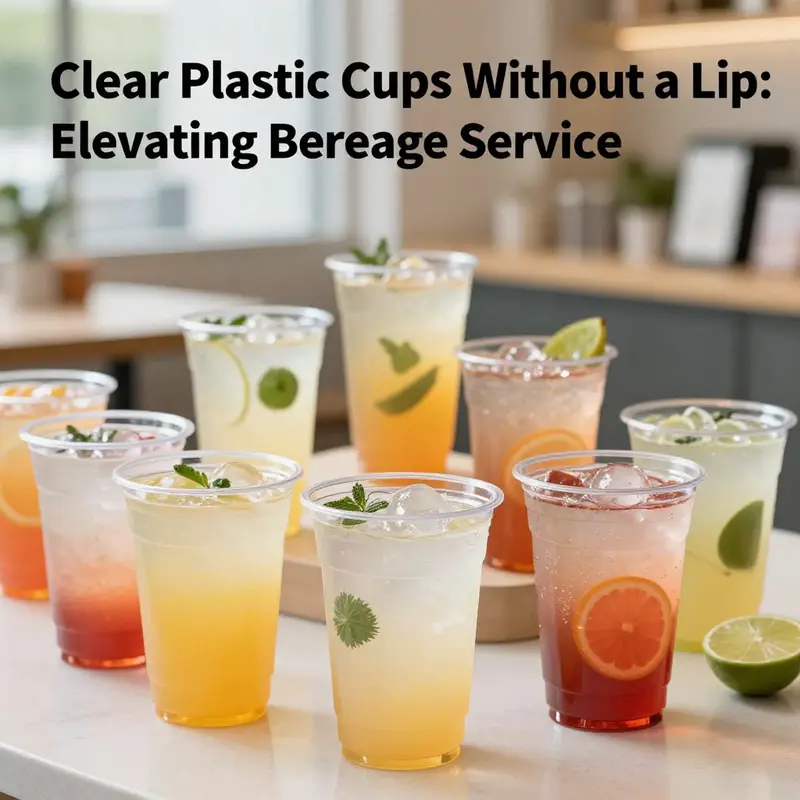
The rise of minimalistic design in serviceware is evident, especially with the emergence of clear plastic cups without a lip. These cups are not just a design novelty; they offer a blend of functionality, aesthetic appeal, and adaptability suitable for beverage chains, food trucks, event planners, and more. With a distinct ability to serve both liquid and dry contents while enhancing presentation, these cups respond positively to market demands for sustainability and efficiency. This article will delve into the various aspects of clear plastic cups without lips, including their design and functionality, market trends, applications across different sectors, and their environmental impact, providing a comprehensive overview for businesses looking to upgrade their service offerings.
The Quiet Rim Advantage: How Lipless Clear Cups Redefine Convenience, Clarity, and Branding

The pursuit of simplicity in disposable drinkware often leads designers to strip away unnecessary features and linger on the essentials: what is seen, touched, and experienced at the moment of sipping. In clear plastic cups designed without a lip, that philosophy becomes a tangible, felt advantage. The absence of a pronounced edge around the rim is not merely an aesthetic preference; it is a deliberate choice that reconfigures how users interact with a beverage, how brands present their products, and how operations move from the counter to a customer’s hand with minimal friction. The lipless, smooth opening invites a different kind of encounter with the liquid inside, where the gaze is drawn to color, clarity, and the gentle arc of the liquid surface rather than to the interruption of a raised edge. This design, often paired with a strawless sip lid, emphasizes a clean line from the vessel to the mouth and aligns with contemporary expectations for hygiene, spill resistance, and convenience in fast-paced service environments. It is a small modification with ripple effects across usability, safety, and perception that resonate from the bench of the factory floor to the curbside pickup station and into the broader narrative of modern packaging.\n\nFrom an engineering standpoint, the lipless cup integrates with a lid system that prioritizes security without sacrificing ease of use. The strawless sip lid, frequently paired with these cups, typically features a small flap cap that seals the opening when closed. This mechanism locks onto the rim, creating an airtight seal that mitigates leaks during transit and reduces the likelihood of spills when a customer is in motion. The combination of a seamless rim and a secure lid makes both cold and room-temperature beverages more manageable for customers who carry cups in bags or hands, a common scenario in takeaway and event settings. The rim itself is carefully contoured to minimize sharp edges, a feature that elevates comfort during direct contact with the lips and fingers. A rolled rim adds a further layer of safety by softening potential irritations that could occur with a harsher edge, particularly when the cup is handled by children or by adults in quick-service lines.\n\nMaterial choices play a crucial role in delivering the practical benefits associated with lipless cups. Typically molded from BPA-free, crystal-clear PET, these cups combine transparency with durability. The glass-like clarity allows consumers to assess the beverage’s hue and readiness at a glance, an attribute that is especially valued for beverages like iced coffee, lemonade, bubble tea, and soft drinks where color cues can influence perceived freshness and flavor expectations. The PET structure is designed to resist cracking under ordinary handling and modest temperature variations, while keeping the vessel lightweight enough to improve handling, reduce shipping weight, and lower overall logistical costs. The absence of a lip does not compromise the rim’s integrity; rather, it channels structural supports from the sides of the cup into the base and walls, resulting in a form that holds liquids securely while remaining easy to stack, store, and transport.\n\nThe functional advantages extend beyond the laboratory of design and into the operational realities of cafes, fast-casual restaurants, and take-away services. For staff, a lipless cup is a straightforward tool with predictable handling characteristics. The smooth rim reduces the risk of accidental cuts during busy shifts and lowers the cognitive load for new employees learning a serving routine. For customers, the experience is about effortless sipping—a seamless transition from straw or direct mouth contact to swallowing without the interruption of a raised lip. In beverages such as iced coffee or bubble tea, where ice, ice pearls, or pulp can complicate consumption, a clean, wide opening coupled with a snug lid helps maintain a controlled flow while keeping the cup visually appealing through the entire drinking process. The clear material acts as a stage for the beverage itself, making the color and texture of the drink the focal point rather than any extraneous vessel feature. This alignment of form and function has clear bearings on perceived quality and consumer satisfaction, especially in contexts where presentation is a differentiator, such as visually driven beverage cultures or premium fast-casual concepts.\n\nBranding and aesthetics are inextricably linked to the lipless design. A cup without a lip offers a minimalist canvas that can enhance a brand’s visual language without competing with the drink’s color for attention. Transparent cups invite the beverage to carry the branding story forward—if branding is applied, it tends to be more about color harmony, label placement, and lid design than about a busy rim ornamentation. The result is a product that communicates cleanliness, modernity, and efficiency. For operators who rely on consistent, high-clarity presentation, the lipless rim ensures that any branding elements—logos, color accents on lids, or subtle texture on outer surfaces—read clearly against the liquid’s surface. In hospitality environments where speed and uniformity matter, such consistency translates into faster service cycles, easier inventory management, and a recognizably clean consumer experience across multiple touchpoints.\n\nFrom a sustainability perspective, the discussion of lipless cups inevitably threads through material choices, end-of-life options, and consumer expectations about eco-friendliness. The trend lines in consumer purchasing show a growing preference for recyclable options and, increasingly, for materials that can be responsibly disposed of or composted in appropriate streams. While the clarity and rigidity of PET make lipless cups a practical choice for many operators, the environmental story gathers strength when manufacturers offer recyclable variants or formulations that enable safe thermal use while reducing environmental impact. Consumers are more likely to connect the clean aesthetic of a lipless cup with a broader commitment to responsible packaging, provided the lifecycle of the product is transparent and supported by accessible recycling streams. The challenge for suppliers is to align product design with the realities of waste management while delivering the performance features demanded by busy service environments. In other words, the lipless cup becomes a case study in how form, function, and environmental responsibility can align to support responsible consumption.\n\nMarket dynamics further illuminate why lipless, clear cups are increasingly appealing to operators who seek efficiency without compromising experience. The design’s simplicity reduces production complexity and enables heavier volumes to be processed with lower risk of defects related to edge integrity. The cups’ compatibility with lightweight, sturdy lids, including strawless variants, contributes to streamlined packaging systems that optimize both waste reduction and efficiency in high-turnover settings. The visual clarity of the cup helps operators and customers gauge whether a beverage has reached an appropriate temperature, whether it contains ice or additives, and whether the container remains properly sealed during transport. In an era where speed, clarity, and hygienic presentation are non-negotiable, the lipless cup positions itself as a practical intersection of everyday use and distinctive brand storytelling, supporting operators’ goals to deliver fast, reliable service while maintaining a crisp, modern image.\n\nFor businesses evaluating procurement options, the lipless cup represents an opportunity to align product design with operational realities and brand aspirations. It enables a streamlined approach to merchandising, where the focus remains on the beverage and its presentation rather than on obstructive vessel features. The combination with a strawless lid reinforces a trend toward secure, spill-resistant takeaway experiences, while preserving the consumer’s ability to visually assess the drink’s appearance. In such contexts, the choice of cup size—ranging from smaller 12-ounce options to larger 16-ounce or even 32-ounce capacities—allows operators to tailor offerings to menu items, customer preferences, and price positioning. The ongoing evolution of this category continues to hinge on advancements in plastic manufacturing that enhance durability, transparency, and recyclability, alongside innovations in lid design that maximize sealing capability without complicating access for the user.\n\nTo readers seeking practical pathways, consider looking beyond price alone and toward a holistic view of supply, compatibility, and lifecycle planning. The lipless design, with its emphasis on a clean, uninterrupted viewing plane and a compact, secure lid interface, aligns with workflows that prioritize speed, hygiene, and a visually appealing beverage presentation. It invites a reimagining of how a cup can contribute to both customer pleasure and brand perception—an interplay between design language and service performance that ultimately shapes a business’s competitive edge. For those curious about sourcing options in bulk, a major global marketplace offers bulk quantities and customization possibilities that can support scale while enabling brands to maintain a minimalist, premium look. If you are exploring such options, a detailed overview of the available configurations, minimums, and lead times can help align procurement decisions with store formats, event needs, and seasonal demand. For further reading in the broader context of disposable drinkware, explore the category dedicated to this family of products within our own packaging and drinkware resources, which also includes related items and branded opportunities: disposable drinkware.\n\nExternal resource: https://www.aliexpress.com/item/1005005794858333.html
Clear, Lipless, in Demand: Market Pulse and Trends for Lip-Free Clear Plastic Cups
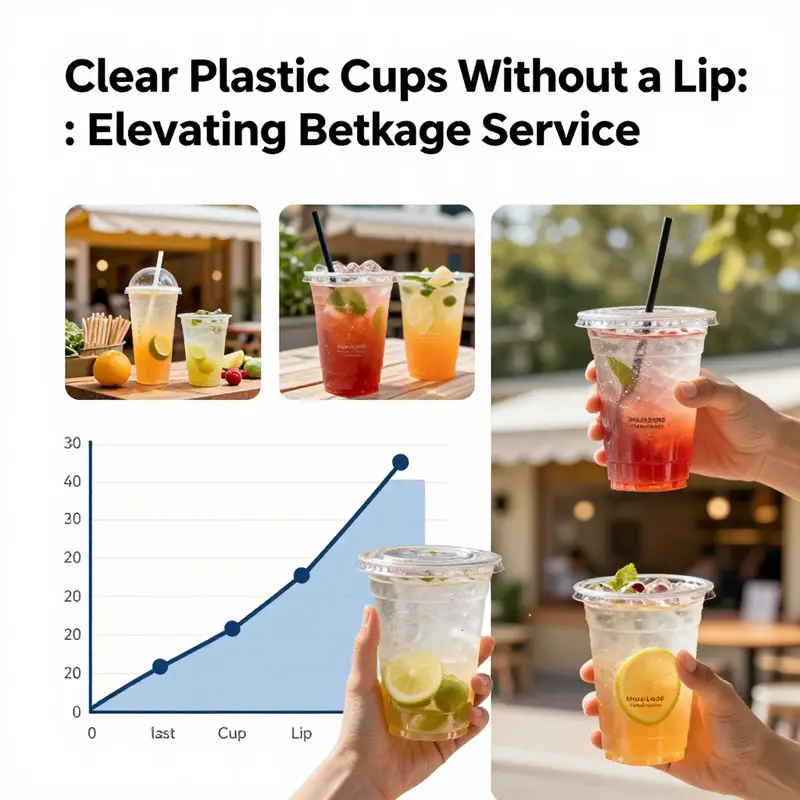
The pursuit of a clean, minimal aesthetic in disposable beverageware has sharpened attention on clear plastic cups designed without a lip. These lipless cups, often paired with a snap-on lid that includes a built-in drinking spout, offer a distinctive combination of visual clarity, hygienic handling, and spill resistance that appeals to a broad spectrum of venues from fast-casual counters to coffee hubs and pop-up events. In practice, the absence of a pronounced lip streamlines the user experience: contents are visible at a glance, the edge is less likely to harbor sticky debris, and the experience of sipping feels smoother and more controlled. This is not merely a stylistic preference; it translates into tangible advantages in high-volume service environments where speed, cleanliness, and brand presentation intersect. As such, lipless cups have evolved from niche alternatives to a core option in the broader landscape of disposable drinkware, reflecting deeper shifts in consumer expectations around convenience, hygiene, and sustainable choices.
Market demand for these cups is buoyed by a triad of consumer priorities. First, convenience drives use in on-the-go settings. The built-in sip mechanism reduces the need for additional accessories and minimizes spill risk during transit, a benefit that resonates in takeout-heavy models and campus venues where mobility, rather than lounge-time, defines the drinking experience. Second, hygiene matters. In busy service flows, the design minimizes extraneous contact points and limits exposed rims that could accumulate contaminants during handling. Third, sustainability—real or perceived—appears in tandem with the rise of clearer choices about materials and end-of-life pathways. Consumers want packaging that looks clean and feels responsible, even when it is disposable. Design and packaging teams have taken these signals seriously, integrating lipless cups into the strategic narrative of convenience without compromising clarity.
Material choices remain central to the conversation. High-grade PET and PS plastics continue to dominate because they deliver optical clarity, rigidity, and cost-effectiveness that suit high-volume manufacturing and nationwide distribution. Yet the market is quietly expanding toward safer, more sustainable options. BPA-free formulations, non-toxic additives, and options that are freezer-safe and recyclable are increasingly highlighted as baseline expectations rather than differentiators. A growing subset of suppliers is exploring plant-based bioplastics such as PLA, which can offer compostability under industrial conditions. These materials align with the environmental values of many brands, particularly those seeking to balance convenience with a clear narrative of stewardship. In practical terms, manufacturers are balancing clarity and durability with a lower environmental footprint, a combination that matters when orders are measured in tens or hundreds of thousands of units per week.
Geographically, the trajectory mirrors broader patterns in the disposable food container sector. North America and East Asia have led the surge in demand for leak-proof, visually appealing packaging that supports takeout, delivery, and fast-casual formats. The logic is straightforward: as more meals and beverages move through off-premises channels, the need for reliable, easy-to-use cups that maintain product visibility grows. Regions with dense urban populations and high cafe-to-consumer turnover, aided by digital ordering and contactless payment trends, show particular strength. This demand is supported by integrated supply chains and cost efficiencies in regions with established production hubs, where manufacturers can deliver large-volume orders with fast turnaround. Supply chain maturity matters here: when a restaurant chain replicates its packaging across dozens of locations, a dependable lipless cup with compatible lid and spout becomes part of a standardized service experience, rather than a bespoke solution.
A key design evolution in this segment centers on functional refinements that elevate both user experience and brand differentiation. Double-wall insulation, for example, serves temperature retention without sacrificing the cup’s clarity. This feature is especially appealing to beverage formats that require a longer hold time, such as iced coffees or smoothies, where temperature preference can influence consumer satisfaction and repeat purchase. Ergonomic sip spouts, refined rim geometry, and compatibility with standard straws are other enhancements that respond to consumer preferences for ease of use while preserving a spill-resistant profile. For operators, these design elements translate into a more predictable serving experience, reducing waste and customer complaints, and enabling smoother front-of-house workflows.
From a regulatory and safety standpoint, lipless cups must navigate FDA food-grade safety standards and transparent material certifications. Cleanroom production environments and rigorous quality control are increasingly viewed as essential prerequisites for suppliers aiming to win partnerships with large foodservice networks. The industry is also seeing a push toward clearer disclosures about material composition and end-of-life pathways. When brands know exactly what is in their cups and lid systems, they can better communicate environmental responsibilities to consumers and investors, a factor that often informs supplier selection in procurement teams focused on sustainability reporting.
The economic underpinnings of this market segment are shaped by both manufacturing efficiency and consumer willingness to pay for performance and aesthetics. Innovations in lightweighting—reducing resin thickness without compromising strength—have reduced shipping costs and lowered the ecological footprint of transport. At the same time, consumers are increasingly drawn to products that appear premium through their optical clarity and minimalist silhouette. This paradox of affordability and perceived quality is one of the reasons lipless cups have gained traction as a versatile option across different price tiers and use cases. As demand grows, suppliers report expanding capacity and more flexible production lines that can respond to seasonal spikes in takeout volume without sacrificing consistency.
For brands seeking to align with these trends, the selection of a supplier becomes as important as the product itself. Compliance with safety standards, reliable material certifications, and the ability to provide transparent documentation are all critical for risk management and brand trust. Sourcing strategies now frequently emphasize partners with cleanroom facilities, controlled sourcing for resin grades, and traceability across the supply chain. The goal is not merely to obtain a cup that looks right and performs well, but to secure a packaging system that can scale with demand while meeting evolving environmental expectations. In practice, this means evaluating the total package: resin type, lid compatibility, recycling or compostability options, and the supplier’s willingness to share performance data and lifecycle assessments.
Consider the experiential dimension of lipless cups in branding and marketing. A clear cup without a lip offers a pristine canvas for color, branding, and product visibility. The absence of an extra lip edge eliminates visual clutter, enabling promotions to be read and appetites to be stirred by the color and texture of the beverage itself. For retailers, this clarity can be leveraged in design-oriented stores and experiential dining concepts, where the packaging mirrors the clean lines of the interior and reinforces a modern, efficient service narrative. In practice, this alignment supports a cohesive brand story across touchpoints—from storefronts and digital menus to the physical cup in the consumer’s hand. Operationally, the cups also reduce the risk of cross-contact contaminants that can accumulate on rims during busy hours, a benefit that operators frequently report as contributing to a smoother service flow when combined with hygienic lid designs.
In sum, the lipless clear plastic cup sits at the intersection of aesthetics, function, and sustainability. The market is responding with a broader palette of materials, an emphasis on safety and clarity, and innovations that strengthen performance without sacrificing visual simplicity. The trend lines point toward continued growth in regions with strong takeout and delivery ecosystems, compounded by demand for recyclable and compostable variants that can align with corporate sustainability goals. Vendors that can demonstrate material transparency, robust manufacturing controls, and flexible production capabilities are well-positioned to capture incremental share as the category expands. For buyers, the decision matrix extends beyond price and clarity to include supply reliability, regulatory compliance, and a credible environmental story that resonates with today’s eco-conscious consumers. The convergence of these factors suggests lipless lip-free cups will remain a central element of the future of disposable drinkware.
For teams exploring procurement options, a practical starting point is to review the disposable drinkware landscape for lipless designs that balance performance with environmental considerations. This category often provides a spectrum of choices that can be matched to specific beverage formats, service speeds, and brand positioning. Explore the broader catalog to see how lipless cups integrate with lids, spouts, and closures, and how the packaging system can be adapted to seasonal menus and promotions. You can learn more about the disposable drinkware options here: disposable-drinkware.
As the market continues to evolve, let the data guide decisions. The global disposable food container market remains robust, with sip-lid and lipless cup configurations contributing a meaningful portion of the expansion. Industry analyses project a compound annual growth rate that underscores both the resilience and adaptability of these packaging solutions as consumer preferences tilt toward convenience, hygiene, and sustainability. This is not a passing fashion—it is a structural shift in how beverages are served, transported, and perceived by customers who value clarity, ease, and responsible choices. For stakeholders across production, distribution, and retail, the implications are clear: invest in scalable lipless cup designs, fortify supply chains with transparent certifications, and align packaging choices with broader sustainability commitments to meet rising expectations and secure long-term competitiveness. External resource: https://www.statista.com/statistics/1459756/global-disposable-food-container-market-size-by-region/
Lipless Clarity in Practice: Applications, Aesthetics, and Sustainability of Clear Plastic Cups Without a Lip
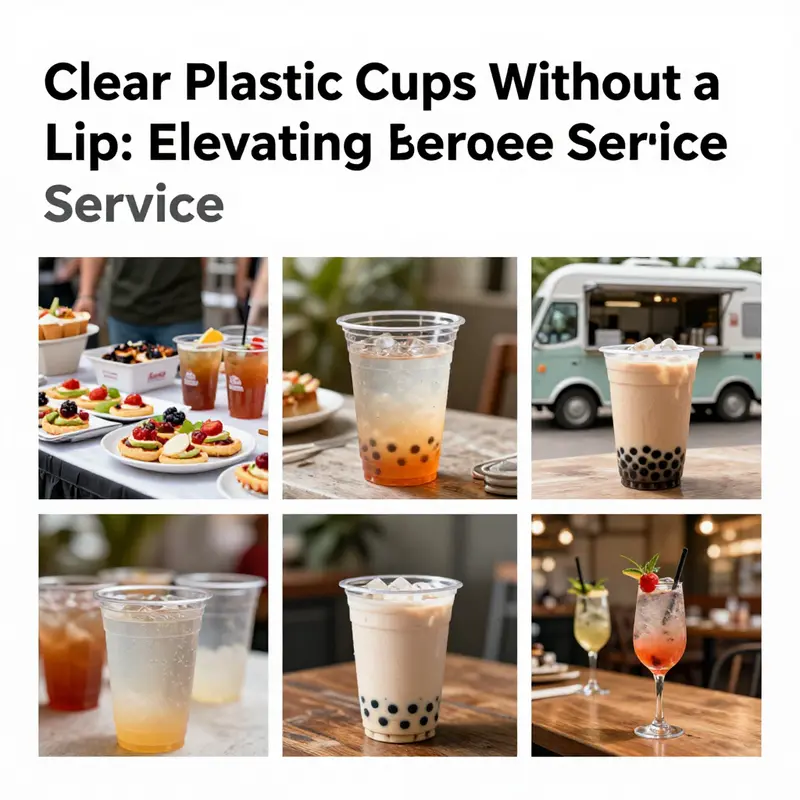
Clear plastic cups with no lip embody a design philosophy that prioritizes purity of form and the unimpeded view of contents. They are not merely a pared-down vessel; they are a deliberate choice about how a beverage is perceived, consumed, and ultimately disposed of. In practice, this lipless configuration supports a direct-drinking experience that simplifies the rituals around beverage consumption. There is no rim barrier between lips and liquid, no built-in straw channel, and no extraneous edge to catch condensation or drips. Instead, the cup presents a clean, uninterrupted surface that partners with the beverage itself, letting color, texture, and opacity tell the story of what is inside. This clarity is not cosmetic; it translates into functional benefits at scale across multiple service environments. For instance, in fast-casual venues where customers often grab a drink to go, the cup’s seamless rim reduces the risk of spills during transport. The lack of a lip means fewer crevices for sticky residues and less friction when placing the cup into a sleeve or carrier, which speeds up both service and pickup. In catering or event settings, the same open-top design reinforces a modern, minimalist aesthetic that aligns with contemporary branding while still accommodating practical needs like bulk handling and quick replenishment. The result is a cup that performs as a neutral stage on which beverages can be presented with maximum visual impact.
From a practical standpoint, these cups excel at containing both liquids and dry contents, thanks to their sturdy yet lightweight construction. The typical materials—PP for the cup body and PET for lids when used—offer a combination of clarity, strength, and recyclability that supports efficient operations without compromising the shopper’s ability to inspect contents at a glance. The open top makes it easy to verify color, fruit pieces, or foam consistency in the moment, which can enhance consumer confidence, particularly in sectors that emphasize freshness and quality control. In many applications, the simplicity of the lipless design reduces the cognitive load for customers who are making quick drink selections. With a quick glance, they can confirm the beverage’s appearance and gauge volume, which is especially valuable in self-serve or grab-and-go contexts where speed matters as much as satisfaction.
The chapter’s focus on applications reveals a practical map of where lipless cups fit best. In fast-casual restaurants and cafes, the cups support beverages like smoothies, iced coffee, and fruit juices that customers want to enjoy immediately, without the distraction of unnecessary features. The absence of a lip and straw hole enhances portability, lessens the chance of spills during transit, and simplifies the pairing with carryout accessories. For catering services—corporate events, weddings, and large gatherings—the cups project a clean, contemporary look that complements designer platters and coordinated color palettes. They can be deployed in station setups or buffet lines where guests might serve themselves, and their open rims encourage quick replenishment while keeping the presentation uncluttered. In food storage and serving contexts, these cups also become reliable containers for dry foods, condiments, or small portions, where the transparency of the cup allows staff and guests to see portion sizes and freshness without opening anything extra. The same logic extends to modular packaging ecosystems in which these lipless cups operate as part of a broader, minimalist line. In such ecosystems, the cups can be paired with compatible lids or other modular components to balance visibility with containment when needed.
Sizing flexibility is a practical advantage here. Common capacities around 360ml (roughly 12oz) meet the needs of single servings and sample-size experiences, while larger options extend into bulk distributions for events or stadium-style concessions. The ability to tailor the cup size to brand needs is a lever for enhancing the overall user experience. OEM customization options let brands reflect their identity through subtle cues such as color-tinted rims, print areas on the body, or branded lid designs. The result is a coherent, consistent visual language that reinforces the brand at the point of consumption. In terms of materials, polypropylene (PP) provides a tough, impact-resistant cup that remains clear and rigid enough for comfortable handling. When optional lids are used, PET lids maintain clarity and provide a secure seal while still preserving a transparent, unbroken line from beverage surface to viewer’s eye. This combination supports both operational efficiency and sustainability goals, as recyclable materials align with growing consumer demand for responsible packaging.
The sustainability dimension deserves particular attention, because it shapes consumer choices in the current market. Clear cups without a lip tend to align well with minimalist, recyclable packaging narratives. The straightforward geometry is easier to manufacture with fewer sculpted features, which can translate into lower energy consumption in production and reduced material waste. At the consumer level, the visual transparency of these cups enhances the perception of purity and cleanliness, reinforcing a narrative of responsible stewardship when paired with recycling programs. The market has shown a notable uptick in demand for biodegradable and recyclable variants, signaling a shift in purchasing behavior toward packaging that appears to respect environmental limits without compromising performance. Brands that position lipless cups within a broader sustainability strategy can leverage this alignment to strengthen trust with customers who value eco-conscious packaging as part of their everyday choices. In practice, such positioning often includes clear labeling about material composition, recycling instructions, and, where feasible, a commitment to recycled content and circular design principles.
From a branding perspective, the lipless cup offers a unique canvas. The absence of extraneous lip or straw-related features clarifies the cup’s silhouette, inviting designers to emphasize color, translucence, and typography on the body. The result is a product that communicates modernity and efficiency at a glance. In environments that prioritize a clean aesthetic—such as premium self-serve kiosks, beverage-forward venues, or minimalist event spaces—the lipless cup acts as a neutral stage on which the drink itself becomes the star. It is also worth noting that the direct-drinking experience can influence consumer perception of portion size and value. The eye is drawn to the liquid’s color and texture, which can enhance perceived freshness and satisfaction. For brands seeking to harmonize practicality with visual appeal, the lipless cup thus serves as a performance instrument, bridging the physical act of drinking with the sensory impression of the beverage.
The operational benefits deserve emphasis too. In logistics, the lighter weight and simpler shape of lipless cups contribute to lower shipping costs and denser palletization. Fewer awkward edges mean easier stacking and more reliable load stability, which translates into reduced breakage and waste along the supply chain. In high-volume settings, prep areas and service counters benefit from easier handling and faster cup swaps, which improve throughput during peak times. The minimal design also supports a more efficient return-to-stock workflow for reusable or returnable programs where applicable, as staff can quickly identify, collect, and restock lipless cups with minimal fuss. In instances where a company wants to minimize straw waste, promoting direct drinking aligns with policy goals and consumer expectations for simpler, more recyclable solutions. The absence of a straw hole removes one potential point of confusion or misuse and supports a broader strategy of reducing single-use accessories without sacrificing user experience.
The literature and supplier landscapes referenced in recent market scans underscore a growing ecosystem around these cups. Although the core design remains simple, the opportunities to expand usage through compatible accessories and packaging ecosystems are tangible. For brands exploring cross-category opportunities, the lipless cup can be integrated with a family of packaging that includes disposable drinkware and related serving solutions. A key practical step is to consider how the cup sits within a broader packaging narrative—how it communicates a brand’s ethos, how it ships and stores, and how customers interact with it in varied contexts. For readers seeking supplier-grade clarity on material options, extrusion methods, and compatibility across lid styles, verified supplier listings in the disposable plastic cups category offer a starting point for due diligence and procurement. The combination of clear visibility, straightforward manufacturing, and adaptable branding makes lipless cups a versatile choice for a wide range of foodservice and events.
In closing, the lipless clear cup represents a convergence of visual clarity, functional simplicity, and responsible packaging practice. Its applications span daily use in fast-casual venues, special occasions with heightened presentation needs, and storage or service roles within broader culinary or hospitality operations. By reducing extraneous features, the design invites a more intentional interaction between consumer and beverage, where the drink’s color, texture, and portion become the focal points. The growing attention to eco-friendly materials and recyclability further reinforces the lipless cup’s relevance in a market that values efficiency without compromising aesthetics or responsibility. As brands pursue streamlined, visually appealing, and sustainable beverage solutions, this simple, open-top cup offers a practical blueprint for how form and function can harmonize in everyday service, while still leaving room for branding and customization to flourish in alignment with consumer expectations and supply-chain realities.
External resource: https://www.alibaba.com/showroom/disposable-plastic-cups.html
Internal reference: For brands looking to expand into a broader range of practical drinkware, the disposable-drinkware category provides adjacent options and ideas for cohesive packaging and display strategies. See the disposable-drinkware section for complementary solutions.
Lipless Clarity, Hidden Footprints: The Environmental Reality of No-Lip Clear Plastic Cups
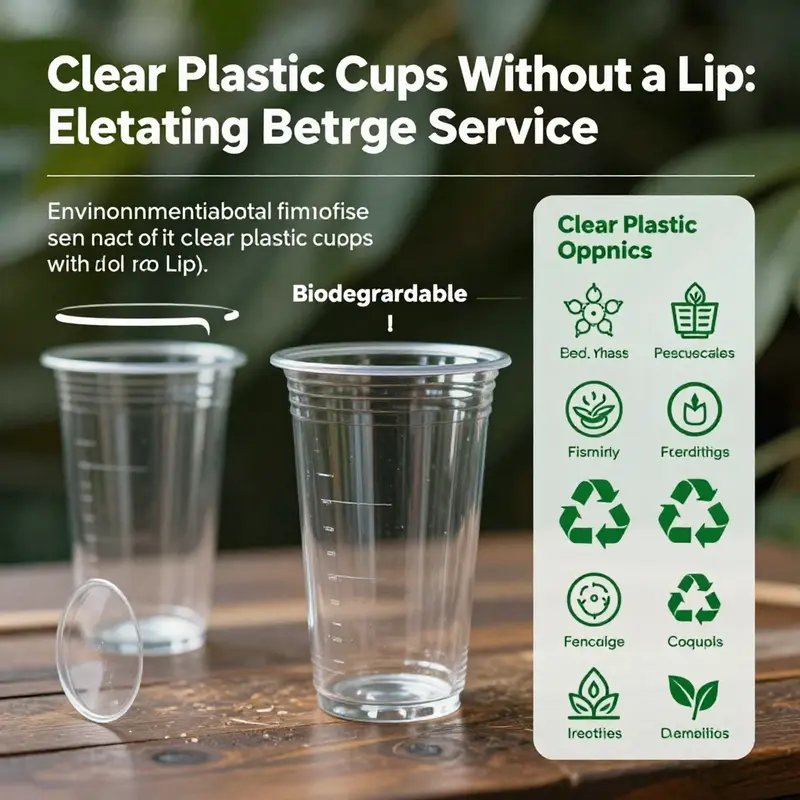
Clear plastic cups with no lip appear to promise a purity of line and a straightforward handoff at a crowded event. They catch the eye with a seamless rim that invites gaze to linger on the contents rather than the vessel. Yet the same absence of a lip carries a heavier implication when assessed from an environmental vantage point. The product seems simple, but its lifecycle touches energy systems, waste streams, and consumer expectations in ways that ripple beyond the tray of beverages. In the context of this article, lipless clarity becomes more than a design quirk; it acts as a lens on how single-use plastics shape modern consumption. The clean, uninterrupted edge suggests efficiency in handling and presentation, a factor that can influence decisions at scale—from festival organizers to quick-service outlets. When we examine this seemingly minor design, we begin to see how form and function intersect with environmental cost in ways that are not immediately visible at the point of purchase.
Material choices underwrite much of the environmental profile of no-lip cups. These cups are typically manufactured from polypropylene, a material classified under recycling code #5. PP is known for durability and heat resistance relative to some other plastics, which makes it a practical choice for disposable use. However, durability in the moment does not translate into environmental friendliness over the lifecycle. The single-use culture these cups reinforce persists despite claims of recyclability. In many regions, the infrastructure required to collect, sort, and reprocess PP remains uneven, leading to a sizable portion of these cups ending up in landfills or the natural environment. The no-lip design does not inherently alter this fate; it may even complicate consumer perceptions of cleanliness and handling, unintentionally increasing usage in some settings. The structural choices, while subtle, thus contribute to a larger conversation about how design intent translates into ecological outcomes when end-of-life options are constrained by market realities and policy frameworks.
The challenges extend beyond material choice. Recycling systems rely on consistent labeling, separation, and consumer participation. A lipless rim offers a visually clean product but does not inherently improve recyclability. Contamination, misplacement, and the sheer volume of waste generated by single-use items complicate recovery rates. In practice, the life cycle of these cups begins with fossil fuel extraction and ends with a question mark about how much of the material can eventually re-enter the economy. Even when manufacturers emphasize BPA-free production and responsible practices, the overall environmental footprint remains substantial. Energy use, process emissions, and the carbon intensity of resin production all contribute to a broader tally that must be weighed against the benefits of a crisp, transparent appearance and a cost-efficient single-use solution.
From a lifecycle perspective, the use of high-density plastics for short-term needs appears to clash with principles of sustainable design. The aim of reducing material weight to lower shipping costs is admirable, yet it does not, by itself, resolve the problem of waste. The no-lip cup makes stacking and handling straightforward, which can streamline distribution and reduce breakage during transport. That operational efficiency is nontrivial; it lowers losses and supports high-volume service. Still, the environmental calculus must account for what happens after consumer use. For venues that aim to minimize ecological impact, the options extend beyond conventional PP cups to include compostable alternatives made from plant-based materials or reusable cup systems that rely on cups returning for cleaning and refilling. Each alternative carries its own tradeoffs in cost, performance, and lifecycle impact, and each demands a thoughtful assessment of supply chains, user behavior, and end-of-life infrastructure.
Consumer preferences are shifting toward materials and designs that signal responsibility, even as convenience remains paramount. The lipless, clear aesthetic can align with branding strategies that emphasize purity, transparency, and minimalism in presentation. But the broader market trend toward sustainability pushes brands to consider not just the foreground visuals but the total environmental narrative. Businesses face the dual challenge of delivering a dependable, clean user experience while acknowledging that single-use cups contribute to a larger problem. The question is not merely whether no-lip cups perform adequately for beverages but whether they fit within a sustainable framework that prioritizes circular economy principles, material substitution where feasible, and systems-level improvements that extend the life of resources rather than curtailing it after a single use.
Economic and logistical realities also shape the environmental profile of lipless cups. The lightweight, stackable form can reduce transport energy and storage needs, a benefit that speaks to efficiency in supply chains. However, these advantages must be weighed against the ongoing cost and availability of recycling streams and the rate at which facilities can process PP waste. In many markets, the true cost of end-of-life management is not reflected in first-cost pricing. As a result, the long-term ecological costs may appear hidden or deferred, creating a disconnection between immediate savings and future environmental responsibility. The no-lip design, while offering minimalism and clarity, cannot escape the fundamental equation: material choice, waste generation, and the effectiveness of recovery systems determine the ultimate sustainability of the product.
One area where the no-lip design may interact with environmental outcomes is in branding and consumer experience. The absence of a lip emphasizes the content and the context in which it is consumed. This can influence how a beverage is perceived—crisp, clean, and unencumbered by extra edges. When a business aims to project a message of simplicity and transparency, the lipless rim can serve as a visual cue that aligns with those values. Yet that alignment must be reconciled with the practicalities of disposal and reuse. In environments that support robust recycling, proper sorting, and widespread public participation, lipless cups can function within a responsible system. In regions where such infrastructure is underdeveloped, they contribute to waste that may linger in landfills or waterways. The balance hinges on how much emphasis is placed on process improvements, consumer education, and policy mechanisms that incentivize responsible disposal. A well-structured approach includes clear labeling, accessible recycling options, and collaboration across supply chains to promote circularity rather than linear take-make-waste patterns.
To connect this analysis to practical choices, consider the role of design in reducing ecological impact without sacrificing performance. The no-lip cup is not inherently the most or least sustainable option; it is a variation within a broader toolkit. For venues seeking to minimize waste, integration with a broader program—such as reusable cup systems or on-site composting of compatible materials—offers a path to lower environmental footprints over time. In situations where reuse is impractical, selecting a cup with improved end-of-life options, including certified compostability or enhanced recyclability, can help shift the balance toward a more sustainable outcome. The key lies in a coordinated approach that aligns product design, consumer behavior, and infrastructure investment so that the lipless form contributes to, rather than undermines, a viable environmental strategy.
From an industry perspective, the no-lip cup intersects with a larger ecosystem of disposable tableware where designers and manufacturers seek to optimize aesthetics and utility while confronting real-world waste challenges. The absence of a lip can simplify branding challenges by providing an unobstructed view of the drink inside and a neutral silhouette suitable for various settings. This contributes to a perception of cleanliness and modernity that may support premium or minimalist branding. Yet the environmental dimension remains critical. If biologically based or highly recyclable alternatives are accessible, they offer meaningful advantages by reducing dependence on fossil-based feedstocks and by improving end-of-life outcomes. Even when such alternatives carry higher upfront costs, they may yield long-term savings through reduced environmental liabilities, potential regulatory compliance benefits, and strengthened consumer trust.
Ultimately, the environmental footprint of lipless, clear plastic cups depends on a network of decisions that begin with material choices and extend through production, distribution, use, and disposal. The no-lip design adds a layer of interpretive complexity to this network, inviting businesses to weigh the aesthetic and functional gains against the necessity of sustainable waste management. It is not a single-variable problem but a system-wide challenge that demands coordinated action among manufacturers, retailers, waste managers, and consumers. In that light, lipless clarity becomes a prompt for thoughtful experimentation with materials, changes in consumer behavior, and, where possible, investment in infrastructure that makes recycling and reuse more accessible and reliable. As we move toward a future where sustainability is a baseline expectation rather than an optional feature, the environmental realities of no-lip clear plastic cups remind us that design is never neutral. It is a choice that echoes through the waste stream and the marketplace, shaping not only how a drink is experienced but how a society manages the resources that enable that experience.
For readers seeking a broader understanding of the environmental implications of single-use plastics, the National Geographic overview provides context on the scale of plastic pollution and systemic solutions that extend beyond a single product category. See https://www.nationalgeographic.com/environment/article/plastic-pollution.
Internal link for further context on product categories that tie into this discussion: Disposable Drinkware. This collection shows how the broader disposable family balances practicality with evolving expectations around reuse, recyclability, and end-of-life responsibility. By considering these related options, readers can compare how lipless designs fit into various packaging strategies while prioritizing environmental stewardship and clear, consistent messaging about product life cycles.
Final thoughts
In summary, clear plastic cups without a lip provide an exceptional blend of design, functionality, and market adaptability. Their minimalist aesthetic appeals to modern consumers while meeting the evolving demands for sustainability from businesses. As the market continues to shift towards environmentally conscious choices, the integration of lipless designs aligns perfectly with contemporary branding strategies, enhancing both user experience and operational efficiency. By incorporating these stylish and practical cups into your service, you stand to benefit from improved customer satisfaction and loyalty.