
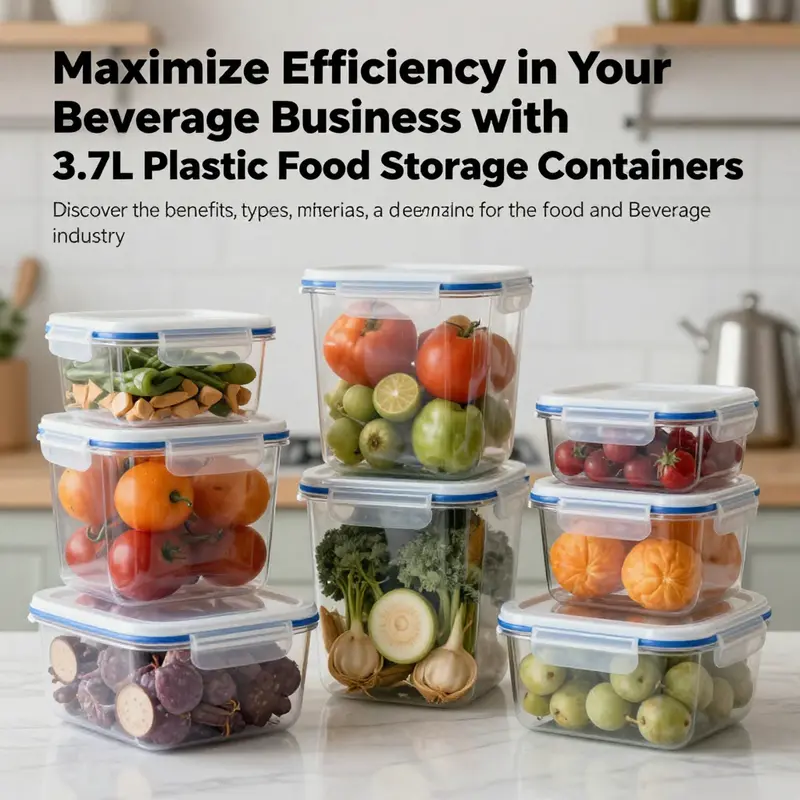
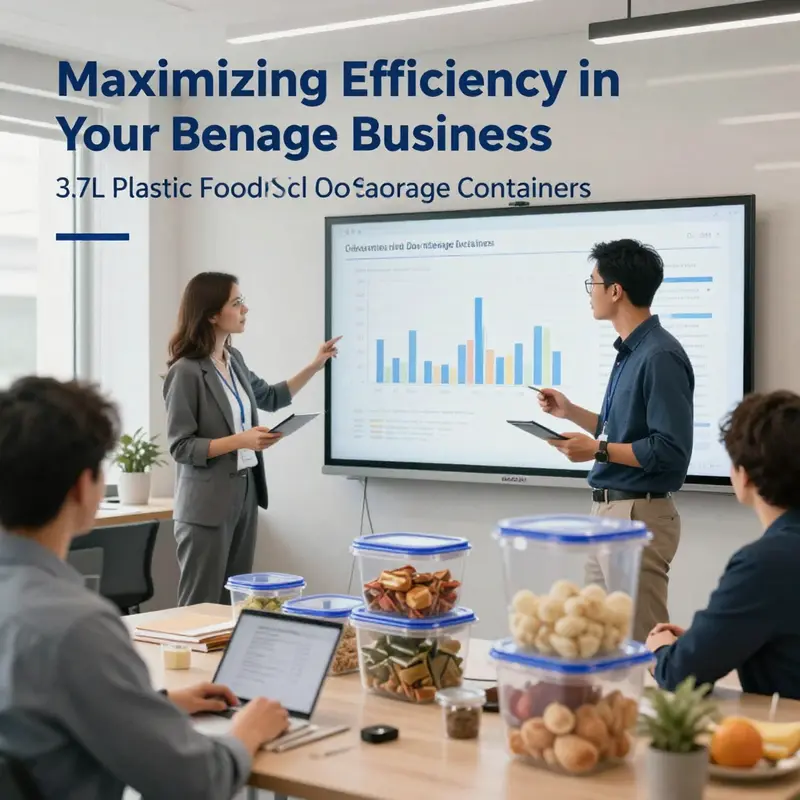
3.7L plastic food storage containers are invaluable tools for businesses in the beverage and food service sectors. These versatile containers not only streamline the storage of ingredients and leftovers but also enhance organization and efficiency in busy environments like bubble tea shops, restaurants, food trucks, and catering services. In this article, we will explore the diverse types of these containers, delve into their materials and safety standards, examine their environmental impact and innovations, and review the latest market trends and consumer preferences. Together, these chapters will provide a holistic understanding of how 3.7L plastic containers can elevate the operational effectiveness of your business.
The Many Faces of 3.7L Plastic Food Storage Containers: A Deep Dive into Design, Safety, and Use
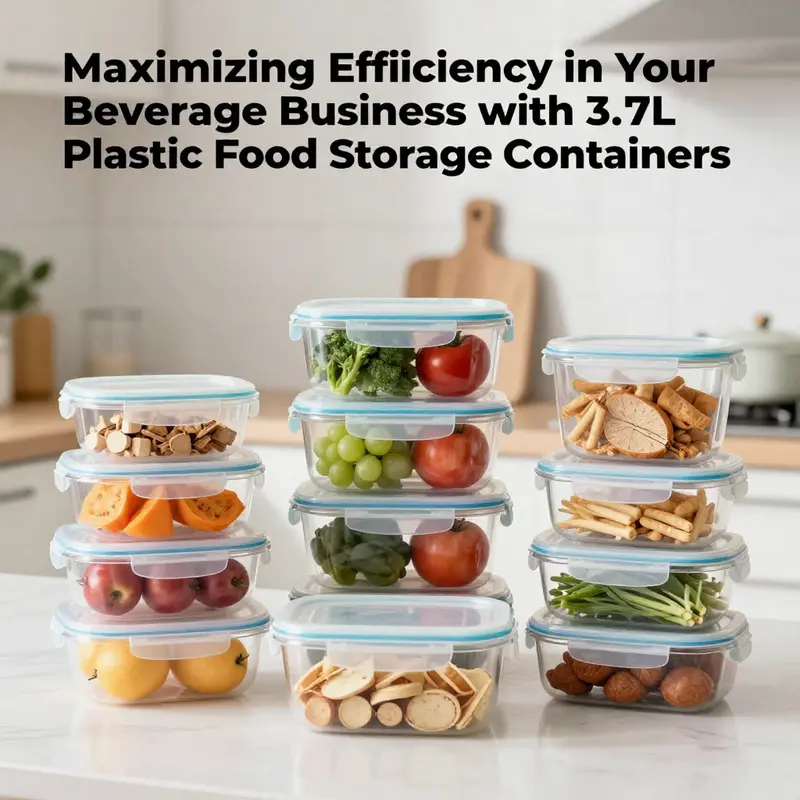
The 3.7-liter plastic food storage container sits quietly at the center of the modern kitchen, a mid-size ally that balances capacity with manageability. It is large enough to hold a substantial bag of grains, a generous portion of snacks, or a batch of leftovers, yet compact enough to tuck onto a pantry shelf or slide into the fridge door. In this space, plastic does more than hold food; it shapes how we think about freshness, organization, and daily routines. The material most often chosen for these containers is a food-grade polypropylene, a plastic that can endure a range of temperatures and resist the kind of moisture and odors that tend to cling to kitchens. When specified as BPA-free, these containers promise a level of safety that matters to households where children frequently reach for snacks or quick meals. The design, then, is not just about keeping food fresh; it is about giving home cooks confidence that their storage choices won’t introduce unwanted chemicals into their meals, and that the containers themselves won’t shed odors or stains that complicate future use. The temperature tolerance of these boxes is a practical consideration many overlook until the moment of use. They can typically withstand chilly fridge temperatures and the chill of a freezer, while also supporting gentle reheating in a microwave. Yet heat and sugars or high-oil foods require caution. Sugars and fats can migrate into plastic and sometimes cause textural changes or odor transfer if the lid is not a good seal. Understanding this nuance helps households decide when a 3.7L container is the right tool for the job and when an alternative is a smarter option.
The heart of a 3.7L container’s usefulness lies in its seal and lid design. A well-sealed lid creates a barrier that protects against air, moisture, and incidental contaminants, which in turn helps preserve flavor and texture. The sealing method can vary—some lids rely on a silicone gasket to cushion and seal the lid to the base, while others use a locking or snap-tight mechanism that clamps down firmly around the perimeter. These small engineering choices—silicone gaskets, ribbed lids, or airtight clips—have outsized effects on shelf life and user satisfaction. A good seal matters not only for long-term storage but for everyday usability: a lid that is easy to remove yet firm enough to stay sealed during transport or in a crowded refrigerator. It is also worth noting that many 3.7L containers emphasize simplicity of cleaning. Materials labeled as food-grade PP resist staining and odors better than other plastics, and many designs feature smooth, removable seals that enable thorough washing—an important detail for anyone who stores seeds, grains, or multi-ingredient meals.
Within the broad category of 3.7L containers, several design philosophies compete for consumer attention, and each serves slightly different needs in the kitchen. One prominent category is the airtight type. In practice, these boxes prioritize longevity of freshness and minimal exposure to air and moisture. They are especially popular for cookies, baked goods, or items that tend to crumble or soften when exposed to air. A square or near-square footprint helps maximize shelf space and makes stacking predictable, which is a practical advantage in smaller kitchens. The emphasis on moisture protection means that these boxes often feature a snug lid that sits flush with the top edge and a robust closure system that guards against leaks and dust. Although not every airtight container is built identically, the overarching goal is consistent: keep the inner contents tasting as fresh as the day they were sealed, whether you’re keeping a batch of cookies for a weekend gathering or portioning dough for weekday lunches.
Another widely used form is the divided or compartmentalized container. This variation speaks to the realities of meal preparation and on-the-go eating. By partitioning the interior into sections, these 3.7L boxes support organized storage without needing multiple separate containers. The benefits extend beyond convenience; divided designs help manage portion control and ensure that different dishes stay distinct, preserving the integrity of flavors and textures. For families that pack lunches or plan weekly meals, this approach reduces the number of containers in circulation while increasing the versatility of a single box. The compartments can range from simple dual sections to more elaborate tri- or quad-compartment layouts, but the common thread remains clear: customization inside a single portable shell can streamline daily routines and cut down on waste from mixed leftovers.
A third, equally common category is the set of three or more containers sold as a coordinated collection. Sets provide a standardized size that enables systematic storage solutions. Having multiple containers of the same capacity fosters a consistent approach to labeling, stacking, and inventorying pantry staples or refrigerator items. Households often appreciate the predictability of a uniform set because it simplifies organization: identical lids, identical rims, identical sealing mechanisms, and, crucially, the assurance that items will nest or stack without fighting for space. This uniformity is not merely an aesthetic preference; it translates into real-world efficiency, making it easier to rotate stock, plan meals, and avoid the trailed chorus of mismatched lids that can frustrate even a patient cook.
Material safety standards underpin every one of these forms. Modern 3.7L containers are typically made from food-grade polypropylene and are widely labeled as BPA-free. This labeling reflects a broader industry shift toward safer plastics, driven by consumer concerns and evolving regulatory expectations. The signal of BPA-free status is not just theory; it translates into practical reassurance for households that wash and reuse containers repeatedly. PP is favored for its balance of clarity, heat resistance, and chemical stability. It tolerates cold and moderate heat reasonably well, resisting deformation under the rigors of daily kitchen life. It is also relatively easy to clean and less prone to odor retention than some other plastics, a meaningful attribute when the same box transitions from cereal storage to a marinated batch of leftovers.
Yet no material lives in an idealized vacuum. Even with BPA-free labeling, there are best practices that optimize safety and performance. First, avoid heating highly sugary or oil-rich foods in containers that aren’t explicitly rated for high-fat or high-sugar contents. The presence of sugar and oil can alter the surface chemistry of plastics, and certain seal designs may become stressed by prolonged exposure to heat. Second, always acclimate containers to the expected use case. If you plan to microwave, verify that the lid is labeled microwave-safe and that the silicone gasket is designed to withstand repeated heating without warping. Third, don’t overfill a container. Leaving a small air gap under a tight seal helps maintain the integrity of the lid’s locking mechanism and reduces the risk of leaks or popped seals when the container is moved or stacked. These practical steps complement the science of materials, turning safety guidelines into an everyday habit that preserves both the food and the container itself.
Beyond the kitchen, the 3.7L size also finds a home in more industrial or commercial contexts. In those settings, the range of uses expands to include packaging for edible oils, dyes, lubricants, or other non-food products that still demand reliable sealing and chemical compatibility. In such environments, the container’s role shifts from personal convenience to operational reliability. The sealing performance, wall thickness, and closure system become critical to preventing spills and ensuring regulatory compliance. While these industrial applications sit a step removed from daily household routines, they share a common design DNA: a compact, sturdy shell that provides a predictable interface between content and handling actions, whether that content is a bag of rice or a container of industrial liquids.
All of this points to a larger narrative that many households are only beginning to fully grasp: the 3.7L container is not a one-size-fits-all solution. It is a family of tools that reflects how people live, cook, and store. The best choice hinges on the intended use: are you prioritizing shelf life and spoilage resistance, or layout and ease of transport? Do you need a divided interior to keep different components separate, or do you value a single, large space that can flex with your weekly menu? The answers are personal, but the framework for making them is universal. The modern kitchen benefits from recognizing how small design decisions—lid shape, seal material, interior geometry, and the number of items in a set—cumulatively shape everyday cooking and long-term storage. In that sense, the 3.7L container becomes a mirror of our routines: flexible, resilient, and quietly capable of turning a cluttered pantry into a well-organized system.
For readers seeking a broader sense of what is available in this category, a practical starting point is exploring the storage containers category on the linked product site. There you can compare different shapes, lids, and stacking options to find the configuration that best fits your space and habits. This side-by-side awareness helps households translate general principles into concrete choices, making the often-abstract idea of “the right container” into something tangible you can reach for in the kitchen. Additionally, it is worth considering how the broader landscape of storage technology is evolving. Innovations such as bio-based plastics and antimicrobial lid surfaces, along with advances in automated molding and sealing technologies, are gradually reshaping what these 3.7L containers can do. These developments promise longer-lasting freshness and lower environmental impact, aligning everyday storage with a broader sustainability narrative that many households are eager to embrace.
The practical implications of these distinctions extend into daily life in small, meaningful ways. Think about the pantry workflow: you might designate one 3.7L airtight box for baking staples like flour or oats, another divided container for ready-to-eat components for lunch boxes, and a third as part of a weekly meal-prep system for leftover dinners. Sets help with this coordination by providing a reliable batch of the same size, reducing the time and energy spent hunting for matching lids. The ability to switch from pantry to fridge to freezer without swapping containers is not merely convenience—it reduces the cumulative friction of food storage, making it more likely that people will plan ahead and avoid waste. In this sense, the 3.7L container becomes less about a single product and more about a holistic storage strategy that complements a mindful approach to cooking, eating, and sustainability.
When readers step back to view the landscape as a whole, the categories—airtight, divided, sets, safety-focused materials, and industrial uses—reveal a spectrum rather than a hierarchy. Each segment reflects different priorities and constraints, from preserving delicate baked goods to transporting a mixed salad to transporting a batch of ingredients for a weeklong meal plan. The common thread is clarity: the more you understand the purpose behind a container’s design, the more effectively you can integrate it into your routines. The 3.7L size, in particular, embodies a pragmatic middle path. It is not oversized for everyday use, yet it offers enough volume to be genuinely useful. It is easy to clean, simple to seal, and versatile enough to handle a variety of foods, from dry grains to leftovers. In a world where kitchen space is at a premium and time is scarce, such versatility is not just convenient—it is empowering. And as consumer expectations shift toward safer materials, better sealing, and smarter production, the 3.7L container will continue to evolve while remaining, at its core, a straightforward tool that helps people store food more reliably, efficiently, and safely.
For readers who want a quick, practical takeaway, consider the flow of your own cooking and storage habits. Do you lean toward a single, multipurpose container that can hold diverse items, or do you prefer sets that simplify labeling and rotation? Are you concerned about heat exposure or odor transfer, or is your focus on portability and stackability for a small apartment? Answering these questions will guide you to the right category within the 3.7L family and ensure that your purchase becomes a durable ally in your kitchen routine. The chapters that follow will continue to connect these practical choices to broader considerations—cost, sustainability, and user experience—so that you not only select a container that works today but also one that aligns with a thoughtful, long-term storage strategy.
Internal link for further exploration: you can browse the storage containers category to see how this size fits among other capacities and forms, which helps map your needs to the closest match in real-world use. storage containers category
External resource for deeper context: https://www.amazon.com/dp/B08KQZJW9X
Safe by Design: The Materials and Safety Story of 3.7L Plastic Food Storage Containers
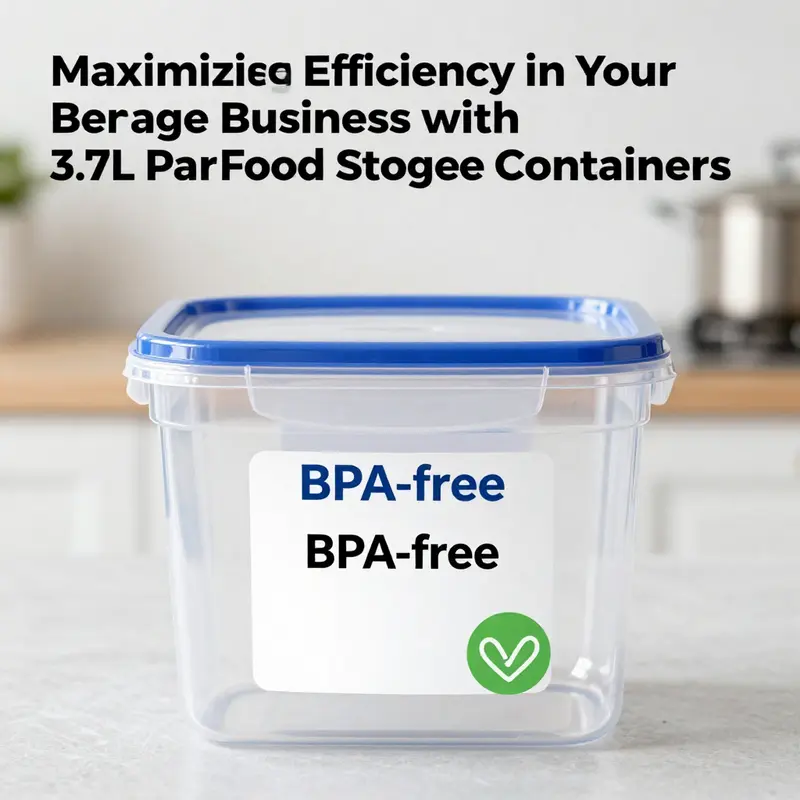
A 3.7-liter plastic food storage container sits quietly in the corner of many kitchens, ready to calm the chaos of groceries, leftovers, and dry goods. Yet behind its simple, utilitarian silhouette lies a careful blend of materials science, safety considerations, and practical design choices that keep food safe, fresh, and accessible. When we zoom out from the everyday use—storing rice, nuts, or a few portions of cooked vegetables—the material selection and the safety features of these containers reveal why the same shape and size appear in countless households around the world. The core of this chapter is not a catalog of models but a coherent account of what makes a 3.7L container trustworthy, how it behaves under real-life conditions, and how to read its signals so you can store with confidence while minimizing risk and waste.
At the heart of most 3.7L containers are two polymer families that have earned broad acceptance for food contact: food-grade polypropylene (PP) and polyethylene (PE). These polymers are chosen for their combination of safety, durability, and practicality. Polypropylene, with its crystalline, sturdy structure, offers good stiffness and fatigue resistance, which translates into robust lids and dependable hinges that can endure repeated opening and closing without warping. Polyethylene, whether in its high-density form or other variants, contributes impact resistance and resilience to cold or heat cycles. Both materials are favored because they interact with food in predictable ways, and because their chemistry has been studied extensively by regulators and manufacturers alike. A defining feature of these materials in consumer storage is their compatibility with a wide temperature range, making them versatile across kitchen realities: they can be refrigerated, frozen, or heated to mild temperatures in the microwave when the manufacturer’s guidelines permit. The typical practical range cited in product documentation is roughly from -20°C to around 120°C, a spectrum that covers most household storage needs and a good portion of reheating scenarios. This temperature tolerance is not a generic claim; it reflects the polymer’s ability to resist cracking, weakening, or deformation under thermal stress while retaining a seal that keeps food protected from air and moisture.
Among the most critical safety assurances for any food-contact container is the absence of potentially harmful substances that could migrate into food. In both PP- and PE-based designs, the presence of bisphenol A (BPA) is avoided, and the materials are marketed as BPA-free. This designation is not merely marketing; it signals compliance with a long-standing consumer safety expectation that has intensified as people demand more rigorous guarantees about what touches their meals. The BPA-free claim reduces concerns about leaching under various conditions, from a cold fridge to a heated plate. It is important to recognize, though, that safety is not a single checkbox. While BPA-free formulations are central, manufacturers may incorporate other additives or polymer blends to optimize clarity, heat resistance, or seal integrity. The broader safety narrative depends on a thoughtful balance of chemistry, manufacturing controls, and transparent labeling so that users can trust that what they see on the package corresponds to what they get in their pantry.
Coupled with material safety is the design of the container’s seals and lids. A common goal across 3.7L models is to minimize air exchange and moisture ingress, extending both the shelf life of dry goods and the perceived freshness of cooked items. This is where the notion of leak-proof seals and airtight lids moves from a convenience feature to a fundamental safety and quality attribute. A well-engineered seal creates a microenvironment that slows the progression of oxidation, moisture loss, and the growth of certain spoilage organisms, especially for foods with moderate moisture content or those stored in bulk. The silicone or elastomer seals—often visible around the lid’s perimeter—must be resilient to repeated cycles of opening and closing and to exposure to temperatures typical of kitchen use. In practice, a robust seal means easier transport without the worry of spills and less air intrusion that can drive flavor and texture changes in stored items.
When these containers are used to reheat leftovers, the safety narrative advances into how the container behaves in heat. Many 3.7L designs are labeled microwave-safe, freezer-safe, and dishwasher-safe, reflecting a pragmatic confidence that the vessel can tolerate the daily rigors of modern kitchens. Microwave safety implies that the container can be heated with caution and within the limitations of the lid, gasket, and any venting mechanisms. Freezer safety suggests resistance to crack formation or embrittlement when temperatures plunge, and dishwasher-safe labeling indicates that the material can withstand detergent exposure and the mechanical action of a dishwasher. Yet the guidance is precise rather than permissive: sugars, fats, and highly concentrated acids can pose particular challenges. Sugar-rich or highly oily foods can interact with the lid seal or create pressure dynamics if warmed in tightly capped containers. The practical takeaway is clear: always follow the manufacturer’s directions for specific foods and heating methods, and be mindful of how density, moisture, and fat content can influence performance. This is not a quirk of one brand or another but a general caveat rooted in material science and culinary physics.
Beyond the chemistry of the plastics themselves, there is a broader thread: the documentation that accompanies each container. Manufacturers typically provide material specifications, safety certifications, and usage guidelines that help users interpret the product’s real-world capabilities. This is where readers and shoppers can confirm that a chosen container aligns with their needs for safety and convenience. The harmony between what a product promises on its label and what it actually delivers in everyday use is grounded in regulatory frameworks and standardized testing. For anyone who wants to deepen their understanding of these dimensions, official resources from regulatory bodies outline the expectations for food-contact substances, including how materials are evaluated for migration potential and long-term stability. The publicly available guidance assists consumers in making informed choices about materials and safety, since it translates technical assessments into actionable consumer advice. For example, the U.S. Food and Drug Administration (FDA) provides guidance on food contact substances, serving as a foundational reference point for both manufacturers and informed shoppers. This helps ensure that the march toward safer, more reliable storage solutions remains anchored in proven safety principles rather than marketing claims alone.
An additional practical aspect of safety involves maintenance and hygiene. Even the best-sealed container can become a source of spoilage if its seal area, gasket, or lid interior harbors residue or mold. Regular inspection of seals for wear, cracks, or deformations is a simple yet effective habit. Cleaning is typically straightforward; many parts are dishwasher-safe, but careful attention should be given to the gasket area, which can trap tiny food particles if overlooked. In some designs, seal components can be gently removed and reassembled to ensure a thorough clean. This diligence pays not only in longer-lasting containers but in the peace of mind that stored foods remain free from contamination or off-flavors.
The conversation about materials and safety cannot ignore the growing environmental dialogue surrounding plastics. The industry continues to pursue eco-friendly upgrades, including the development of bio-based or biodegradable alternatives and materials engineered for longer lifespans and easier recycling. Even as these innovations mature, the core choices for a kitchen storage solution remain a balance between safety, cost, durability, and convenience. Automated, precision manufacturing processes improve consistency and reduce waste at the production stage, while efforts to minimize migration potential and to refine sealing technologies reflect a sustained commitment to safe and dependable everyday use. For the consumer, this means that selecting a 3.7L container is not just about capacity but about a product designed to withstand repeated use with reliable safety and a lower environmental footprint where feasible.
In practice, evaluating a 3.7L container for everyday use can be a straightforward exercise in reading a few key cues. Start with the material claim: confirm that the container is made from a food-grade polymer, and verify that it is BPA-free. Next, assess the temperature compatibility by checking the stated microwave, freezer, and dishwasher guidelines. Consider the seal design: is the lid equipped with a watertight gasket, and is the closure mechanism robust enough to resist accidental openings during transport? If you frequently store sticky or sugary foods, pay particular attention to how the seal and lid materials respond to sugar-rich environments, as sugars can influence surface tackiness and seal longevity over time. Finally, inspect the label for any warnings or care instructions. The more explicit and precise the guidance, the more confidently you can integrate the container into your routine.
As you weigh these factors, a broader reference point helps connect individual product decisions to the larger ecosystem that shapes home storage. You can explore related resources in the storage containers category, where a range of options and configurations illustrate how design choices translate into real-world performance. This internal link points to a repository of storage solutions and can offer a helpful cross-section of sizes, shapes, and sealing mechanisms that complement the discussion of materials and safety. Think of it as a way to see how different configurations address similar storage challenges while staying true to safety and quality principles. storage containers category
To ground these considerations in established guidelines, it is useful to consult authoritative sources that distill the technical underpinnings of food-contact safety into practical recommendations for consumers. The FDA’s guidance on food contact substances provides a valuable reference point for understanding how materials are evaluated and regulated in the U.S. context. This resource helps clarify questions about migration limits, regulatory expectations, and the general framework that underpins the materials used in mainstream consumer containers. Access to such guidance equips readers with a clearer lens through which to interpret product labels and manufacturer claims, enhancing the ability to choose containers that align with both safety standards and personal cooking practices. For further reading, see the FDA resource on food contact substances, which offers a concise overview of the regulatory backdrop and the rationale behind certain labeling practices. FDA Guidance on Food Contact Substances.
In sum, the 3.7L plastic food storage container embodies a synthesis of material science, safety engineering, and user-centric design. The choice of food-grade PP and PE, the BPA-free assurances, the presence of reliable seals, and the practical guidance embedded in care instructions all converge to create a product that performs reliably across the kitchen’s daily rhythms. The emphasis on airtightness and leak resistance is not merely about convenience; it is a safety protocol that helps protect the integrity of stored foods, reduce waste, and support healthier, more organized cooking and meal-prep routines. By understanding the materials, the safety features, and the real-world implications of use, readers can approach storage with greater confidence, making choices that both safeguard health and respect the environment. Reading product labels with a critical eye, verifying temperature guidance, and recognizing the limits of heating in sealed containers are all part of a pragmatic, informed approach to home storage. This approach aligns with a broader movement toward safer, more sustainable kitchen practices that honor both science and daily life, ensuring that the humble 3.7L container remains a dependable ally in the ongoing work of keeping food fresh, flavorful, and safe.
Small Containers, Big Footprints: Environmental Realities and Innovation in 3.7L Plastic Food Storage Production
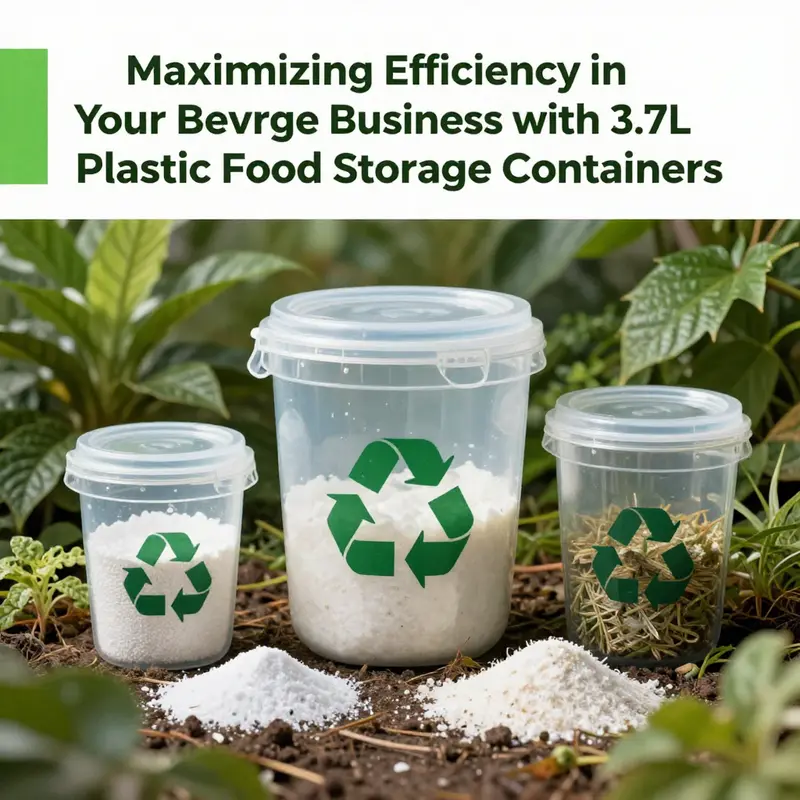
The 3.7-liter plastic food storage container has settled into kitchens as a versatile workhorse, quietly enabling organized pantries, portion control, and efficient meal prep. Yet behind its weathered plastic sheen lies a set of environmental dynamics that stretch from the factory floor to the consumer’s table. This chapter traces those dynamics in one widely used size, weaving together the realities of virgin-plastic production, the rising pressures of waste and regulation, and the innovations that promise to tilt the balance toward greater sustainability without sacrificing the durability and convenience that keep these containers in everyday use. In doing so, it also highlights how choices at the consumer level—paired with industry shifts—shape the trajectory of a product category that touches households and supply chains alike.
At first glance, the 3.7L container is simply a compact, sturdy vessel designed for dry goods, leftovers, or bulk ingredients. Its capacity sits at a comfortable middle ground: large enough to store significant quantities yet small enough to fit into standard cabinets, refrigerators, and freezers. The appeal of this size partly rests on practical design features—tight-sealing lids, often employing silicone gaskets or snap-lock mechanisms, that resist air ingress and moisture loss. Such features extend shelf life, preserve texture, and reduce spoilage. They also silently influence waste streams by limiting food waste, a factor that ripples outward into environmental calculations because the most sustainable packaging system is one that keeps food edible longer. These benefits, however, owe their value to material choices and manufacturing practices that have far-reaching consequences beyond the kitchen.
The environmental picture becomes clearer when one looks at the life cycle of these containers, especially those made from virgin plastics. The production of virgin polymers demands energy, feeds fossil-fuel extraction, and releases emissions at multiple stages—from feedstock synthesis to polymerization and molding. It is not merely about the resin itself but about the embedded energy and the accompanying greenhouse gas footprint of converting raw petrochemicals into a finished, ready-to-use container. When these containers enter households and are not recycled at end of life, the path from production to disposal can end in landfills or, worse, in ecosystems where microplastics accumulate and persist for decades. In this sense, every three-point-seven-liter container that escapes recycling contributes to a larger, cumulative environmental impact that extends far beyond its immediate utility.
The sustainability challenges facing the 3.7L segment are not merely technical; they are regulatory, economic, and cultural. Regulators around the world are tightening standards around plastic use, packaging waste, and the potential for consumer exposure to chemicals of concern. Even as some jurisdictions push for reformulations that reduce environmental burden, others emphasize extended producer responsibility and take-back schemes. This regulatory climate nudges brands toward more sustainable design and manufacturing choices, even while it exerts cost pressures that can influence material selection and production throughput. Consumers, too, are increasingly aware of the lifecycle story behind their purchases. They recognize that a reusable container is not inherently virtuous unless it is part of a system that prioritizes reuse and recyclability. In this mood, brands find themselves balancing demand for dependable performance with a shared responsibility to minimize plastic waste and to optimize resource use.
Innovations in production reflect this balancing act. A notable trend is the incorporation of recycled materials into new containers, a practice that helps reduce the demand for virgin feedstocks while demonstrating that recycled content can meet the practical demands of everyday use. rPET, spun from recycled beverage bottles and other polymer streams, has become a recurring feature in more ambitious packaging programs. In contexts where the 3.7L size is common, such recycled content can provide a credible path toward lower life-cycle emissions, particularly when the resulting containers are engineered to maintain the same level of airtightness, clarity, and heat tolerance that consumers expect. The design challenge is ensuring that recycled content does not compromise clarity, chemical resistance, or toughness—qualities essential for safety, convenience, and longevity in kitchen environments. When these boxes can resist cracking under cold storage and retain their lid’s seal integrity after repeated cycles, they offer a meaningful win for sustainability: less virgin material, more reuse, and reduced waste.
Another core strand of innovation is lightweighting. By optimizing wall thickness, wall geometry, and the selection of durable polymers, manufacturers can achieve meaningful material savings without sacrificing performance. The practical effect is twofold: a lighter container means lower raw-material use and reduced transport emissions, since lighter products require less energy to move from factory to shelf. But lightweighting also escalates a design challenge—ensuring the structural resilience needed for stacking, handling, and freezer conditions. Achieving this balance requires advanced processing techniques, precise tolerances, and rigorous quality control. When done well, lightweighting can lower the total environmental footprint of each unit and, importantly, scale up across millions of containers to yield substantial cumulative gains.
Beyond material choices and form, the industry is exploring closed-loop recycling systems as a cornerstone of a more circular economy. In practice, closed-loop efforts aim to keep plastics in use by ensuring that containers returned for recycling re-enter the production cycle with minimal downcycling. This approach demands robust take-back programs, reliable collection streams, and high-quality sorting streams so that the recycled polymer can be reprocessed into containers of comparable performance. While the ideal—having a fully circular system for 3.7L containers—remains a work in progress, pilot programs and industry coalitions are building the infrastructure needed to close the loop. When these systems mature, they have the potential to decouple production growth from virgin-plastic demand, a shift that resonates with both climate goals and resource stewardship.
Biodegradable and compostable alternatives sometimes enter the conversation as potential pivots toward end-of-life solutions. In theory, these materials could offer compostability credentials that align with waste-management practices in appropriate facilities. In practice, however, durability concerns, composting infrastructure gaps, and performance limitations for high-demand food storage use complicate their widespread adoption. The reality is that many biodegradable options struggle to withstand the rigors of refrigeration, freezing, and dishwashing cycles without degrading in undesirable ways. As a result, the industry tends to reserve biodegradable variants for niche applications where composting pathways exist and where performance trade-offs can be managed. In parallel, some manufacturers are testing durability-enhancing coatings and barrier technologies that improve shelf life and reduce the need for preservatives in food, thereby contributing to waste reduction indirectly by minimizing spoilage.
Consumer engagement is a critical, often underappreciated, element of the sustainability equation. Eco-conscious buyers increasingly favor products that demonstrate recycled content or compatibility with recycling streams. Certifications and clear labeling help shoppers understand what portion of a container originates from recycled input and how end-of-life disposal should be handled. When consumers opt for reusable, well-designed containers and actively participate in recycling programs, the environmental benefits compound. The personal choices of households—when multiplied across communities and regions—shape market demand, which in turn influences manufacturers’ research and capital decisions. In this sense, the 3.7L category serves as a microcosm of broader shifts in how households intersect with industry commitments to sustainability.
Industry literature and leading sustainability frameworks highlight several practical pathways for improvement within the 3.7L space. First, expanding the use of recycled content in new containers, while maintaining performance standards, proves feasible with improved polymer blends, compatibilizers, and process controls. Second, continuing to optimize weights and wall designs—without compromising stackability or heat resistance—can yield meaningful reductions in material use and energy consumption during transportation. Third, advancing closed-loop programs requires collaboration across the value chain: manufacturers, retailers, municipal waste services, and consumer participation must align toward a shared goal of keeping plastics in use for as long as possible and ensuring that collected materials are efficiently returned to production streams.
Regulatory developments further accelerate the push toward more sustainable production. The tightening of plastic-use regulations and the expansion of producer-responsibility schemes create incentives for brands to redesign products for longevity and recyclability. In many markets, there is growing recognition that the environmental costs of plastic must be managed through systemic approaches rather than isolated, device-level improvements alone. The resulting policy mix encourages investments in clean production technologies, better sorting and recycling infrastructure, and, crucially, more transparent disclosure of material composition and end-of-life pathways. As this regulatory landscape evolves, the industry’s innovations tend to move from incremental improvements to integrated system-level changes that redefine what a 3.7L container can be and do within a sustainable economy.
The consumer-facing implication of these shifts is both practical and aspirational. On the practical side, shoppers can look for containers designed to maximize reuse, with robust seals that withstand repeated cycles and materials that tolerate a broad temperature range. They can also seek products that originate from recycled content and that offer clear, credible information about end-of-life options. On the aspirational side, the broader narrative emphasizes a future where the distinction between “plastic for storage” and “plastic waste” narrows as containers persist in daily use and are reintegrated into production streams with minimal loss of value. In this light, the 3.7L size becomes more than a convenient measure; it becomes a focal point for discussions about how households, manufacturers, and policymakers can advance toward a more sustainable packaging ecosystem without compromising the essential functions that make these containers so useful.
For readers seeking to connect these ideas with practical product landscapes, the category of storage containers offers a useful entry point to observe how design, material science, and recycling logic intersect. A centralized hub of storage-containers products illustrates the ongoing tension between performance and environmental stewardship, while also showing how brands communicate recycled content, durability, and compatibility with recycling streams. Such a lens helps demystify the choices behind the scenes and invites readers to consider how their own purchasing decisions contribute to a broader circular economy. As the discourse around plastics matures, it becomes possible to imagine a future in which the most common kitchen artifacts—the humble 3.7L container among them—play a stronger role in closing the loop rather than simply closing the pantry.
In closing, the environmental impact and innovations in 3.7L plastic food storage container production reveal a field marked by tension and opportunity. Tension arises from the need to balance durable, reliable performance with waste reduction and responsible material use. Opportunity emerges in the form of recycled-content plastics, lighter designs, and smarter take-back and recycling systems that transform end-of-life into a resource rather than a fate. The interplay of consumer behavior, corporate strategy, and regulatory impetus will continue to shape how this ubiquitous size is designed, manufactured, and disposed of in the years ahead. For readers who want to explore further, the Ellen MacArthur Foundation’s work on plastic packaging provides a comprehensive framework for understanding how packaging can evolve toward greater circularity while preserving the essential benefits of modern food storage solutions. Ellen MacArthur Foundation – Plastics.
If you are looking to connect these themes with practical procurement or product development perspectives, you can explore the broader landscape of storage solutions that communities, retailers, and households rely on. A dedicated category site for storage containers can serve as a useful, cesium-like focal point for comparing features, materials, and end-of-life options in a way that supports informed choices. For a direct gateway to such a resource, see the storage containers category, which aggregates a range of containers designed for diverse uses and life cycles: storage containers. This link offers a practical lens for readers to examine how the concepts discussed—recycled content, durability, weight reduction, and take-back opportunities—translate into real products in the market. The chapter’s aim is not to prescribe a single path but to illuminate how improvements in material science, design, and system-wide thinking can make everyday containers, like the ubiquitous 3.7L model, part of a more sustainable packaging future.
Smart Size, Strong Seal: The 3.7L Storage Contour in Modern Pantries
At a glance, the 3.7L plastic storage container embodies more than a simple box. It represents a balance of safety, practicality, and everyday efficiency in contemporary kitchens.
Material safety sits at the core of its appeal. Food-grade plastics, often PP or PET, are favored for their strength, inert behavior, and resistance to leaching. This choice supports staple foods like rice, cereal, nuts, and flour while remaining light and easy to clean.
Airtight seals are not mere aesthetics; they slow staling, protect aromas, and maintain humidity control inside the container. Gasket-backed lids and reliable clasps translate into safer storage, easier rotation, and less waste in busy homes and professional settings.
The 3.7L capacity hits a practical middle ground: large enough for bulk staples, compact enough for orderly shelves. Many sets offer stackable, nested configurations that maximize visibility and minimize clutter, enabling quick access and streamlined pantry planning.
Clear or frosted materials enhance content visibility, reducing rummaging and overbuying. Sustainability-minded manufacturers increasingly emphasize recyclability, reuse, and extended lifespans, balancing affordability with environmental responsibility.
In sum, the 3.7L container is a product of current design priorities—safety, efficiency, and transparency—reflecting how households organize space and manage ingredients in today’s fast-paced kitchens.
Final thoughts
In conclusion, 3.7L plastic food storage containers provide essential solutions for beverage and food service businesses, offering diverse types, safe materials, and a notable positive influence on sustainability. As market trends point toward eco-conscious consumerism, investing in innovative storage solutions not only meets operational needs but also aligns with modern environmental standards. Adopting these containers can enhance storage efficiency, reduce waste, and promote a healthier food service environment. By understanding these vital aspects, businesses can make informed decisions that benefit both operations and customer satisfaction.