
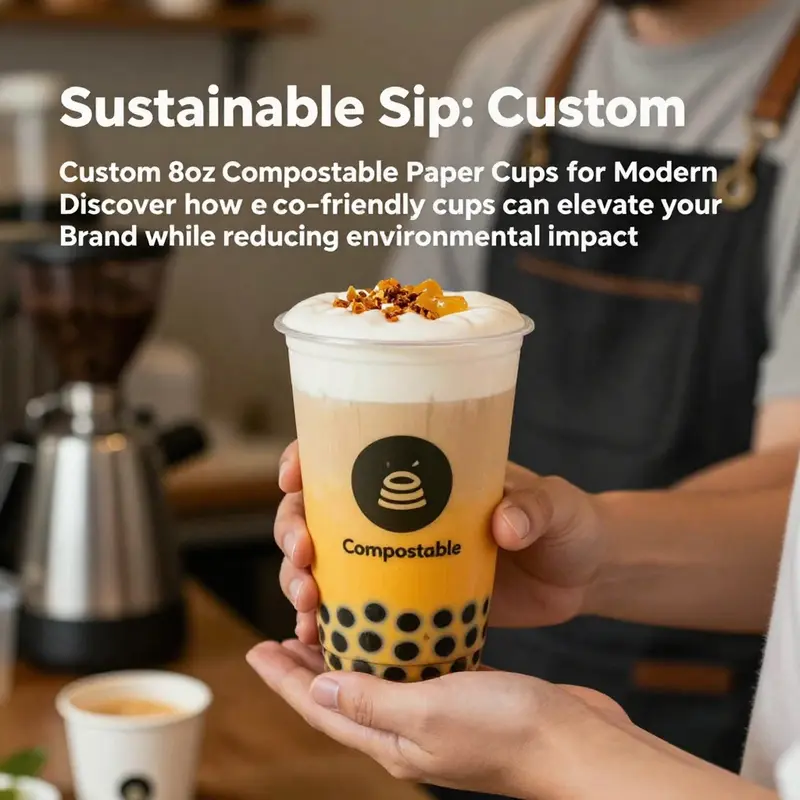
In today’s eco-conscious marketplace, businesses in the beverage industry are increasingly seeking sustainable solutions that resonate with their values and their customers’. Custom 8oz compostable paper cups stand out as not only a functional choice but also a compelling branding opportunity for bubble tea shops, restaurants, food trucks, catering services, event planners, and corporate procurement teams. By transitioning to these eco-friendly cups, businesses can enhance their customer experience, demonstrate commitment to sustainability, and capitalize on growing environmental awareness. This article dives into the key features and benefits, pricing models, and sourcing strategies for custom 8oz compostable paper cups, equipping your business with the knowledge to make an informed and impactful choice.
Small Cup, Big Impact: Crafting Brand Identity and Sustainability with Custom 8oz Compostable Paper Cups
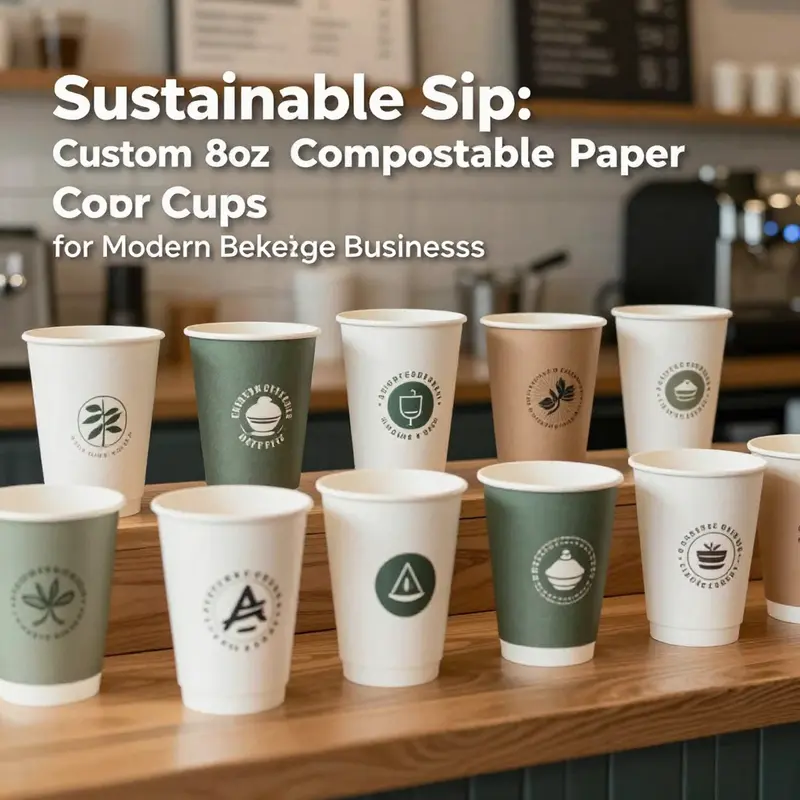
The coffee cup has long been more than a vessel for a drink. It is a portable storefront, a tiny billboard that travels from barista to customer, from street corner to office lobby. When a business chooses custom 8oz compostable paper cups, it does more than select a container; it makes a statement about priorities, values, and the kind of future it wants to support. In a landscape where waste often travels with the beverage, these cups function as a hinge between daily ritual and long-term responsibility. They are designed to be functional, yes, but they are also engineered to align with a broader set of goals: cleaner cities, healthier ecosystems, and a brand narrative that resonates with customers who care about how products are made, how they end their life, and how they reflect the identities of the people who choose them.
At their core, custom 8oz compostable paper cups are built from paper and a plant-based coating that replaces traditional plastic linings. The coating, typically derived from renewable resources, is designed to be biodegradable and compostable in industrial facilities. This is not merely a buzz phrase; it is a practical commitment to end-of-life outcomes. When the cup reaches an appropriate composting stream, it breaks down into the components of soil biology rather than lingering as waste in landfills. The essential idea is straightforward: if a cup can be composted, it should be composted. The implications for waste management are significant. For a brand that serves hot beverages in bustling urban areas, the potential to divert substantial volumes of material from landfill streams can translate into meaningful reductions in overall environmental footprint over time.
Material selection matters, and here the paper is often paired with a plant-based coating, a combination designed to balance performance with sustainability. The outer surface can be customized with branding elements, while the interior focuses on safety and compatibility with hot liquids. The 8oz capacity is a deliberate choice. It mirrors standard serving sizes in many cafes and offices, ensuring that the cup fits comfortably in customers’ hands while maintaining a reasonable balance between volume and heat retention. The capacity supports a common café workflow, where a single serving size reduces complexity in inventory management and workflow planning. For many operators, it is a sweet spot between portion control and a satisfying drink experience.
One of the most compelling aspects of these cups is their customization potential. Branding is not an afterthought; it becomes an integral part of the consumer experience. The exterior can be emblazoned with logos, color schemes, slogans, and distinctive artwork that reinforces a brand’s identity. The moment a customer holds a cup that carries familiar colors or a recognizable mark, the exchange becomes more than a transaction. It becomes a branding moment, a micro-communication that signals values and style without saying a word. In a crowded marketplace, that ability to capture attention through packaging is a potent competitive advantage. A well-designed cup can prompt social sharing, word-of-mouth enthusiasm, and a perception of quality that extends beyond the beverage itself.
From a functional standpoint, these cups are designed to be leak-proof and durable. The double-wall construction is a key feature that supports insulation, protecting hands from heat while reducing the likelihood of heat transfer to the consumer’s fingers. This is especially important in quick-serve environments where customers may be on the move or in line, juggling multiple tasks. The insulation is not merely about warmth; it contributes to a safer, more comfortable user experience. The cups are molded to resist deformation from the heat of coffee or tea and to remain sturdy during handling and transport. Even when filled with hot liquids, the structure holds steady, which helps maintain the integrity of the brand experience from the moment the cup leaves the machine until the last sip.
Safety is another critical pillar. Food-safe and non-toxic design means that the cups are free from harmful chemicals and odors that could alter the drink’s flavor or raise concerns about consumer health. In a market increasingly attentive to what is in contact with food and drink, this level of safety support is not optional. It helps ensure that the beverage’s flavor remains pure and unaltered by packaging interactions. The absence of substances such as BPA or PFAS in the materials used to produce these cups is not merely a technical detail; it is a reassurance valued by customers who want clean, reliable packaging that aligns with their own health and wellness expectations.
Versatility rounds out the practical appeal. Although optimized for hot beverages like coffee and tea, the cups are sufficiently versatile to accommodate cold drinks, juices, smoothies, and even small snacks in some settings. This broad usability is attractive for event planners, catering teams, and coffee shops that host a variety of occasions. The ability to repurpose a single packaging format for multiple uses simplifies vendor relationships and inventory management for operators who strive to minimize complexity while maximizing impact. For venues that host weddings, festivals, or conferences, these cups can serve as a cohesive, sustainable packaging solution that supports a unified brand experience across icons, signage, and service ware.
A chapter of production and procurement reveals a different, equally important story. The market for these cups is global, with the majority of manufacturing concentrated in major manufacturing hubs in Asia. Suppliers on B2B platforms provide detailed specifications, including material composition, coating type, capacity, and order terms. Pricing is not uniform. It ranges widely, reflecting differences in customization complexity, printing method, and order volume. The typical per-unit price can swing from a few tenths of a cent to nearly a tenth of a dollar, with minimum order quantities that often sit around 50,000 to 100,000 pieces depending on the printing approach. For many smaller businesses, this means a careful negotiation of cost against brand visibility and environmental impact. Sample packs may offer a pathway for testing, with starting points around a penny per piece, enabling operators to gauge print quality, fit, and user experience before committing to larger volumes.
What makes the sourcing narrative compelling is not only the price but the scalability and reliability of supply. Companies with the capacity to produce hundreds of thousands of cups annually ensure that seasonal spikes in demand can be met without compromising service levels. The ability to manage international payments in stable currencies and access clear refund policies for orders that arrive damaged or delayed builds trust in the supplier relationship. It is, in effect, a continuity plan for packaging that must perform reliably in a fast-paced hospitality environment. When operators consider these cups, they are evaluating not just a product; they are evaluating a supplier ecosystem that can support growth, changes in demand, and evolving design requirements over time.
Branding and the customer journey intertwine most closely at the point of use. The cup becomes a tactile reminder of a brand’s personality—from the chosen color palette to the typography on the sleeve or the simplicity of the logo alignment on the cup’s exterior. The physical shape and grip—whether single-wall for lighter handling or double-wall for enhanced insulation—affect the consumer’s daily ritual. A customer who receives a cup that feels premium, prints clearly, and behaves predictably when filled with a hot beverage is more likely to associate those positive attributes with the brand itself. In this way, packaging becomes a silent ambassador, reinforcing values such as sustainability, quality, and attention to detail. The aim is not merely to deliver coffee but to deliver an experience that reflects a company’s commitment to responsible practices while still delivering convenience and enjoyment to the user.
Of course, a sustainable packaging strategy does not exist in a vacuum. It interacts with consumer behavior, waste management infrastructure, and regional regulations. Compostable cups rely on the existence of compatible industrial composting facilities to complete their lifecycle. In places with robust organics programs, the cups can reach the intended end of life more reliably. In markets with limited composting capacity, proper disposal becomes a shared responsibility among retailers, waste haulers, and customers. This reality invites businesses to communicate clearly about disposal options at the point of sale, use, and post-use. Effective labels and signage, gentle nudges toward composting rather than open-waste trash, and customer education can increase the likelihood that cups contribute to a sustainable loop rather than ending up in landfills. These considerations become part of a brand’s stewardship narrative, adding depth to the story consumers encounter as they interact with the physical package and the brand behind it.
Design and production opportunities extend beyond the material and the printing. The coating, while plant-based, has to deliver practical performance in terms of moisture resistance, heat tolerance, and barrier properties. The decision to adopt a particular printing method—whether offset, flexography, or another process—affects surface fidelity, color depth, and the ability to maintain legibility through multiple uses and exposures. The packaging ecosystem rewards operators who invest in thoughtful design, including the alignment of brand colors with cup color, the legibility of slogans at the rim’s edge, and the balance between an eye-catching motif and the cup’s functional constraints. Strategic design decisions that consider both aesthetics and usability yield higher perceived value among customers and create more opportunities for social sharing and word-of-mouth recommendations. In this sense, the cup is not merely a container; it is a small, efficient media channel that communicates a brand’s stance on sustainability while delighting the user with a well-executed sensory experience.
The conversation about these cups inevitably touches on the broader conversation about supply chain resilience and scalable sustainability. For businesses planning growth, the capability of suppliers to handle large volumes—potentially hundreds of thousands of pieces annually—balances with the need to maintain consistent quality and safe, non-toxic materials. The prospect of a wholesale partner that can accommodate international transactions, honor refund policies, and provide dependable delivery timelines becomes a strategic asset. It reduces the risk of stockouts during peak demand periods, aligns packaging with marketing campaigns, and supports calendar-driven events where customized cups can reinforce the brand’s presence. In practical terms, this means a café can launch a seasonal promotion with a limited-edition cup design, knowing that the supply chain can scale to meet demand without compromising environmental commitments or product safety.
The customer experience is the throughline. A cup is an object that travels, touches hands, and ends its life in a compost stream. Each stage—production, customization, use, and disposal—offers opportunities to reinforce a brand’s story while honoring a commitment to planetary health. The cups’ biodegradable and compostable nature does not absolve a business from responsibility; it amplifies it. It asks brands to consider the entire lifecycle and to communicate clearly with customers about how to dispose of the cup after use. As more cities and institutions strengthen waste management policies and as consumer expectations rise for sustainable packaging, the choice to adopt custom 8oz compostable cups becomes a concrete expression of a brand’s environmental philosophy. It is a deliberate, tangible step toward a circular economy in which packaging materials re-enter productive life rather than accumulating as waste.
For readers who want to explore practical options or visualize how these cups could fit into a broader packaging strategy, the current market provides a continuum of choices. Operators can engage with suppliers to discuss printing capabilities, color matching, and the level of customization that aligns with their brand standards. They can request samples to validate grip, heat resistance, and print clarity, ensuring the final product supports both functional performance and aesthetic expectations. They can also consider the downstream implications: how the cups will be routed through the local waste stream, how staff will educate customers about proper disposal, and how the brand’s sustainability claims will be supported by a credible execution plan. In this way, the decision to use custom 8oz compostable cups becomes part of a holistic approach to packaging that respects efficiency, aesthetics, and environmental stewardship equally.
As a practical note for those assessing options, a quick mental model helps. Think of the cup as three layers: the outer surface that carries the brand, the interior coating that ensures food safety and maintains the beverage’s flavor profile, and the structural wall that provides the necessary warmth and hold. In a well-designed system, each layer contributes to a predictable, high-quality user experience while the entire unit points toward a sustainable end-of-life story. The beauty of this approach is that it blends craft and science: design choices that honor the hand that holds the cup, materials chosen to minimize environmental impact, and a supply network capable of meeting demand without compromising safety or performance. When these elements converge, a simple 8oz cup becomes a reliable vehicle for climate-conscious branding and responsible consumption.
For readers who want to explore more about the current landscape and what options exist in practice, a useful resource is the broader category of paper cups and disposable drinkware, which aggregates multiple suppliers and design configurations. This gives businesses a sense of the range of customization, material options, and printing methods available, while highlighting how different cups balance cost, durability, and environmental goals. You can view related options in the paper cups category on the supplier’s site—an accessible starting point for evaluating form, function, and fit with your brand’s sustainability ambitions.
External resource: https://www.alibaba.com/product-detail/8-16oz-Compostable-Customized-Printing-Coffee_1600457884275.html
Pricing as a Palette: Understanding the Models Behind Custom 8oz Compostable Paper Cups
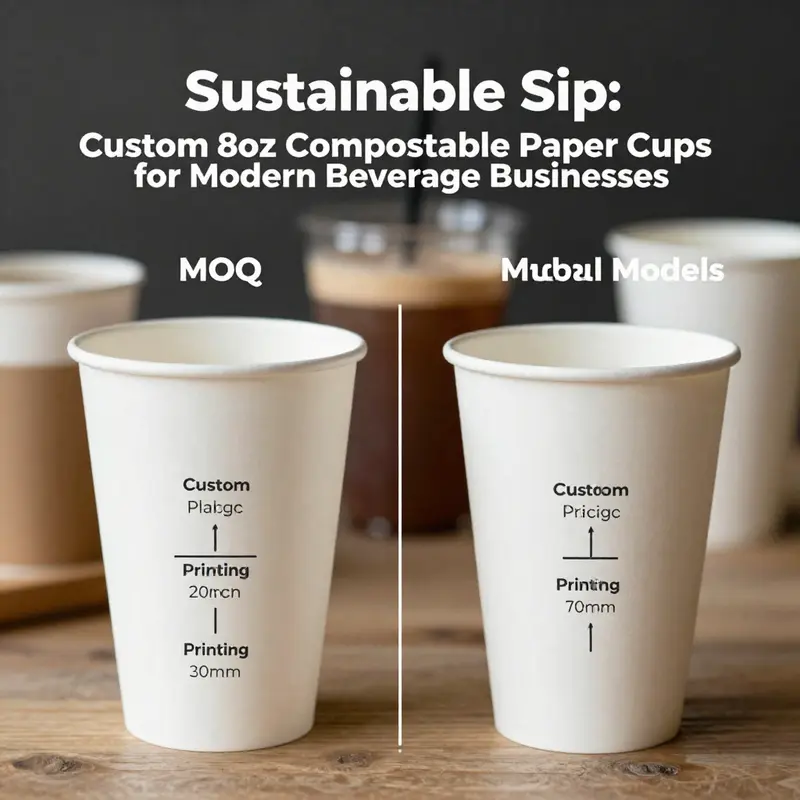
Pricing for custom 8oz compostable cups is a careful negotiation between material science, manufacturing realities, and brand storytelling. The price you pay is not just a number on a quote; it is a signal about how a business chooses to present its environmental commitments, how it manages guest experience, and how reliably it can serve peak demand. In markets that prize compostability, price becomes intertwined with the value proposition a brand offers to customers. The way a cup is designed, the wall structure that controls heat transfer, and the degree of customization all translate into a per-unit cost. For operators, understanding these dynamics helps translate sustainability into tangible outcomes, from margins to customer satisfaction. This chapter traces the core drivers of price in custom 8oz compostable cups, focusing on how order size, design complexity, and material choices shape what appears on the invoice and, more importantly, how those choices affect business results over time.
At the most basic level, unit price scales with quantity. For a typical mid-range order of 50,000 cups, quotes commonly land in the US$0.008 to US$0.013 per cup range. Those figures may seem small, but when a business is serving hundreds or thousands of drinks daily, every cent matters. For a small coffee shop or event vendor, a savings of a fraction of a cent per cup compounds into meaningful yearly savings. The lower end of the range often corresponds to straightforward, single-wall designs with a simple PLA coating, where the emphasis is on producing a leak-proof, sturdy cup that can handle hot beverages without compromising compostability. The upper end along this lower tier usually appears when a brand adds a modest level of customization, like branded color blocks or a simple logo, or when the cup is required to meet more stringent production tolerances. The per-unit delta, while seemingly modest, is amplified by order frequency and the length of campaigns, making early alignment on the desired look and performance increasingly valuable.
In contrast to the modest single-wall price band, the market sometimes presents pricing at much higher volumes that can muddy the typical price curve. Some listings claim that at 1,000,000 pieces or more, per-cup prices can drop to as low as US$0.098 for unbleached or bleached sugarcane pulp cups. That figure appears inconsistent with the more common ranges and likely reflects bulk packaging metrics, special promotional terms, or a particular production scenario. Real-world quotes at such scales, however, often continue to cluster around the more conservative end of the familiar range, with reliable guidance typically landing between US$0.008 and US$0.012 per cup for standard, well-controlled production. The important takeaway is that economies of scale exist, but the most dependable savings come from consistent process optimization, stable specifications, and long-term supplier relationships rather than a single dramatic price point. For buyers planning large campaigns, locking in price stability over time and ensuring predictable supply often outweigh the allure of the lowest possible unit price.
Customization channels pricing further. Basic printing—adding a brand logo, simple color blocks, or small text—commonly adds roughly US$0.008 to US$0.009 per cup, a modest premium that many cafes accept as the cost of differentiating their cups from generic offerings. Once you push beyond basic logos into more visible customization, such as printed sleeves or double-wall insulation with full-color graphics, unit costs can rise to the US$0.02–US$0.05 range. These higher costs reflect not only the additional materials but also the more involved setup, screening, and longer run commitments that producers require to ensure high fidelity, color accuracy, and durability under heat. MOQs for enhanced customization frequently rise to ten thousand pieces or more, a threshold that aligns with brand-building strategies but can be prohibitive for short-lived promotions or small pop-up events. In practice, the escalation in price often mirrors the value the design conveys: a stronger, more professional brand signal can justify the investment when it translates into better recognition and stronger customer recall.
Material choices and structural design carry their own pricing implications. Single-wall cups are typically the most economical option, commonly built on PLA-coated paper or sugarcane pulp variants. They deliver sufficient insulation for most hot drinks and provide a clear environmental narrative without adding excessive cost. Double-wall cups, by contrast, add an extra layer that improves heat retention and reduces the burn risk for consumers. This added performance comes at a price, with double-wall configurations typically in the 0.01 to 0.015 per cup range when produced at scale. The heat barrier these cups provide can be critical during busy service periods, where speed and comfort influence guest experience. Aesthetic touches—textured exteriors, color gradients, or a thicker liner—can push prices higher still, while the sustainability story, if backed by credible certifications, can help justify the premium in crowded markets that value responsible packaging.
The practical realities of procurement unfold through MOQs and supplier terms. Most suppliers set MOQs between 1,000 and 10,000 pieces for standard offerings. Ordering more than the minimum typically lowers the per-unit cost, but it also ties up capital and requires storage and inventory management. For brands experimenting with new packaging concepts, a smaller initial order followed by a staged ramp-up can be a prudent approach. Negotiating terms—lead times, payment terms, color tolerance, and even the possibility of phased deliveries—can meaningfully influence the total cost of ownership. In this context, price is not a single figure but a negotiation envelope that reflects volume commitments, risk tolerance, and supply chain reliability. Effective planning, particularly for seasonal campaigns, reduces the risk of rush charges or price volatility at peak times and keeps the campaign on track without compromising sustainability goals.
Beyond the headline unit price, several ancillary factors influence total spend. The decision to include a printed sleeve or a wrap, for example, changes the cost per cup and the end-of-life profile of the packaging. Coatings matter as well; standard PLA remains a common choice, but some buyers pursue alternative, plant-based finishes with different compostability certifications and disposal implications. If a retailer commits to a certified compostable workflow, there can be added costs for third-party testing, label verification, and waste-stream integration. Design complexity—whether it demands precise color matching to brand standards or a transition from grayscale to full color—also drives art costs and setup fees. Finally, shipping adds a significant layer of complexity. Importing from overseas suppliers introduces freight costs, potential duties, and longer lead times, all of which contribute to the landed cost per cup. For buyers seeking practical guidance on how to weigh printing and packaging choices against price, the category linked earlier offers a broader view of options and ideas: packaging and printing options.
Price, however, must be weighed against value. A lower-priced cup that delivers unreliable leak resistance, inconsistent print quality, or questionable compostability can incur hidden costs through waste handling, customer dissatisfaction, and reputational risk. Conversely, a modest price premium can secure more reliable seals, smoother drinking experiences, and a coherent sustainability message that resonates with environmentally conscious customers. The optimal choice depends on context: a fast-moving cafe may prioritize rapid service and durable insulation, while a festival or conference may seek a visually striking cup that strengthens brand recall over a short timeframe. In markets saturated with eco-friendly packaging options, the ability to demonstrate genuine compostability, durability, and clear end-of-life pathways often matters as much as the visual appeal. The price difference becomes a reflection of how well the cup aligns with the retailer’s long-term strategy and the expectations of its audience.
Geographic and supply-chain considerations also shape pricing trajectories. A large portion of these cups originates in Asia, where factories offer an expansive range of customization options and scalable production schedules. Importing introduces lead times, freight costs, and, depending on the destination, tariffs or duties. The choice between containerized ocean freight and faster but more expensive air shipments can drastically alter landed costs, especially for campaigns with tight launch windows. For buyers that require flexibility, aligning a supplier’s production cadence with campaign dates is essential to keeping pricing predictable and avoiding last-minute surcharges. Long-term relationships, well-defined specifications, and transparent communication about expected volumes reduce the likelihood of price surprises during peak demand periods, making price stability a strategic asset rather than a mere negotiation outcome.
Testing, samples, and pilot runs are an essential part of cost management. Sample packs that start around 0.01 per piece allow buyers to assess fit, feel, and print durability before committing to larger orders. This due diligence lowers the risk of miscommunication and design mismatches down the line. When introducing logos, color, or intricate artwork that deviates from standard graphics, setup costs can escalate quickly. A careful review of proofs, color matching standards, and print durability helps prevent expensive reprints and product returns. For brands planning ongoing programs, budgeting a modest amount for iterative testing pays off by ensuring that final orders align with brand expectations and perform well in real serving conditions. In this way, pricing becomes a practical tool for ensuring quality and consistency across multiple campaigns, rather than a one-off decision.
From a procurement standpoint, the most effective approach to pricing balances rigor with flexibility. Request quotes from several suppliers that share similar material choices, wall designs, customization levels, and MOQs. Ask for exact material composition details of the coatings and for any compostability certifications and waste-stream support. Clarify lead times and whether sleeves are included or sold separately. Evaluate quotes on total cost of ownership, not just the unit price. Assess a supplier’s capacity to deliver consistently across multiple campaigns and seasons. A simple scoring rubric that weighs price, reliability, print quality, and sustainability credentials can help teams compare offers without losing sight of strategic priorities. For readers who want a broader view of printing and packaging ideas, the internal category linked earlier can offer additional context and inspiration. The result is a procurement process that translates sustainability into predictable, repeatable outcomes.
Ultimately, pricing for custom 8oz compostable cups reflects a synthesis of material science, manufacturing economics, and brand storytelling. The right choice balances a fair price with the value of a frictionless customer experience and a credible sustainability narrative. As buyers refine specifications—from stronger color control to thicker insulation or a more scalable supply chain—the unit price mirrors those priorities while staying aligned with the organization’s financial targets. The goal is not merely to minimize cost but to optimize trade-offs that serve both business ambitions and environmental responsibilities. With a clearer picture of price drivers, buyers can move from rough estimates to confident commitments, charting a path that harmonizes financial goals with consumer expectations and a commitment to a more sustainable packaging ethos. External resource: https://www.alibaba.com/product-detail/Custom-Compostable-8oz-Paper-Coffee-Cups_1600545742272.html?spm=a2700.100193.0.0.5a3f6c5bZyJYlX
Beyond Green Branding: Strategic Sourcing and Manufacturing of 8oz Compostable Paper Cups for Clean, Concrete Impact
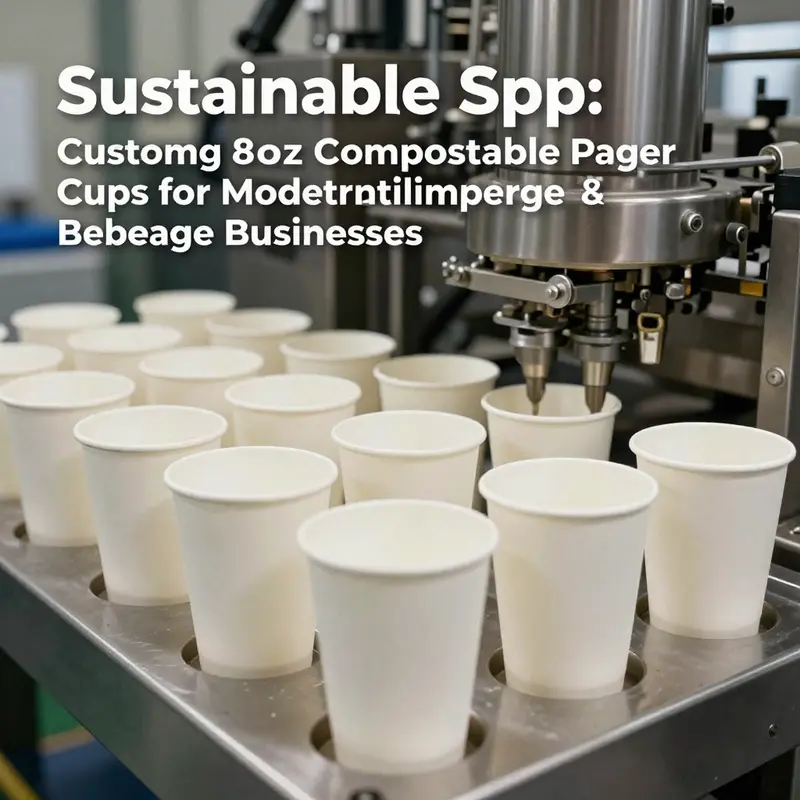
The move toward sustainability in consumer packaging has shifted many brands from a simple preference for eco-friendly labels to an operational commitment that touches sourcing, manufacturing, and logistics at every turn. Among the options with tangible impact, custom 8oz compostable paper cups stand out for hot beverage vendors who want a strong sustainability signal without sacrificing performance. This chapter follows a thread from concept to implementation, tracing how brands translate sustainability goals into a reliable supply of cups that are not only compostable but also customizable, durable, and cost-effective at scale. The discussion flows from the strategic decisions buyers must make about where and how these cups are produced to the practical tests of quality and supply chain resilience that make or break a program in real markets. It is a journey that begins with the recognition that the material choice—paper coated with a plant-based barrier—maps onto a broader ecosystem of risk, certification, and customer perception, and ends with a clear set of moves a sourcing team can execute to align supplier capabilities with brand promises and customer expectations.
The core proposition of 8oz compostable paper cups rests on a simple but powerful premise: a disposable cup can hold hot liquids, deliver a brand story, and dissolve into a composting stream with minimal environmental baggage. The paper base, coupled with a biodegradable coating such as PLA derived from renewable resources, offers a clean break from traditional plastic-laminated cups. Yet the practical adoption of these cups requires more than a green label. It demands a working knowledge of where production happens, how the lines are organized, which certifications govern the process, and how to balance customization against lead times and pricing. The supply chain for these cups has crystallized into two major manufacturing clusters in modern China—the Yangtze River Delta and the Pearl River Delta—each with distinct strengths that can be optimized depending on a buyer’s priorities, whether those are scale, speed, or a particular balance of cost and customization.
The Yangtze River Delta, a region stretching across Zhejiang, Jiangsu, and Shanghai, has earned its reputation through vertically integrated factories that shepherd the entire cup lifecycle. In practice, this means suppliers often control pulping and paper production, bio-based coating application, forming, and even printing in a single facility or a tightly connected group of facilities. That vertical integration translates into tighter quality control, fewer handoffs, and, under the right conditions, shorter lead times. For buyers who emphasize reliability and certification-driven compliance, this cluster can be particularly attractive. The proximity to major international ports, including Shanghai and Ningbo, further compresses the logistics window from factory floor to distribution center, a factor that matters when lead times can ripple through marketing calendars, promotions, or seasonal events that demand precise inventory planning. In this environment, the emphasis on certifications—OK Compost or FSC marks, ISO management systems, and independent lab verifications—tends to be more pronounced. The result is a supply pipeline that not only delivers on performance expectations but also supports the rigorous sustainability narratives brands want to attach to their cups and campaigns.
Across the Pearl River Delta, with its core in and around Shenzhen, suppliers frequently push the frontier on automation and high-volume output. Automation—robotic handling, high-speed printing, and streamlined material workflows—yields impressive production cycles and cost efficiencies that can be decisive when a buyer is chasing aggressive pricing for standardized designs or moderate customization. The Pearl River Delta’s strength lies not just in volume but in the ability to respond quickly to demand surges and to accommodate a degree of customization within a tight cycle. This is particularly valuable for brands testing new flavors, seasonal campaigns, or limited-run designs where the speed of iteration matters as much as the final quality. The risk, of course, is that smaller facilities within this region may have less bandwidth for extensive customization or for longer, more complex certification trails. Buyers who lean into this cluster often pair fast turnarounds with a carefully staged approach to artwork and material specification, ensuring that what is produced aligns with regulatory expectations and consumer safety standards while still delivering the visual impact brands seek on shelf or in-store displays.
Factor in the material itself, and a broader picture emerges. The cups are paper-based, with a coating derived from plant-based polymers—primarily PLA—that provides a moisture barrier and heat resistance sufficient for common hot beverages. The coating’s origin from renewable feedstocks is central to the compostability narrative, but it also requires context. Not all composting facilities accept PLA-coated paper, and the outcomes depend on local infrastructure. For a brand, that means decisions about where the cups will be disposed of or collected for composting must sync with the consumer’s behavior and the city’s waste system. Some markets excel in industrial composting, where temperature and microbial action accelerate decomposition. Others rely on home composting, which has stricter limitations. The practical implication for sourcing teams is to verify not only the material’s claim of compostability but also the third-party verification that supports that claim, as well as any regional caveats about end-of-life processing. In addition, the cups must be food-safe and non-toxic, meeting stringent safety standards for contact with hot liquids and avoiding off-odors or migration of substances into beverages. These assurances typically come from independent testing and documented certifications that can be audited by procurement teams and, if needed, by retailers or regulatory bodies.
Brand customization is a core differentiator in the B2B space for compostable cups. Buyers increasingly seek full-color branding on the exterior, a feature that pushes printers toward flexible, high-resolution printing methods and robust color-matching processes. The printing approach, whether offset or flexographic, influences the minimum order quantities, unit costs, and lead times. A design that blankets the cup with a brand color, a logo, and multiple supporting graphics will require a stationary printing setup that can reproduce the artwork without compromising the barrier properties or the heat performance of the cup. The know-how here is not purely artistic. It involves precise material thickness, careful ink selection compatible with a PLA-coated surface, and an understanding of how the printing process affects the cup’s integrity under hot-fill conditions. A mature supplier network offers a spectrum of customization options, including single-wall and double-wall configurations, and a range of standard capacities around 8oz, with the possibility of extending to 12oz or 16oz for campaigns that require a family of products to maintain a consistent brand look across sizes. The end result should be a cohesive packaging system that reinforces a brand’s sustainability pledge while delivering a dependable consumer experience—no leaks, no heat transfer beyond comfortable handling levels, and a printing finish that holds up from the point of sale to the consumer’s first sip.
When buyers evaluate potential suppliers, a set of practical questions moves to the forefront. Material certification must be verified: the cup should be made from paper with a PLA or equivalent compostable coating, and the overall package must be proven to be compostable in independent testing environments. The supplier’s capabilities in customization matter, but so do their production footprints and schedules. Some buyers opt for a two-step approach—select a base sheet and a coating lineage that meets regulatory and sustainability goals, then layer in a design brief that aligns with brand identity. The minimum order quantity, or MOQ, emerges as a critical constraint. In many cases, MOQs are shaped by the printing method used and by the volume thresholds required to justify high-format production lines. The pricing spectrum is broad, with per-unit costs influenced by volume, artwork complexity, and material thickness. While large volumes can drive unit costs down, smaller runs may incur premium charges for digital or flexo printing setups, making early budgeting and design decisions essential to avoid sticker shock later in the process.
Beyond cost and color, buyers must consider the broader risk management and transactional protections offered by sourcing platforms. In international trade, securing payment terms, ensuring shipment protection, and clarifying loss or defect remedies are essential. Some platforms provide payment protection, escrow, and refund guarantees in cases of delay, loss, or defect, helping buyers manage risk across borders. For any business investing in a sustainability-driven packaging program, this is not a luxury but a default control that supports supplier relationships and project timelines. The combination of a robust regional manufacturing base, strong certification ecosystems, and disciplined procurement practices creates a pipeline that can deliver both performance and purpose at scale.
What emerges from these dynamics is a practical blueprint for brands seeking to implement or broaden a program around 8oz compostable paper cups. First, define a target profile that balances environmental goals with consumer expectations: compostable, food-safe, leak-proof, with credible third-party verification. Second, map the sourcing landscape to identify whether a given project benefits more from the deep, tightly knit supply chains of the Yangtze River Delta or the automation-driven, rapid-response capabilities of the Pearl River Delta. Third, align customization needs with production realities. When artwork is a central part of the brand story, ensure that the design brief accounts for color accuracy, print durability, and the potential impact of the coating on the final appearance. Fourth, establish a clear MOA—minimum order agreement—that frames both the baseline product quality and the governance around change orders, material substitutions, or packaging innovations. Fifth, stress-test the supply chain with samples, lead-time simulations, and pre-shipment inspections to minimize disruption once a full production run is underway. Finally, keep a watchful eye on end-of-life realities. Develop guidance for customers that explains how to dispose of the cups in ways that support composting programs while avoiding misaligned expectations that could generate negative environmental outcomes or accusations of greenwashing.
A practical step in this journey is recognizing the value of integrating supplier knowledge with marketing and product planning. The ability to print bold, full-wrap branding on an eco-friendly cup can become a competitive advantage when paired with a credible compostability narrative. However, it is equally important to ensure consumers understand the disposal pathway and that municipalities or composting facilities can accept such cups. The reliability of the program hinges on a chain of trust that begins with the supplier’s certifications and ends with a well-communicated consumer message. This is not about chasing a single green credential; it is about orchestrating a credible, end-to-end narrative that customers can believe and journalists can verify. In that sense, the sourcing decision becomes a strategic business practice, not merely a procurement choice.
The importance of documentation cannot be overstated. Buyers should demand traceable records that demonstrate material origin, coating composition, and the alignment of manufacturing processes with stated certifications. They should request independent lab results that confirm compostability under stated conditions and safety for hot beverages. They should confirm packaging compatibility with lids and sleeves and ensure that the chosen customization method does not compromise barrier performance. A transparent, well-documented process reduces the risk of supply chain disruption and supports a marketing story that can withstand scrutiny from customers, retailers, and sustainability auditors alike.
From a practical vantage, these considerations translate into concrete actions. Engage early with potential suppliers to discuss your desired cup format, print requirements, and end-of-life expectations. Use a phased approach to the rollout: start with a smaller pilot order to validate color fidelity and performance under real-world conditions, then scale up as confidence builds and forecasts stabilize. Develop a feedback loop that captures data on consumer reactions to the cup’s look and feel, as well as performance metrics such as heat resistance, leak resistance, and sleeve fit. This approach reduces risk while building a robust data set to inform future product iterations and packaging strategies. The end-to-end picture is not simply about producing a single item but about establishing a reliable, scalable system that ties together sustainability claims, branding quality, and supply chain discipline.
For buyers who want to anchor their decisions in a broader packaging ecosystem, an accessible entry point is to explore related categories that influence the overall packaging narrative. The broader family of paper packaging options includes not only cups but also sleeves, lids, and related disposable tableware, all of which can be aligned to present a coherent sustainability story. Within this ecosystem, a practical move is to consult the paper packaging category for a sense of material choices, coatings, and alternative formats that might support a brand’s strategic goals while preserving service levels and cost controls. This integrated view helps ensure that brand promises do not rely on a single green label, but on a robust operational plan that delivers reliable performance and clear, honest communication to customers. For readers seeking a concrete catalog of related packaging options, this category provides a curated overview of products that can complement compostable cups and extend a sustainability narrative across the entire beverage experience, from presentation to disposal. paper packaging category
In sum, the sourcing and manufacturing of 8oz compostable paper cups demands a careful balance of regional manufacturing strengths, material integrity, customization capabilities, and supply chain risk management. Buyers who navigate these dimensions with a clear strategy can realize not only a sustainable product but a durable branding asset that resonates with customers and stands up to the practical pressures of a global marketplace. The two delta regions offer complementary strengths: the Yangtze River Delta can provide integrated quality control and certification rigor that help meet heavy regulatory demands and brand protection needs; the Pearl River Delta can deliver rapid, cost-efficient production that suits fast-moving campaigns and modular customization. By combining these regional capabilities with careful material validation, robust testing, and transparent communication about end-of-life processing, brands can deploy compostable cups as a credible element of a larger sustainability program rather than a one-off marketing gesture.
External reference: https://www.made-in-china.com/products/170432517796/Compostable-PLA-Paper-Cups-8oz-Disposable-eco-Friendly-Hot-Coffee-Cup.html
Final thoughts
As we delve into the sustainability-driven landscape of the beverage industry, custom 8oz compostable paper cups emerge as a pivotal element for businesses seeking to align product offerings with eco-conscious consumer demands. Upholstering your business with these cups not only presents a unique branding opportunity but also contributes meaningfully to reducing your environmental footprint. By recognizing the key features and benefits they offer, understanding the pricing dynamics, and knowing where to source them effectively, your business can thrive while promoting a greener future. Prioritizing sustainable practices, such as the use of compostable cups, can ultimately lead to stronger customer loyalty and a more vibrant business reputation.