
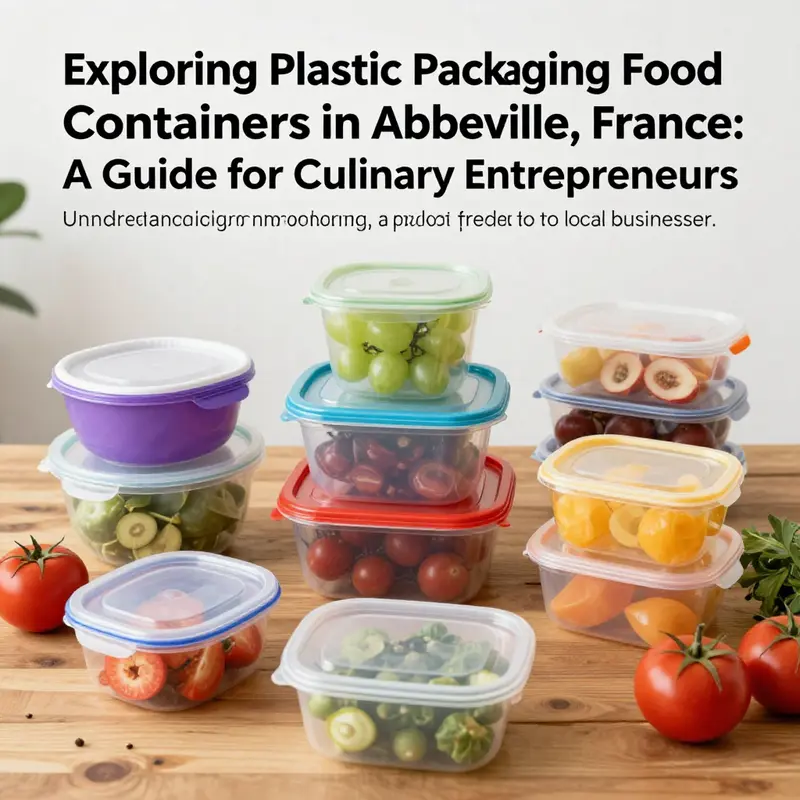
Abbeville, France, is a hub for culinary ventures, including bubble tea shops, restaurants, food trucks, and catering services. As these businesses grow, so does the need for effective food packaging solutions, particularly plastic food containers. This article delves into the essentials of sourcing plastic packaging in Abbeville. We begin by exploring the local manufacturing landscape and supply chain, before examining market demand and the technological innovations shaping the industry. We’ll also address the environmental impacts of plastic containers and the regulations governing their use, offering a comprehensive view for business owners looking to optimize their packaging solutions.
null
null
null
null
Abbeville’s Green Edge: How Innovation Is Redefining Plastic Food Packaging Containers
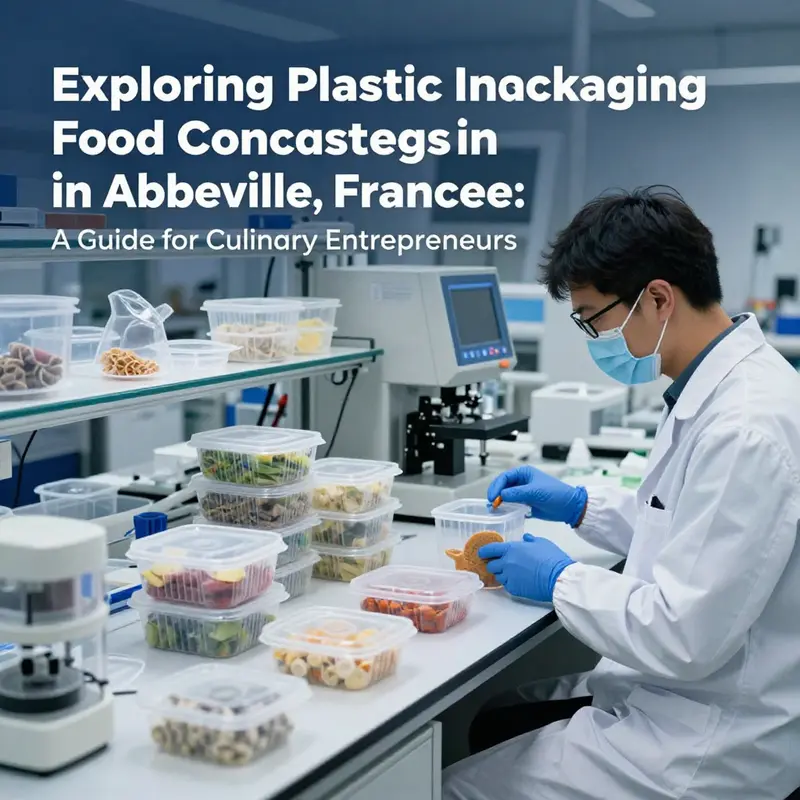
Abbeville, a historic town tucked in northern France, sits at a quiet crossroads of traditional craft and contemporary materials science. Its evolving landscape of plastic food packaging containers mirrors a broader European shift, where brand owners, retailers, and consumers increasingly demand products that keep food safe, extend shelf life, and align with a circular economy. In this region, the path from concept to market is shaped not only by local factories and how they adapt to new polymers, but also by the global networks that connect Abbeville to a wide array of suppliers and innovations. Marketplaces that aggregate manufacturers, exporters, and distributors offer a practical lens on how Abbeville can balance cost, performance, and sustainability. Through these platforms, buyers can compare real-time pricing, assess supplier reliability, and explore customization options that suit both a retailer’s display needs and a household’s everyday use. The practical reality is that sourcing is no longer a simple local decision; it is a curated collaboration across continents, with Abbeville standing as a node where European standards meet global supply chains. Within this frame, the region’s innovations in plastic packaging containers reveal a quiet but steady redefinition of what “new” means for food containment. Bio-based materials, mono-material designs, smart packaging features, and lightweighting techniques are not isolated experiments but part of an integrated approach to materials performance, environmental stewardship, and consumer safety.
A central thread in Abbeville’s evolving packaging story is the rise of bio-based plastics. This category of materials draws on renewable resources—most commonly plant-derived feedstocks—to replace a portion of conventional fossil-based polymers. The appeal is twofold: it lowers cumulative greenhouse gas emissions over the packaging’s life cycle and reduces dependence on nonrenewable resources. In practice, this means containers that can still resist moisture, maintain form during refrigerated storage, and endure the mechanical stresses of stacking and transport, yet leave a lighter environmental footprint when the packaging reaches its end of life. The challenges, of course, include ensuring consistent supply chains for bio-based raw materials, managing the life cycle trade-offs, and maintaining barrier properties that protect fragile foods. In Abbeville, manufacturers are navigating these trade-offs by blending bio-based options with established polymers or by optimizing processing conditions to maximize performance without inflating cost. The result is a more nuanced spectrum of materials where renewables complement, rather than replace, the proven reliability of traditional plastics.
Equally transformative are advances in recyclable and mono-material designs. The goal here is straightforward in principle: make packaging easier to recycle by reducing the complexity that arises when different polymers and adhesives coexist in a single container. Mono-material architectures, when possible, enable municipal recycling streams to sort and process containers with fewer exceptions. This clarity benefits both waste management facilities and households, which often struggle with unclear disposal instructions. In Abbeville and across parts of Europe, designers and manufacturers are rethinking layers, lamination, and labeling to preserve functionality while stripping away superfluous material diversity. The aspiration is not to create a single ideal material but to curate a family of materials and structures that are compatible with common recycling practices. When this logic is combined with standardized packaging footprints and modular components, the industry moves toward an ecosystem where a container used in one region can travel to another with a predictable end-of-life outcome. The practical gains are significant: reduced contamination in recycling streams, improved material recovery rates, and greater confidence for municipalities tasked with delivering efficient waste programs.
Smart packaging technologies add another layer of precision to Abbeville’s packaging narrative. Time-temperature indicators and freshness sensors exemplify a new mindset about product condition rather than simply product safety. Time-temperature indicators provide a visual cue if a product has endured temperature excursions that could compromise quality. Freshness sensors, often embedded in the packaging’s interior or integrated into the cap or label, offer real-time data about the product’s state, helping retailers and consumers judge suitability before opening. This information not only supports longer, safer shelf-life windows but also curbs unnecessary food waste by enabling better decision-making at the point of sale and in households. While these features introduce new data flows and require robust data governance, they also empower a more transparent dialogue among suppliers, distributors, and end users. In Abbeville, producers are exploring how to balance the benefits of real-time condition data with privacy and data integrity concerns, ensuring that information enhances trust rather than overwhelming the user with complexity.
Lightweighting techniques further illustrate how Abbeville is translating sustainability into practical, market-ready packaging. Reducing plastic content without compromising strength or barrier properties translates into lower material use, easier handling, and reduced transportation emissions per unit of product. The work happens at multiple scales: optimizing thickness in the container body, redesigning closures to achieve better sealing with less material, and refining the geometry of corners and ribs to maximize stiffness against deformation. Lightweighting does not simply shave grams off a product; it reimagines how a container behaves under real-world conditions—from cold storage to crowded retail shelves to fast-moving consumer logistics chains. The benefits ripple outward, influencing not only the packaging’s environmental footprint but also the energy and fuel consumption associated with distribution. In a region like Abbeville, where logistics networks are intimate with neighboring markets, even modest gains in weight efficiency compound into meaningful reductions in carbon intensity across regional supply chains.
The broader ecosystem in which Abbeville operates helps explain how these innovations come to life. Digital marketplaces, such as Alibaba’s platform, play a practical role in identifying local and international manufacturers and suppliers who can translate these advances into container formats that meet European standards and regional preferences. A buyer in Abbeville can filter options by material family, durability metrics, and end-of-life compatibility, view live price quotes, review supplier performance, and gauge options for customization. This connectivity supports a balanced approach: maintaining high product safety and performance while remaining responsive to regional consumer expectations for sustainability and value. It also underscores how regional hubs can leverage global networks to accelerate adoption of new formulations and design strategies that address both consumer needs and municipal waste realities. The result is a more resilient and adaptive packaging sector in Abbeville, one that can respond quickly to evolving regulations, market preferences, and environmental goals.
For readers seeking a tangible connection to the broader materials landscape, a useful entry point is the plastic packaging category within a diversified packaging catalog. This internal pathway reflects how Abbeville’s innovations align with a wider set of packaging options, from simple containers to more sophisticated system-level components. Engaging with this category helps illustrate how regional efforts can integrate with global supply networks, ensuring that local manufacturers and suppliers have access to a broad palette of materials and configurations. In practical terms, it means Abbeville-based operations can experiment with new bio-based blends, test mono-material approaches, and prototype smart features within a framework that remains compatible with established recycling streams and consumer disposal practices. The linkage to the broader catalog also hints at a continuum of design iterations and supply-chain arrangements that keep pace with evolving European directives on plastics and packaging waste.
Beyond the specifics of materials and design, the Abbeville narrative sits inside a policy and market context that increasingly favors circular economy principles. Post-consumer waste management is no longer a peripheral concern; it is a central design criterion. The European market, reinforced by industry associations and regulatory bodies, rewards packaging innovations that reduce waste, improve recyclability, and maintain product integrity throughout the supply chain. In this environment, bio-based inputs, mono-material configurations, smart sensing capabilities, and lightweight structures are not merely features—they are strategic responses to demand for efficiency, transparency, and stewardship. The balance between performance and environmental impact requires careful material selection, process optimization, and end-of-life planning that considers how containers are collected, sorted, and reintegrated into production cycles.
For scholars and practitioners seeking a broader frame, these developments in Abbeville reflect a continental trajectory documented in comprehensive industry analyses. The 2024 Plastic Packaging in Europe report offers a holistic view of how European manufacturers are navigating material choices, design for recyclability, and innovations in packaging functionality. It situates Abbeville’s local experiments within a broader European system that emphasizes compatibility with municipal recycling schemes, standardized labeling, and cross-border logistics. While local ingenuity remains essential, the region’s progress gains its momentum from access to global sourcing networks, a responsive regulatory environment, and market demand that values both safety and sustainability. As Abbeville continues to integrate bio-based options, mono-material designs, smart packaging features, and weight reductions, it demonstrates how a relatively small urban center can contribute meaningfully to a larger, more sustainable packaging future.
External reference: https://www.plasticsEurope.org/en/insights-and-publications/reports/2024-plastic-packaging-in-europe
The Environmental Footprint of Plastic Food Packaging in Abbeville, France: Tracing Waste, Policy, and the Path to Change
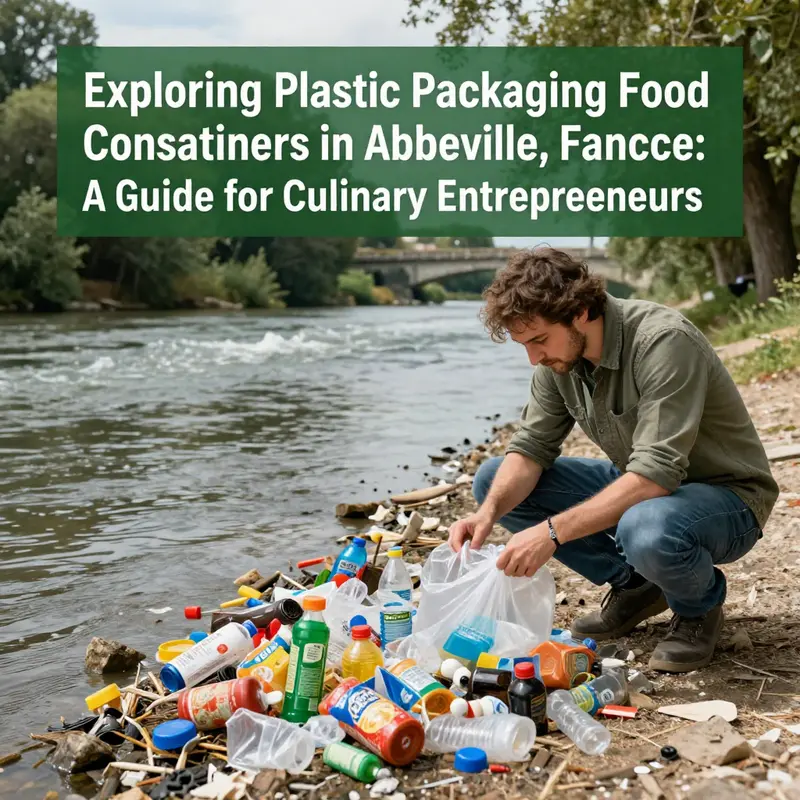
In Abbeville, the simple act of sealing a meal with plastic packaging sits at the crossroads of daily convenience and long term environmental consequence. The town may feel distant from the world’s great waste streams, yet the choices made here reverberate through regional streams, fields, and shorelines. Plastic packaging touches every table in the region, and its footprint is not only in landfills or recycling plants. It is a traceable line from manufacturing floors, through distribution networks that span continents, to the moment it leaves a consumer’s hand. The resulting chain is both a testament to global connectivity and a stark reminder that local action matters when millions of containers circulate every day. Abbeville’s landscape—its river basins, its agricultural fields, and its urban edges—collects the outcomes of that exchange. The Seine basin, while not contained to a single municipality, is a corridor of life where waste management, litter control, and recycling practices converge with community norms and municipal policy. When a container escapes its intended path, it becomes a small but persistent symbol of a larger system that still prizes convenience over containment. The environmental narrative around plastic food packaging in this part of France is thus less about a single act of disposal and more about the rhythms of consumption, supply, and responsibility that shape waste fate across seasons, market days, and even public health moments that alter shopping patterns and packaging choices alike.
The key concerns are interconnected. Pollution surfaces in public spaces and along roadside ditches, yet the more insidious danger often travels unseen: microplastics. Tiny fragments arise from breakdown of larger items and from microbeads embedded in products, and they can travel through soils, sediments, and waterways, eventually entering aquatic food chains. In Abbeville and rural-adjacent communities, the risk is not only ecological; it is cultural. When litter accumulates along paths used by residents and visitors, it influences how people perceive waste and how seriously they take recycling and separation at source. Policies that address these practices must contend with both the visible eye of a roadside pile and the invisible risk carried by windblown particles and riverine sediments. The result is a layered responsibility: individuals, businesses, and local authorities each play a role in reducing the volume of packaging that ends up in the wrong place, and in steering what happens to containers after their use.
Franco–European policy frames this challenge in a way that connects local action to wider currents. France has moved to curb single-use plastics through bans and prohibitions on certain disposable items, while at the same time promoting recycling and the adoption of reusable or recyclable materials. These measures align with European Union directives designed to reduce waste, improve circularity, and encourage producers to consider end-of-life outcomes in product and packaging design. Yet policy strength does not automatically translate into on‑the‑ground improvements. Across Abbeville’s streets and neighborhoods, waste segregation and disposal can be uneven, and the pressure of seasonal demand, tourism, or public health concerns can lead to spikes in disposable packaging use. In times of crisis, such as health emergencies where hygiene becomes paramount, a temporary drift toward more single-use packaging is possible, complicating efforts to maintain recycling streams and to minimize environmental leakage.
Against this backdrop, the flow of packaging materials into and out of Abbeville can be seen through a lens of supply chain dynamics as well as local behavior. Global platforms that connect manufacturers, suppliers, exporters, and importers have made it easier to source packaging solutions that claim to be more recyclable or more protective of food quality. In discussions of where to find appropriate and responsible packaging partners, marketplaces such as Alibaba’s ecosystem are frequently cited as gateways to a wide array of options. The real value of such platforms lies in the ability to filter for specifications that matter locally—recyclability, compatibility with existing waste streams, and the potential for customization that aligns with municipal collection and sorting capabilities. This capability is not merely a commercial convenience; it shapes how Abbeville businesses select containers, how schools and hospitals package meals, and how retailers decide which lines of packaging to stock. The global reach of these platforms also raises questions about supply chain transparency, labeling, and adherence to regional environmental standards. The confluence of global sourcing with local waste management realities is a reminder that the environmental performance of a plastic container cannot be judged solely on its appearance or its protective function; it must be understood in the context of how it is produced, used, and finally treated within the local systems that cradle it.
In that sense, a practical route to improved outcomes begins with clarity about what can be done at the local level. France’s push toward a circular economy emphasizes design for recyclability, reduced material intensity, and the shift toward reusable or refillable options where feasible. Yet the practical path in Abbeville requires collaboration across sectors. Food service operators, retailers, and households all contribute to the fate of packaging. It is here that education, infrastructure, and policy intersect. Public information campaigns that articulate the importance of sorting at source and reducing unnecessary packaging can empower citizens to act with confidence. Likewise, investment in collection and processing infrastructure, from sorting facilities to advanced recycling streams, can close the loop in ways that reduce leakage to soils and waterways. In a region where agricultural activity is a prominent feature of the local economy, the potential for plastics to enter the environment through field runoff, irrigation systems, and even disposal practices is real. The significance of every container lies in its end-of-life journey, which in Abbeville should be guided by a system that makes the sustainable choice the easiest choice.
For researchers and practitioners seeking to understand and address these issues, it is useful to consider the broader context of packaging design and lifecycle thinking. A critical question is how packaging can meet food safety and shelf-life needs while still fitting into a robust local waste system. Recyclability depends not only on the material itself but on the precision of labeling, the availability of compatible recycling technologies, and the discipline of consumers in following collection guidelines. In Abbeville, as in many regional contexts, these interdependencies mean that even seemingly straightforward decisions—such as selecting a particular container type for a school lunch program or a local market stall—carry downstream implications for environmental outcomes. The complexity invites a holistic approach that values lifecycle thinking, from material selection and manufacturing processes to post-use management and beyond.
One practical step in this narrative is to recognize the potential of rethinking packaging configurations to align with the town’s infrastructure. When suppliers and buyers collaborate to design packaging that minimizes waste while also reducing loss of product quality, the result can be a product that travels through the value chain with less environmental friction. The question is not only what packaging can do for food safety and convenience, but what packaging can do for Abbeville’s rivers, soils, and urban spaces. In that spirit, the discussion of sourcing options should be tempered by a shared commitment to responsible waste management. The broader market for packaging presents opportunities to select more sustainable options, while the local system for handling packaging waste must be capable of handling the chosen solutions. This balance—between supply chain flexibility and local waste processing capacity—will shape the environmental footprint of plastic packaging in Abbeville for years to come.
For readers who want to explore the wider landscape of packaging materials and their environmental implications, a practical resource is the broader category of plastic packaging. This category reflects a spectrum of possibilities—from simple, single-use containers to more sophisticated, recyclable designs—and provides a lens through which to compare options against local capacity and policy aims. plastic packaging category offers a useful starting point for understanding how different choices align with recyclability, consumer acceptance, and potential environmental trade-offs. It is a reminder that the decisions made at the point of purchase reverberate through the waste stream and, ultimately, into the health of local ecosystems.
In terms of concrete data and localized measures, Abbeville, like many municipalities, benefits from national and regional frameworks that guide waste collection, segregation, and recycling. The role of ADEME and regional environmental authorities is central in translating broad directives into practical actions on the ground. While Abbeville-specific studies may not always be readily accessible, the patterns observed nationwide—reduction in single-use plastics, expansion of recycling targets, and encouragement of reusable alternatives—are the compass by which local programs navigate the complexities of packaging waste. To deepen understanding of local measures and progress, it is helpful to consult municipal environmental reports and regional agencies that monitor the effectiveness of waste management and pollution prevention strategies. ADEME’s resources for the Normandie region, including Abbeville, provide contextual information about goals, programs, and emerging best practices that communities can adapt to their own circumstances. For readers seeking a direct link to these broader insights, the regional page offers a gateway to practical information and case studies that illuminate how policy and practice intertwine in real places.
For readers who want to explore additional materials tied to Abbeville and its environmental context, the following resource can offer further perspective on regional initiatives and initiatives aimed at reducing plastic waste while maintaining public health and economic vitality: ADEME regional resources for Abbeville. ADEME regional page for Abbeville.
From Local Aisles to Global Policy: Reframing Plastic Food Packaging in Abbeville, France
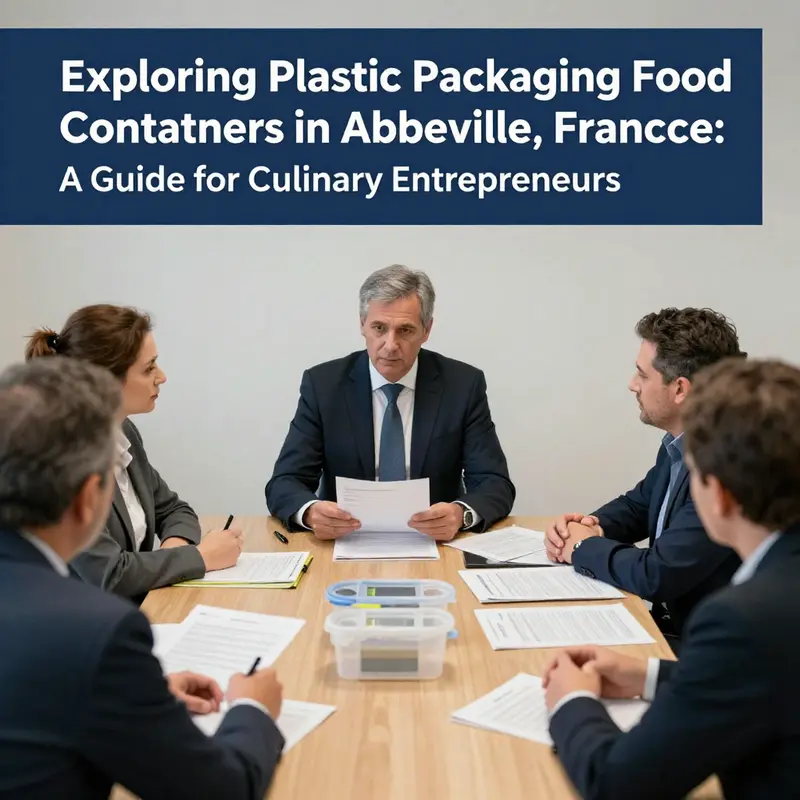
In Abbeville, as in much of France, the story of plastic packaging for food is inseparable from a larger narrative about responsibility, design, and the future of waste. The town sits within a national system that treats packaging as both a commercial tool and a public policy instrument. Small retailers, farmers, and producers in the Abbeville area find themselves navigating a shifting landscape where regulatory intent and consumer expectations converge to redefine what is acceptable on shelves and in markets. The result is less a chapter about compliance and more a broader rethinking of how food is presented, protected, and perceived from farm to table. The regulatory framework in France is designed to curb unnecessary packaging while preserving food quality and safety. In practice, this means a careful balance between materials that can preserve freshness, withstand handling, and be responsibly managed at end of life. The regulatory push stems from a clear objective: reduce single-use plastics and transition toward more sustainable packaging solutions that still meet the practical needs of fast-moving consumer goods and everyday retail. Abbeville’s experience mirrors national priorities but also reflects local realities—the rhythms of market days, the cadence of harvest seasons, and the expectations of residents who value both heritage and progress.
Since January 1, 2022, France has implemented restrictive measures on plastic packaging for fresh produce in most retail settings. The aim is straightforward in principle: limit single-use plastic for fruits and vegetables to curb waste and reduce environmental impact. The policy’s core stipulation is that most fresh fruits and vegetables sold in grocery stores and marketplaces across the country, including Abbeville, cannot be packaged in plastic, with a notable exception for items weighing more than 1.5 kilograms. This threshold acknowledges that some larger products require protection, moisture control, and tamper-evidence that alternative materials might fail to provide without compromising safety or shelf life. The practical upshot is that produce commonly received in plastic wraps or bags—think smaller berries, cherry tomatoes, or delicate greens—has to be displayed or sold with less reliance on conventional plastic packaging. In many cases, this nudges vendors toward paper-based wraps, compostable films, or reusable containment strategies that align with the broader goals of waste reduction. Yet the policy does not prescribe a single perfect substitute; it leaves room for innovation and local adaptation, acknowledging that different fruits and vegetables may demand different approaches to maintain freshness, reduce spoilage, and ensure consumer trust.
A further nuance in the Abbeville corridor concerns temporary allowances. While the state’s direction is toward minimizing plastic use, some smaller produce categories may continue to be sold in plastic for a transitional period. This concession reflects the reality that immediate, wholesale changes could lead to significant wastage if not paired with viable alternatives and practical infrastructure. The policy thus allows a pragmatic path, at least for a time, while signaling an ultimate objective: by 2026, all single-use plastic packaging for whole fruits and vegetables is slated for elimination. The clear milestone helps retailers and suppliers plan capital investments, workflow changes, and training for staff who handle produce, packaging, and point-of-sale systems. The 2026 deadline also frames a broader European and global conversation about packaging design, recycling streams, and the lifecycle impacts of materials used to protect fresh food on crowded shelves and in busy markets.
For Abbeville’s retailers and producers, these regulatory signals translate into concrete operational questions. How can a shop display strawberries, raspberries, or small peppers without plastic and still offer a clean, appetizing presentation? Which materials perform best under varying humidity levels and transit times from farm to store? How can packaging choices reduce waste without driving up prices to customers who are already sensitive to cost? These questions force a cross-Functional recalibration that touches supply chain engineering, procurement, and even marketing. They also highlight a broader skill set that local businesses are cultivating: the ability to evaluate packaging not only by its immediate function but by its end-of-life trajectory, potential for reuse, and compatibility with local waste management capabilities. The strategic shift is not merely about replacing plastic with paper or a similar substitute; it is about reimagining how packaging functions at every stage—from protection and logistics to consumer experience and environmental accountability.
Within this reimagined frame, Abbeville’s packaging ecosystems may increasingly rely on materials that offer comparable performance while enabling better recyclability or compostability. Paper-based options, plant-based films, and innovative coatings designed to preserve moisture and prevent contamination are likely to appear alongside traditional wood-pulp boards and cardboard displays. The move toward these alternatives is seldom a straight line. It requires collaboration among farmers, distributors, packaging manufacturers, and retailers to pilot new solutions, measure spoilage rates, and adjust shelf layouts. In this sense, the regulatory impulse acts less as a rigid constraint and more as a catalyst for design thinking and supplier diversification. Local businesses that can demonstrate cost-effectiveness, reliability, and environmental advantages in their packaging choices stand to gain both from compliance and from a growing consumer appetite for responsible consumption.
The multifaceted challenge extends to the supply chain’s broader architecture. Abbeville’s producers and packers are increasingly attentive to how packaging communicates quality and safety to customers who value transparency. Labels, date codes, and clear information about recyclability or compostability become part of a product’s narrative rather than mere formalities. This resonates with a shift in consumer culture toward mindful consumption: shoppers in Abbeville are more likely to favor outlets that can articulate why packaging is designed in a particular way, how it will be disposed of, and what role it plays in reducing waste. As retailers experiment with unpackaged or minimally packaged displays in markets and shops, they also explore the potential of community-supported initiatives that emphasize bulk buys, reusable containers, and distributed storage rather than single-use wraps. In such a landscape, the packaging conversation becomes a dialogue about values as well as materials, a dialogue that helps bridge regulatory requirements with consumer expectations and the practicalities of small-business life in Abbeville.
For businesses seeking to balance regulatory compliance with supply flexibility, the search for reliable sourcing partners becomes a priority. While the Abbeville region cannot operate in isolation from global supply networks, it benefits from the possibility of connecting with suppliers who can offer compliant, efficient, and sustainable options. Within the broader ecosystem of packaging procurement, the available product categories—ranging from paper-based solutions to innovative compostable formats—offer a menu of choices that can be tested, validated, and scaled over time. In this context, a careful procurement strategy emphasizes not only cost but also lifecycle performance, compatibility with local waste streams, and the ability to adapt to evolving standards as the 2026 milestone approaches. The narratives of local shops and markets begin to converge with global supply dynamics, forming a collaborative path forward that respects regional realities while embracing forward-looking packaging design.
The transition also invites a practical mindset about consumer engagement and education. When packaging changes accompany shifts in labeling, signage, or product placement, retailers have an opportunity to tell a story about sustainability that resonates with shoppers. Clear messaging about why a particular material was chosen, how to dispose of or return packaging, and what the environmental benefits are can turn regulatory compliance into a value proposition. Visitors and residents who have witnessed Abbeville’s markets evolve may come to see packaging not as a burden but as a signal of a community that translates policy into responsible everyday practice. In this sense, packaging becomes part of the city’s cultural and economic fabric, a visible reminder that small, consistent choices can collectively contribute to a more sustainable food system.
From a practical standpoint, the shift toward sustainable packaging in Abbeville invites retailers and producers to explore the full spectrum of options available in the market. Some organizations may find that a carefully selected paper-based packaging line provides the right balance of durability, temperature control, and aesthetic appeal for certain produce categories. Others may require more specialized films or coatings that provide moisture barriers without using traditional plastics. The ongoing challenge is to balance performance, cost, consumer acceptance, and end-of-life handling within the framework set by national law. As the local economy adapts, opportunities emerge for training and upskilling in packaging engineering, waste management collaboration with municipal authorities, and the development of pilots that test new materials under real-world conditions. These pilots help illuminate not only what works but also why certain approaches fail or succeed in Abbeville’s unique market environment.
In parallel with the regulatory transition, it is natural for businesses to seek avenues for sourcing and collaboration that can support these changes. To understand the scope of packaging categories and to explore potential suppliers, many firms turn to online marketplaces and trade platforms that aggregate manufacturers and material options from across regions. Within this broader context, a practical and strategic step for Abbeville entities is to examine the plastic packaging category as a starting point for exploring alternatives and a platform for comparison. This approach supports a structured evaluation of materials, finishes, and performance metrics while maintaining a tight alignment with regulatory requirements and consumer expectations. For readers seeking an easy entry into this exploration, a concise way to view current packaging options is through a dedicated category that showcases the range of products available for protective and promotional uses. This framing helps businesses connect with suppliers who can provide compliant, sustainable materials, while keeping the focus on practical functionality and cost control. plastic packaging category
The Abbeville experience thus becomes a case study in how a community negotiates policy, markets, and material choices. It demonstrates that regulatory aims—reducing single-use plastics, protecting food quality, and guiding end-of-life through recyclability or compostability—can coexist with economic viability and consumer satisfaction. It also reveals how digital channels and market intelligence contribute to the ongoing calibration of packaging strategies. As policies tighten and markets evolve, the ability to source flexible, compliant, and innovative packaging solutions will differentiate retailers and producers who invest in thoughtful design and collaborative problem solving. The interplay of local practice and global possibility is shaping a new normal in Abbeville, where packaging decisions in the short term connect with long-term goals for sustainability, efficiency, and resilience in the food supply chain.
External resources offer additional guidance on implementation and enforcement. For details on the official framework and how it translates into local practice, consultees can refer to the French Ministry of Ecological Transition’s site, which outlines the policy trajectory and enforcement considerations behind the regulations affecting packaging for food products. This external reference supports readers in situating Abbeville’s experience within the national agenda and the broader European context, highlighting how statutory timelines and compliance expectations are communicated and monitored across jurisdictions.
Final thoughts
In conclusion, the insights regarding plastic packaging food containers in Abbeville, France, reflect the critical intersection of manufacturing, market demand, innovation, environmental concern, and regulation. For bubble tea shops, restaurants, food trucks, and catering services, understanding these dynamics can significantly enhance their operational efficiency and customer satisfaction. By staying informed about local suppliers and embracing new technologies and sustainable practices, businesses can not only meet current demands but also contribute positively to their community and environment.