
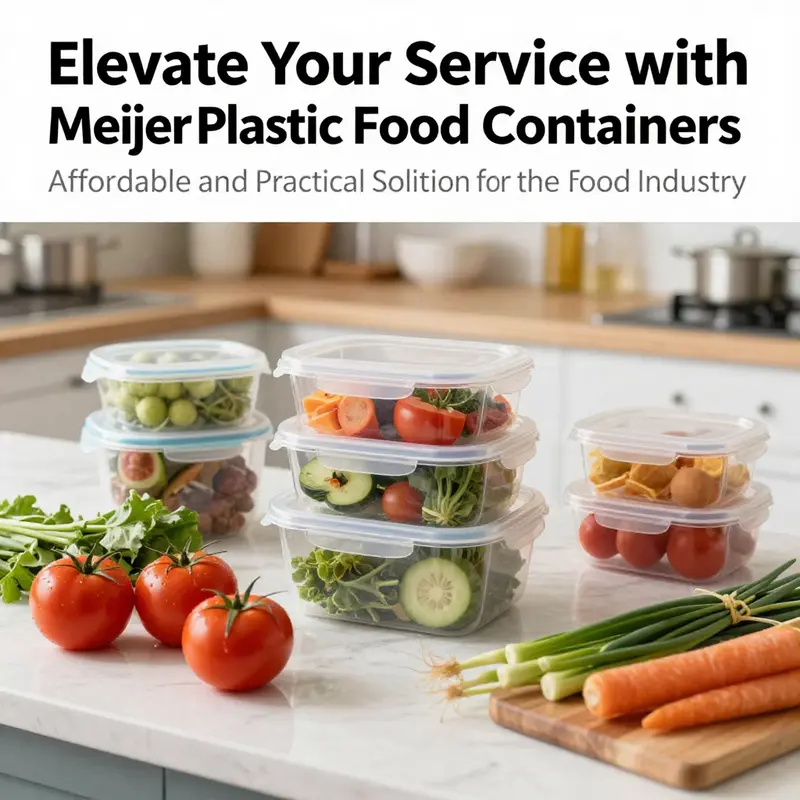
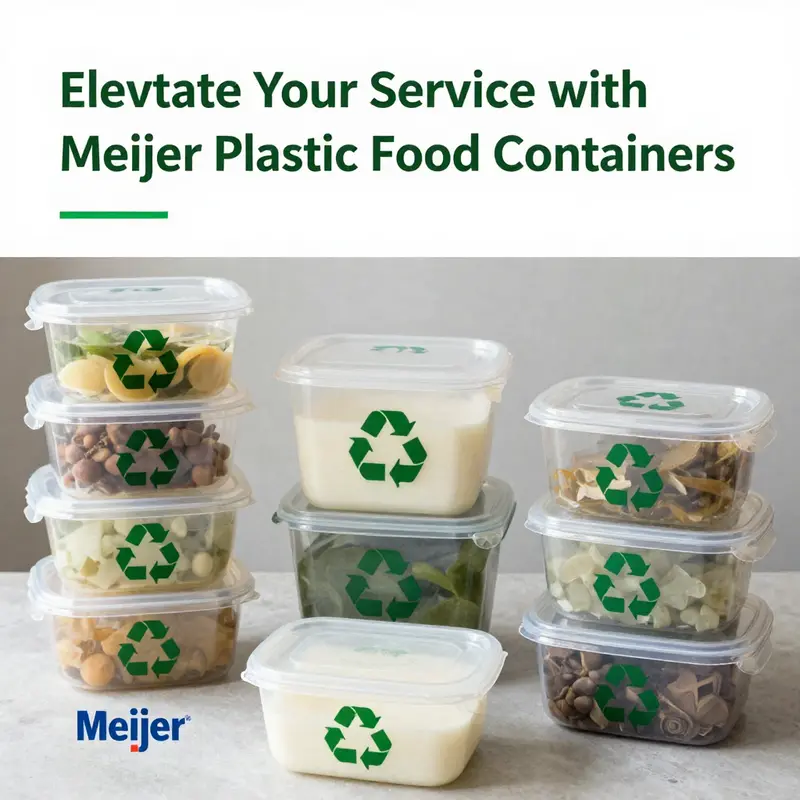
In the bustling world of food service, efficiency, cleanliness, and cost-effectiveness are paramount. For businesses ranging from bubble tea shops to catering services, the right food storage solutions can make all the difference. Meijer, a well-respected name in retail, offers an array of plastic food containers that perfectly fit the needs of your business. This article explores the available options, highlights their features and benefits, compares them with other brands, discusses environmental considerations, and examines customer feedback and market trends. Whether you are a restaurant owner or an event planner, understanding how Meijer plastic food containers can enhance your operations is crucial.
Practical, Everyday Storage: Navigating Meijer’s Private-Label Plastic Containers for Leftovers, Lunches, and Meal Prep
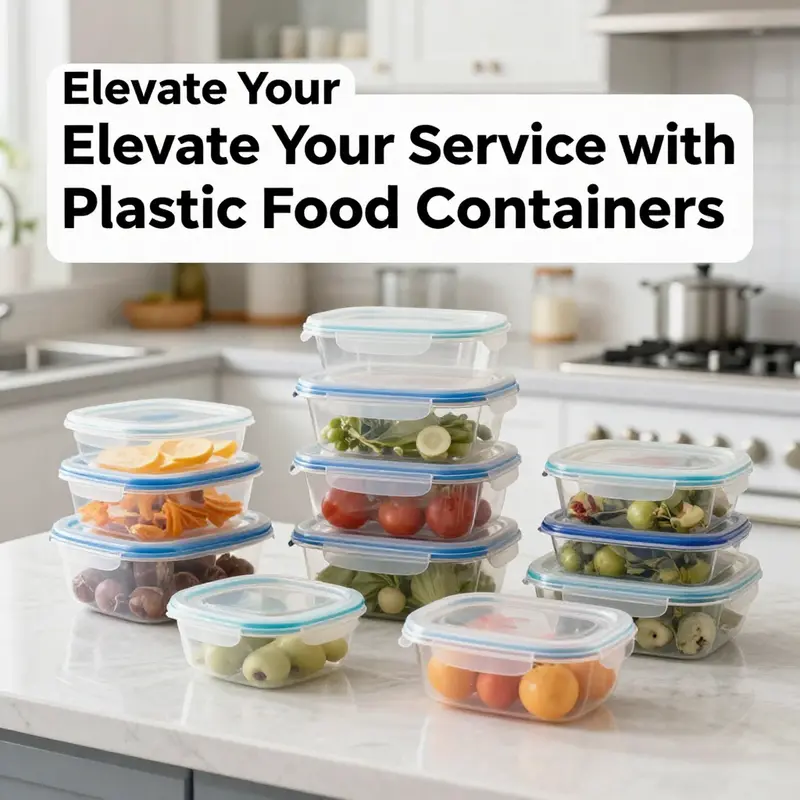
Storing, reheating, and transporting food are daily practices that shape how families eat and waste less. In the grocery ecosystem, plastic storage containers sit on the shelves as quiet workhorses, waiting to be chosen for a week of meals or a batch of leftovers. Among major retailers, one chain offers a practical, price-conscious route to reliable plastic ware through its private-label lines. The containers in question are designed to endure the rhythm of home life—daily openings and closings, trips to the office, lunches in school bags, and quick reheating in a microwave. The goal is straightforward: provide safe, durable, and space-saving solutions that help households manage time and resources more efficiently. The result is a suite of options that foreground usability and value, with features mirrored in many contemporary lines across the market.
Health and safety anchor the design story. In the kitchen, the choice of plastic for food storage matters as much as the seal on the lid. The containers offered through these private-label ranges are described as BPA-free, an important assurance for families mindful of chemical exposure. The emphasis on BPA-free materials aligns with a broader move toward safer plastics in everyday cookware and storage. It signals more than a label; it signals a principle: the container should be inert with respect to ordinary meals, not introduce flavors or toxins into stored foods. This safety baseline is complemented by practical layouts that make everyday decisions easier. When you open a cabinet and scan for a storage solution, what you want isn’t a single attribute but a combination: a container that can be nested with its peers, a lid that remains secure during a commute, and a material that can stand up to the daily heat and cold cycles of a busy kitchen.
Shape and size diversity is the second pillar of this private-label range. The logic here is simple: food comes in many forms, and storage should adapt without forcing the cook to bend meals to fit a rigid box. Square and rectangular silhouettes dominate the lineup because they maximize cartography on kitchen shelves and inside drawers. These shapes offer clean lines when stacked and arranged, leaving less wasted space and making it easier to plan a week of meals or a batch of lunches. Round containers fill in for sauces, soups, or fruit bowls, offering a traditional pairing for lids that latch securely. The sizes are chosen to cover a spectrum—from compact singles and snack portions to larger family-sized portions. The breadth of options matters when you consider meal prep for the workweek, left-overs from weekend meals, or kids’ lunches that demand compartments surpassing simple foil wrappers. The aim is to give home cooks a palette rather than a single brushstroke, enabling configurations that suit different dietary routines and household rhythms.
A central attribute within this category is the lid, the hinge itself and its secure cousin that locks in freshness and contains spills. Locking lids are a common feature across the line, designed to resist leaks when containers are carried in a bag or tucked into a backpack. This is not just about keeping the food intact; it is about preserving texture and temperature. A well-sealed container helps maintain the crispness of a salad, the tenderness of a casserole, and the aroma that signals a ready-to-eat meal after a busy day. The seal also protects against the curiosity of curious pets or small hands during a kitchen rearrangement, adding a practical layer of reliability that families appreciate in everyday use. In many cases, the lids are designed to snap or click into place with reassuring feedback, a small design cue that reduces the guesswork of whether a container will stay closed in transit or on a shelf in a pantry.
Another practical axis is microwave compatibility. The ability to reheat directly in the container is a feature many families seek, saving time and washing up. The research results indicate that some containers in the private-label range are microwave-safe, a capability that makes lunch leftovers or ready-to-heat meals more accessible during rushed weekday afternoons. However, the guidance is to check the labeling on each item rather than rely on a blanket guarantee. Temperature thresholds, instruction notes, and announcements about safe reheating protocols can vary by product, even within the same line. The emphasis here is on empowerment: by reading the care and use labels, shoppers can identify which pieces are designed for microwaving and under what conditions. This cautious but practical approach helps avoid missteps, such as heating containers made for cold storage or using plastics that can warp or degrade if overheated. It is a reminder that the boundary between convenience and safety rests on clear labeling and mindful use.
In parallel to safety and convenience, environmental considerations enter the conversation. The term reusable is not merely a demographic marketing trope; it is a lived practice that underpins how families decide what to keep and what to replace. The private-label range is positioned as a durable, long-lasting option for everyday meals, a choice that can lower single-use waste over time. The environmental logic traces a simple path: reuse translates into fewer disposable options discarded after a single use, which, in turn, reduces waste streams and the demand for new plastic packaging. The most meaningful impact comes from everyday decisions—the number of times a container is used, how well it tolerates repeated cycles, and whether it remains crack-free after months of use. In this sense, the containers function not merely as a practical tool but as a small commitment to sustainability embedded in daily routines. The ergonomic design echoes this commitment as well: stackable profiles help keep a kitchen organized and less cluttered, making it easier to store multiple weeks’ worth of meals in a compact, tidy system.
Clear labeling is another subtle but important feature that supports organization and efficiency. When a family opens the kitchen cabinet, the ability to quickly identify contents without pulling every box out of the shelf matters. Containers with visible labeling—whether on the lid, the side, or the base—make it simpler to sort leftovers by date, portion size, or meal type. This clarity reduces waste because it is easier to keep track of what’s inside at a glance. The combination of clear labeling and stackable shapes creates a library-like system in a pantry or kitchen cabinet, where a simple pull provides a reliable match for the day’s needs. The design philosophy behind such a system is not about flashy aesthetics but about reducing friction in everyday cooking and storage. It is a quiet efficiency that compounds over days and weeks, changing the way households approach meal planning, leftovers, and the pace of daily life.
The private-label assortment, while not marketed with a single flagship line, follows a consistent logic that makes it accessible to a broad audience. In-store, these containers are typically stocked in the kitchenware or fresh-produce sections, placed alongside other practical options for meal prep, leftovers, and lunch solutions. The pricing tends to be competitive, a deliberate choice to broaden access to reliable storage without forcing shoppers into premium categories. This affordability is not at the expense of performance; the focus remains on practical design, durable materials, and long life across repeated uses. That balance—value without sacrificing essential features—resonates with households seeking dependable everyday tools rather than novelty items. For shoppers who prefer to do their research before buying, Meijer’s official online storefront offers search filters and real-time stock checks that can indicate whether a particular size or shape is available for local pickup or delivery. An in-store or online approach often works in concert, enabling busy families to compare options, handle items in person, and confirm that the container will meet their specific needs.
When choosing among the options, buyers often start with a mental map of their typical meals and workflows. Do you batch-cook for lunches, or do you prefer to freeze soups and sauces? Are your meals transported in bags, backpacks, or lunchboxes that require spill-proof seals? Do you want a compact stack for a roommate’s kitchen or a family-sized container for a Sunday batch of casserole leftovers? Answering these questions guides a shopper toward the right combination of sizes and shapes. The reality is that most households use more than one container to cover the spectrum of daily needs. A small set of compact boxes can store sliced vegetables or portioned grains, while a larger rectangular box can hold dinner leftovers for the family. The added benefit of having a market-accessible private-label set is the assurance that the materials are appropriate for food contact, with practical lids, reliable seals, and clear labeling to keep the contents organized over time. The goal is not to overwhelm with choices but to offer enough flexibility for a dynamic kitchen that changes week to week.
The Meijer private-label approach to plastic food containers is part of a broader retail strategy that centers on practicality, accessibility, and everyday value. It aligns with how families shop: they want to find reliable storage solutions that fit into real-life routines and budgets, not a showroom of high-end, niche options. The containers are designed to blend into the kitchen ecosystem rather than stand out as fashion accessories. They accompany the routine of shopping for fresh produce, of loading groceries into a cart, and of choosing containers that can serve as the workhorse for meal prep, leftovers, and lunch packing. The result is a coherent menu of storage tools that integrate with the day-to-day choreography of cooking and feeding a household.
For readers exploring the topic further, it helps to think of these containers as part of a larger ecosystem of home storage and meal planning. They are designed to be compatible with everyday kitchen ecosystems, cross-merchandised with related storage products, and easy to integrate into existing routines. The idea is to provide a practical entry point for families that want to build a sustainable, organized kitchen without sacrificing ease of use or affordability. With a careful selection, a buyer can assemble a set that matches their pantry layout, their cooking schedule, and their budget. The result is a coherent system that can scale up as needs change, with containers that can be nested for compact storage, labeled for quick identification, and reached for again and again as part of a daily routine.
To discover the full range and current availability, the official Meijer site offers a way to search for \”plastic food containers\” or \”storage containers\” by location, ensuring that shoppers can confirm stock levels at their local store or place an order online for pickup. For readers who want to explore a broader catalog of storage options beyond this retailer, the following internal link points to a category dedicated to storage containers that aligns with the topic of home organization and efficient kitchen storage: storage containers. If you’d like to corroborate safety and material standards from a broader consumer perspective, a widely cited external resource provides guidance on safe plastic use in food storage and helps frame the BPA-free claim in current safety terms. External resource: https://www.meijer.com/shop/product/food-storage-plastic-containers/10356792.html
Sealed, Stacked, and Everyday-Ready: Features and Benefits of Meijer Private-Label Plastic Food Containers
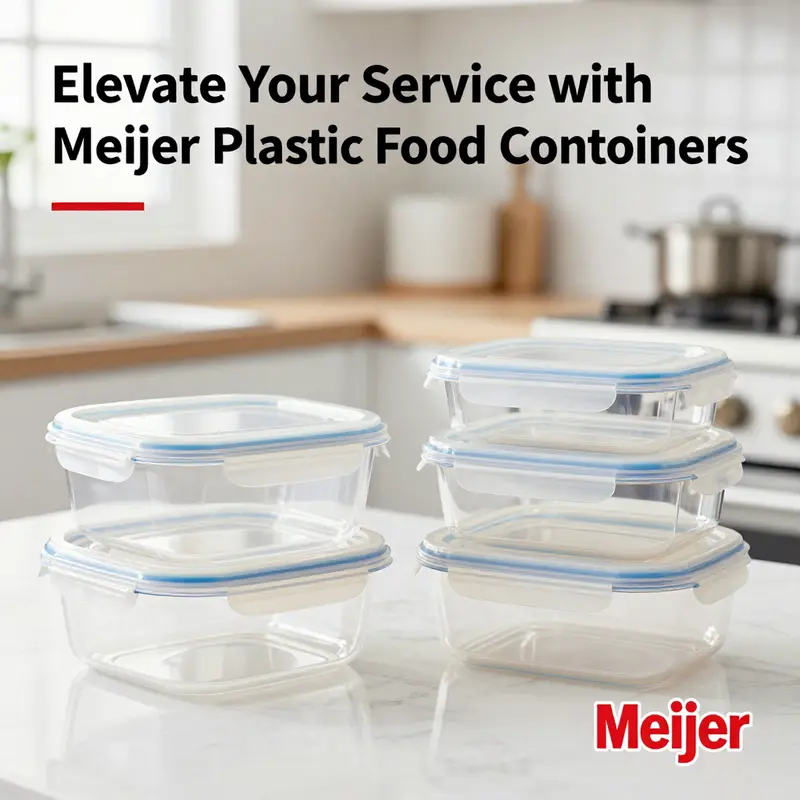
In the bustling ecosystem of a city supermarket, a quiet workhorse often goes overlooked. Meijer’s private-label plastic food containers sit on those shelves not as flashy gadgets but as dependable tools that keep meals, ingredients, and memories organized. These containers are designed for real life: they travel between kitchen, work desk, and school backpack; they hold yesterday’s leftovers without leaking through a busy day; they nest neatly in cabinets to make the most of limited space. What makes them appealing, and how do they truly earn a place in a family’s daily routine? The answer lies in a practical sum of features that matter when a family aims to be organized, frugal, and ready for whatever the week throws at them. While the broader market offers a spectrum of options, the Meijer private-label line emphasizes a straightforward blend of affordability, reliability, and everyday convenience. This isn’t about showy novelty; it’s about the quiet, consistent performance that helps weeknight dinners go from frantic to manageable with one simple tool in hand.
One of the defining aspects of these containers is how they seal. A well-sealed lid is more than a safety feature; it’s the key to maintaining freshness and preventing spill during a commute or a crowded lunch-hour fridge tour. Many of the Meijer private-label options feature lids designed to snap securely into place with an airtight or near-airtight feel. The seal is often continuous around the rim, and the lids themselves are typically clear, which means you can peek at the contents without removing the lid. This transparency is more than a convenience; it reduces the daily guesswork that accompanies leftovers and meal-prep portions. When you’re juggling work, kids, and a dozen other little tasks, being able to identify what’s inside a container at a glance saves seconds that add up across a week of meals.
Stackability is another practical virtue baked into these containers. The way the bases and lids align—flat rims, uniform dimensions, and compatible lid profiles—helps maximize cabinet and lunchbox space. This is not merely about tidiness; it’s about ensuring a household can scale up meal-prep routines without expanding the kitchen footprint. The modular aspect also tends to appear in a thoughtful range of sizes. A basic set often covers a spectrum from small portions for sauces and snacks to larger, multi-serving dishes for leftovers or prepped meals. The common thread here is predictability: when you buy a set that stacks well, you gain a reliable framework for organizing what you cook and what you store. The result is less time spent searching, reorganizing, or repurchasing because a mismatched lid refused to snap or a container wouldn’t nest correctly after a load of dishwasher cycles.
In terms of material and safety, these containers are pitched to meet everyday food-handling expectations. They are typically made from food-grade plastics designed to withstand a reasonable range of temperatures and daily use. While specifics can vary, the underlying value proposition tends to emphasize suitability for ordinary home heat challenges—reheating leftovers, transporting meals, and keeping ingredients fresh in the refrigerator. A notable point for families is the ability to heat cautiously when needed. Some of the Meijer private-label options are described in general terms as microwave-friendly, meaning they can be used to reheat foods directly in the container with appropriate guidance—usually pertaining to removing the lid or venting as required. This aligns with the growing preference for containers that can bridge the gap between refrigerator storage and quick meals, reducing the need for extra transfers and minimizing cleanup.
Durability is another shared strength. These containers are built to withstand repeated opening, closing, and washing. While no plastic is indestructible, the design intent is to resist cracking or warping under typical household conditions, including stacking within a crowded storage shelf and enduring a cycle or two of dishwasher use where permitted. The durability narrative connects directly to the broader consumer aim of getting multiple uses out of a single purchase, which appeals to families looking to reduce waste and stretch grocery dollars. The price point of private-label lines typically reflects this balance—affordable enough to encourage frequent replacement when necessary, but sturdy enough to survive the usual cycles of a busy kitchen.
Aesthetics and visibility also play a subtle but meaningful role in how these containers stay relevant in everyday life. The transparent lids aren’t just about seeing inside; they convey a sense of order and predictability in the kitchen. When you open the fridge, having clearly labeled tops and see-through bodies means you can label your meals, assortment, and portions without rummaging. Small but meaningful touches like color accents in some sets can help families assign different containers to different meal types or family members, which reduces confusion and helps kids participate in packing lunches. The color variation, when present, is usually modest and purposeful rather than flashy, designed to complement the home environment rather than shout from the shelf. In practice, this means a system that feels calm and consistent, which is exactly the mood many households want when they’re juggling school runs, late work nights, and weekend meal-prep marathons.
Customization—though not in the sense of bespoke products—plays a role in how retailers manage stock and how families assemble their own sets. Meijer’s private-label lines are produced to meet broad consumer needs, but the available sizes, lids, and sometimes set configurations enable shoppers to assemble a practical assortment that matches their kitchen realities. This isn’t about tailoring each container to each food type; it’s about providing a reliable core toolkit that can be used across a variety of everyday tasks. A family can start with a compact starter set and, over time, expand as needs evolve—adding a larger container for family-style leftovers or a narrower one for sauces and dips. The idea is to give shoppers a flexible backbone for food storage that aligns with real-life rhythms rather than a rigid, inflexible system.
From a shopping and usage perspective, the Meijer private-label approach is intimately tied to the omnichannel ecosystem. In-store, these containers occupy the kitchenware and fresh-produce sections where practical, everyday items live. The layout makes sense for shoppers who are shopping with full carts or who are collecting a handful of essential kitchen staples in one trip. Online, the same private-label options are discoverable through Meijer’s search tools, and customers can check real-time inventory for a particular store or opt for online ordering with in-store pickup. That capability—knowing whether a container is available in your local store before you drive there—reduces the friction that often accompanies home goods shopping. It’s a small but meaningful improvement in the overall shopping experience, the kind of convenience that becomes especially valuable for busy families who plan meals around a schedule rather than a mood.
In the grand scheme of kitchen organization, these containers perform a quiet but essential service. They reduce waste by making portion control and leftover meal planning straightforward. They support meal-prep strategies by offering predictable portions and reliable reheating options. They aid in school and work-lunch routines by providing durable, easy-to-clean vessels that survive the daily shuffle of a child’s backpack and a colleague’s backpack-sized tote. And because the private-label line exists within a major retail environment, pricing remains accessible, encouraging families to maintain a routine of using reusable containers rather than opting for disposable alternatives on every grocery run. This is where value meets practicality: an everyday product designed for repeat use, easy to source, and straightforward to care for.
To readers navigating this landscape, a practical approach is to examine the core features that matter most in your home. Consider the seal quality and how comfortable you are with snap-on lids and visible rims. Evaluate whether you prefer a broad set with multiple sizes or a leaner collection that covers the essentials. Reflect on how you store and transport meals—whether you need containers that travel well in a tote or a shelf in a cramped apartment kitchen. If you skim the shelves and see a mix of clear bodies and crystal-clear lids, you’ll know you’re looking at a system that prioritizes visibility and simplicity over fancy gimmicks. It’s the kind of design philosophy that has a lasting appeal in households where time is precious and meals are the anchor around which the day orbits.
For readers who want to explore related storage ideas beyond the Meijer private-label experience, the broader category of storage containers, with its own nuanced range of materials and designs, provides a useful frame. See the storage containers category for more options and examples of how different designs approach the same problem: keeping food safe, accessible, and organized. This internal resource can help you compare features such as lid stiffness, gasket reliability, and overall ergonomics without leaving the context of everyday kitchen use. storage containers
External considerations also influence how we choose these everyday tools. Material safety standards, such as the use of food-grade plastics and compatibility with typical household heat and cold cycles, shape the long-term value of a container. While many private-label lines emphasize practicality and cost-effectiveness, it remains important to follow manufacturer guidance about microwave use, dishwasher safety, and whether the vented lids should be removed during heating. Consumers who adopt a consistent routine—recycling old containers, repurposing them for different foods, and choosing compatible lids for a given size—tend to get the most out of these products. It is this blend of sensible design, accessible pricing, and user-friendly performance that makes Meijer private-label plastic food containers a dependable feature of many kitchens.
In closing, the story of these containers is not about novelty or trend. It’s about a durable, affordable option that demonstrates how a well-executed private-label line can blend into everyday routines with minimal friction. The sealed lids, clear visibility, predictable stackability, and a range of sizes are the quiet advantages that translate into real-world benefits: less food waste, easier meal-prep, and a kitchen that feels a little calmer in the midst of a busy week. When you next walk down the aisle, take a moment to notice the practical design choices that make these containers reliable partners in your daily life. They are the kind of kitchen tool that earns its keep not with loud promises, but with consistent performance and everyday value. If you want to explore related product categories or broaden your understanding of storage solutions, the link to the broader storage containers category provides a convenient entry point to compare features, materials, and configurations across a wider range of options. storage containers. For an external perspective on safe handling and material considerations for food-contact plastics, see an authoritative external resource: https://www.fda.gov/food-contact-materials
Meijer Private-Label Storage: A Practical Benchmark in Everyday Kitchen Containers
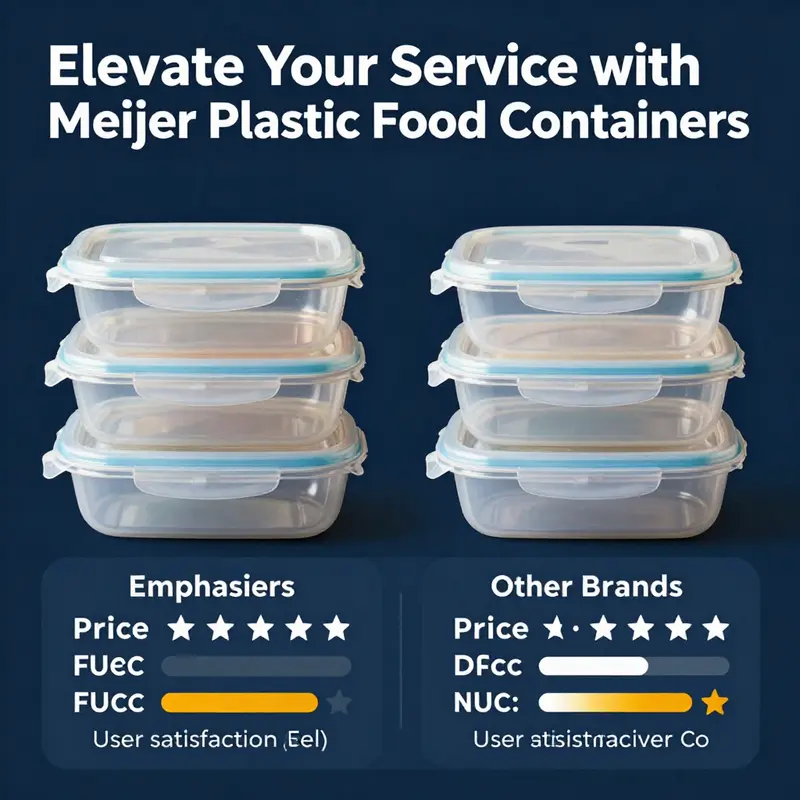
In the broad landscape of domestic kitchens, plastic storage containers play a quiet but essential role. They organize meals, protect leftovers, and help weekday routines stay predictable. When a retailer curates a private-label lineup, many shoppers ask not only about price but about real-world performance over time. This chapter examines how Meijer’s private-label storage boxes balance practicality, durability, and value in a way that makes everyday cooking and organization feel simpler. It begins with broad design considerations and then situates Meijer’s line within common kitchen needs: reliable seals, dishwasher-safe materials, stackable shapes, and affordable sizing options.
From a shopper’s perspective, three attributes matter most: sealing reliability, material practicality, and space efficiency. Airtight gaskets that stay pliable after repeated cycles minimize odors and leaks. Polypropylene bases offer lightness and chemical resistance, while resisting stains from sauces and spices. Good stackability reduces cabinet chaos by aligning lids and bases in predictable ways. These features, implemented at a budget-friendly price point, explain the appeal of a private-label line that aims to cover everyday leftovers, lunches, and meal-prep without demanding premium resources.
Where Meijer’s lineup shines is in its breadth and consistency: a coherent set of sizes that can be mixed and matched across many meals, with clear care instructions that help households extend the life of the containers. While no single feature redefines consumer choice, the combination of seal integrity, practical materials, and space-conscious design creates a dependable backbone for weekly meal planning. Readers are encouraged to compare base materials, temperature tolerances, and dishwasher compatibility against their own routines, rather than chasing luxury features that do not translate into real-world benefits.
For those who want to anchor decisions beyond a single retailer, the takeaway is simple: prioritize everyday performance and ease of use over flashy marketing. Meijer’s private-label storage line offers a practical, budget-aware option that supports the rhythms of daily life, from fridge to microwave to table, and scales with growing families or changing routines.
null
null
Listening to the Kitchen Pulse: Customer Feedback and Market Trends Shaping Meijer Plastic Food Containers
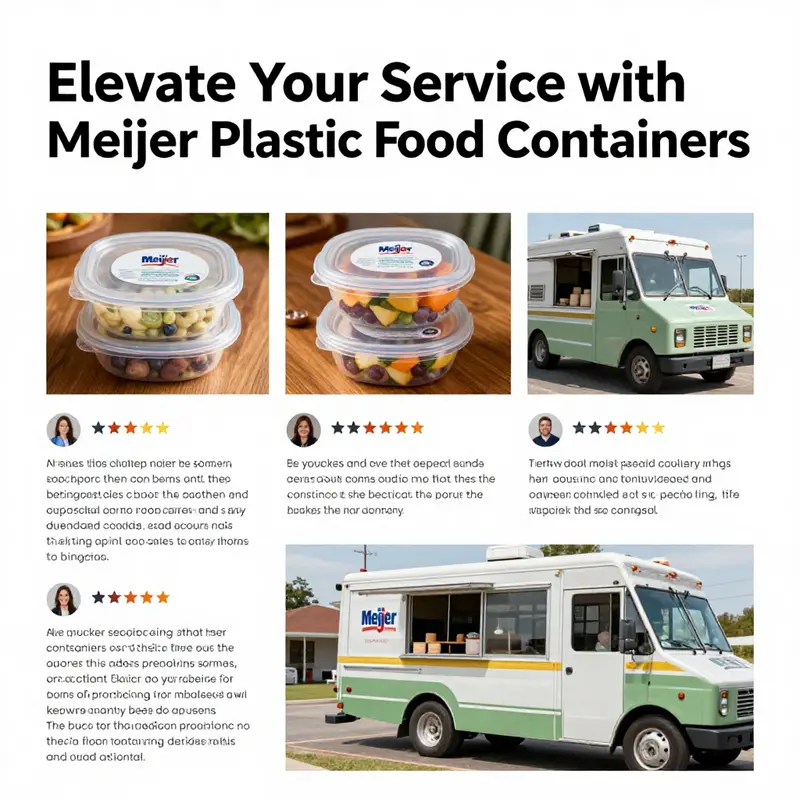
On the shelves across Meijer stores, plastic food storage containers sit in unassuming rows, quietly proving their worth in busy households, dorm rooms, and workplace break rooms. They are not flashy gadgets; they are the dependable workhorses that translate grocery trips into daily routines—keeping leftovers edible, lunches organized, and ingredients fresh enough to reduce waste. The underlying story of these containers is not simply about material—it’s about how real people use them, what they expect from durability and safety, and how market dynamics press private-label products to grow beyond mere affordability into meaningful longevity. The landscape is shaped by two intertwined forces: customer feedback, which travels through reviews, storefront conversations, and word of mouth, and broader market trends, which push manufacturers toward safer materials, smarter designs, and a more sustainable footprint. Meijer’s private-label lines—commonly positioned as value-first options—tend to emphasize practicality, reliability, and cost-effectiveness. Yet the full picture of customer experience with these containers remains distributed across multiple channels, from in-store experiences to online marketplaces and consumer testing reports. What emerges from this diffuse feedback is not a single, uniform view but a mosaic in which core needs align with evolving expectations: multifunctionality, space efficiency, and material safety, all balanced against price and perceived value.
When shoppers evaluate plastic food containers, they look for a blend of features that keep pace with daily life. First, there is multifunctionality: containers must serve not only as storage vessels but as vessels for reheating, freezing, and washing. The ability to tolerate a microwave without warping, a dishwasher without losing seals, and a freezer without cracking becomes a practical calculus of convenience. These capabilities matter because they directly affect the user’s time, energy, and money. If a container can go from refrigerator to microwave and back, it reduces the number of dishes a household must manage and minimizes the risk of leaks or awkward transfers between containers. The market trend toward all-in-one usability leaves a tangible imprint on consumer expectations for value-focused lines as well. A container that fits standard shelf space but refuses to stack efficiently—or that uses lids of inconsistent sizes—adds friction. In practical terms, space optimization translates into less clutter and more accessibility for family cooks who juggle errand runs, school lunches, and late-night meal-prep sessions.
Alongside function, material safety shapes how customers perceive trust in a budget-conscious line. The modern consumer no longer views “affordable” as a license to compromise on safety. Messages about BPA-free materials or long-term durability surface repeatedly in feedback cycles as decisive elements of satisfaction. Consumers want products that feel robust enough to endure daily use without showing signs of wear after a few months. They also seek clarity in labeling—clear disclosures about materials, whether the container is microwave-safe, and if it is dishwasher-compatible. These expectations are not niche; they reflect a broader shift in which families scrutinize packaging decisions through the lens of health, waste, and future-proofing. The private-label segment, including Meijer’s own brands, has responded to this shift by aligning product design with transparent labeling and more durable construction while preserving price competitiveness. In practice, that means using sturdy plastics that resist cracking, designing airtight seals that maintain freshness, and standardizing lid sizes to support efficient stacking. Yet even with clear intent, the reality of customer experiences remains varied. In many instances, feedback is localized—driven by the particular batch, shelf placement, or even regional water hardness that influences how seal rings perform over time. Such nuances remind us that feedback is not a single datum but a series of momentary snapshots taken from diverse consumer journeys.
The broader market context amplifies these themes. Across the retail spectrum, shoppers increasingly evaluate containers by their ability to handle multiple stages of the kitchen lifecycle: portion control for meal prep, safe reheating, and compatibility with sustainable disposal or recycling streams. A growing emphasis on reusable solutions means customers compare price against expected lifespan. They weigh the initial investment against the frequency of replacement, the ease of cleaning, and how well a product holds up after repeated cycles. In practice, this translates into demand for containers with durable lids and reliable seals that resist wear, even after hundreds of cycles in a dishwasher. It also means heightened attention to the materials themselves. Consumers want plastics that resist staining and odor retention, yet they also want proof that these materials do not leach substances under typical usage scenarios. Although many categories embrace a general appreciation for durability, the persistence of certain concerns—such as the environmental impact of plastics and the logistics of recycling—shapes how shoppers interpret value. In this sense, the best-performing lines are those that pair long-lasting performance with clear sustainability cues, whether through recyclability, reduced packaging, or the use of recycled content.
Within this interconnected web of expectations, private-label strategies face a practical challenge: how to deliver a product that feels premium enough to inspire confidence, yet remains accessible to price-sensitive families already navigating tight grocery budgets. For Meijer, the path forward likely involves highlighting the right blend of design intelligence and cost efficiency. A few design principles echo through consumer feedback and market analyses. First, modular design matters. When containers come in a consistent set of sizes that nest or stack well, they save kitchen space and make meal-prep routines more predictable. This consolidation reduces the cognitive load of choosing the right container and speeds up the process of packing lunches or storing leftovers. Second, sealing performance remains a core predictor of satisfaction. Airtight, leak-resistant seals that stand up to regular opening and closing cycles earn trust, while lids that warp or seals that degrade over time become common complaint areas. Third, clear, durable labeling supports user confidence. Packaging that communicates material safety, microwave and dishwasher compatibility, and recyclability in a straightforward way helps families plan their usage without guesswork. And fourth, the sense of value is often tied to perceived durability. If a budget-friendly option proves resilient in the long run, it earns a reputation that can outpace more expensive competitors in the eyes of households juggling multiple budget priorities.
For Meijer’s private-label lines, drawing insights from customer feedback and market trends means building a more deliberate product narrative. The narrative should acknowledge real-life usage: containers that hold a reasonable portion, resist staining from sauces, and maintain their form after repeated freezing and thawing. A practical approach would be to emphasize compatibility with common kitchen routines—reheating in the same vessel, safe transfer from freezer to oven, and easy cleaning in standard dishwashers—without forcing consumers to juggle incompatible lid systems. In addition, a forward-looking strategy would underscore sustainability without sacrificing value. This could involve approaching packaging decisions with a cradle-to-cradle mindset: using durable, recyclable materials, minimizing unnecessary packaging, and providing guidance on how customers can recycle or repurpose the containers at the end of their life cycle. The feedback loop here matters as much as the products themselves. Encouraging and collecting reviews, monitoring in-store and online sentiment, and engaging with customers through accessible channels can refine product ideas before they reach wide distribution. In this sense, the Meijer private-label program can evolve into a living platform—one that learns from users as much as it serves them.
Another dimension of the conversation involves how customers compare private-label options to those from other large-scale retailers and equivalent market segments. Feedback from broad consumer review ecosystems often highlights a tension between price and performance. Shoppers appreciate a low price, but not at the expense of functionality. When storage containers break or lids fail to seal after a handful of cycles, even high perceived value can erode quickly. Conversely, a line that demonstrates consistent performance, convenient sizes, and reliable dishwasher safety earns longer-term loyalty and becomes the default choice for households seeking predictable, budget-conscious solutions. From Meijer’s vantage point, that translates into focusing on rigorous quality control during manufacturing and sustainable supplier relationships that can deliver consistent batch quality. It also implies a careful curation of the product assortment across stores, ensuring that popular sizes and lid designs are readily available and easy to locate in the kitchenware aisles or near fresh produce touchpoints where they are often used to manage prepped ingredients.
To bridge the gap between the raw signals of feedback and tangible product improvements, it helps to consider how customers encounter these containers in their daily lives. The home is a theater of micro-decisions: what to store, how to organize, and how to keep costs manageable while maintaining safety and flavor. In this theater, the containers act as the supporting cast—quietly enabling healthy habits, reducing waste, and streamlining the logistics of meals. A well-designed private-label line can become a trusted ally in this routine by offering a coherent set of sizes that fit typical refrigerator and freezer shelves, by providing a robust set of sealing methods that withstand regular use, and by delivering on the promise of convenience without compromising on safety. The most compelling stories in customer feedback often come from the smallest wins—the lids that stay snug after dozens of cycles, the containers that resist staining after tomato-based sauces, or the sets that stack neatly in a crowded cabinet. Each of these micro-moments contributes to a broader understanding of what a value-focused line can achieve when it is designed with attention to real-world usage rather than theoretical performance alone.
For readers seeking a practical way to engage with these insights, a visit to the relevant storage-containers category on a curated e-commerce or retail platform can be illuminating. Exploring a dedicated section such as the storage-containers category can provide a sense of the variety customers expect, the range of sizes that tend to sell well, and the kinds of features—such as uniform lid designs or modular stacking—that appear repeatedly in high-rated offerings. See the Storage Containers category for a concrete sense of how product design patterns align with what households actually want in a daily storage solution. Storage containers category
All told, the current reality of Meijer’s private-label plastic storage containers lies at the intersection of affordability, practicality, and growing consumer demand for safer materials and sustainable packaging. While direct, Meijer-specific consumer sentiment may be dispersed across a range of platforms, the converging signals from broader market trends point toward a design and materials strategy that prioritizes long-term usability and transparent communication. The intent is not to chase a single hot feature but to craft a durable, versatile line that can adapt to evolving standards around safety, health, and the environment, all while remaining within reach for families managing budgets and busy schedules. If executed with attention to the granular details that matter in everyday use—reliable seals, compatible sizes, straightforward labeling, and a commitment to responsible production—the Meijer private-label plastic containers can become more than a low-cost option. They can become a dependable backbone of kitchen routines, trusted by households that rely on repeat purchases to keep their kitchens organized and efficient. In that sense, the path ahead is less about chasing fad features and more about delivering dependable performance, consistent quality, and clear, honest communication about what is inside the box.
External resources provide a helpful benchmark for understanding how consumer advocates and independent evaluators view the category as a whole. For a broader industry reference that highlights what the market believes constitutes the best plastic food storage solutions, see Consumer Reports’ overview of the top options in this category. This external perspective complements the Meijer-specific discussion by outlining tested criteria—durability, safety, ease of use, and value—that resonate with shoppers across different retailers. https://www.consumerreports.org/plastic-food-storage-containers/best-plastic-food-storage-containers-a000000000000000000000000000000000000000000000000000000000000000000000000000000000000000000000000000000000000000000000000000000000000000000000000000000000000000000000000000000000000000000000000000000000000000000000000000000000000000000000000000000000000000000000000000000000000000000000000000000000000000000000000000000000000000000000000000000000000000000000000000000000000000000000000000000000000000000000000000000000000000000000000000000000000000000000000000000000000000000000000000000000000000000000000000000000000000000000000000000000000000000000000000000000000000000000000000000000000000000000000000000000000000000000000000000000000000000000000000000000000000000000000000000000000000000000000000000000000000000000000000000000000000000000000000000000000000000000000000000000000000000000000000000000000000000000000000000000000000000000000000000000000000000000000000000000000000000000000000000000000000000000000000000000000000000000000000000000000000000000000000000000000000000000000000000000000000000000000000000000000000000000000000000000000000000000000000000000000000000000000000000000000000000000000000000000000000000000000000000000000000000000000000000000000000000000000000000000000000000000000000000000000000000000000000000000000000000000000000000000000000000000000000000000000000000000000000000000000000000
Final thoughts
Choosing the right food storage solutions is essential for any food business aiming to maintain efficiency and quality. Meijer plastic food containers present an ideal blend of affordability and functionality, making them suitable for a wide range of applications, from bubble tea shops to catering. By understanding the features, benefits, and customer sentiments surrounding these containers, businesses can make informed purchasing decisions that enhance their operations and ultimately their service delivery. As you consider your options for food storage, look no further than Meijer’s trustworthy products, which are designed to support your needs while keeping your costs manageable.