Introduction
The snack box market is a dynamic blend of customization, sustainability, and efficiency. For business owners, selecting the right snack box manufacturer means aligning product forms, production capabilities, and strategic goals with the evolving expectations of consumers, retailers, and regulators. Industry leaders offer a spectrum of solutions—from grease-resistant takeaway cartons and built-in-lid chip boxes to eco-friendly, printed paper boxes suitable for retail branding. The result is a marketplace where wholesale pricing, design flexibility, and quick turnaround sit alongside commitments to sustainability and supply chain resilience. This article examines three pivotal threads that help business owners navigate this landscape: the market landscape and key players; the technologies, sustainability practices, and customization options shaping packaging decisions; and the broader economic, geopolitical, and societal factors that influence sourcing, pricing, and long-term strategy. Each chapter builds toward a practical understanding of how to choose a snack box manufacturer that not only fits today’s needs but also adapts to tomorrow’s realities.
Tables of Contents
Chapter 1: Chapter 1 — snack box manufacturer: Market Landscape, Key Players, and Product Forms
- Chapter 1 — snack box manufacturer: Market Landscape, Key Players, and Product Forms — Technological Trajectories in Packaging: Innovation in Formats, Materials, and Smart Packaging
- Economic Dynamics and Competitive Positioning in Snack Box Manufacturing: Market Growth, Investment Signals, and Supply Chain Realities
- Chapter 1 — snack box manufacturer: Market Landscape, Key Players, and Product Forms — Geopolitical and Societal Context: Trade, Regulation, Sustainability Demands, and Consumer Behavior
Chapter 2: Chapter 2 — snack box manufacturer: Packaging Technologies, Sustainability, and Customization
- Technological Frontiers in Snack-Box Packaging: From Automation to Sustainable Customization
- Economic Dynamics of Snack Box Manufacturing: Costs, Efficiency, and Market Forces in a World of Tech-Driven Packaging, Sustainability, and Customization
- Societal and Geopolitical Context for Snack Box Packaging: Navigating Sustainability Standards, Regulation, and Global Supply Chains
Chapter 3: Chapter 3 — Snack Box Manufacturer: Navigating Economic Currents, Geopolitical Shifts, and Societal Demands
- Steering Snack Box Innovation: Technology, Sustainability, and Packaging Performance under Economic, Geopolitical, and Societal Pressures
- Economic Currents and Resilience in Snack Box Manufacturing: Costs, Supply Chains, and Strategic Adaptation
- Geopolitics, Policy, and People: How Global Currents Redefine Snack Box Manufacturing
Chapter 1: Chapter 1 — snack box manufacturer: Market Landscape, Key Players, and Product Forms
1. Chapter 1 — snack box manufacturer: Market Landscape, Key Players, and Product Forms — Technological Trajectories in Packaging: Innovation in Formats, Materials, and Smart Packaging
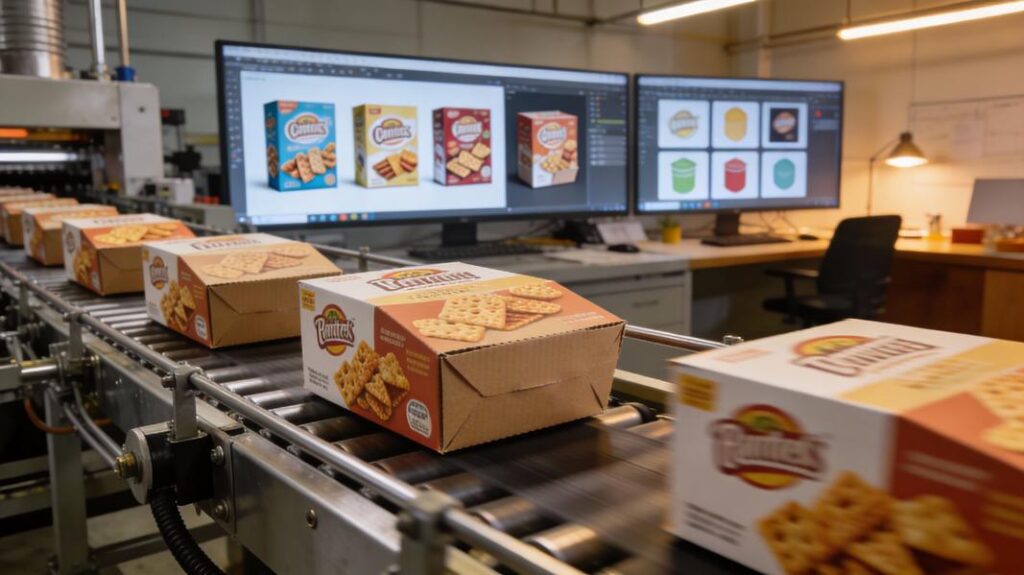
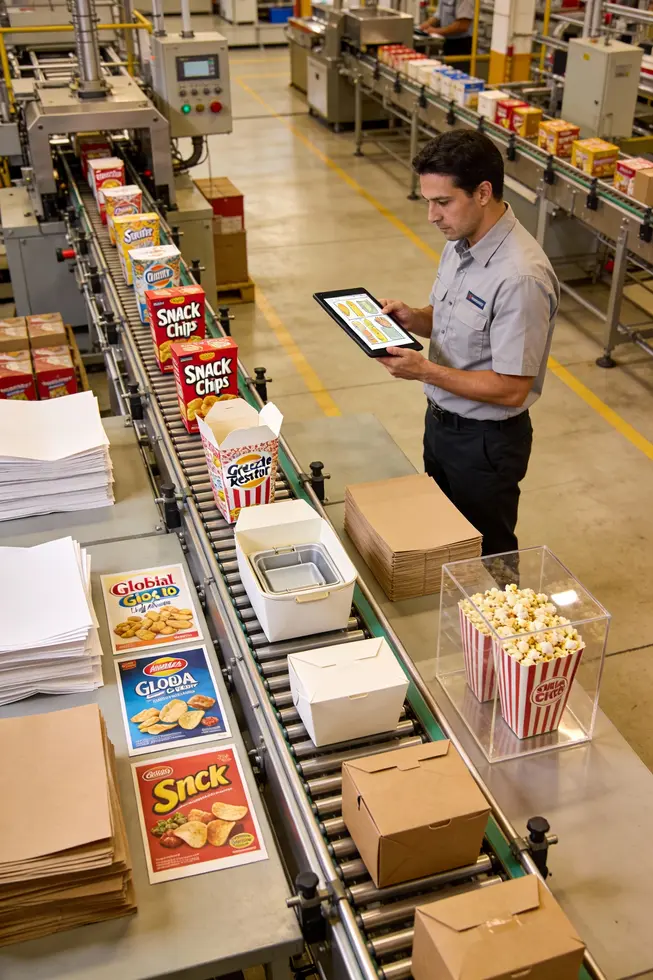
The snack box manufacturing landscape sits at a crossroads of convenience, sustainability, and data-driven operations. As consumer expectations shift toward portable, single-serve formats that preserve freshness without excessive waste, researchers and practitioners alike are converging on packaging that does more than just contain. It must protect, inform, engage, and adapt to a variety of consumption contexts—from quick-service counters to workplace micro-markets and subscription boxes. This convergence is not merely about a new box shape; it is about rethinking the end-to-end packaging system. Designers and manufacturers are testing modular formats that can be reconfigured for different snack lines, stacked efficiently for displays, and sized to optimize both shelf presence and fulfillment density. The resulting formats are increasingly right-sized, frictionless in use, and suitable for both retail and wholesale channels. In practice, this means a shift toward stackable corrugated and paperboard solutions, as well as lighter-weight mono-materials that maintain barrier properties while simplifying recycling streams. The emphasis on grease resistance, venting for hot or freshly heated items, and integrated lids continues to evolve. A notable line of thinking centers on coating chemistry that reduces not only material weight but also energy consumption in processing and end-of-life separation. Within this broader trajectory, one can envision a spectrum of formats—from compact, single-serve cartons to small multi-pack assortments—designed for rapid assembly and swift, error-free restocking. For manufacturers, this progression translates into investment in digital design and production tooling. Digital previews, 3D modeling, and online quoting shorten the gap between concept and production. In today’s competitive environment, a single line or box format that fails to scale can undermine a brand’s service model, particularly where same-day or next-day delivery is a norm. This is why flexible manufacturing cells, automated cutting, and in-line printing capabilities are increasingly essential. The ability to tailor packaging to each product—whether a low-sugar, high-protein snack, a plant-based option, or a classic favorite—without sacrificing efficiency or waste management is becoming a differentiator. Material selection remains a central theme, with suppliers steering toward cleaner, simpler supply chains. Paper-based and bagasse-derived alternatives are rising in prominence due to recyclability, reduced fossil-fuel intensity, and growing consumer scrutiny of ultra-processed packaging. Yet such shifts require careful alignment with barrier requirements, moisture handling, and shelf stability. This is where smart packaging concepts begin to intersect with material science. Embedding connectivity—via QR codes, NFC, or printed electronics—offers a path to greater transparency around ingredients, sourcing, and freshness. Real-time data can support both consumer trust and operational resilience, enabling retailers and operators to monitor stock levels, verify authenticity, and reduce waste through better demand forecasting. In parallel, the design of packaging formats increasingly incorporates environmental accounting. Extended Producer Responsibility (EPR) considerations, recyclability labeling, and life-cycle data become integral to product development. Manufacturers must balance the desire for premium appearance and tactile quality with the practical needs of recycling streams and safe end-of-life handling. Consumers increasingly expect packaging to tell a story about ingredients and origins, and packaging design is meeting that expectation by aligning branding with sustainability narratives without compromising recyclability. The market dynamics also push toward smarter production networks. AI-assisted demand sensing, automated restocking triggers, and digital twins of packaging lines enable rapid scale-up or down, reducing capital exposure in volatile raw material markets. When material costs swing—whether plastics, pulp products, or coatings—the ability to adjust formats, thicknesses, and print workflows in real time helps preserve margins and delivery timelines. The role of branding cannot be underestimated in this landscape. Visual identity, tactile cues, and ergonomic handling all influence consumer choice in crowded aisles or on digital storefronts. As packaging formats become more modular, brands gain the opportunity to curate micro-collections of snacks with cohesive, distinct packaging that still harmonizes across a portfolio. This strategic flexibility supports portfolio optimization, seasonal editions, and co-branding opportunities, while maintaining a consistent framework for compliance and data sharing. The potential for open-ended customization is especially relevant for niche snacks and bakery-adjacent offerings, where packaging must reflect both the product’s character and the retailer’s display strategy. For readers exploring practical exemplars of evolving packaging forms, one can consider customized kraft-paper packaging options that illustrate how format, branding, and sustainability converge in a single solution. See an example here: custom kraft paper snack packaging. This kind of product demonstrates how a single packaging concept can be sized, printed, and equipped with branding elements while remaining compatible with recycling streams and cost targets. Looking ahead, the intersection of formats, materials, and smart features will shape the competitive positioning of snack box manufacturers. Those who integrate flexible manufacturing with modular designs, material choices aligned to circular economy goals, and connectivity-enabled packaging will be best positioned to serve a diverse range of retailers and food brands. The strategic takeaway is clear: innovation in formats and materials must go hand in hand with data-enabled operations and responsible end-of-life management. In a market defined by rapid delivery, evolving dietary norms, and heightened sustainability expectations, the most resilient manufacturers will be the ones that can translate design intent into scalable, compliant, and verifiable packaging ecosystems. The ongoing dialogue among format designers, material scientists, and supply chain technologists will continue to push the envelope, delivering snack boxes that delight visually, perform technically, and travel the supply chain with minimal waste and maximum traceability.
2. Economic Dynamics and Competitive Positioning in Snack Box Manufacturing: Market Growth, Investment Signals, and Supply Chain Realities
The snack box manufacturing market is characterized by rising demand for convenient, single-serve formats and rapid growth in packaged snacks. Key growth drivers include on-the-go consumption, e-commerce expansion, and brand investments in protective, recyclable packaging. Regions vary in maturity, with Asia Pacific leading in volume while regulatory and material costs shape competitive dynamics. Sustainability, traceability, and smart packaging features are becoming differentiators, and supplier networks with resilient, data-driven operations are critical to profitability and risk management.
3. Chapter 1 — snack box manufacturer: Market Landscape, Key Players, and Product Forms — Geopolitical and Societal Context: Trade, Regulation, Sustainability Demands, and Consumer Behavior
The geopolitical and societal context surrounding snack box manufacturing is not a peripheral backdrop but a core driver of how boxes are designed, sourced, and distributed. Trade dynamics shape the availability and cost of raw materials, from fiber for paper-based packaging to coatings and inks that keep grease-resistance intact. Tariffs, regional supply chains, and the push toward nearshoring influence not only where production takes place but which formats are economically viable for brands at different scales. In this environment, manufacturers must balance global capacity with the resilience of local suppliers, ensuring that volumes, lead times, and customization capabilities align with the fluctuating tides of international trade. The result is a packaging ecosystem that prizes flexibility—an ability to switch between liner grades, coatings, and printing methods without sacrificing speed or compliance. The challenge for snack box makers is to harmonize the vagaries of cross-border logistics with the steadier demands of retailers and foodservice operators who expect reliable, consistent packaging that preserves product quality from factory to consumer’s hands.
Regulation adds another layer of complexity that ripples through every stage of the value chain. Extended Producer Responsibility and related packaging directives are no longer distant considerations but immediate planning items for 2026 and beyond. Manufacturers must capture precise data on each packaging component, from fiber origin and recyclability to ink safety and end-of-life pathways. Such traceability is not simply a compliance checkbox; it informs design choices that can reduce material usage, enable more efficient recycling streams, and lower total cost of ownership for brands that must navigate multiple jurisdictions with varying standards. In practice, this regulatory pressure accelerates a shift away from complex plastics toward more transparent, recyclable, or compostable substrates. It also drives innovation pipelines toward smarter packaging that can convey ever-more information with minimal on-pack real estate through QR codes, printed electronics, and other digital touchpoints. The regulatory environment thus nudges manufacturers toward designs that anticipate future obligations while delivering immediate benefits in waste reduction and consumer trust.
Sustainability demands are no longer a trend but a baseline expectation for both business-to-business buyers and end consumers. The pivot from single-use plastics to paper-based alternatives has gained momentum as brands seek packaging that communicates responsibility as clearly as it does product identity. This transition dovetails with a broader reassessment of packaging life cycles: right-sizing boxes to minimize wasted space, optimizing transit efficiency to lower carbon footprints, and selecting coatings and adhesives with proven recyclability. The rise of smart packaging—whether for tracking freshness, verifying authenticity, or providing usage guidance—reflects a consumer appetite for transparency. Shoppers increasingly expect on-pack clarity about ingredients, sourcing, allergens, and processing steps. In response, manufacturers are not only choosing sustainable materials but also embracing design strategies that simplify recycling and recovery, such as mono-material constructions or easily separable components. The convergence of regulatory stringency, environmental stewardship, and consumer demand creates a permissive yet demanding landscape where packaging must do more with less and do it responsibly.
Consumer behavior plays a pivotal role in shaping product forms and packaging configurations. People are gravitating toward snacks that marry health considerations with convenience, and that preference extends to how packaging communicates value. Boxes must support not only branding and display at the point of sale but practicality during handling, storage, and consumption. For many operators, the requirement is a packaging system that accommodates a range of snack formats—chips, nuts, baked goods, or ready-to-eat combinations—while offering branding opportunities through wholesale and co-pack arrangements. The ability to provide diverse, customizable formats in scalable quantities is now a core competitive differentiator. In this context, suppliers that can deliver both standard stock boxes and bespoke, print-enabled solutions—without compromising speed or sustainability—become indispensable partners for brands navigating the increasingly complex terrains of global and local markets.
Within this ecosystem, the procurement choices brands make for packaging are also shaped by the practical realities of sourcing. A growing number of manufacturers emphasize wholesale access, custom printing, and branding capabilities to help snack brands maintain shelf impact across channels. The demand for built-in features such as grease-resistant coatings, venting solutions, and integrated lids demonstrates how form follows function in ways that directly influence product quality and consumer experience. At the same time, the market remains attuned to the rising importance of supply chain agility. Flexible contract terms, scalable production lines, and the capacity to accommodate surges in demand are essential for staying competitive. For brands seeking scalable yet distinctive packaging solutions, exploring suppliers that blend global capacity with regional responsiveness is no longer optional but essential.
For brands looking to prototype or scale packaging solutions that align with these geopolitical and societal currents, there are practical pathways to consider. Packaging suppliers now offer a spectrum of formats—from traditional corrugated and paper-based cartons to sophisticated, customizable kraft boxes with design previews and bulk pricing. In this environment, a wholesale, customizable option that can be tailored to brand storytelling while meeting stringent sustainability criteria represents a compelling fit. Such solutions often come with the added advantage of streamlined logistics and consistent quality, enabling brands to maintain uniform packaging across multiple markets. For those aiming to balance cost efficiency with eco-conscious design, a representative example of the kind of scalable, recyclable packaging that aligns with current trends is available through providers that offer customized kraft-based containers—an approach exemplified by the option to tailor a 2000 ml out-container package for food applications. This path reflects a practical synthesis of trade-aware sourcing, regulatory foresight, and consumer-driven demand for responsible packaging.
customized-2000ml-out-container-price-kraft-paper-box-packaging-for-food
Chapter 2: Chapter 2 — snack box manufacturer: Packaging Technologies, Sustainability, and Customization

1. Technological Frontiers in Snack-Box Packaging: From Automation to Sustainable Customization
The packaging technologies shaping snack boxes today extend far beyond simply enclosing a product. They are a convergence of precision engineering, material science, and design thinking that orchestrates manufacturing efficiency, product protection, consumer appeal, and environmental responsibility. In an industry where speed to market and the ability to adapt formats determine competitive viability, equipment choices and material strategies act as the invisible levers that enable brands to scale, differentiate, and meet increasingly stringent sustainability targets. The narrative of these frontiers is not about a single breakthrough but about a system of interlocking capabilities that allows a supplier to move from a narrow line of formats to a flexible, multi-SKU operation without sacrificing throughput or quality.
At the heart of modern snack box production lies automated filling and sealing systems. These lines, whether they use vertical or horizontal form-fill-seal configurations, are engineered to handle a spectrum of snack formats—from dry, gritty pieces to oily or sticky compositions—without frequent retooling. Cartoning and end-of-line automation complete the cycle, enabling precise packaging while minimizing human touchpoints. The benefits are tangible: improved dimensional accuracy, reduced waste, shorter changeover times, and the ability to reallocate lines quickly to respond to demand shifts. As markets demand more complex packaging—varied sizes, multilingual branding, and faster replenishment cycles—these systems are designed with modularity in mind, allowing manufacturers to adjust fill weights, carton styles, and lid configurations in a single production run.
A parallel stream in this landscape is the evolution of multipack and bundling concepts. Traditional plastic rings and shrink-wraps are increasingly challenged by paperboard clips and other fiber-based assemblies that marry merchandising appeal with environmental considerations. The shift toward paper-based multi-pack solutions supports on-shelf visibility and customer convenience while aligning with growing expectations for recyclability and reduced plastic usage. This trend places new demands on the upstream equipment stack, which must accommodate changes in packaging geometry and stacking patterns without forcing costly line rebuilds. In practice, the result is a more versatile production footprint: lines that can switch from a single-serve box to a small multipack with minimal downtime, enabling brands to test formats and respond to seasonal campaigns or regional preferences.
Another cornerstone is the use of modified atmosphere packaging to extend freshness and protect quality across a snack’s shelf life. MAP technologies control oxygen levels inside the package, slowing oxidation and spoilage while maintaining texture and flavor. This is particularly impactful for snacks with oil-rich coatings, nut mixes, or seasoned morsels where even slight moisture or oxygen ingress can degrade taste and mouthfeel. The choice of barrier substrates and sealing technologies becomes a critical partner to MAP, since the compatibility of the gas mix with the package materials determines how effectively the atmosphere can be maintained throughout distribution and retail display. In practice, MAP is not a one-size-fits-all solution; it requires careful material selection, seal integrity testing, and an understanding of consumer retrieval behavior at the point of purchase.
The debate between paperboard-based solutions and more traditional plastic laminates continues to evolve in the pursuit of sustainability. Advances in barrier coatings and barrier-lined substrates enable paper-based boxes to offer meaningful protection against moisture vapor and oxygen while supporting recyclability. Coatings and laminates are increasingly designed to be compatible with standard recycling streams or to be compostable where appropriate, allowing brands to claim lower lifecycle impacts without compromising barrier performance. When combined with recyclable flexibles or compostable alternatives for inner liners, these approaches broaden the design space for snack packaging and open opportunities to standardize equipment platforms across multiple SKUs.
The practical implications of these technologies extend into supplier ecosystems and capital planning. For snack brands, the ability to differentiate through presentation and sustainability hinges on flexible lines that can produce a range of formats and sizes with minimal downtime. For packaging engineers and manufacturers, the emphasis shifts toward flexible, scalable lines that can adapt to new substrates and barrier strategies while maintaining throughput. Sustainability professionals push for solutions that reduce single-use plastics, maximize recyclability, or enable compostable end-of-life options, all while preserving product protection and brand experience. These demands create a collaborative landscape in which equipment manufacturers, material suppliers, and brand owners must coordinate early in the design process to deliver end-to-end systems that can evolve with consumer preferences and regulatory expectations.
In this evolving ecosystem, collaboration becomes a core capability. Design teams work with material scientists to tailor barrier properties to the chosen substrate, while line engineers evaluate how changes to packaging geometry influence fill head efficiency, seal integrity, and palletization. The result is a holistic approach where sustainability metrics—such as carbon footprint, recyclability, and energy use—are embedded in the decision-making process from the outset. For brands seeking to explore diverse packaging options while maintaining a stable production cadence, experience with modular, adaptable lines reduces risk and total cost of ownership. A practical route to evaluating the packaging spectrum is to consider substrate versatility, from recyclable paperboard to barrier-coated composites, and to test how a single substrate can support multiple SKUs across different markets. As a concrete starting point for explorations in paper-based packaging options, see the following resource: customized-2000ml-out-container-price-kraft-paper-box-packaging-for-food.
Looking ahead, the frontier is not a single invention but an integrated system that harmonizes production efficiency with evolving consumer expectations and environmental responsibilities. The most compelling developments will be those that enable brands to bring innovative, appetizing, and sustainable snack experiences to market at scale. In the end, the success of snack box packaging will hinge on a supplier network that can align automated capabilities with material science advances, supporting faster prototyping, leaner changeovers, and a clearer pathway to lower environmental impact without compromising taste, texture, or shelf life. As the landscape unfolds, the dialogue among equipment designers, material engineers, and brand owners will determine how quickly and how gracefully packaging technologies can adapt to the next generation of snack formats and consumer demands.
2. Economic Dynamics of Snack Box Manufacturing: Costs, Efficiency, and Market Forces in a World of Tech-Driven Packaging, Sustainability, and Customization
The economics of snack box manufacturing today rests on a convergence of packaging technologies, sustainability imperatives, and the relentless push for customization. This confluence does not merely shape how boxes look; it redefines cost structures, efficiency norms, and the competitive dynamics across the supply chain. At the heart of packaging technologies is a balance between traditional methods that deliver consistent branding and newer, flexible approaches that support on-demand production. Offset printing continues to deliver high-definition visuals and color accuracy for core branding, while digital printing unlocks the ability to tailor runs to specific markets, campaigns, or even local tastes without sacrificing speed. The financial implications of this mix are nuanced: digital workflows reduce setup costs and inventory risk for small or regional brands, but the unit costs of high-volume runs through traditional presses can still be favorable. The market has learned to treat packaging as more than a protective layer; it is a vehicle for direct consumer engagement. Smart features—QR codes, NFC tags, and freshness indicators—are increasingly integrated to support traceability, authenticity, and interactive campaigns. When these features are deployed at scale, they shift the economics from a simple container to a marketing and product integrity tool. AI-driven automation promises meaningful gains: manufacturing cost reductions in the range of one-fifth to one-third, tighter supply chain synchronization, and waste minimization that lowers material spend and disposal costs. These improvements do not occur in isolation. Quick fulfillment pressures from online and rapid-delivery channels demand packaging that can be produced, stocked, and deployed with minimal delay. The combined effect is a more dynamic cost curve, where capital expenditures in digital presses and automated handling can be amortized across a broader mix of SKUs and batch sizes, delivering greater financial flexibility for brands that prize speed and customization.
Sustainability remains a central driver of cost and value. The move away from complex plastics toward paper, paperboard, and biodegradable films reflects regulatory scrutiny, shifting consumer expectations, and the volatility of raw material pricing. The resulting cost calculus often favors materials that, while perhaps pricier upfront, support premium positioning and longer product shelf life when combined with barrier-enhanced designs. A circular-economy mindset—recycling, reuse, and extended producer responsibility—restructures typical packaging budgets. In practice, brands are experimenting with recycled foams for cushioning, reusable packaging concepts for e-commerce, and designs that maximize recyclability without compromising protection or branding. These strategies carry both environmental and financial benefits, including reductions in waste disposal costs and potential incentives from policy regimes designed to reward recyclability. In bakery and snack segments, sustainability has become a differentiator for premium and artisanal offerings, enabling higher price points that help offset the cost of more sustainable materials. The economic payoff hinges on consumer willingness to pay for eco-credentials, as well as the regulatory landscape that slowly reshapes the cost of non-recyclable packaging and waste management.
Customization is the third pillar reshaping the economics of snack box manufacturing. Brands increasingly seek packaging that tells a story—limited editions, heritage cues, tactile finishes, and foldable formats designed for portability and convenience. Custom visuals and textures intensify perceived product quality, allowing premium positioning without abandoning mass-market reach. This trend aligns with broader shifts in consumption, where portion control, health messaging, and fortification narratives become packaging clues that drive purchase decisions. The demand for personalized or regionally tailored packaging also intersects with e-commerce and quick-commerce, where packaging must be resilient in transit, easy to open, and capable of conveying usage ideas or nutritional messaging in digital environments. A notable facet of customization is the ability to communicate product benefits clearly on the outside of the box, whether those benefits relate to added nutrients, improved freshness, or sustainable sourcing. In practical terms, the ability to alter a design, adjust a print run, or switch out a panel for a limited-edition motif without incurring prohibitive setup costs is a decisive competitive edge. For brands exploring scalable customization, a compelling example of how design and material choices converge with market demand can be seen in evolving container formats that support larger or smaller portions while maintaining strong branding and efficient logistics. For instance, there are turnkey options that allow a brand to offer a single packaging platform with multiple size variants, thereby optimizing procurement, stock, and distribution.
The broader market dynamics reinforce these internal cost and capability shifts. The global food packaging arena is projected to reach hundreds of billions of dollars in the coming years, with the snacks segment contributing a substantial share. Growth is driven by convenience, premiumization, and rapid online sales, while costs remain susceptible to raw-material volatility and evolving regulations. AI-driven automation is often cited as a key lever for efficiency, delivering tangible reductions in manufacturing costs and improvements in supply-chain reliability, while also supporting tighter waste controls. The regional growth picture highlights rapid expansion in large and developing markets where manufacturing capacity and demand for foodservice packaging are expanding in tandem. Segment-specific trends, such as the steady expansion of bakery boxes and premium packaging for snacks, suggest that higher-value packaging solutions are likely to command stronger pricing power, particularly when sustainability narratives are entwined with brand storytelling.
A practical takeaway for manufacturers and brands is the need to view packaging as a strategic asset rather than a cost center. The most successful players are those who integrate design with material science, digital print capabilities, and smart features in a way that harmonizes branding, consumer experience, and cost discipline. The opportunity lies in balancing high-definition visuals with on-demand customization, leveraging recycled and recyclable materials without triggering price penalties, and deploying automation that pays off across volumes and SKUs. The journey toward a more sustainable, more customizable, and more technologically integrated packaging ecosystem is not just about meeting today’s demands; it is about building cost-efficient resilience for tomorrow’s market disruptions. The internal link to forward-looking packaging solutions—such as customized, scalable packaging options documented in current supplier catalogs—underscores the practical pathway brands can follow to align economic performance with evolving consumer expectations. customized 2000ml out container kraft paper box packaging for food
In sum, the economic landscape of snack box manufacturing is being rewritten by the twin forces of technology-enabled efficiency and sustainability-driven value creation, all channeled through the prism of customization. As margins compress under raw-material volatility and regulatory scrutiny, the brands and manufacturers that win will be those who can deliver compelling, differentiated packaging at scale. They will combine high-impact visuals with intelligent design, sustainable materials with smart logistics, and flexible production with consumer-grade personalization, turning packaging into a durable source of competitive advantage rather than a peripheral cost.
3. Societal and Geopolitical Context for Snack Box Packaging: Navigating Sustainability Standards, Regulation, and Global Supply Chains
The decisions behind snack box packaging sit at a complex intersection of consumer expectations, regional rules, and the pressures of a global supply network. Societal values—such as a preference for recyclability, transparency about materials, and responsible sourcing—shape what is feasible on the design table. At the same time, geopolitical forces, including trade regimes, tariffs, and evolving regulatory architectures, constrain material choices and supplier ecosystems. For a manufacturer of snack boxes, success hinges on translating these broad currents into tangible packaging solutions that protect product quality, enable efficient distribution, and communicate stewardship to the end consumer.\n\nSustainability standards have moved beyond a single virtue like recyclability or compostability. They function as a coordinated language that informs material selection, barrier performance, and end-of-life scenarios. International management frameworks such as ISO 14001 drive how a company organizes its environmental program, while ISO 20400 guides sustainable procurement decisions across suppliers of papers, inks, and coatings. Product-level considerations—such as ensuring food-contact safety (FDA or regional equivalents), avoiding substances of concern (REACH-related considerations), and verifying end-of-life pathways—shape the engineering of the box itself. Labels and declarations, from compostability certifications to environmental footnotes, help consumers understand what happens after the box leaves the shelf. In practice, this means designers must weigh barrier performance against recyclability: a multilayer structure may extend shelf life but complicate recycling streams, whereas monomaterial constructions can improve end-of-life outcomes but allow fewer options for moisture or aroma control.\n\nFrom a regional vantage, regulatory landscapes diverge in meaningful ways. In Europe, the Packaging and Packaging Waste Directive and prospective Packaging and Packaging Waste Regulation push for higher recyclability content and clearer end-of-life guidance, while also restricting certain polymers and additives. In the United States, food-contact approvals and state-level waste policies increasingly tilt toward extended producer responsibility and recycling infrastructure improvements. The United Kingdom aligns with similar ambitions post‑Brexit, with its own market-specific labeling and reporting expectations. In Asia and the broader global arena, shifting rules around waste, recycled-content mandates, and cross-border material flows compel manufacturers to diversify suppliers and build traceability into the product journey. These regulatory intricacies drive not just what materials are permissible, but where production should occur and how data is captured to prove compliance.\n\nThe supply chain dimension adds a practical layer to this landscape. Global sourcing exposes snack box manufacturers to volatility in pulp, resins, inks, and coatings, as well as to port delays and climatic risks. Resilience now often means supplier diversification, regionalization of some inputs, and closer collaboration with converters who understand end-of-life streams in specific markets. Traceability becomes a strategic tool: GS1 standards enable lot-level visibility from fiber to finished box, supporting both safety recalls and sustainability reporting. Courts of governance—such as the prospective European Corporate Sustainability Reporting Directive or OECD due‑diligence guidelines—encourage proactive risk assessment and disclosure of social and environmental impacts throughout the supply chain. The outcome is not simply compliance; it is a governance discipline that informs supplier selection, manufacturing locations, and the pace of innovation.\n\nCustomization, when viewed through this lens, becomes a pathway to balance and resilience rather than a marketing flourish. Digital printing and on-demand production enable regionally tuned aesthetics, language, and promotional narratives without forcing large, static runs. This flexibility reduces waste and supports circular economy goals by enabling near-market variants that align with local recycling capabilities and consumer expectations. Yet customization must still respect end-of-life realities. Clear labeling for recyclability, consistent ink chemistry, and compatible adhesives are essential so the box remains stitchable into local recycling streams rather than becoming a contaminant. In practice, designers can pursue customizable packaging that communicates recycled content or compostability where infrastructure exists—without compromising the pack’s barrier needs or safety assurances.\n\nFor manufacturers, the path forward blends proactive standards alignment with agile sourcing and data-driven decision making. Early-stage design reviews should incorporate life-cycle thinking, selecting materials and constructions that can be justified under multiple regulatory scenarios and supply-chain contingencies. Procurement teams must build multi-sourcing strategies, supplier codes of conduct, and capacity plans that reflect evolving EPR regimes and recycling infrastructure. In parallel, investments in digital printing and modular packaging concepts can unlock personalized campaigns while maintaining a coherent sustainability narrative across product families. The aim is a packaging ecosystem where customization complements compliance, enabling brands to meet local demands and global ambitions without escalating waste or risk.\n\nOrganizations that fuse these threads—governance, regional regulation, resilient supply chains, and responsible customization—will be better positioned to meet the expectations of both regulators and consumers. The packaging decision becomes a strategic differentiator, signaling that the snack box manufacturer prioritizes not only performance and brand appeal but also accountability across the value chain. As markets continue to tighten around recycled-content mandates, clear end-of-life guidance, and transparent reporting, the most successful packaging platforms will be those designed with a shared understanding of societal values and geopolitical realities. Ultimately, the challenge—and opportunity—is to craft packaging that protects food, respects the planet, and engages diverse communities in a coherent, traceable, and trusted story.\n\nTo explore practical pathways for integrating these standards and customization capabilities, see how flexible, customizable kraft paper box packaging can support regional adaptations while maintaining end-of-life integrity. customizable kraft paper box packaging
Chapter 3: Chapter 3 — Snack Box Manufacturer: Navigating Economic Currents, Geopolitical Shifts, and Societal Demands
1. Steering Snack Box Innovation: Technology, Sustainability, and Packaging Performance under Economic, Geopolitical, and Societal Pressures
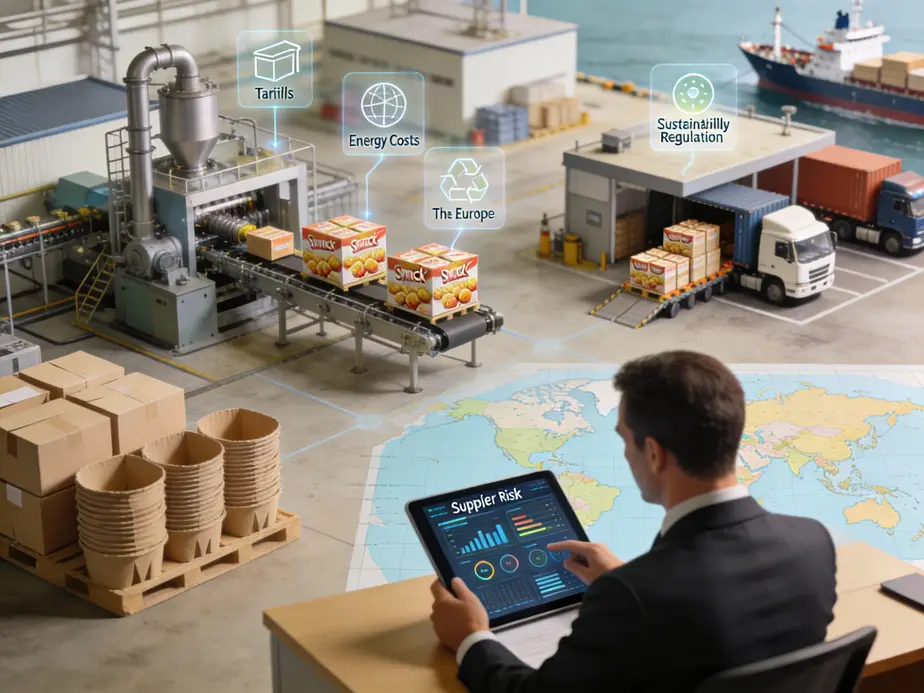
Snack box manufacturing now unfolds at a complex crossroads where economic dynamics, geopolitical realities, and evolving societal expectations converge to shape what ends up on shelves, and how it is produced. The subchapter that follows examines how technological innovation, sustainability imperatives, and packaging performance must be orchestrated in concert with cost structures, risk management, and shifting consumer values. The core challenge is to balance efficiency with resilience, while delivering packaging that preserves product quality and delivers a clear signal of responsibility to modern shoppers. In this context, the economics of production—raw materials, coatings, films, and paperboard, as well as the energy, labor, and capital required to turn these elements into finished snack boxes—sets the baseline for every strategic decision. Raw-material costs remain highly variable. Paperboard and barrier films must meet food-contact safety standards while supporting barrier performance that protects snacks from moisture, oxygen, and odors. Coatings, inks, and closures add layers of expense, yet automation and line integration offer paths to reduce unit costs through higher throughput, reduced waste, and lower labor intensity. The move toward automation is not merely about cutting jobs; it is about enabling consistent quality at scale, improving predictive maintenance through connected equipment, and freeing resources to focus on design and testing. Economies of scale amplify these benefits, as standardized formats and modular packaging lines enable faster changeovers and more predictable line performance. Yet scale also exposes a company to supply-chain shocks. Hedging commodity risk—oils, starches, resins, and laminates—while diversifying suppliers across regions has become a routine risk-management practice. The total cost of ownership must account for end-of-life considerations as well, since disposal, recycling, and take-back programs increasingly influence buyer decisions and regulatory compliance. Geopolitically, the snack box sector is shaped by the global texture of trade: tariffs, import-export controls, and regional disruptions can trigger sudden shifts in lead times and material availability. This reality incentivizes regionalization and nearshoring where feasible, as well as supplier diversification to avoid reliance on a single supply corridor. Regulatory alignment across markets adds another layer of complexity. Food-contact rules differ by region, and claims around recyclability or recycled content must reflect actual end-of-life outcomes. Firms that excel here do not merely meet compliance; they embed regulatory insight into product design, enabling faster, safer market entry and fewer post-launch recalls. Society, in turn, is demanding packaging that aligns with environmental stewardship and social responsibility. Consumers increasingly scrutinize the lifecycle of packaging—from the sourcing of fibers to the ability to recycle or compost ending in municipal streams. This social lens has fed a broader ESG agenda within packaging companies, urging transparent reporting on waste, recycling rates, and supplier labor practices. The implications extend to labeling, responsible sourcing claims, and brand storytelling that can affect preference and loyalty. Technology is the lever that can reconcile these competing pressures. Automation and robotics streamline primary and secondary packaging steps, while digital twins and connected equipment offer predictive maintenance and throughput optimization. Data-driven operations, including AI-assisted demand forecasting and inventory optimization, help reduce waste and align production with real-time market signals. In packaging technology itself, advances in barrier materials and lightweight laminates strive to improve shelf life with lower environmental impact. The emergence of mono-material, recyclable films and increased use of recycled-content layers illustrate a strategic tension: improving recyclability often requires rethinking barrier performance, printability, and seal integrity. Smart packaging adds another dimension, enabling traceability, time-temperature monitoring, and consumer engagement through digital interfaces, while也 supporting recalls and quality assurance through robust batch data. Sustainability-focused technologies—bio-based polymers, compostable options, and innovations in design-for-recyclability—present promises and challenges. They require careful alignment with regulatory environments and with the capacity of recycling and composting infrastructure in different markets. Packaging performance remains the anchor of consumer acceptance. Barrier properties, seal strength, and mechanical durability must withstand transport, handling, and storage conditions, all while remaining compatible with automated lines and end-of-life processing. Rigorous testing—ISO/ASTM methods for barrier and seal performance, accelerated shelf-life studies, and migration assessments—ensures safety and reliability across markets. The sustainability imperative must marry with performance; a lighter film that undermines shelf life or a recyclable solution that compromises seal integrity is not a win, even if it satisfies a recycling scorecard. Intersections and trade-offs are the everyday terrain. Cost versus sustainability requires thoughtful material selection, balancing barrier needs with recyclability. Regulatory constraints across regions may demand multiple packaging variants to maintain market access, complicating procurement and increasing the risk of fragmentation. Supply chain resilience often requires localized production footprints and diverse supplier bases, which can dilute some economies of scale but reduce vulnerability to disruptions. The pace of innovation must be weighed against capital expenditure and implementation risk, particularly when new materials or automated systems require extensive qualification and process validation. Finally, consumer expectations shape both design and messaging. Brands seek transparent communication about recycled content, recyclability, and lifecycle impact, while also demanding performance and convenience—reliability on shelf and ease of use at home or on the go. To translate these intertwined forces into practice, manufacturers increasingly embrace a holistic approach. They begin with a clear packaging design brief that embeds sustainability, performance, and regulatory requirements from the outset. They run parallel evaluations of mono-material versus multi-layer solutions, using lifecycle costing to compare total economic impact rather than upfront price. They cultivate supplier ecosystems with contingencies for critical resins, adhesives, and coatings, and invest in data platforms that aggregate performance metrics, traceability, and predictive insights. In this context, an applied example of adaptable packaging design and customization can illustrate the path forward. For a practical look at how customizable packaging can be realized at scale, explore this example of customized 2000ml kraft paper box packaging for food. customized 2000ml kraft paper box packaging for food.
As the chapter on market dynamics and competitive positioning unfolds, this subchapter underscores that technology and sustainability are not luxuries but essential capabilities. They enable snack box manufacturers to deliver safe, cost-competitive products while meeting evolving social expectations and navigating an uncertain geopolitical landscape. The integration of robust performance testing, smarter supply-chain design, and forward-looking material choices will determine who leads in a world where packaging is both a functional protection for a snack and a statement about a brand’s value system. The stretch between today’s packaging and tomorrow’s possibilities will be bridged by disciplined investment, cross-functional collaboration, and a willingness to pilot and iterate across markets. In the chapters that follow, the conversation shifts from macro dynamics to concrete strategic moves—how investment, market access, and supply-chain design translate into tangible competitive advantage for snack box manufacturers.
2. Economic Currents and Resilience in Snack Box Manufacturing: Costs, Supply Chains, and Strategic Adaptation
The year 2026 places snack box manufacturing at a crossroads where measured growth meets practical constraints. Market studies project the snack packaging sector to reach about US$24.4 billion in 2026 and to climb toward US$34.8 billion by 2033, a respectable CAGR of roughly 5.2 percent. Yet this is not a buoyant era of unsustained expansion. The broader economic backdrop is one of normalization—lower interest rates, cooled inflation, and a recovery pace that is steady rather than spectacular. For manufacturers, that translates into opportunities that must be earned through efficiency, differentiation, and disciplined cost management rather than through macroeconomic tailwinds alone. In practice, this means balancing volumes with value, investing in flexible production, and embracing packaging innovations that align with evolving consumer expectations and logistical realities.
A principal pressure point remains the rising cost of inputs. Plastics, paper, and aluminum—central to most snack boxes and their coatings, liners, and closures—are subject to energy-driven price volatility and disruption-related spikes. While a broad easing of commodity prices is anticipated in 2026, the relief is uneven, leaving manufacturers to navigate a persistent cost band. The overlap with premiumization—where specialty, sustainable, and aesthetically enhanced packaging commands higher price points—creates a dual dynamic. On one side, sustainability and premium packaging expand opportunity for brand differentiation and loyalty; on the other, they push up material and process costs. This tension forces packaging teams to pursue scale, streamline conversions, and optimize material choices that deliver both performance and cost discipline. In practice, many players are pursuing mono-material and recyclable solutions that offer end-to-end recyclability and lighter weight, even as the upfront investments required for such transitions can press margins in the near term.
The economics of scale are thus pivotal. As the specialty boxes market grows—reflecting consumer appetite for premium, story-driven packaging—the margin equation hinges on achieving cost leadership through efficient production, automated workflows, and high-speed conversion. At the same time, the demand for sustainable options means suppliers are continuously innovating to reduce total cost of ownership, even if unit costs rise in the short term. Manufacturers that couple eco-friendly materials with lean processes can capture a premium segment without sacrificing profitability, provided they align supplier contracts, inventory turns, and waste reduction programs with precise demand signaling. The result is a packaging ecosystem where price and value are negotiated rather than assumed, and where efficiency gains are as important as the allure of a visually compelling box.
Beyond raw materials, supply chain resilience has moved from a nice-to-have to a competitive necessity. The industry’s stability now leans on network optimization, digital synchronization, and the ability to pivot quickly in response to demand spikes or disruptions. In recent years, major snack producers have pursued portfolio rationalization and production-site optimization to lower fixed costs and improve throughput. The implication for snack box manufacturers is clear: invest in automation, data analytics, and flexible manufacturing that can absorb SKU reductions without compromising on service levels. E-commerce expansion compounds this need. As more snacks move through online channels, packaging must survive longer transit, maintain brand integrity, and support rapid fulfillment—and these requirements feed back into box design, coatings, and closure systems.
Consumer behavior in 2026 further reinforces the push toward resilient packaging. Value remains a key driver for many shoppers, even as health-conscious and premium сегментов grow. Private-label growth, promotions, and the ongoing scrutiny of ingredients place a premium on packaging that communicates value and trust. Simultaneously, health trends and the rising visibility of gut-health narratives are nudging brands toward packaging that can support cleaner labels, portion control, and on-the-go convenience. All of this places packaging not merely as a container but as a narrative device that reinforces product claims while withstanding the rigors of modern distribution. In tandem with these shifts, geopolitical tensions and tariff regimes continue to shape cost bases. Tariffs on inputs from various regions push some manufacturers toward regional sourcing and nearshoring strategies, reducing exposure to long-haul logistics and currency volatility. North American and APAC markets, in particular, emerge as focal points for diversified sourcing and rapid product introductions, thanks to their dynamic consumer bases and competitive port-to-warehouse ecosystems.
The interplay of costs, resilience, and consumer expectations compels a strategic posture for snack box manufacturers. Production flexibility becomes a core capability, enabling quick configuration changes as SKUs are added or retired in response to marketing campaigns or regulatory shifts. Partnerships with suppliers who can deliver scalable, customizable, and recyclable packaging at a predictable cost are essential. In this context, the market’s breadth—ranging from wholesale custom boxes to lightweight, eco-friendly formats and branded, retail-ready displays—supports a wide spectrum of business models. Rather than chasing a single path, successful manufacturers blend standardization with modular customization, applying digital tools to optimize run lengths, changeovers, and waste minimization.
For teams exploring practical illustrations of scalable packaging options within this landscape, one illustrative avenue lies in customizable, container-style packaging designed for food applications. Such options underscore the trend toward adaptable formats that balance capacity, cost, and sustainability. customized-2000ml-out-container-price-kraft-paper-box-packaging-for-food provides a tangible example of how a single box can be adapted across product families and delivery channels while maintaining brand integrity and performance. This kind of versatility is precisely what manufacturers need as they navigate inflationary pressures and shifting demand. It also highlights the importance of supplier ecosystems that can scale with a brand—from initial pilot runs to full-scale production—without sacrificing speed or consistency.
Looking ahead, the trajectory of snack box manufacturing hinges on how well players translate macroeconomic signals into operational pivots. Investment in automation—robotic handling for high-speed packaging lines, digitized quality control, and intelligent forecasting—will be decisive in sustaining margins as input costs adjust. Equally critical is a continued emphasis on sustainability that lines up with regulatory expectations and consumer preference, while avoiding an unsustainable cost burden. In this evolving environment, the most competitive manufacturers will be those that balance cost discipline with the capacity to deliver premium, sustainable packaging at scale, and with an agile supply chain that can absorb shocks and deliver value to brands and consumers alike. As the next subchapter will explore, these dynamics intersect with regulatory expectations and societal pressures, shaping how snack box packaging evolves in response to a broader geopolitical and cultural context.
3. Geopolitics, Policy, and People: How Global Currents Redefine Snack Box Manufacturing
The snack box manufacturing landscape sits at the intersection of shifting geopolitics, evolving trade regimes, and a rapidly changing tapestry of consumer expectations. Brands that survive and thrive are those that translate global turbulence into resilient planning, adaptive sourcing, and a storytelling capability that resonates with diverse markets. The interplay between supply chain risk, policy design, and consumer sensibilities creates a continuous loop: geopolitical moments drive policy responses, which in turn shape supplier relationships, product safety regimes, and packaging narratives, all filtered through the lens of what people want from their snacks and how they want to receive them.\n\nGeopolitical tensions and regional dynamics leave a tangible imprint on the availability and cost of both ingredients and packaging inputs. Variability in grain crops, nuts, dried fruits, and flavorings translates into price volatility and delivery delays. At the same time, the packaging substrates that safeguard quality—board, coatings, adhesives, and the infrastructure to print and brand—are also exposed to energy fluctuations, port congestion, and evolving environmental regulations. Shipping lanes and inland logistics breathe with the pulse of global events, recalibrating lead times and risk premiums. This uncertainty pushes manufacturers to diversify their supplier bases, cultivate regional production hubs where feasible, and build more flexible procurement strategies that can absorb sudden shifts in availability or freight cost.\n\nTrade policy acts as both a shield and a lever. The rules of origin, tariff schedules, and non-tariff barriers established by international bodies and regional agreements directly alter landed costs and competitiveness. When duties rise on key ingredients or packaging components, the total cost of a snack box can move in lockstep with policy signals, prompting consideration of alternate sourcing footprints or local production to optimize total landed cost. Non-tariff barriers—licensing requirements, technical standards, labeling regimes, and phytosanitary rules—add layers of compliance that delay time-to-market and affect the complexity of reformulation or rebranding across markets. Sanctions and export controls, meanwhile, can abruptly restrict access to specialized processing technologies or materials, underscoring the need for due diligence and contingency planning that reaches beyond traditional supply chain risk registers.\n\nThe cross-border dimension of modern snack brands amplifies these policy forces. E-commerce and direct-to-consumer channels invite a broader, borderless consumer base, yet they also bring heightened regulatory exposure. Digital disclosures, data localization requirements, and consumer protection laws interact with labeling, allergen declarations, and nutrition information to demand harmonized, scalable regulatory intelligence. For manufacturers with ambitious regional or global footprints, the ability to interpret, translate, and execute multi-market requirements quickly becomes a core capability. In parallel, regional preferences can be both a risk and an opportunity: the same policy push that enforces stricter labeling may enable a retailer to demand clearer sourcing disclosures, while local content rules or incentive programs can make regionalized production more attractive from a total-cost perspective.\n\nSocietal consumer trends increasingly steer policy dialogues and corporate behavior in tandem. Health and wellness imperatives push for transparent nutrition data, reduced artificial additives, and cleaner ingredient lists, elevating the importance of traceability and recall readiness. Sustainability concerns drive packaging decisions toward recyclability, compostability, or the use of recycled content, which in turn interact with regional waste management policies and certification regimes. Personalization and convenience foster the growth of curated snack boxes, but they also raise expectations for consistent quality across markets and a seamless, omnichannel experience. Ethical considerations—ranging from fair labor practices to supplier diversity and data privacy—shape how brands communicate their sourcing stories and how they collect and use consumer data to tailor assortments and promotions.\n\nThese intertwined forces have practical implications for strategy. Supply chains designed for resilience emphasize diversification rather than single-sourcing, with near-shoring or regional hubs as viable options for reducing exposure to a single geopolitical shock or tariff wave. Sourcing governance shifts toward rigorous ESG screening, supplier capacity assessments, and the embedding of contingency clauses in long-term agreements. Regulatory compliance becomes a living function, supported by a centralized intelligence capability that tracks labeling, safety, and packaging standards across markets and translates changes into actionable operations. Packaging strategy aligns with sustainability objectives—and credible third-party certifications—so that claims of recyclability or compostability withstand scrutiny from regulators, retailers, and consumers alike. Branding narratives increasingly foreground transparency around sourcing, environmental impact, and labor practices, which helps differentiate a manufacturer in a crowded market while addressing growing retailer expectations for responsible supply chains.\n\nThe momentum of sustainability is not merely a response to consumer demand but also a strategic tax on risk. By integrating ecological considerations into product and packaging design, manufacturers reduce the likelihood of late-stage reformulations prompted by regulatory tightening and consumer backlash. A packaging ecosystem that favors renewable or recycled inputs can dampen volatility tied to virgin material markets, even as policy regimes evolve toward stricter waste management and circular economy mandates. To navigate this landscape, a well-constructed portfolio combines adaptability with a clear signal to customers and partners: the capacity to deliver consistent quality, clear provenance, and responsible stewardship across every market, regardless of external pressures.\n\nFor those charting a course through these currents, one practical signal is the growing viability of sustainable packaging options that align with both policy incentives and consumer expectations. See a representative example of these materials in action through one packaging solution that emphasizes eco-friendly, sugarcane-based inputs and multi-region applicability: eco-friendly packaging solution for snack boxes. This kind of option illustrates how packaging decisions can simultaneously advance sustainability goals, reduce exposure to certain commodity cycles, and support a credible narrative about ethical sourcing and waste reduction.\n\nAs the next subchapter unfolds, the discussion will turn toward regional market dynamics and product category nuances—how different regulatory environments and consumer preferences shape formulation, packaging, and channel strategies in North America, Europe, and Asia-Pacific. The aim is to translate these broad macro forces into concrete, regionally attuned moves that balance risk, cost, and contemporary demand for snack experiences that are safe, sustainable, and satisfying.
Final thoughts
Navigating the snack box manufacturing landscape requires a balance of capability, reliability, and strategic alignment. Business owners should map their needs to the market’s offerings: identify manufacturers with proven experience in the required product forms (from grease-resistant chip cartons to eco-friendly paper boxes), assess their packaging technologies and customization options, and evaluate resilience to economic and geopolitical shifts. The most successful partnerships combine scalable supply, clear value in sustainability and branding, and trusted support from quote to delivery. By prioritizing capability alignment, sustainability commitments, and supply chain agility, brands can secure snack box solutions that lift product presentation, reinforce brand identity, and maintain cost discipline across growth phases.
Choose our reliable disposable tableware and packaging solutions for your business. We offer quality products that meet safety standards, with fast delivery and flexible options. Partner with us today to elevate your service – contact our team now for a tailored quote!
About us
We specialize in manufacturing and supplying disposable tableware, packaging paper, and boxes. With years of experience, we prioritize safety, durability, and eco-friendly practices. Our goal is to provide businesses with trusted, cost-effective solutions backed by responsive customer support.