
Introduction
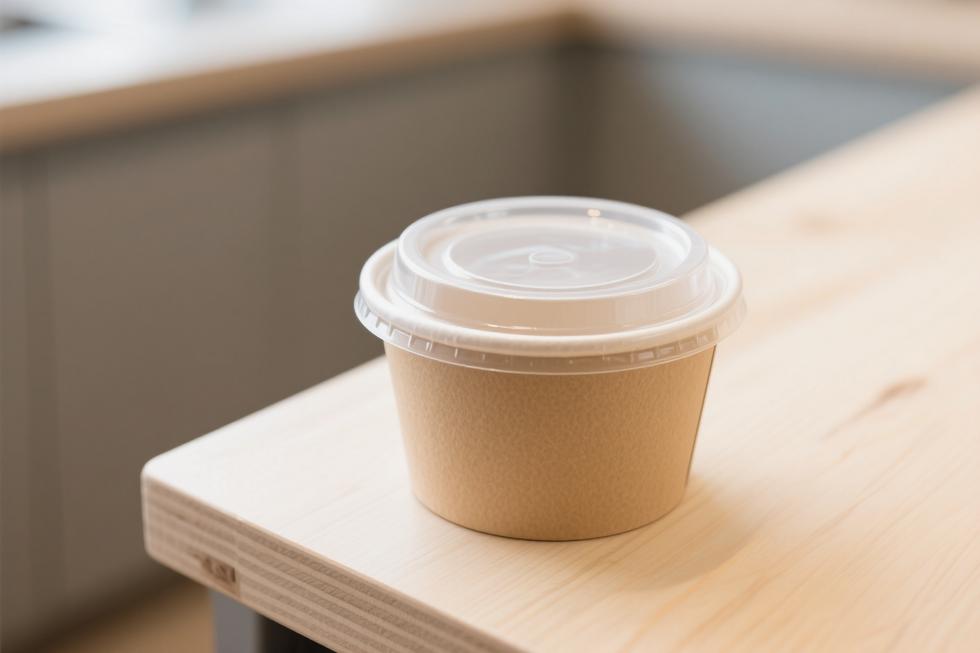
Across food service, the 360ml paper bowl has become a dependable workhorse. It balances carrying capacity, heat tolerance, and cost for caterers, quick-service restaurants, event organizers, and takeaway operations. The 360ml size, equivalent to 12oz, sits at the sweet spot for soups, salads, and smaller servings, enabling a compact footprint for packing and handling while delivering a comfortable mouthful for customers. The typical construction blends kraft-based papers (100–150 GSM) with a barrier layer to resist leakage and grease, while allowing end-of-life options like recycling or composting in some settings. Lids in PET, PS, or paper complement the bowl, expanding use cases from dine-in to delivery. Beyond the product itself, the 360ml bowl exists within an ecosystem: diverse suppliers across India, the UK, Indonesia, and China, a range of pack sizes (50–500 units), and price points that reflect volume discounts and regional cost structures. In an era of rising sustainability expectations, plant-based packaging claims, and shifting trade dynamics, business owners must evaluate not just the unit price but the total cost of ownership: suitability for hot or cold foods, compatibility with lids, supplier reliability, and end-of-life options. This holistic view is essential to leverage the 360ml bowl to its fullest. The three chapters that follow unpack this topic: Chapter 1 explores the technological design and material composition that drive leak-proof performance; Chapter 2 surveys the global supply landscape, pricing, and market segments to inform procurement strategy; Chapter 3 considers environmental, social, and geopolitical factors shaping production and use. Together, these threads reveal how a seemingly simple disposable bowl can influence operational efficiencies, customer experience, and sustainability goals.
Tables of Contents
Chapter 1: Chapter 1 — The 360ml Paper Bowl: Engineering the Interface Between Food, Handling, and Global Supply
- Innovations in Structural Design, Barrier Chemistry, and Seal Integrity for the 360ml Paper Bowl
- From Core Components to Global Currents: Economic, Geopolitical, and Social Impacts of the 360ml Paper Bowl
Chapter 1: Chapter 1 — The 360ml Paper Bowl: Engineering the Interface Between Food, Handling, and Global Supply
1. Innovations in Structural Design, Barrier Chemistry, and Seal Integrity for the 360ml Paper Bowl
The 360 ml paper bowl is more than a simple receptacle for soup, salad, or sauce; it is a compact test bed for how material science, geometry, and interface design converge to keep contents contained from kitchen to carriage. In this microcosm of packaging, leak-proof performance is not an afterthought but a core design criterion that governs customer satisfaction, operational efficiency, and even the economics of food service at scale. The bowl must resist buckling under load, maintain a stable stance on crowded trays, and withstand the sway and jostle of transport without letting liquid or grease breach its boundaries. Achieving this starts with precise yet practical choices in geometry and material composition. A bowl engineered for 360 ml typically embraces a top diameter around 10 cm with a height near 6.5 cm, a ratio that balances a generous cavity with a stable base and a lid that seats securely. These dimensions are not arbitrary; they reflect a deliberate compromise between capacity, stiffness, and fit with standard lids designed for roughly 115 mm interfaces. The geometry—slightly tapered walls, a rounded rim, and a well-proportioned base—minimizes edge deflection when loaded and reduces the risk of creases that can propagate leaks under vertical pressure or horizontal shaking. The structural role of the cup walls is further enhanced by the choice of material. Coated paperboard, often in the 100–150 GSM range for the sheet and 200–350 GSM for the finished wall, provides a sturdy yet lightweight skeleton. The coating strategy is where the performance envelope truly widens. An internal polyethylene (PE) extrusion forms a moisture and oil barrier that preserves rigidity when the contents are hot or oily, and a potential external layer adds a second line of defense against condensation and ambient moisture ingress. This dual-layer approach—internal coating to repel liquids from within and, in some designs, an optional external barrier—helps the bowl resist sogginess and delamination that would otherwise undermine its shape and seal. The result is a package that holds up to the demands of food service: hot soups, cold salads, and everything in between, from a quick take-away to a catered event. The barrier chemistry is the quiet workhorse of leak resilience. The primary mechanism is simple in concept but pivotal in practice: the PE coating acts as the dominant barrier, forming a nonporous interface that prevents water and oil from wicking into the board and softening the structure. In standard configurations, a single internal PE layer delivers reliable performance for many contents. When the content is particularly greasy or when transport conditions are more demanding, manufacturers may opt for a double-PE arrangement, adding an external layer to further reduce diffusion of lipids and moisture into the paper body. This arrangement reduces the chance of external moisture migration that could cause the exterior to feel tacky or weaken print adhesion, while also mitigating condensation on the interior that might compromise lid fit or seal integrity. Beyond PE, there is active exploration of alternatives aimed at sustainability without eroding protective performance. Water-based aqueous coatings and polylactic acid (PLA) coatings offer pathways to reduce or replace conventional plastics, but each comes with trade-offs. PLA can enhance compostability in contexts with suitable industrial facilities, yet its barrier performance under heat and long-duration storage may require design compensations, such as a thicker wall or a reinforced internal coat. Aqueous coatings can lower plastic content but must be carefully tuned to resist grease transfer and moisture migration, particularly for hot or oily foods. In practice, the chosen barrier system—single PE, double PE, or an alternative—must align with the target contents, expected temperatures, and end-of-life infrastructure. The seal integrity component is inseparable from both geometry and barrier chemistry. A leak-proof experience depends on the precise mating of bowl and lid and the maintenance of a tight interface through the life cycle of the product. The lid, whether PET, PS, or paper-based, is not merely a cover but a key element in the leak-prevention equation. It must align with the bowl’s geometry, sealing with a perimeter that resists lateral displacement while withstanding the stresses of stacking, metering, and transit. The interface tolerances—how tightly the lid sits, how evenly it seats around the rim, and how consistently the seal performs under slight misalignment—determine whether a spill occurs when a box is jostled or a tray is passed across a crowded table. Increasingly, inflight innovations in seal design emphasize wall rigidity as well as lid geometry. A thicker bowl wall—often in the 200–350 gsm range—can dramatically improve resistance to deformation under load, preserving the intended seal geometry even when the bowl is full or hot. Double-walled configurations add insulation, important for hot contents and for maintaining a comfortable touch temperature during handling. However, the drive toward sustainability pushes some manufacturers toward lighter walls and alternative materials, compelling engineers to re-balance stiffness, barrier performance, and cost. This is where eco-friendly upgrades—kraft paper constructs with compostable barriers or bagasse-based layers—enter the conversation. They promise lower environmental impact, improved end-of-life outcomes, and the potential for alignment with waste management systems that favor composting or recycling. Yet these options must still meet the practical timings of service and the conditions of transport: they must not buckle, they must not delaminate under heat, and they must preserve the integrity of the lid seal. The holistic design philosophy, therefore, refuses to treat barrier, geometry, and seal as independent culprits or saviors. They are interdependent levers. A barrier layer that is too thin or poorly bonded can fail at the interior interface, allowing moisture to creep into the substrate and soften the walls, which in turn compromises the fit of the lid and invites leaks during movement. Conversely, a robust lid seal is only as effective as the walls’ ability to maintain the geometry that supports it. If the walls buckle, pockets form along the rim that can defeat even a well-fitted lid. In practice, these relationships shape decisions in production lines, where tolerances must be controlled tightly and quality checks focus on lid fit, vertical load tests, and leak-proof performance under simulated transport conditions. Observations from industry practice underline a key truth: leak resistance is less about a single miracle material and more about the orchestration of barrier performance, structural rigidity, and seal interface. The chapters that explore this orchestration often stress how the choice between single and double PE coatings shifts the balance among rigidity, cost, and end-of-life considerations. When plastic content is reduced through alternative barriers, designers must compensate with geometry or wall thickness to avoid compromising performance. The practical implications for designers, researchers, and procurement teams thus revolve around optimizing trade-offs rather than chasing a universal best. For a given application—whether a hot noodle bowl, a creamy sauce, or a cold, oily salad—the optimal solution emerges from matching the barrier system to the content profile, the expected storage duration, and the transport context. A credible design will, for instance, pair a robust lid interface with a precise rim tolerance and a wall that sustains form under load, while selecting a barrier system appropriate to the product’s moisture and fat content and the local end-of-life ecosystem. The global context intensifies these considerations. The supply chain for 360 ml bowls often spans multiple regions, with producers sourcing coated paperboard, barrier coatings, and lid components from diverse suppliers. The economics of scale matter: small changes in coating type or ink-adhesion processes can influence yield, printability, and recycling compatibility, which in turn affect pricing, regional availability, and lead times. Geopolitical dynamics shape raw material access, regulatory constraints on recyclability or compostability, and the degrees of freedom that manufacturers have to innovate without triggering costly certifications or extended testing requirements. In regions where waste-management infrastructure favors recycling rather than composting, barrier designs that skew toward recyclable paperboard with minimal polymer layers may hold appeal. In jurisdictions pushing toward compostable packaging, the allure of PLA or bagasse-based barriers grows, albeit with the need to validate performance for hot and greasy foods and ensure compatibility with composting streams. Societal expectations also play a role. Consumers increasingly value packaging that minimizes waste and supports responsible end-of-life handling. They expect reliable performance during take-away and at social events, where leaks can sour the experience and erode trust in a brand. The subchapter thus threads together the micro-level engineering choices with macro-level implications: the materials science of barrier layers, the geometry that ensures stability, and the seal interfaces that deliver peace of mind during transport, all within the broader realities of economic constraints, regulatory environments, and societal demand for sustainability. For readers seeking a concrete illustration of these ideas in practice, a representative example of a closely related product category demonstrates how a 360 ml vessel can balance barrier performance with heat resistance and lid compatibility while maintaining a reasonable environmental footprint. This example highlights the potential of a generic, non-branded approach to design where the aim is to preserve integrity and user experience without overreliance on a single material technology. It is important to note that while the specific formulations and patent-level details are not disclosed here, the overarching principles—rigid yet lightweight geometry, strategic barrier layering, and a well-sealed interface—remain central to achieving consistent leak-proof performance across a spectrum of contents and use contexts. In closing, the 360 ml bowl embodies the practical synthesis of materials science, mechanical design, and process engineering. Its success hinges on a coherent system where each element supports the others: barriers that deter liquid ingress without compromising recyclability, walls that resist deformation while keeping production costs in check, and lids that lock the interface into a reliable seal. This integration is the quiet engine behind dependable take-away experiences, event-service reliability, and the steady evolution toward more sustainable packaging systems that still meet the uncompromising demands of leak-proof performance. As this narrative moves toward broader dimensions—economic, geopolitical, and societal—the subchapter anchors the reader in the tangible realities of design while pointing to the larger forces shaping packaging futures. For those curious to see how a real-world example translates these concepts into practice, one nearby, non-branded reference point offers a practical look at a close analogue: food-grade kraft-paper 12oz porridge bucket with lid. This anchor invites consideration of how a familiar size and form factor can be adapted across markets and content profiles, reinforcing the notion that the core principles of leak resistance remain constant even as materials and sustainability strategies evolve. The next chapter broadens the lens further, turning attention to the broader economic, geopolitical, and societal dimensions and implications of the 360 ml bowl’s design choices, while maintaining the thread of leak-proof performance as the unifying thread across scales and contexts.
2. From Core Components to Global Currents: Economic, Geopolitical, and Social Impacts of the 360ml Paper Bowl
The 360ml paper bowl sits at the intersection of material science, market demand, and public policy. It is a node in a global system that moves raw fibers, coatings, and heat resistance from forests to street vendors and event spaces. Design choices that ensure leak resistance and heat tolerance shape supply chains, policy responses, and consumer disposal practices. Economically, mass production lowers unit costs but price volatility in pulp, coatings, and energy can affect margins and procurement planning. Geopolitically, regional policies on forestry materials, tariffs, and compostable coatings influence lead times and pricing, encouraging supplier diversification and flexible formulations. Societally, the move toward compostable or biodegradable coatings aligns with sustainability expectations, but success depends on local waste streams and disposal behavior. From lifecycle to policy, the 360ml bowl demonstrates how a simple packaging item can become a lever for sustainability, economics, and governance in foodservice.
Final thoughts
The 360ml paper bowl is more than a disposable container; it is a focal point where design, procurement economics, and responsible use converge for modern food service. Its leak-proof performance rests on material choices and manufacturing methods that balance barrier functionality with environmental considerations. Globally, buyers weigh price, lead times, and customization options across regions, aiming to optimize cost of ownership without compromising experience. Finally, as regulatory expectations, recycling capabilities, and public sentiment evolve, the lifecycle of the 360ml bowl—from sourcing to end-of-life management—must align with a business’s sustainability and risk posture. For the savvy operator, the 360ml bowl is not just a purchase; it is a strategic lever to improve service quality, streamline operations, and advance responsible packaging.
Choose our reliable disposable tableware and packaging solutions for your business. We offer quality products that meet safety standards, with fast delivery and flexible options. Partner with us today to elevate your service – contact our team now for a tailored quote!
About us
We specialize in manufacturing and supplying disposable tableware, packaging paper, and boxes. With years of experience, we prioritize safety, durability, and eco-friendly practices. Our goal is to provide businesses with trusted, cost-effective solutions backed by responsive customer support.