
Introduction
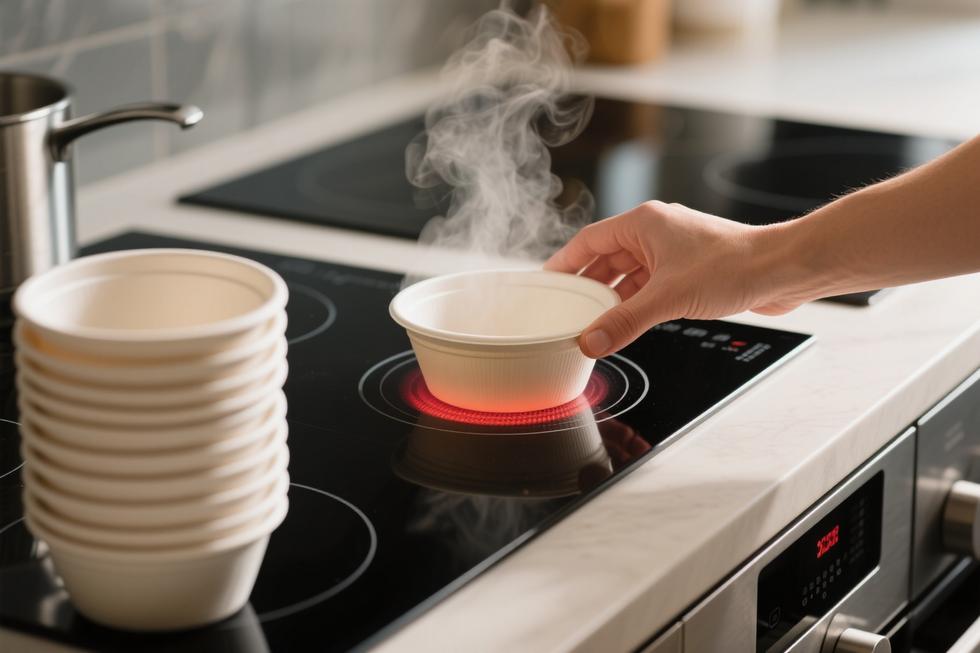
A growing segment of foodservice operations leverages induction-ready workflows to speed service, reduce handling, and standardize hot-food experiences. The disposable induction bowl sits at the heart of that shift, offering heat resistance and single-use convenience without compromising safety or quality. These bowls are typically built from durable kraft paper or compostable coatings that resist direct induction heating, enabling operators to heat soups, noodles, and finger foods directly on induction cooktops. For business owners, selecting the right induction-ready disposable bowl involves balancing design constraints, supplier capabilities, and lifecycle impacts against service goals and costs. This three-part exploration ties together practical design considerations, market dynamics, and sustainability implications to help you decide when and how to adopt these products in your operation. Chapter 1 examines material choices and construction methods that determine heat tolerance and handling. Chapter 2 investigates market dynamics, production capabilities, and the economics of scale. Chapter 3 evaluates safety, waste streams, and societal outcomes that influence long-term value for brands and customers.
Tables of Contents
Chapter 1: Chapter 1: Design and Material Considerations for the Disposable Induction Bowl
- Induction-Ready Essentials: Foundations, Material Choices, and Design Innovations for the Disposable Induction Bowl
- From Cost to Coatings: Economic Viability, Manufacturing Scalability, and Lifecycle Realities of the Disposable Induction Bowl
- Geopolitics, Regulation, and Environmental Stewardship in Induction-Ready Disposable Bowls
Chapter 1: Chapter 1: Design and Material Considerations for the Disposable Induction Bowl
1. Induction-Ready Essentials: Foundations, Material Choices, and Design Innovations for the Disposable Induction Bowl
Designing a disposable induction bowl requires balancing rapid, uniform heating with safe handling and end-of-life considerations. The core challenge is to ensure the bowl couples efficiently to an induction cooktop while remaining safe for food contact and economical enough for single-use applications. This subchapter outlines the essential physics, material strategies, and design features that enable a practical, scalable solution.
Induction heating relies on magnetic coupling between the cooktop coil and a ferromagnetic or conductive path in the bowl base. The base structure typically comprises a food-contact shell, a heat-transfer interface, and sometimes a magnetically active insert. The thickness, material properties, and geometry of these layers determine heating rate, temperature distribution, and user experience. Careful design helps avoid hotspots, scorching, or under-heating of thicker foods.
Material selection sits at the intersection of performance, safety, and end-of-life. Common thermoplastics offer moldability and cost benefits, but heat resistance and barrier performance must be sufficient for typical cooking scenarios. Biobased options (e.g., PLA, PHA) align with sustainability goals but may require protective laminates to withstand high temperatures. Multilayer constructions can boost heat transfer or barrier properties but complicate recycling. A mono-material approach improves recyclability, but may require trade-offs in heat performance. Any coating or laminate should resist migration, be food-safe, and maintain integrity through repeated heating cycles if the bowl is intended for multiple uses before disposal.
Design innovations translate material choices into geometries that optimize heating and handling. Features like a slightly contoured base improve contact area with the induction surface, while an underside ferromagnetic insert can enhance coupling in a disposable package. Ergonomy matters: cool rims, sturdy edges, and intuitive venting lids support user safety and convenience. Packaging density, nestability, and stacking tolerance influence transport efficiency and storage costs.
Manufacturability and lifecycle considerations drive the selection of fabrication methods and end-of-life pathways. Injection-molding remains the dominant process for thermoplastics, while laminations add function at a cost and recycling complexity. Emphasis on mono-material bases simplifies sorting at end of life, while clear labeling and standardized composting or recycling schemes improve circularity. Regulatory compliance for food-contact materials, migration limits, and safety testing remains non-negotiable.
In summary, a practical disposable induction bowl is not a single-material or single-feature solution. It is a carefully engineered stack of materials and geometries that delivers acceptable heating performance, safe handling, and a feasible end-of-life option. The most successful designs integrate induction physics with material science and user-centered ergonomics within a scalable manufacturing framework.
2. From Cost to Coatings: Economic Viability, Manufacturing Scalability, and Lifecycle Realities of the Disposable Induction Bowl
The subchapter examines how material choices translate into real-world outcomes. A disposable induction bowl must heat evenly, be producible at scale, and manage end-of-life implications. This section explores the trade-offs among materials, coatings, barrier layers, and assembly methods, emphasizing design for manufacturability, cost containment, and environmental performance from cradle to grave. The goal is a single-use package that performs reliably in kitchens while fitting into existing waste streams and recycling infrastructures.
3. Geopolitics, Regulation, and Environmental Stewardship in Induction-Ready Disposable Bowls
The disposable induction bowl embodies more than a clever kitchen accessory; it is a nexus where material science meets policy, markets, and the planet. Its heat-resistant performance on inductive surfaces depends on a careful balance of barriers and barriers—chemical, mechanical, and regulatory. Yet the same choices that enable reliable heating—thick coatings, resilient polymers, and smart laminates—also tilt the economics of production, shape where and how these bowls are manufactured, and determine what happens to them after use. Seen this way, geopolitics, regulation, societal needs, and environmental imperatives do not live in separate boxes. They co-create the life cycle of every bowl that moves from factory to table to waste stream.
Geopolitically, the raw materials and manufacturing capabilities for induction-ready disposables are concentrated in regions with established paper-pulp, plastics, and coatings industries, often in East Asia and other high-volume production hubs. The sourcing of kraft-based laminates, chemical coatings, and polymer films occurs against a backdrop of tariff regimes, trade negotiations, and logistics infrastructure that can shift with geopolitical tension. When shipments slow or costs rise, the risk is not merely a higher price tag; it is a tighter design window for new products, fewer customization options for restaurants, and longer lead times for restocking. This reality pushes manufacturers to consider regional diversification, dual-sourcing strategies for barrier coatings, and modular designs that can adapt to different material streams without sacrificing performance. The outcome is a more resilient supply chain, but one that is deeply connected to macroeconomic currents that can tighten or loosen the availability of heat-resistant, food-safe components.
Regulatory considerations anchor the design and marketability of induction bowls. Food contact safety remains non-negotiable, demanding certifications such as FDA or LFGB compliance, BPA-free status, and careful attention to migration of substances under magnetic induction heating. Induction-specific testing is essential to ensure that heating does not drive leaching or degrade coatings in ways that conventional microwave-safe disposables would not encounter. Regions pursuing aggressive waste-reduction directives push for compostable or rapidly recyclable solutions, often favoring PLA-coated paper or other bio-based composites over conventional plastics. In practice, this regulatory backdrop motivates a dual track: ensure broad food-safety acceptance while aligning with local or regional plastic bans and waste-management programs. The regulatory landscape, in turn, informs labeling, traceability, and even the design of tamper-evident lids and secure seals. These features matter not only for hygiene but for minimizing returns and waste, particularly in high-volume food-service settings where quick turnover and reliable transport are critical.
Societal implications center on hygiene, convenience, and equity in access to safe meals. Disposables that perform well on induction cookers reduce cleaning burdens in busy kitchens and at events, lowering cross-contamination risks and enabling rapid service. Yet consumers increasingly expect options that align with broader societal aims—reduced environmental harm, transparent material sourcing, and responsible end-of-life pathways. A growing segment of operators blends disposables for takeaway with reusables for dine-in experiences, signaling a hybrid future that balances convenience with sustainability. Even as the immediate utility of induction-ready bowls remains clear—fast service, stable heating, and compact storage—the social demand for responsible lifecycles pushes developers to optimize for recyclability or industrial compostability where feasible, while providing clear guidance on disposal.
Environmental implications weave through every design choice. The environmental burden of single-use bowls is not fixed; it shifts with material composition, end-of-life infrastructure, and consumer behavior. Compostable options, such as paper-based laminates with bio-based coatings, can dramatically reduce long-term persistence in landfills if industrial composting streams exist. Recyclability remains a challenge when multi-material laminates resist separation, and recycling rates for plastics in take-away packaging continue to lag behind desired targets. Life-cycle assessment highlights trade-offs: higher heat resistance and better barrier properties may demand fossil-based polymers or dense coatings, but when paired with responsible end-of-life management, their overall impact can be mitigated. Energy use in induction heating, heat distribution efficiency within the bowl, and the ability to deliver consistent temperature without scorching are all part of the environmental calculus. The aim is a design that minimizes waste through durable performance and maximizes end-of-life options through material choice and clear disposal guidance.
The economic viability and scalability of production sit at the heart of these considerations. Material choices must deliver consistent performance at scale, with tolerances that keep manufacturing costs predictable. The complexity of lids, seals, and stacking-friendly geometries can influence warehouse space, batch downtime, and labor costs. A mature market will favor formats that can be produced with high-speed processes while offering flexible customization for branding, portion sizes, and regional regulatory requirements. In this sense, the subchapter on sustainability becomes inseparable from the economics of volume, the geometry of the container, and the chemistry of coatings. The interdependencies among geopolitics, policy, society, and the environment demand a holistic approach to design—one that anticipates shifts in supply chains, embraces evolving safety standards, and pursues end-of-life invariants that reduce overall planetary impact.
For readers seeking a concrete reference to an eco-conscious option within this landscape, the design and material choices described here come alive in real-world examples that prioritize safety, heat resistance, and responsible disposal. See Senang05 disposable eco-friendly kraft paper take-away soup bowl with lid kraft paper for a practical illustration of how a single product page can embody both functional performance and environmental consideration. senang05-disposable-eco-friendly-kraft-paper-takeaway-soup-bowl-with-lid-kraft-paper Integration of such options into menus, packaging strategies, and waste streams represents a tangible step toward harmonizing design ambitions with the broader goals of sustainable, resilient food service in a global economy.
Final thoughts
The disposable induction bowl sits at a practical crossroads for modern foodservice. Its value hinges on material resilience, reliable manufacturing, and a lifecycle that aligns with a brand’s safety standards and environmental commitments. By assessing design choices that resist heat and leakage, evaluating scalable production and supplier capabilities, and weighing safety and sustainability outcomes, business owners can optimize service speed, cost structure, and customer trust. When used strategically, induction-ready disposables can enhance a menu’s appeal, shorten service times, and reinforce a forward-looking brand narrative.
Choose our reliable disposable tableware and packaging solutions for your business. We offer quality products that meet safety standards, with fast delivery and flexible options. Partner with us today to elevate your service – contact our team now for a tailored quote!
About us
We specialize in manufacturing and supplying disposable tableware, packaging paper, and boxes. With years of experience, we prioritize safety, durability, and eco-friendly practices. Our goal is to provide businesses with trusted, cost-effective solutions backed by responsive customer support.