
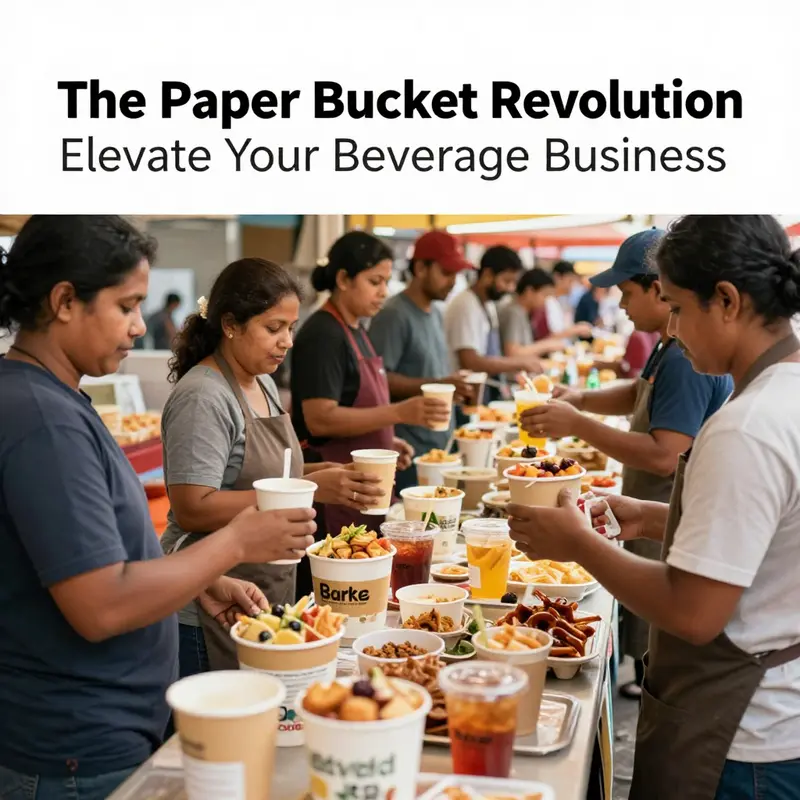
As the food and beverage landscape continues to evolve, businesses are increasingly seeking packaging solutions that align with their operational needs and environmental commitments. One such innovative option is the paper bucket, an eco-friendly alternative to traditional plastic containers. This article delves into the myriad ways paper buckets can benefit bubble tea shops, restaurants, food trucks, catering services, and corporate procurement teams. Each chapter will explore critical facets such as the environmental impact of using paper buckets, their various applications across industries, economic advantages over plastic containers, recent design innovations enhancing durability, and the market trends shaping their production. By understanding the full potential of paper buckets, you can make informed choices that support sustainability while meeting your business objectives.
From Pulp to Purpose: Unpacking the Environmental Footprint of Paper Buckets
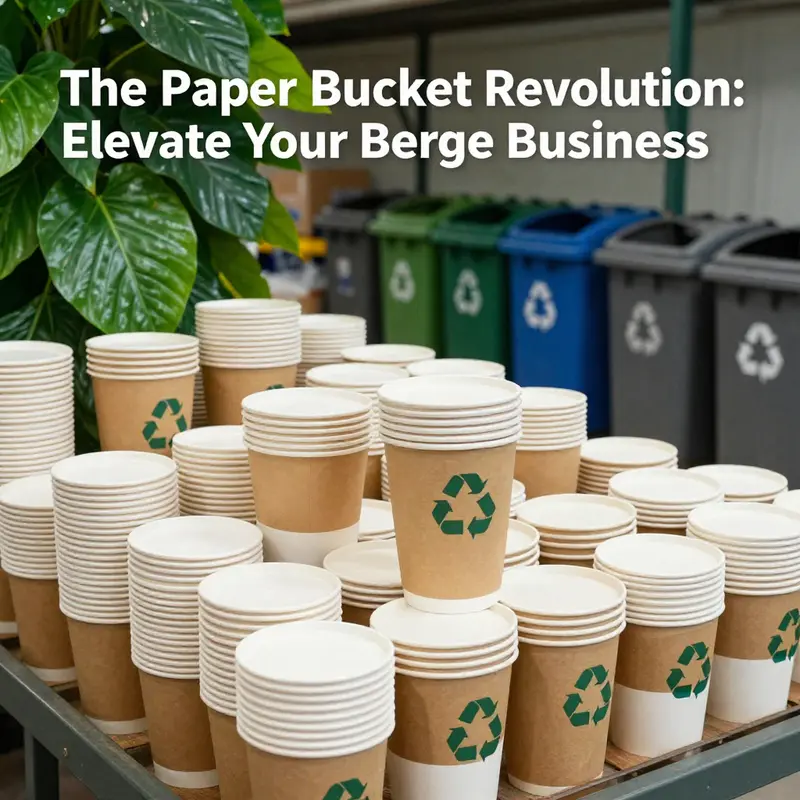
In a world where turbidity must be kept to a minimum and project timelines are tight, the paper bucket often serves as a lightweight, cost conscious option. Yet the environmental arithmetic behind that convenience is not simple. A lifecycle view reveals a balance between potential benefits and hidden costs embedded in supply chains, production facilities, and end of life management. This chapter follows the journey of a paper bucket from raw fibre to end of life, highlighting how systemic decisions shape overall impact rather than any single moment of use.\n\nMaterial sourcing sits at the cradle of environmental assessment. Paper buckets that contain recycled content can reduce pressure on forests and lower the demand for virgin pulp. Upstream benefits hinge on the availability of post consumer streams, the efficiency of sorting and reprocessing, and the degree to which recycled fibres retain sufficient strength for the intended use. Recycled content must be processed in facilities that are energy and water efficient and that return material to a usable state rather than creating more waste. In the grand scheme, material sourcing is a foundational dial on which the rest of the environmental performance turns. A careful, material conscious design can tilt the lifecycle toward a more favorable outcome, especially when paired with efficient production practices and responsible end of life management.\n\nBeyond sourcing, energy and resource use during manufacturing remain a core piece of the environmental footprint. Producing paper buckets, even with recycled fibre, consumes significant energy and water. Pulping, forming, drying, and finishing require process energy, while water is used across stages from cleaning to conditioning the fibres. The degree to which a facility recycles process streams, recovers heat, and treats water can swing the overall impact. Suppliers vary in their efficiency strategies, but the overarching goal is clear: push the envelope on energy and water use without compromising product performance and strength.\n\nEnd of life is a decisive phase in the story. Paper buckets are designed to be recyclable in many systems, but their fate depends on discard practices and whether the recycling stream can accept them with other materials. When well integrated with recycling programs, a used bucket can re-enter the paper stream and help produce new fibre products, avoiding landfill and reducing virgin pulp demand. If end of life management is weak or misaligned, contamination or lack of infrastructure can undermine these benefits and contribute to waste and emissions. The lifecycle then becomes a negotiation: the benefit of recycled content relies on robust disposal pathways and consumer participation.\n\nA practical lens helps guide improvement. First, strengthen material choices by prioritizing recycled content where feasible and ensuring compatibility with existing recycling streams. Second, pursue energy and water efficiency in production, including heat recovery, water reuse, and lower chemical loads in pulping and finishing. Third, boost end of life through clear labeling, consumer education, and accessible recycling infrastructure. Fourth, design for recyclability by avoiding non paper laminates or coatings that hinder recycling while maintaining necessary performance. Finally, support broader stewardship through policy incentives and transparent reporting to align environmental outcomes with economic realities.\n\nTo connect theory to practice, imagine a paper bucket traveling from purchase to use to disposal. It is chosen for its lightness and functional fit, used to contain material in a project, and finally disposed in a way that determines whether fibres return to the economy or are routed to landfill. The overall impact rests not in a single choice but in the reliability of the system that supports recycling, reuse, and responsible disposal. Readers may wish to explore dedicated literature on packaging lifecycles to see how design decisions, production practices, and consumer behaviours converge to shape outcomes. The environmental narrative of paper buckets thus sits within a broader context of packaging, waste management, and the move toward a more circular economy.
Paper Buckets in Action: How Lightweight Cardboard Carriers Power Food Service, Entertainment, and Industry
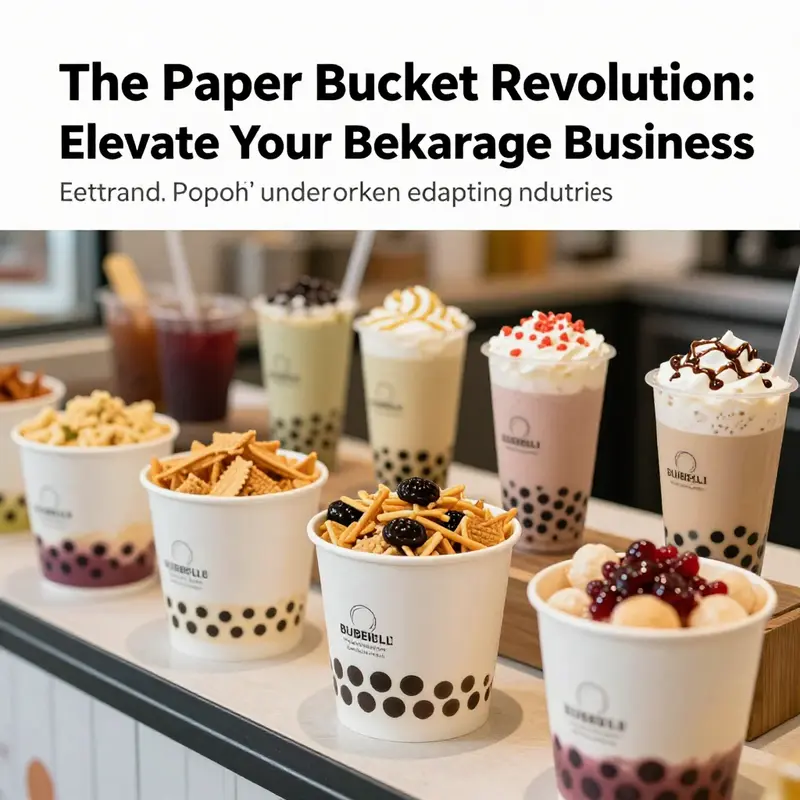
The term paper bucket evokes a simple image: a round, cylindrical container crafted from paper or cardboard, designed to hold food, snacks, or small components with a balance of lightness and strength. Yet the practical impact of these containers extends far beyond their modest appearance. In today’s packaging landscape, paper buckets function as a bridge between performance and sustainability. They are engineered to resist grease, to travel without spilling, and to fit into busy workflows where efficiency matters as much as price. Their design embodies a pragmatic response to the demands of modern commerce, where products must arrive at the consumer fresh, appetizing, and in a form that supports fast service, responsible disposal, and straightforward recycling. When we look closely at how these seemingly ordinary buckets are used, a coherent pattern emerges—one that reveals their value across multiple sectors and scales, from a bustling takeout window to a crowded stadium concession line and onward to the backrooms of manufacturing plants that need to move small parts with minimal waste and maximum protection.
In the realm of food service, the takeout and delivery model has made paper buckets a staple for fried items, popcorn, and other grab-and-go offerings. The core challenge here is twofold: keep food appealing and intact during transit, while preventing the container from soaking through or leaking. This has driven the adoption of high-quality, grease-resistant paperboard, often paired with interior barrier coatings or liners that separate moisture and oil from the carton walls. The result is a vessel that can cradle hot or warm portions, retain a presentable appearance, and withstand the handling of drivers, riders, and customers without losing shape or insulation. The visual and tactile cues matter as well. A well-turned paper bucket communicates that the contents are cared for, that the presentation aligns with brand standards, and that the consumer experience remains consistent from kitchen to doorstep. While many chains champion their own packaging innovations, the underlying philosophy remains the same: a lightweight, economical, and hygienic carrier that contributes to faster service and cleaner operations in the kitchen and in transit.
Beyond the kitchen, paper buckets find a natural home in entertainment and event settings. Where large crowds converge, there is a premium on single-use convenience, cleanliness, and speed. Paper buckets serve as snack containers for popcorn, pretzels, and candy, delivering a compact, disposable solution that minimizes the risk of cross-contamination and simplifies post-event cleanup. The design discipline here emphasizes not only barrier properties but also ergonomic factors—easy gripping, stable stacking, and secure lid compatibility for occasional hands-free use. Even in environments that emphasize reusability, such as themed installations or temporary displays, paper buckets can be elevated with decorative finishes and sturdy rims that withstand repeated handling. In such contexts, the bucket performs as both functional packaging and a subtle aesthetic element, contributing to the overall experience rather than merely serving as a throwaway vessel. This versatility underscores a broader point: paper buckets are not simply containers; they are adaptable carriers that respond to the rhythms of consumption, whether in a fast-paced food line or a weekend festival.
Industrial applications extend the concept of a paper bucket beyond food. In manufacturing and logistics settings, these containers provide a practical solution for transporting small parts, tools, and components. Their relatively rigid walls, when paired with a robust base and secure resealability, offer protection against dust and minor impacts during storage and shipment. The lightweight nature of paper buckets also translates into tangible efficiency gains in warehousing and freight. Fewer weight equivalents mean more cost-effective shipping and easier handling by workers who must move dozens or hundreds of containers through a product line or distribution channel. In environments governed by strict performance standards—where food-grade materials must meet health and safety regulations, or where contamination must be avoided in sensitive manufacturing processes—the design choices surrounding material composition, coatings, and closure methods are critical. The result is a packaging solution that aligns with sustainability goals while maintaining the reliability needed for industrial workflows.
To understand why these buckets resonate so strongly across industries, it helps to consider the material and design decisions that underpin their performance. Paper buckets are typically built from recycled fibers or virgin paperboard that can be formed into cylindrical or partially rigid shapes. This geometry supports stable stacking and compact storage, two properties that reduce space requirements in warehouses and on catering carts. Coatings play a decisive role in extending use beyond dry products. Grease resistance, moisture barriers, and temperature management are achieved through barrier treatments that do not obscure the recyclability of the core materials. The preference for paper-based solutions also reflects a growing emphasis on end-of-life outcomes. Many stakeholders in food, events, and logistics industries are incentivized to minimize the burden on waste streams by choosing containers that can be easily disposed of or recycled with minimal complexity. In practice, this means coordinating with local recycling capabilities and designing buckets that avoid coatings or additives that complicate processing. The conversation surrounding paper buckets therefore weaves together performance, safety, and sustainability into a single, coherent decision framework.
The design ethos of paper buckets also emphasizes modularity and adaptability. Depending on the application, a bucket may be paired with different lids, liners, or inner barriers to tailor its function for a given product category. In food contexts, the emphasis is on maintaining contents at an appealing temperature and preventing grease-front leakage. In industrial contexts, emphasis shifts toward protection from dust, minor impact, and ease of stacking in logistics racks. The objective remains consistent: to deliver a trustworthy user experience while optimizing resource use. Even the way these buckets are manufactured reflects a balance between economies of scale and customization. Mass production yields consistency and cost efficiency, while the option to customize surface finishes, thicknesses, or internal coatings provides a route to meet specific brand or regulatory requirements. The result is a family of containers that can scale from small, high-volume runs to specialized, low-volume orders without abandoning the core advantages of paper-based construction.
From an environmental perspective, the appeal of paper buckets is not simply in their biodegradability but in the overall life cycle they enable. In many cases, the containers can be produced with high recyclability, and their use often replaces more resource-intensive alternatives such as plastic buckets or metal cans for similar functions. Contamination remains a critical factor, however. In food applications, leftovers, oils, and sauces can complicate recycling if the bucket is not emptied and cleaned before disposal. This reality has spurred packaging developers to pursue coatings and barrier systems that preserve performance while enabling straightforward post-use processing. The broader effect is a packaging ecosystem that incentivizes responsible disposal, supports local recycling infrastructure, and encourages designers to think beyond the moment of filling to the journey of the container after its service life ends.
The interconnectedness of these factors becomes clearer when we place paper buckets within the larger universe of paper-based packaging. They are part of a continuum that includes packaging films, plates, bowls, and boxes—each playing a role in how businesses present products, manage costs, and meet environmental expectations. In this broader context, the bucket stands out as a practical exemplar of how form, function, and sustainability can align. For readers curious about this wider landscape, the paper packaging category offers a window into the types of materials, coatings, and construction methods that shape packaging choices across sectors. The category serves as a navigational map for designers and buyers seeking to balance performance with responsibility. paper packaging category provides a curated view of these options and their applications, illustrating how a single family of solutions can adapt to diverse contexts without sacrificing core advantages.
As the discussion moves toward a holistic understanding of paper buckets, it becomes clear that their value arises from how they address real-world constraints. They must withstand grease and moisture for food service, resist tearing under the strain of transport, and align with recycling streams without becoming a burden to processing facilities. They must also satisfy the practicalities of everyday use: easy to grip, simple to stack, quick to fill, and efficient to dispose of. The continuous evolution of coatings, materials, and manufacturing processes promises incremental improvements in durability, barrier performance, and end-of-life outcomes. Yet the essence remains timeless: lightweight, economical, and adaptable containers that help businesses move products efficiently while reducing environmental impact. In a world that increasingly prizes responsible packaging, paper buckets offer a tangible example of how a humble container can perform across multiple domains without compromising safety or quality.
For readers seeking deeper technical detail on the specifications and performance characteristics of craft paper buckets in industrial contexts, a comprehensive resource is available. It outlines the materials, coatings, tolerances, and testing standards that govern use in food-grade and other regulated applications, providing a precise, practical guide for designers and procurement teams. This external resource complements the narrative here by grounding the discussion in measurable standards and real-world validation, reinforcing how paper buckets function as reliable, scalable packaging workhorses across sectors. https://www.benjaminross.com/blog/all-about-craft-paper-bucket-specifications-performance-and-common-industrial-applications
From Thin Paper to Long-Term Value: The Economic Case for Paper Buckets over Plastic Containers
Packaging decisions are rarely driven by a single factor. Price, performance, and image all press on the decision at once. Yet when the goal is to move from plastic containers to paper buckets, organizations often discover that the most compelling justification is economic, and not merely environmental. The shift hinges on a blend of cost efficiency, price stability, and the way packaging choices shape long-term planning. In economic terms, paper buckets can transform an ordinary procurement decision into a strategic move that reduces waste, stabilizes costs, and quietly strengthens a company’s value proposition. The analysis that follows treats paper buckets not as a fragile, one-off substitute, but as a financial instrument within a broader system of procurement, waste management, and policy incentives. It is within this system that the real advantages emerge, often outweighing any modest premium paid upfront for the container itself.
One of the clearest pathways to economic benefit lies in cost efficiency over the lifecycle of a packaging solution. On a first glance, the initial purchase price of a paper bucket may be similar to or slightly higher than that of a plastic alternative. But the comparison quickly shifts when we account for downstream effects. Paper buckets are lightweight, recyclable, and compatible with processes designed to minimize waste. When a company adopts a policy of purchasing only what is needed—often labeled a paper-light or similar approach—overall procurement costs can fall sharply. A compelling case comes from a real-world initiative in a major city’s administration, where a move toward reduced paper consumption led to substantial savings across departments within six months. The logic is simple: by curbing unnecessary purchases and diminishing waste, the organization reduces both direct material costs and the hidden costs associated with excess stock, storage, and disposal. In practice, the cost curve of paper buckets bends in favor of those who design their operations around lean, waste-conscious procurement. The same logic extends to the broader supply chain, where lighter, easier-to-handle packaging can cut labor costs at packing lines, in warehousing, and during distribution. The cumulative effect is a tightening of the total cost of ownership that often surpasses any small advantage of lower upfront price.
A second economic pillar is pricing stability and supply chain reliability. Plastic containers, which depend heavily on petroleum-based inputs, are subject to volatile commodity markets. Fluctuations in oil, resin feedstocks, and shipping can translate into unpredictable pricing for end users. Paper buckets are anchored in renewable resources and mature recycling streams, which tend to offer more predictable cost trajectories. When a company engages with paper-based packaging suppliers who emphasize stable production capacity and thoughtful design, procurement planning becomes more reliable. Long-term contracts can be structured around anticipated demand, with cost projections that reflect steady input costs rather than sudden spikes. This predictability is not merely a budgeting convenience; it reduces financial risk and makes capital planning easier. In industries facing tight deadline windows and high throughput, the ability to forecast expenses accurately across multiple periods is a genuine competitive edge.
Policy and institutional incentives also shape the economic calculus. Governments and international organizations increasingly reward reduced waste, recycled content, and sustainable procurement practices. In the broader context of green office management and circular economy objectives, these incentives can translate into tangible financial benefits. A well-documented example is a global institution that shifted away from certain disposable hand towels in its facilities, citing substantial annual savings tied to waste reduction and sustainable procurement. While the specifics vary by jurisdiction and policy design, the underlying principle is clear: when public and institutional buyers adopt paper-based solutions, they create demand signals that support more efficient production and distribution. These signals, in turn, help stabilize prices and supplier capacity, contributing to a more resilient supply chain for paper buckets.
The economic advantages extend into the long term, where environmental considerations reinforce financial performance. A circular economy mindset—building durable, recyclable packaging around a closed-loop system—can yield sustained savings by reducing raw material needs, extending product life cycles, and enabling higher recycling rates. Paper buckets, when produced from recycled fibers or sustainably managed sources, can participate in this loop in ways that plastic cannot always match. The environmental gains reinforce financial outcomes by lowering disposal costs, reducing energy use in manufacturing and end-of-life processing, and creating more favorable reputational dynamics with customers and business partners who value responsible stewardship. In this way, the ecological and economic narratives reinforce each other. Investing in recyclable packaging and designing for end-of-life recovery is not merely compliance or image-building; it is a deliberate strategy to bend the cost curve over time and align with stakeholders who prize predictable, responsible budgeting.
Yet translating these advantages from a conceptual frame into day-to-day decision-making requires a careful look at the other side of the ledger. The work involved in switching to paper buckets is not cost-free. There are transition costs—supplier onboarding, potential changes to filling lines, and adjustments in storage and handling. However, these one-time or short-term costs are typically outweighed by long-term savings when viewed through a lifecycle lens. The emphasis should be on a disciplined approach to supplier collaboration, process adaptation, and waste reduction targets. When organizations standardize on paper-based packaging for a broad range of uses, they can negotiate better unit costs, streamline ordering channels, and reduce the complexity of supplier catalogs. In this sense, the economic message is not simply about a cheaper bag or drum; it is about building a coherent procurement ecosystem where paper packaging becomes the default choice and plastic is relegated to niche roles where it truly excels.
For teams exploring options, the practical pathway often begins with linking packaging decisions to broader procurement and sustainability goals. The available options in the paper packaging category illustrate a spectrum of choices designed to maximize compatibility with existing operations while minimizing waste and cost. A quick way to frame these choices is to view paper buckets as part of a larger packaging family that includes cardboard drums, fibre drums, and related cylindrical containers. Each form factor offers distinct advantages for different contents, fill volumes, and handling requirements. The guiding principle is to align the container’s design with the entire value chain—from material sourcing and production to storage, transport, and end-of-life recovery. When decisions are made with this holistic view, the economic benefits become more visible and more durable. For teams seeking concrete inspiration on how to integrate paper packaging into their workflows, a look at the broader packaging ecosystem can be illuminating. The paper packaging category provides a range of options and ideas that can be tailored to specific applications, from bulk storage to consumer-facing packaging. See the paper packaging category for a concise view of the available formats and materials, and consider how each option might intersect with your procurement and sustainability targets.
In this light, the decision to adopt paper buckets over plastic containers signals more than a materials change. It represents a shift in how a business thinks about cost, risk, and value over time. The most compelling economic argument centers on the union of cost efficiency and stability with strategic policy alignment and circular economy benefits. The upfront price may be comparable, but the total cost of ownership trends downward as waste is reduced, procurement is simplified, and supply chains gain resilience. Firms that pursue this path can also enhance their brand reputation, a factor that translates into customer loyalty, supplier collaboration, and access to favorable terms in the future. The narrative is not that paper buckets are always cheaper out of the gate; rather, it is that they offer a path to lower total expenditures, more predictable pricing, and stronger alignment with a future oriented, resource-conscious economy.
External factors reinforce the practical sense of this shift. In regions where governments or global organizations push for reduced waste and sustainable procurement, the business case for paper packaging strengthens further. These policy currents can help stabilize demand and provide a framework for funding or tax incentives that offset transition costs. They also create a shared language for reporting and benchmarking, making it easier for organizations to track progress against waste reduction goals, recycling rates, and lifecycle cost targets. When a company can demonstrate that its packaging decisions contribute to explicit fiscal savings and environmental outcomes, the case for scaling paper packaging across product lines becomes more compelling. This is especially true for operations seeking to harmonize packaging across multiple facilities, channels, and markets, where standardized paper-based solutions simplify training, auditing, and compliance.
To tie these threads back to everyday practice, consider the operational logic of choosing paper buckets as part of a broader, integrated approach to packaging. The research landscape suggests that paper-based options can deliver cost discipline, supply chain predictability, and measurable environmental and reputational gains. The exact balance of savings will depend on local material costs, waste handling policies, and the breadth of paper packaging implementation, but the underlying principle remains consistent: alignment between material choice, procurement strategy, and sustainability objectives yields superior financial outcomes over the long run. When teams communicate these expectations clearly to suppliers and internal stakeholders, the transition becomes more predictable, and the economic dividends become clearer and more durable. For those seeking a deeper exploration of source materials and supplier ecosystems, a practical entry point is the paper packaging category itself, which compiles various formats and designs that support cost-conscious, sustainability-driven decisions. See the paper packaging category for more details and options.
External reference for policy context and broader implications: https://www.sz.gov.cn/zhengce/2026/01/21/12345.html
Durable by Design: Engineering Paper Buckets for Strength, Safety, and Sustainable Packaging
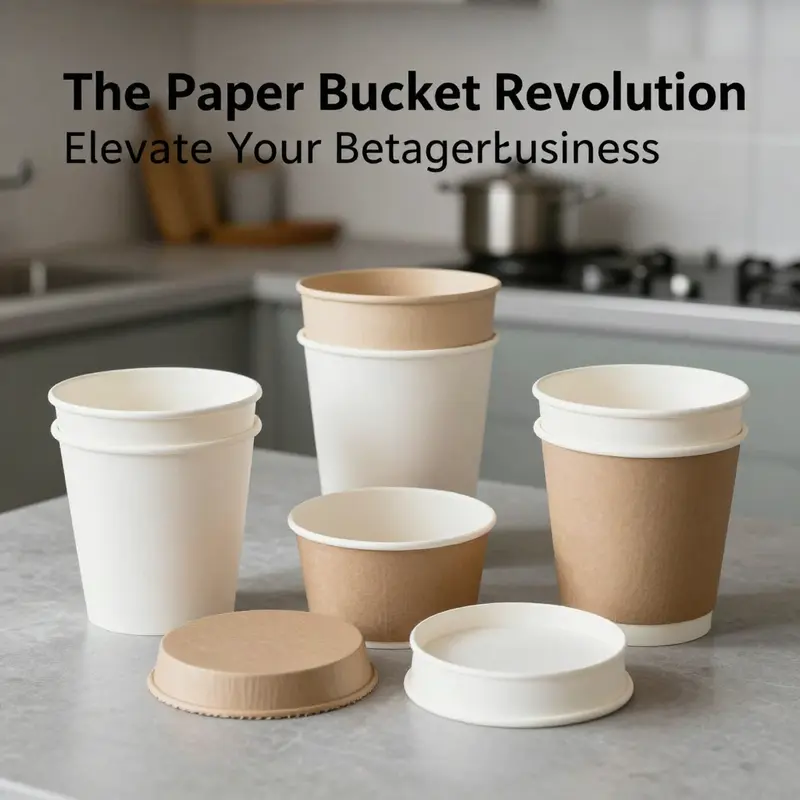
Paper buckets have evolved from simple, single-use vessels into sophisticated packaging systems that balance performance with responsibility. In conversations about disposable containers, the emphasis often lands on convenience and cost, yet a quieter revolution is unfolding in how these buckets are designed, manufactured, and end-managed. The chapter that follows traces a cohesive arc from the core idea of structural integrity to the nuanced realities of coatings, materials, and forms, demonstrating how durability does not equate to wastefulness but to smarter life cycles. As the broader packaging ecosystem grows more aggressive about sustainability, the engineering choices behind paper buckets reveal a future where strength and stewardship travel together rather than in opposition. This is not merely about keeping contents safe; it is about preserving value across uses, maintaining temperature and containment, and signaling a commitment to responsible packaging that can be recycled, repurposed, or returned to the supply chain with minimal environmental impact. In this sense, durability becomes a design philosophy as much as a mechanical attribute, guiding every turn of the sheet, every fold, and every seal that keeps a bucket functional from the moment it leaves the line until its final disposition.
One of the clearest markers of progress lies in structural integrity. Modern paper buckets are engineered with a clear awareness of how they will be handled, transported, and consumed. The geometry of the body, the thickness of the walls, and the distribution of material all work in concert to resist deformation when the bucket is full of liquid or semi-solid contents, and to resist collapse during stacking or rough handling. Rather than relying on a single material layer, manufacturers increasingly employ multi-layered paperboard that combines a base fiber with reinforcing plies. Higher grammage sheets contribute to a stiffer profile, while carefully chosen laminations help the bucket recover its shape after impact. The result is a container that maintains its form even when subjected to uneven loads on a delivery truck or the jostle of a crowded kitchen line. In practical terms, this translates into fewer leaks, less spillage, and reduced customer complaints—an outcome that strengthens brand trust without resorting to heavier alternatives that defeat the eco-friendly impulse that coexists with durability.
Coating technologies add another vital dimension. The advent of food-grade water-resistant and oil-repellent coatings marks a meaningful step in enabling paper buckets to hold hotter or greasier contents without sacrificing permeability or recyclability in the long run. The coatings act as a barrier between the fiber and the contents, curbing seepage and restricting the migration of oils into the paper structure. Importantly, these coatings are designed to be compatible with standard recycling streams when the bucket reaches end of life, preserving the fiber’s value rather than introducing persistent contaminants. The engineering challenge is subtle: coatings must endure the heat and friction of real-world use, yet not hinder the bucket’s eventual processing in recycling facilities. The dialogue around coatings is an ongoing conversation about safety, performance, and environmental responsibility, reminding us that every layer is a decision with downstream consequences.
Another cornerstone of modern durability is the use of multi-layered paperboard. By layering paper with adhesives and protective plies, manufacturers can raise the grammage without making the bucket excessively heavy. This approach couples strength with practicality. Thicker sidewalls distribute stress more evenly and reduce the tendency for tearing when handles are hoisted or when the bucket is placed on uneven surfaces. Reinforced bases are increasingly common, providing a stable contact point that prevents tipping and helps preserve the integrity of the lid or closure in transit. The interplay between layers is not accidental; it is the result of careful testing and simulation that map how loads propagate through the container. The aim is to ensure that an otherwise ordinary storage or transport task does not become a catalyst for leaks or deformation.
Engineered designs also contribute to durability in ways that might not be immediately visible to the consumer. Folding patterns, for example, are optimized to distribute stress across the circumference rather than concentrating it along a single seam. Thickened sidewalls, gussets, and precision-cut joints work together to absorb shocks and maintain rigidity during handling. The result is a bucket that behaves like a small shell, resisting flex and buckling under pressure. In some cases, designers experiment with alternative seams and joint configurations that can be formed in-line during production, reducing waste and improving uniformity. Such innovations reveal a broader truth: durability in paper packaging emerges not from brute force alone but from a sophisticated choreography of materials and geometry.
In concrete terms, an emerging class of high-temperature resistant paper buckets demonstrates what is possible when industry demands meet material science. These buckets are purpose-built for contexts that involve heat or oil-rich contents, where traditional paper containers might falter. The claim—no deformation, no odor, no leaks—speaks to a holistic approach that combines barrier coatings, high-grammage boards, and reinforced architecture. The practical implications are significant: food service operations can switch to disposable containers that retain form and function even under hot, fatty conditions; retailers can embrace lighter, more energy-efficient packaging without surrendering performance; and manufacturers can pursue sustainability goals with a credible, end-user experience. The underlying logic is straightforward: if a container can resist the rigors of use and transport, it can be trusted to complete its life cycle with minimal waste and maximum recoverability.
The consumer’s expectations in this space are moving in parallel with technical innovations. Today’s shoppers often connect packaging choices to broader values, including environmental stewardship, supply chain transparency, and the desire for safer, cleaner products. The durability of a paper bucket becomes a signal of these values, showing that convenience and responsibility can coexist. Yet durability also carries responsibilities of its own; it invites manufacturers to think about the entire lifecycle. A highly durable bucket that cannot be recycled is a paradox. Therefore, the most compelling designs are those that harmonize resilience with recyclability, enabling the fiber to be reclaimed and reprocessed with minimal loss of quality. The life-cycle conversation is not merely about end-of-life; it involves upstream decisions about raw materials, sourcing, and the energy profile of production. Companies that optimize these elements often report improvements in total cost of ownership, not solely in per-unit price, as durability reduces the frequency of replacements and returns.
The way forward for durable paper buckets hinges on a synthesis of materials science, manufacturing precision, and thoughtful product design. Coatings must be formulated to resist heat and oil while staying compatible with recycling streams. Multi-layer boards must balance stiffness with lightness, enabling easier handling and lower transport emissions. Folding patterns and joint designs must be engineered to spread stress and extend service life without introducing unnecessary complexity in production. Each improvement, while incremental on its own, compounds into a more robust and sustainable packaging option. In this sense, a high-performance paper bucket is less about being an exception to the rule and more about redefining the rule itself: that a container made from fiber can stand up to modern demands, protect its contents, and ultimately contribute to a circular economy that values both function and afterlife.
Within the broader ecosystem of packaging materials, these innovations feed into a larger conversation about what constitutes responsible design. The category of paper-based packaging has matured from a niche scatter of disposable items to a strategic asset in supply chains that aim to reduce plastic usage, lower carbon footprints, and streamline end-of-life processing. The structural cues—thicker walls, reinforced bases, and smart folds—are complemented by barrier technologies and smarter adhesives so that the bucket serves as a reliable, sanitary, and recyclable vessel. For designers and ecosystem builders, the challenge is to maintain performance while navigating regulatory, technical, and consumer expectations. The payoff, however, is clear: durable paper buckets that are trusted to perform in real-world conditions, respected for their environmental credentials, and capable of supporting efficient waste recovery processes.
To connect these threads back to practical choices, consider the broader gateway into paper packaging as a platform for value. Organizations exploring this space can explore the wider product family through the packaging ecosystem, recognizing how paper-based solutions interact with boards, coatings, and closure methods to form coherent packaging systems. For instance, in the broader landscape of paper packaging, see the paper packaging category. This reference highlights how durable paper components integrate with other packaging modalities to deliver cohesive, recyclable, and cost-effective solutions across multiple applications. Beyond the technicalities of material science, the real story is about a shift in mindset: durability is a means to extend utility and reduce waste, rather than an excuse to over-engineer or over-package. When teams embrace this mindset, they begin to design not only for today’s needs but for tomorrow’s logistics, recycling infrastructure, and consumer expectations.
In sum, durability in paper buckets emerges from a deliberate blend of material choice, geometric thinking, and surface engineering. It is a holistic approach that respects the realities of handling and distribution while honoring the environmental imperatives that shape modern packaging. The innovations discussed here are not isolated experiments; they are pieces of a larger transition toward packaging that wears its strength lightly, delivers dependable performance, and participates gracefully in a circular economy. For readers who want a tangible example of the direction this field is moving, external references provide concrete illustrations of how high-temperature resistance, odor control, and leak prevention can be achieved in fiber-based containers. External resource: https://www.alibaba.com/product-detail/High-Temperature-Resistant-Paper-Bucket-Fried-Chicken_1600542839779.html
From Cardboard Drum to Everyday Packaging: The Sustainable Trajectory of Paper Buckets
The paper bucket is not merely a convenience; it is a lens through which we observe how packaging is evolving in a world that demands performance, value, and responsibility. Made from paper or cardboard, these containers have quietly moved from niche uses to the mainstream in food service, retail, and even industrial applications where texture and protection matter. They combine light weight with functional strength, and their life story—from pulp to product to recycling stream—has become a useful case study in how modern packaging can align with sustainability goals without sacrificing usability.
Market demand for eco-friendly packaging has become a powerful lever. Consumers increasingly expect products and services to offer end-to-end environmental responsibility. Regulators push for recyclability and compostability, and brands that communicate credible environmental stewardship can secure competitive advantage. Paper buckets fit squarely into this dynamic because they are designed to be recyclable, often made from recycled fibers, and engineered to detach cleanly from waste streams when properly processed. In practical terms, this translates into lower environmental impact in disposal and the potential to close the loop in recycling facilities that already handle paper waste.
On the production side, the story is about precision, speed, and integration. Modern manufacturing lines for paper buckets bring together feeding, forming, gluing, and stacking in a single, automated flow. Each cycle can yield consistent thickness, seam strength, and dimensional accuracy, while reducing labor costs and human error. The result is a scalable option that can respond to sudden shifts in demand, a common circumstance for seasonal foodservice or promotional campaigns. Regions with advanced industrial ecosystems have pushed these capabilities even further; in particular, manufacturers in parts of Asia have leveraged access to high-quality raw materials and equipment to deliver throughput that once seemed exclusive to other packaging segments. The net effect is a product that is not only cheaper per unit but also more predictable in performance across large batches.
Buying teams now put as much emphasis on reliability and traceability as on price. They seek verified manufacturers who can demonstrate material certifications, mechanical property data for the intended use, and alignment with environmental regulations. This shift fosters a culture of transparency that benefits both buyer and supplier. When a packaging supplier can show not just a price quote but a clear material pedigree—fiber source, recyclability, adhesive compatibility, and testing results—it becomes easier to plan for downstream processing, share accurate end-of-life guidance with customers, and integrate with existing recycling flows. In industries where a bucket might contact food or chemicals, this level of documentation is not an optional extra; it is a basic expectation that shapes procurement decisions and long-term partnerships.
Design considerations are equally important as process control. Paper buckets must protect their contents while resisting the rigors of transport and handling. That means thinking about moisture barriers, grease resistance, and stacking strength. A typical approach uses interior coatings or laminates that provide the needed barrier without compromising recyclability. The balance is delicate: coatings must perform under intended use yet be compatible with repulping streams, and adhesives must hold fast without leaving residues that would hamper recycling. The ongoing evolution in coating chemistries and laminates allows a spectrum of performance—from light-duty, single-use containers to heavier cans for industrial coatings—but always with recyclability in mind. The practical implication is that a single bucket design might be adaptable enough to handle snacks in one context and chemicals in another, provided the barrier properties and regulatory considerations line up correctly.
End-of-life is not a footnote but a design driver. In markets that embrace circularity, the packaging footprint is judged by how cleanly the material can re-enter the recycling loop, how easily it can be separated from other streams, and how much energy is required to reclaim it. Paper-based packaging, when properly sourced and processed, offers a high rate of recyclability and the potential for reintroduction into fiber streams. Yet the choice a company makes about its paper bucket—whether it uses post-consumer waste fiber or a factory-grade mix—has implications for recycle rates, processing capacity, and even consumer perception. Transparent labeling about material content and end-of-life options helps brands avoid missteps that could otherwise undermine recycling outcomes. This transparency is not merely compliance; it is part of the value proposition that resonates with customers who want to know that the packaging matches the product’s sustainability claims.
Beyond sustainability, customization is redefining what a paper bucket can do. The same efficient lines that handle standard shapes now accommodate a range of diameters, heights, and lid configurations, allowing brands to transform a simple container into a branded experience. In this sense, paper buckets serve as a bridge between packaging performance and marketing presence. They can be printed, embossed, or color-tuned to align with product lines, seasonal campaigns, or retailer-specific requirements. The design flexibility extends to structural features such as reinforced rims, integrated handles, or tailored venting patterns, all calibrated to maintain stackability and reduce damage in transit. The result is a packaging element that not only carries content but also communicates a message about quality, responsibility, and attentiveness to consumer needs.
From a strategic perspective, the rise of paper buckets reflects a broader shift in supply chain thinking. Manufacturers and retailers are moving away from brittle single-use plastics toward materials that support circular economies, even when those materials must perform under tougher conditions. The supply chain becomes a conversation about risk, not just cost: risk of material shortages, risk of regulatory changes, risk of reputational damage if the packaging is not responsibly sourced. Verified suppliers who offer clear lead times, stable raw material access, and robust quality control reduce that risk and enable companies to plan for peak demand without compromising sustainability goals. In this environment, the paper bucket is less a disposable container and more a modular component in a resilient packaging strategy.
To connect this trajectory with the broader landscape of packaging options, consider the category that houses these materials and products within a supplier ecosystem. The page dedicated to paper packaging options provides a useful overview of the permutations available, from boards and boxes to more specialized forms. It is a reminder that a single bucket is part of a family of paper-based solutions designed to meet varied performance and environmental targets. For readers seeking this contextual view, a curated exploration of the paper packaging category offers a stepping stone into how brands can calibrate performance, aesthetics, and sustainability across their packaging portfolios. paper-packaging.
Finally, the market dynamics outlined in this discussion hint at a future where paper-based containers become a standard option across more sectors. As consumer expectations evolve and manufacturers refine the art and science of converting paper into durable, food-safe, and transport-ready packaging, the economics will continue to tilt in favor of sustainability. The integration of automation with rigorous material testing, and the insistence on transparent supply chains, signals a packaging ecosystem that values not just cost and appearance but accountability and lifecycle performance. In this sense, paper buckets illustrate a broader shift in how we think about packaging: as an enabling technology for responsible consumption, a facilitator of efficient logistics, and a canvas for brand storytelling that does not come at the expense of the planet.
External resource: https://www.alibaba.com/showroom/paper-bucket-suppliers.html
Final thoughts
The paper bucket is more than just a packaging solution; it represents a significant shift towards sustainable practices in the food and beverage industry. By adopting paper buckets, bubble tea shops, restaurants, food trucks, and catering services not only enhance their operations but also contribute positively to the environment. The economic advantages, innovative designs, and growing market trends reflect an opportunity for all businesses to improve their practices and appeal to a conscientious consumer base. A commitment to sustainability through the use of paper buckets elevates customer experience while fostering loyalty and brand integrity.