
Introduction
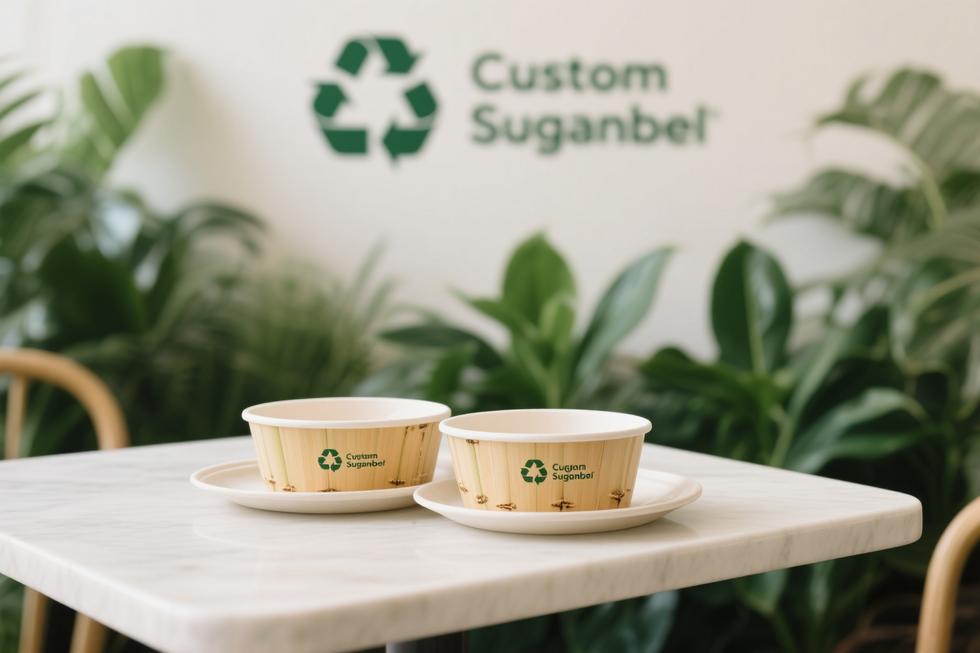
Sustainable packaging choices have moved from niche to necessity for many businesses seeking to align brand values with operational realities. Customized sugarcane bowls, molded from sugarcane bagasse, offer a compelling blend of compostability, strength, and branding potential. These eco-friendly bowls are designed to handle hot and cold foods—from soups and noodles to salads and desserts—across a range of capacities (12oz to 40oz). They typically feature leak resistance, microwave safety, and a natural white finish that signals a minimal environmental footprint, while avoiding PFAS and chlorine-heavy processing. For compliance and consumer confidence, certifications such as USDA, BPI, and EN 13432 are commonly referenced, helping businesses meet regulatory expectations and consumer scrutiny alike. The customization ecosystem has matured as well: suppliers offer options like logo printing, branding, or even custom lids, enabling events, retail packaging, or hospitality services to showcase a distinctive, sustainable identity. That said, the landscape is nuanced. Some manufacturers advertise standard products with no customization, while others offer tailored quotes and design support—often with minimum order quantities and design constraints tied to the bagasse material. Importantly, bagasse-based bowls support broader corporate goals: reducing single-use plastics, supporting agricultural supply chains (notably Indian farmers in some models), and aligning with certifications that facilitate end-of-life management in home or industrial composting settings. The three chapters that follow connect the science, the supply chain, and the social-geopolitical context to offer a holistic view for business owners evaluating customized sugarcane bowls as a packaging and branding strategy.
Tables of Contents
Chapter 1: Chapter 1: Customized Sugarcane Bowls
- From Bagasse to Branding: Material Properties, Processing, and Certification Landscape
- From Mill to Market: Economic Viability, Geopolitical Currents, and Societal Impacts of Custom Sugarcane Bowls
Chapter 1: Chapter 1: Customized Sugarcane Bowls
1. From Bagasse to Branding: Material Properties, Processing, and Certification Landscape
The journey of a customized sugarcane bowl begins with bagasse, the fibrous residue after juice extraction. This natural material is rich in cellulose, hemicellulose, and lignin, which together form a reinforcing network when processed into pulp and molded into cups. Through heat and pressure, the pulp bonds into a rigid yet lightweight substrate that can support hot foods while remaining compostable. The core advantage lies in avoiding synthetic binders, which helps align performance with environmental goals. The material is typically food-contact safe and free from many plastics add-ons when processed with clean formulations.
The material science centers on a porous but cohesive cellulose-based matrix. Microfibrils carry load while lignin contributes stiffness and moisture resistance. The result is a bowl that can tolerate typical serving temperatures and mechanical handling without excessive warping. Because the feedstock is plant-derived, a non-toxic end-of-life becomes feasible in well-managed composting streams.
In practice, branding and customization, such as logos or color accents, are designed to respect the surface characteristics of the fiber. Printing and coatings must be compatible with compostability, avoiding additives that hinder disintegration. The ecosystem often requires third-party certifications to verify that products meet compostability and safety standards, such as EN 13432 or ASTM D6400, and that food-contact safety criteria are satisfied.
The certification landscape is dynamic and context-dependent. Companies typically pursue third-party verification through recognized bodies, and buyers increasingly require documented proof of compostability and absence of harmful substances. When properly validated, bagasse-based bowls offer a credible combination of performance and environmental responsibility that supports brand narratives while aligning with consumer expectations for responsible packaging.
2. From Mill to Market: Economic Viability, Geopolitical Currents, and Societal Impacts of Custom Sugarcane Bowls
The journey of customized sugarcane bowls from raw material to marketed branding tools is as much about economics and policy as it is about chemistry and craft. The economic viability of these products rests on a delicate balance among feedstock supply, capital investment, process efficiency, and the willingness of buyers to pay for sustainability as a value proposition. Sugarcane bagasse, the fibrous residue left after juice extraction, represents a low-cost, high-availability feedstock that can lower unit costs when harnessed through automated pulping and molding. Because bagasse is a byproduct of a busy agricultural system, its price tends to be less volatile than virgin pulp or petroleum-based plastics—yet it is not free of cost. Availability can swing with harvest cycles, factory downtime, and regional processing capacity. The economics therefore hinge on scale: the more bowls a facility can produce on a given line, the lower the per-unit cost becomes, particularly when mold tooling is amortized over high-volume runs. In this sense, customization—branding, logos, and tailored shapes—acts as a lever to unlock premium pricing without eroding the fundamental economics of the material. The added value of branding is not merely cosmetic. It translates into greater consumer recall, more compelling takeout experiences for events, and stronger alignment with corporate sustainability narratives. When producers can partner with foodservice operators to deliver branded packaging that remains fully functional—holding hot foods, resisting moisture, and withstanding microwaving—shop floors begin to see longer turnover and higher repeat demand. The result is a feedback loop: demand for customized designs pushes tooling investments, which in turn drives efficiency and reduces per-unit costs, reinforcing the appeal of bagasse-based bowls to larger buyers while preserving the distinct environmental advantage over conventional plastics.\n\nA central economic factor is the cost structure itself. Raw material costs are mitigated by the fact that bagasse is an abundant agricultural byproduct, turning what would be waste into a value stream. The bulk of savings rests on processing efficiency: pulping, slurry formation, and mold-filling steps are amenable to automation, which diminishes labor intensity and standardizes production at scale. However, customization adds complexity. Each unique mold and color option requires tooling, alignment with brand guidelines, and quality checks to ensure consistent printing or embossing without compromising the bowl’s integrity. The capital outlay for multi-configuration tooling can be substantial, but it pays off when orders come in at a volume that justifies the diversification of shapes, sizes, and branding elements. In markets where consumer preference favors eco-friendly disposables, the premium on sustainability can absorb a portion of the tooling cost while still delivering competitive unit pricing compared with plastics in comparable service contexts. The upstream supply chain—farmers, mills, and bagasse processors—also influences economics. A robust, locally anchored supply chain reduces transportation costs and fosters quicker response times for seasonal demand spikes, a boon for festival seasons, catering clusters, and large-scale foodservice operators seeking reliable, branded packaging that aligns with waste-management practices.\n\nGeopolitics enters the bagasse story not as a direct confrontation with geopolitics of plastics, but as a series of dependencies that shape risk and resilience. Bagasse production clusters are concentrated in a few major sugar-producing regions, which means supply can be sensitive to tariffs, trade policies, and climate-induced disruptions. While the material itself is a byproduct, the sustainability narrative that supports its adoption is export-sensitive and policy-driven. Regions that invest in domestic processing capacity can reduce exposure to global price swings and import restrictions, creating more predictable lead times for customized orders. Conversely, if export restrictions or transportation bottlenecks arise, manufacturers must pivot to alternative regional suppliers or adjust product mix to maintain service levels. This dynamic invites a proactive approach to supplier diversification, inventory buffering for core components such as molds and printing inks, and collaborative planning with downstream customers to forecast demand accurately. The broader implication is a shift toward regionalized ecosystems that combine agricultural output with manufacturing, logistics, and packaging design—a triad that can stabilize price bands and shorten supply cycles for value-added, branded tableware.\n\nBeyond marketplace economics, these bowls carry broader societal implications that extend well beyond the checkout counter. The most evident impact is a reduction in plastic pollution and a meaningful contribution to circular economy models. By converting agricultural waste into durable, compostable tableware, communities can divert disposable products from landfills and reduce the environmental footprint of foodservice. The end-of-life story matters almost as much as production. In regions with established industrial composting infrastructure, bagasse-based bowls can break down in weeks, returning nutrients to soils and closing the loop on waste. In areas without such infrastructure, home-composting or community composting programs become essential, underscoring the need for clear labeling and consumer education about disposal pathways. The societal benefits extend to public health and urban sustainability. A shift away from petrochemical-based disposables reduces exposure to potentially toxic additives and persistent plastics, aligning with broader public health goals and environmental justice considerations. The manufacturing footprint itself can support greener rural economies: jobs in sugarcane regions that transition toward byproduct processing, mold making, mechanized pulping, and quality assurance create opportunities for skill development and stable employment.\n\nCustomization also shapes social dynamics and branding ecosystems. As brands seek to communicate responsibility and quality through packaging, the ability to imprint logos, color schemes, and messaging on bagasse bowls becomes a strategic lever. This is not merely about aesthetics; it is about how a business tells its story through packaging. In a market where consumers increasingly seek transparency and traceability, being able to point to a compostable supply chain, the use of agricultural byproducts, and a process that avoids chlorine-based bleaches or hazardous additives enhances trust. Brand-led packaging can become a platform for local empowerment: supporting smallholders, creating school teaching moments about sustainable packaging, and enabling community-driven takeout programs that reinforce local identity. At the same time, the emphasis on branding must be balanced with performance. The molds and coatings used to print or decorate must not compromise heat resistance, moisture barriers, or microwave safety. In this sense, material science and packaging engineering intersect with marketing strategy, ensuring that sustainability narratives are matched by reliable functionality in real-world usage.\n\nTo link these threads—material science, market dynamics, and social outcomes—consider the practical implications for decision-makers in foodservice and packaging supply. For operators, the decision to adopt customized sugarcane bowls hinges on a clear understanding of total cost of ownership, including procurement price, potential waste-management savings, and the incremental revenue or brand uplift associated with a customizable solution. For manufacturers, economics favors models that maximize batch runs and minimize changeover times, yet this must be balanced against customer demand for bespoke branding. A realistic pathway often begins with pilot programs that test specific branding campaigns or compartmentalized designs, gradually expanding once profitability and performance are demonstrated. For policymakers and community planners, the opportunity lies in aligning incentives: supporting composting infrastructure, encouraging agricultural byproduct valorization, and fostering standards that ensure safety and compostability without stifling innovation.\n\nFor readers seeking a tangible anchor within this broader landscape, a concise primer on the material journey remains valuable. What exactly is sugarcane bagasse, and how does it translate into a durable, heat-resistant, and compostable bowl? A helpful primer can be found in discussions that illuminate the transformation of bagasse into tableware, including its pulping, molding, and curing processes, which together yield a family of products capable of replacing plastic and foam disposables in many contexts. For those who want to explore this foundational question further, a succinct overview is available here: What exactly is sugarcane bagasse?. This reference helps ground the economic and geopolitical analysis in a concrete understanding of the material’s origins and properties, reinforcing how the science feeds the market and the market, in turn, reinforces sustainable practice across industries. As the chapter on material science and certification landscape moves into the next frontier, the conversation about viability, policy, and social impact remains central to assessing the long-term trajectory of customized sugarcane bowls. The integrated view—spanning science, standards, economics, and society—offers a coherent path from innovation to widespread, responsible adoption.
Final thoughts
Customized sugarcane bowls sit at the intersection of science, commerce, and stewardship. Material science defines what the bagasse-based product can endure—from heat exposure to mechanical handling—while certifications and labeling unlock trust with customers, regulators, and retailers. The customization and supply-chain chapters highlight a practical pathway for brands to embed branding into packaging without sacrificing performance or sustainability. Yet the broader environmental, social, and geopolitical dimensions remind us that adoption is not merely a product choice; it is a strategic engagement with farmers, factories, waste-management systems, and global trade networks. For business owners, the payoff lies in a coherent packaging strategy that aligns product integrity, brand distinction, and responsible end-of-life management. When executed with clear minimums, design constraints, and a plan for compostability in target facilities, customized sugarcane bowls can strengthen brand equity while reducing plastics reliance and waste streams.
Choose our reliable disposable tableware and packaging solutions for your business. We offer quality products that meet safety standards, with fast delivery and flexible options. Partner with us today to elevate your service – contact our team now for a tailored quote!
About us
We specialize in manufacturing and supplying disposable tableware, packaging paper, and boxes. With years of experience, we prioritize safety, durability, and eco-friendly practices. Our goal is to provide businesses with trusted, cost-effective solutions backed by responsive customer support.